Competitions and Connections (blog post 8 of series)

SAW Conference 2025

This weekend I attended the Scottish Association of Writers’ Conference, where writing groups from all across Scotland congregated at the Westerwood Hotel. The weekend was jam-packed full of workshops, talks from Industry experts and adjudications. I was delighted to win Second and Third prize for the humorous short story competition. One of my stories The Opposite of Cake was an extended version of a short flash I wrote a couple of years ago during my blog challenge, so a great example of how creative tasks you set yourself can lead onto bigger things.

I attended a brilliant workshop run by the talented Catherine Ogston, where she taught us about Hermit Crab Flash Fiction. This is where you borrow from an existing form or structure, such as writing a story in list form, or as an instruction. I had no idea this type of structure was given this name. The exercises in the class inspired a new idea for me. I also attended another brilliant workshop delivered by writer Colette Coen where she showed us how to use memory to inspire ideas. I came away with two new story ideas from the exercises, and enjoyed using different techniques to kick-start my creativity.

Writing competitions played a massive role in building my initial confidence when starting out as a writer, and have continued to give me much needed boosts along the way to encourage me to keep going.

I first attended the Scottish Association of Writers’ conference when I was seventeen. I didn’t pluck up the courage to start entering their competitions until my twenties and I nearly fell off my chair when I heard my name being called out as a second place winner in the SAW General Short Story competition during the early years. I was secretly relieved I hadn’t won first place as that would have meant standing up in front of hundreds of attendees to read out my work, which I wasn’t quite ready for (They no longer expect winners to read live!) It ignited a much needed belief that I could do this, I could actually write stories that people enjoyed reading.

Fast forward a few years later, I started to get short pieces published in literary journals. Then I won the SAW TC Farries trophy for my first proper attempt at writing a Young Adult novel. This gave me the courage to start submitting my book to agents and publishers, and winning this competition also gave me something significant to mention in my pitch letter.

Winning the TC Farries Trophy SAW 2011

When my first book was out on submission, (which I’m sure any writer realises can be a brutal time of highs and lows), I continued writing shorter fiction. When I received Highly Commended in the WordswithJAM short story competition it gave me a lift. The best part was attending the launch night for the competition print anthology at Foyles Bookshop in London with my Mum. I asked her to come with me as I worried it might be my one and only ‘book launch’, and I wanted to celebrate properly. As it turned out, it wasn’t long after I had my own launch for my first Young Adult novel at Waterstones. I think the night in Foyles gave me that extra needed self-belief at the time.
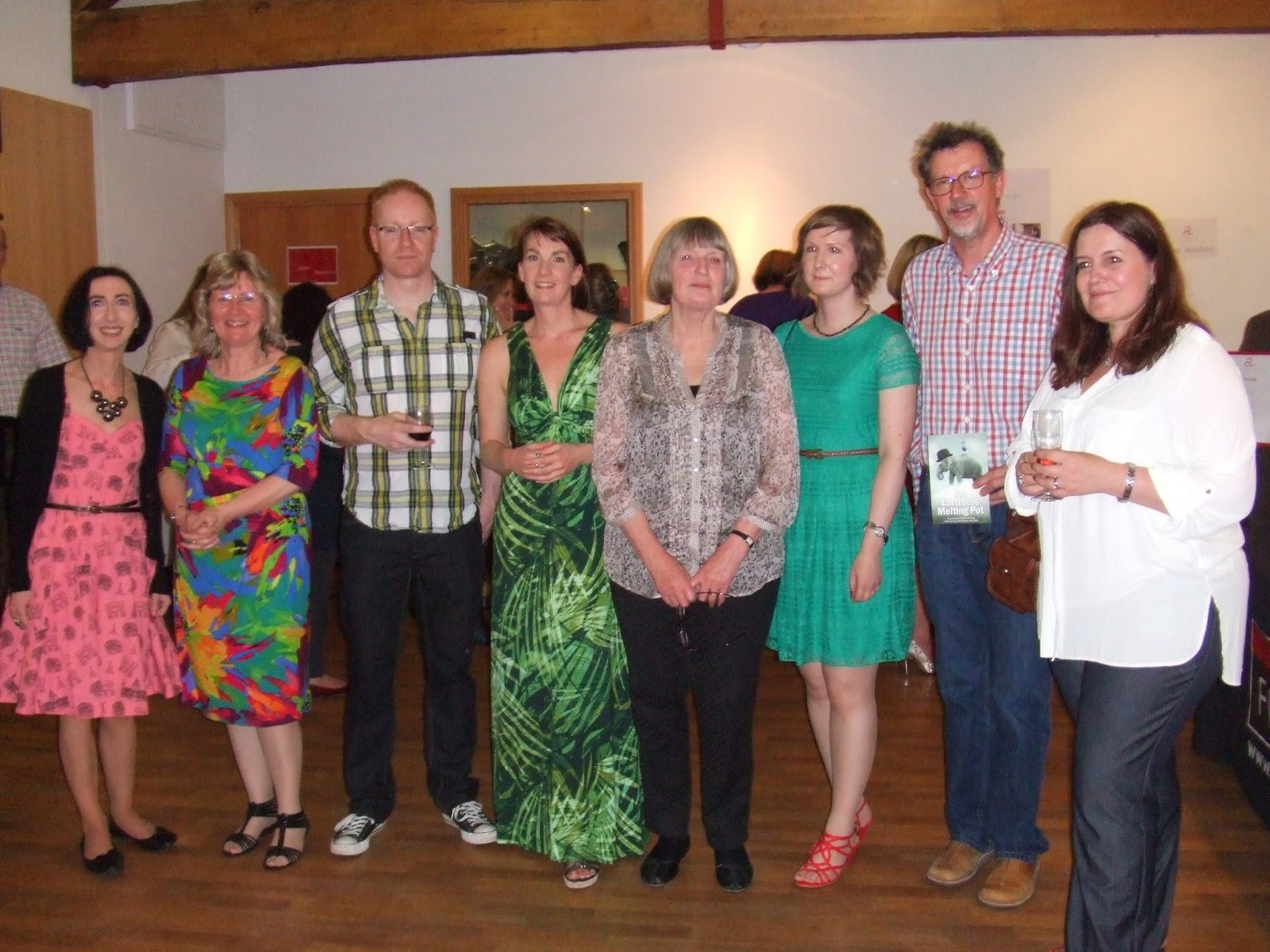
An Earthless Melting Pot Launch – winners at Foyles Bookshop London 2013

This is why I continue to enter competitions. There are so many moments during the rollercoaster of writing and releasing work out into the world that challenge our self-belief. It’s nice to receive some concrete validation from time to time. It’s also a bit of an adrenaline rush receiving emails or announcements where an editor or judge tells you they have selected you as their winner, or placed you on a short list. When I won The Writing Magazine school-themed short story competition a couple of years ago it was published in the magazine and on their website (see here). It was exciting to win, and even better when readers of the magazine looked me up on social media to tell me how much they enjoyed my story. Knowing my writing connected with others and made them feel something is what makes it all worthwhile. A big motivation to write is to feel connected to something bigger, and make sense of the world.

Being surrounded by writers at the SAW conference this weekend also reminded me the importance of this community. One of the speakers highlighted that when you are part of a like-minded tribe and you share your real-life stories (never mind fictional) with all of the ups and downs this creative life throws your way, they will understand in ways no-one else can really comprehend.

If you feel brave enough to send your work out into the world, here are some competitions/sites I have come across recently. Thanks to Catherine in her workshop for highlighting some of these. Happy writing!

THE BATH SHORT STORY AWARD | International Short Story Competition Closes soon!

Flash Fiction writing competition

Home | New Flash Fiction Review

The Plaza Prizes The Plaza Prizes – International Literary Awards – US$25,000 Prize Fund
Writing Prize — The Alpine Fellowship

Make Every Word Count (blog post 7 of series)

Unsplash Image by Sixteen Miles Out

Today’s post focuses on Flash Fiction, and how it might help you develop your writing. I started experimenting with Flash Fiction when I got serious about sending work out to publications. Tackling 100 or 200 word stories felt less daunting in terms of potentially being able to complete something during busy periods of my life. When tackling big projects like writing a novel, there are so many moments where it can be tempting to abandon the project; especially at the ‘sticky middle’ where it can feel like the whole story might never take shape, or even at the start if you can’t quite translate the ideas in your head onto the page and your characters aren’t revealing themselves in the way you’d hoped they might.

With Flash Fiction there’s no space to let your brain slow you down with doubt, as you just need to run with your idea and let the words take shape, with the challenge of still attempting to capture a meaningful ‘moment in time’ that tells some kind of story.

When I was a teenager I loved experimenting with poetry, and for me flash fiction became an extension of that creativity, as I tend to use a lot more imagery in my shorter work. In fact one of the first pieces of work I ever got published was labelled ‘Prose Poetry’, a cross-between poetry and flash fiction. Thanks go to Amy Burns for publishing Performance in her literary journal Spilling Ink (sadly the journal is no longer). Before I started to submit Performance, it won first place in a competition, which gave me the confidence to start sending it out. It was actually accepted for the Herald Saturday story section, but when a year went by without it ever appearing in print I realised the editor had forgotten about me. I was delighted when it then found a home with Spilling Ink. This was my first taste of the rollercoaster of sending work out! You can read Performance in the short story section of my website.

There have been times where I’ve cut longer stories to fit Flash Fiction entry rules, and that in itself can be a really helpful exercise. It starts to highlight unnecessary ‘filler’ words you might use a lot, and can give you more confidence in conveying a meaning or scene without over-explaining it to your reader. It teaches you in real-time how to make every word count.

 I mentioned in an earlier post that learning how to make every word count can help if you are writing pacey, fast-moving novels. If you’re writing a mystery or thriller, or tackling an unsettling topic, you want to keep your reader feeling a bit on edge, and not get bogged down in long over-written passages of narrative which have no purpose. 

If you fancy giving the form a try, check out The Flash Flood Journal It’s a great place to submit flash fiction and join in with a community of writers whose work is posted throughout National Flash Fiction Day. This year National Flash Fiction Day falls on 14 June so that gives you plenty of time to work on a piece (or two). You can read some of my flash fiction which featured in the journal over the years here

I’ll leave you with some tips I shared when I delivered a flash fiction writing workshop at a local writers group.

Top Tips

  • Make every word count – you don’t have much space for backstory and a lot of summarising and don’t get bogged down by unnecessary detail
  • Very important to ‘show’ not tell when working with limited words – show how your character is feeling by their actions and dialogue
  • Get into the action quickly – create intrigue to draw your reader in
  • Create emotion – what mood do you want to create? What do you want your reader to feel? (fear, sadness, hope, humour, romance)
  • Figure out what is at the heart of your story – what message do you want to get across? What are you trying to convey? Getting to the heart of your story helps you make every word count
  • Be creative with strong imagery and symbolism – this can draw the reader in and help you build the mood/setting
  • Still tell a story – have characters (not too many), a setting, something happening and then some kind of resolution
  • Write around a single moment in your protagonist’s day/life – often location will take on a bigger meaning, or perhaps an object
  • Often end with a surprise or impact – if you go for a twist try to avoid a cliché
  • Read some flash fiction to give you an idea of the structure

Inspiration is Everywhere #Part 3 (blog post 6 of series

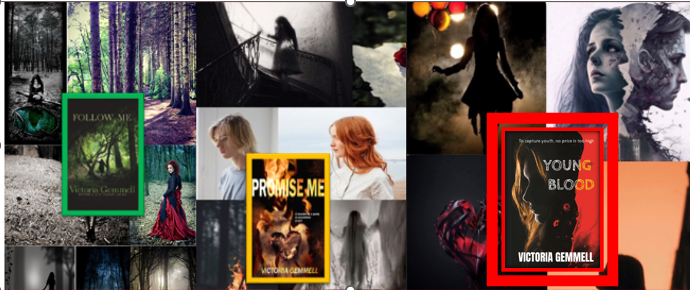
Continuing with the theme of sharing where I find inspiration for stories, today’s post is about the inspiration behind my Young Adult books. I’m cheating a bit with this post and extracting a section from a blog post I wrote back in 2022, where I went into quite a bit of depth already about the inspiration behind my debut YA mystery, Follow Me, and my second YA mystery, Promise Me. You can read the full post ‘Stranger than Fiction’ here

My latest YA Thriller, Young Blood, was also inspired by an article I read in the press, so it fits nicely with the theme of paying attention to what you read in the news. Just like I talked about in last week’s ‘inspiration’ post, the best stories can be formed from things that catch your attention in ‘real- life’, if you add in the ‘What if’ question, and let your imagination run wild…

News headlines often catch my eye and act as a catalyst. When my imagination takes over, and characters start to form, a story of fiction then unfolds, where I imagine what would happen if fictional teenagers were placed in these situations I read about.

Numerous reports of the unexplained Bridgend suicides stayed with me for years .There were twenty-six known suicides in the town between 2007-2008, and most of those who lost their life were young adults. I remembered opening newspapers at the time, wondering what on earth was going on in that town.

In my book Follow Me my 17-year-old protagonist, Kat, begins a desperate search for answers and explanations, after her twin, Abby, is the sixth in their small Scottish town to die by apparent suicide.

A big theme of my YA mystery, Promise Me, is the way in which press coverage and social media has the power to portray a certain narrative during high profile, emotional murder cases. One of the inspirations of the story was my memory of the sensationalist press coverage of convicted Scottish teen Luke Mitchell from many years ago. From 2003-2005 there was lots of press coverage around his case. Demonising language and character assassination was often used in reporters’ narratives (With headlines like ‘Devils Spawn’ appearing on front page reports).

The headline ‘Boyfriend, 15, charged (with murder of schoolgirl Jodi Jones)’, was published in the Edinburgh Evening News, (2004) before said boyfriend (Luke) even went to trial. Everyone in their small-knit town knew he was ‘the boyfriend’.

The paper took things a stop further and named him. The Press and Journal, Aberdeen, also ran a similar story. They faced contempt charges but were cleared of breaching the Criminal Procedure (Scotland) Act, that states “no newspaper report of any proceeding in court should identify anyone under the age of 16.” (In Scotland this is now 18). They were cleared of charges because judges ruled that the story was not a report of court proceedings. This is just one troubling example of how a fifteen-year-old boy, (and throughout his trial when he was sixteen), dominated headlines. Numerous false ‘facts’ were published about the case, and tabloids delighted in running sensationalist reports about Mitchell’s apparent obsession with knives, drug-taking, lack of discipline in a single parent household, even linking his music tastes to the murder.

I read a lot about the case and it made me realise how easy it could be for a small community to spread rumours relying heavily on hearsay and perceptions of a local outcast boy’s ‘reputation’, and how this could influence local prosecution investigations, and a jury. Conversations I’ve had with legal people where I questioned how anyone could truly be impartial in such a high profile case said a judge would have ensured jurors had no local connections to the case. The trial took place in Edinburgh, less than half an hour away from where the murder took place. I was reading newspaper stories an hour away from where it all unfolded and still felt emotional reactions to the reports, even if I didn’t personally know anyone.

My book Promise Me is a work of fiction, set in an affluent fictionalised Scottish village, and not about the Mitchell case, but I hope it makes people think about how damaging media and indeed, court narratives can be, and the distorted perceptions that communities can sometimes have of young people who don’t quite ‘fit’. In my job I’ve undergone unconscious bias training and I really believe the police involved in this case let a lot of their own unconscious bias (and media pressure to get a conviction), influence their decision-making. If you have an interest in finding out more about this case I recommend the brilliant podcast Through the Wall by Naomi Channell.

My latest YA thriller, Young Blood, is a story about young people in the care system who are kidnapped and taken to a secret house to become exclusive plasma donors for an elite group of wealthy adults who want to stay youthful and healthy. It’s told from the perspective of two teenagers – Ana who is outside the house and dealing with the realisation her mum may have early onset dementia; and Hope who is captured and taken to the house.

Young Blood was inspired by an article I read about an American start-up company ‘Ambrosia’, founded by a medical school graduate in 2016 which sold ‘young blood transfusions’ (from young people into older people). Charging a large sum of money for these transfusions, they claimed a range of health benefits such as treatment for Alzheimer’s. In a pitch about Ambrosia at a self-enhancement conference in 2017 Karmazin said, “We’re a company interested in making you young again.” In my day job I work with vulnerable teenagers. I see how much instability and uncertainty young people in the care system in particular can face. This sparked off the idea of having a powerful doctor set up a premium club who can access pure plasma transfusions from a select group of young people who are easy to make ‘disappear’, whilst maintaining a super-controlled environment within ‘the house.’

Links to buy my Young Adult books are here

I often take along strange news headlines to creative writing workshops I deliver in schools and get the class to choose one as inspiration for a story. A popular headline lots of pupils chose last year was, ‘Girl discovers criminal living in her attic.’ I love hearing the ideas form, and characters that start to develop. It also shows that we can all start with a similar idea, but when you create your own unique characters a truly unique story also starts to take shape…

Why not spend the week looking up interesting headlines, and see if it sparks off any great story ideas!

Inspiration is Everywhere Part 2# (blog post 5 of series)

An old observation diary

Today’s post is a continuation from last week where I shared some creative exercises that have helped me understand that when it comes to writing, and creating, you can find inspiration in the everyday ~ if you pay enough attention, stay curious, and let your imagination run wild!

When I deliver creative writing workshops I encourage participants to think of fun ways they can experiment with their writing. Often writers can put a lot of pressure on themselves, especially if working to deadlines, or expectations. It can also be daunting if you think a story should contain ‘complicated’ words or be a certain length.

I find a good way to take the pressure off, and to stop over-thinking, is to engage in writing tasks which don’t require a lot of words, and in fact make you start to look at words in a completely different way.

A challenge I took part in years ago, (just for fun, with friends), was to try and write stories composed of only three letter words (which then extended out to write stories with four letter words, five letter words – you get the idea!).

I amazed myself with being able to write not one, but quite a few, very short stories composed of three letter words. I’m sharing one of them below, which turned into a bit of a philosophical story.

3 Letter Word Story Example

Pat Woo and the Sun


One day Pat Woo saw the sun dip and tip out the sky. 
”Wow! See the sun!”

Pat Woo saw the sun run and Pat ran too. The sun set off for the day. One sun ray hit the ill cow. Pat saw the cow fly – set out for the sky. 

“Moo! Pat Woo! The cow can fly!”

Pat Woo saw the sun run and dip. Its ray hit the old rat. The old rat was lit. The rat got fit – saw the sky; his old eye now new. The rat saw the sun; saw Pat Woo.

“Pat Woo! The rat can see!”

One ray hit the cod. Pat Woo saw its fin dip; saw the cod nod and the cod got out the sea net.

“Pat Woo! The cod will not die!”
”Hot sun you are ace.” Pat Woo had joy for the sun. 

The sun had fun. Pat Woo did too – the day Pat Woo saw the sun dip and tip out the sky.

Why don’t you give this a go yourself? If you’re part of a creative writing group, it might a fun warm-up task to try to wake up the creative side of your brain.

As an extension of last week’s ‘Small Stones’ exercise, I’m going to challenge you to keep a more general ‘observation diary’. This can take the form of visual notes such as photographs, or scribbles (or notes in your phone), of interesting things you notice during your day-to-day. The Small Stones were quite creative paragraphs or lines, but in an observation diary you might want to capture musings and reflections on things in the news, things you overhear etc, anything really which you think one day could form part of a story.

Take a Photograph a Day

Was this a real girl?
Why is there a shoe in the cage with the skeleton?

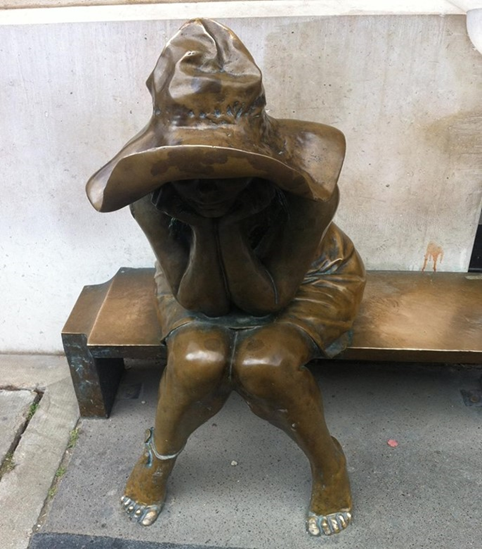
I’m a very visual writer and I love taking photographs. You can start to build a ‘photographic’ observation diary by taking at least one interesting photograph every day. This could be anything which catches your attention; an abandoned shoe lying at the side of the road, an interesting sculpture you walk past every day, a strange doll in the window of a shop… You can start thinking about the story behind the image there and then, but often it might take a while for a proper idea to form. And that’s fine. Because now you’ve stored the photograph somewhere on your phone, you can return to this later. You might even want to combine the small stones tasks (see the post here for examples), with your photographs.

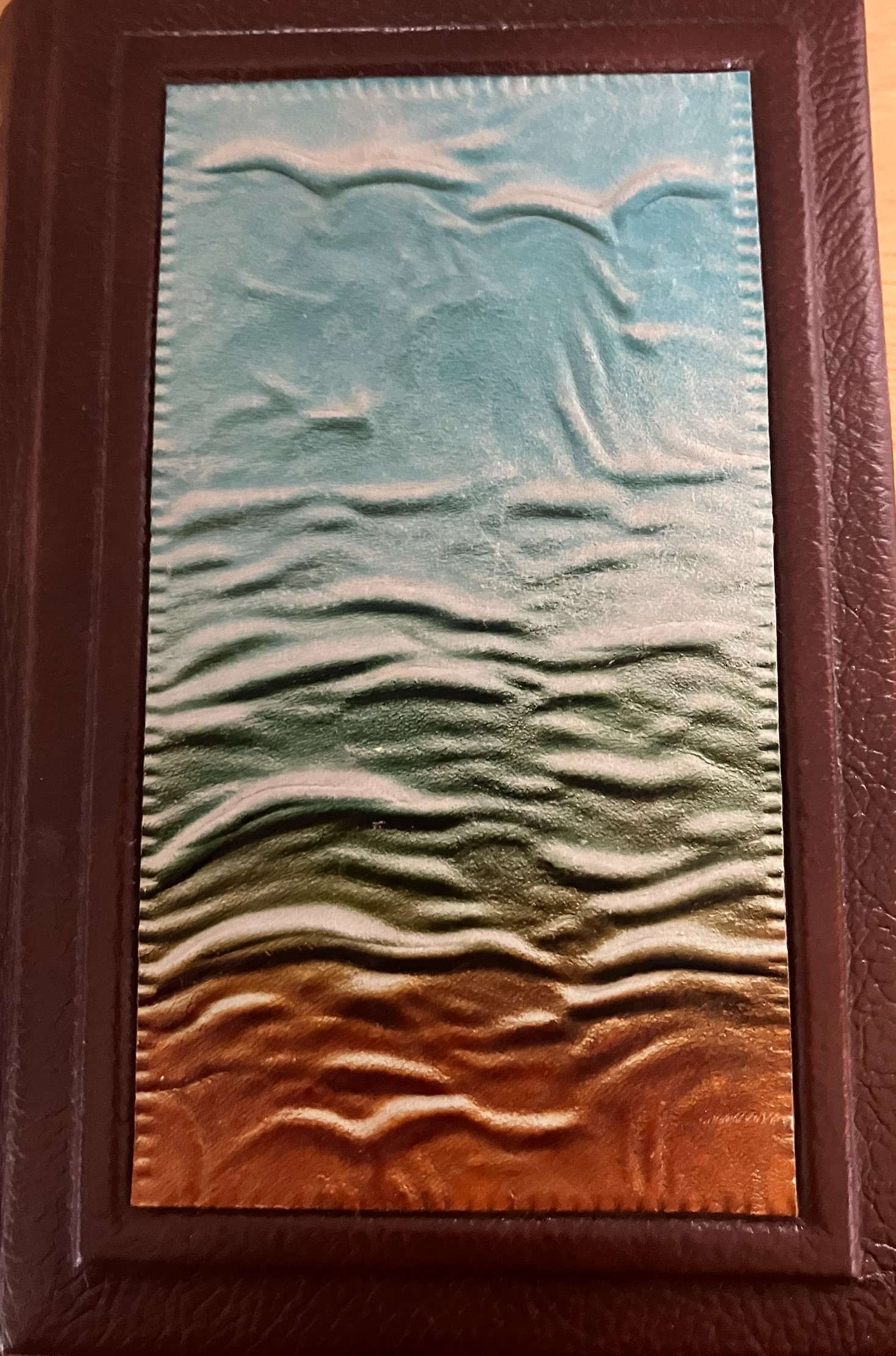
I’ve shared some photographs above I took when on various trips across the years, which I then later turned into short stories.

The heart photograph was a print which hung in the staircase of a Paris hotel I stayed in during my first solo trip abroad. I spent three nights in Paris and enjoyed wandering the streets alone, and it was during this time, passing by this print every day, I started to form the idea for a short story ‘Only You’ where a jilted bride spends her honeymoon alone in Paris. The story was runner-up in a competition, and broadcast on Hospital Radio. They sent me a CD recording of an actor reading it aloud, which was quite special. I loved hearing my words come to life.

If you enjoy finding inspiration from photographs check out the Scottish Book Trust 50 word story competition here They provide monthly photographic prompts

Listen to conversations

When I say listen to conversations, I mean within reason, as obviously it’s a bit rude to invade others’ privacy. But if you’re on a train or bus where your fellow passengers insist on talking loudly to one another (or on their phone), then naturally you will probably pick up interesting snippets of conversations throughout your day.

In an old ‘observation diary’ (where I used to write down thoughts that randomly popped into my head, interesting facts or stories I came across on social media or in the news, as well as overheard conversations) I found these snippets:

A man and a woman in conversation: “Tommy, you’re being really unfair. You’re stopping me from going to Hollywood. You’re being really bad to me with the brain transplant thing. I know I’ve had at least four brain transplants behind my back.” On the surface, most passengers would dismiss this woman as talking nonsense. But what if the man she is with is a mad scientist, and she’s the subject of numerous experiments, and is starting to rebel?

A teenage girl was sitting behind me on one train journey, talking loudly into her phone, “She fell out with me when I was camping because she said I never texted, but I couldn’t text because seriously I didn’t have reception… and then I ended up sitting with her all night on a night out so she never felt left out… I hate falling out with people, the thought of someone hating me, or having a problem with me…” At this point a boy nearby asks me if I’ve got a pen. He then returns to his seat to scribble something on a bit of paper and when he gets up at his stop he chucks a note at the girl before walking off.

The girl then shrieks into her phone, telling the person on the other end, “Oh my f-ing God. A guy just threw a note at me on the way off his train. Wait, wait. His name is Ryan. I swear… wait… he must have been listening to my conversation. How rude, haha.” (Newsflash girl, I think we’re all now listening)… “He’s said, You are too beautiful to have friends who are mean to you. Add me to facebook and let me make you smile.”

Now depending how your writer brain works, this could either be the start of a romantic novel or a true-crime type stalker thriller….

Next time I’ll be writing more about the inspiration behind my books.

Happy writing!