Competitions and Connections (blog post 8 of series)

SAW Conference 2025

This weekend I attended the Scottish Association of Writers’ Conference, where writing groups from all across Scotland congregated at the Westerwood Hotel. The weekend was jam-packed full of workshops, talks from Industry experts and adjudications. I was delighted to win Second and Third prize for the humorous short story competition. One of my stories The Opposite of Cake was an extended version of a short flash I wrote a couple of years ago during my blog challenge, so a great example of how creative tasks you set yourself can lead onto bigger things.

I attended a brilliant workshop run by the talented Catherine Ogston, where she taught us about Hermit Crab Flash Fiction. This is where you borrow from an existing form or structure, such as writing a story in list form, or as an instruction. I had no idea this type of structure was given this name. The exercises in the class inspired a new idea for me. I also attended another brilliant workshop delivered by writer Colette Coen where she showed us how to use memory to inspire ideas. I came away with two new story ideas from the exercises, and enjoyed using different techniques to kick-start my creativity.

Writing competitions played a massive role in building my initial confidence when starting out as a writer, and have continued to give me much needed boosts along the way to encourage me to keep going.

I first attended the Scottish Association of Writers’ conference when I was seventeen. I didn’t pluck up the courage to start entering their competitions until my twenties and I nearly fell off my chair when I heard my name being called out as a second place winner in the SAW General Short Story competition during the early years. I was secretly relieved I hadn’t won first place as that would have meant standing up in front of hundreds of attendees to read out my work, which I wasn’t quite ready for (They no longer expect winners to read live!) It ignited a much needed belief that I could do this, I could actually write stories that people enjoyed reading.

Fast forward a few years later, I started to get short pieces published in literary journals. Then I won the SAW TC Farries trophy for my first proper attempt at writing a Young Adult novel. This gave me the courage to start submitting my book to agents and publishers, and winning this competition also gave me something significant to mention in my pitch letter.

Winning the TC Farries Trophy SAW 2011

When my first book was out on submission, (which I’m sure any writer realises can be a brutal time of highs and lows), I continued writing shorter fiction. When I received Highly Commended in the WordswithJAM short story competition it gave me a lift. The best part was attending the launch night for the competition print anthology at Foyles Bookshop in London with my Mum. I asked her to come with me as I worried it might be my one and only ‘book launch’, and I wanted to celebrate properly. As it turned out, it wasn’t long after I had my own launch for my first Young Adult novel at Waterstones. I think the night in Foyles gave me that extra needed self-belief at the time.

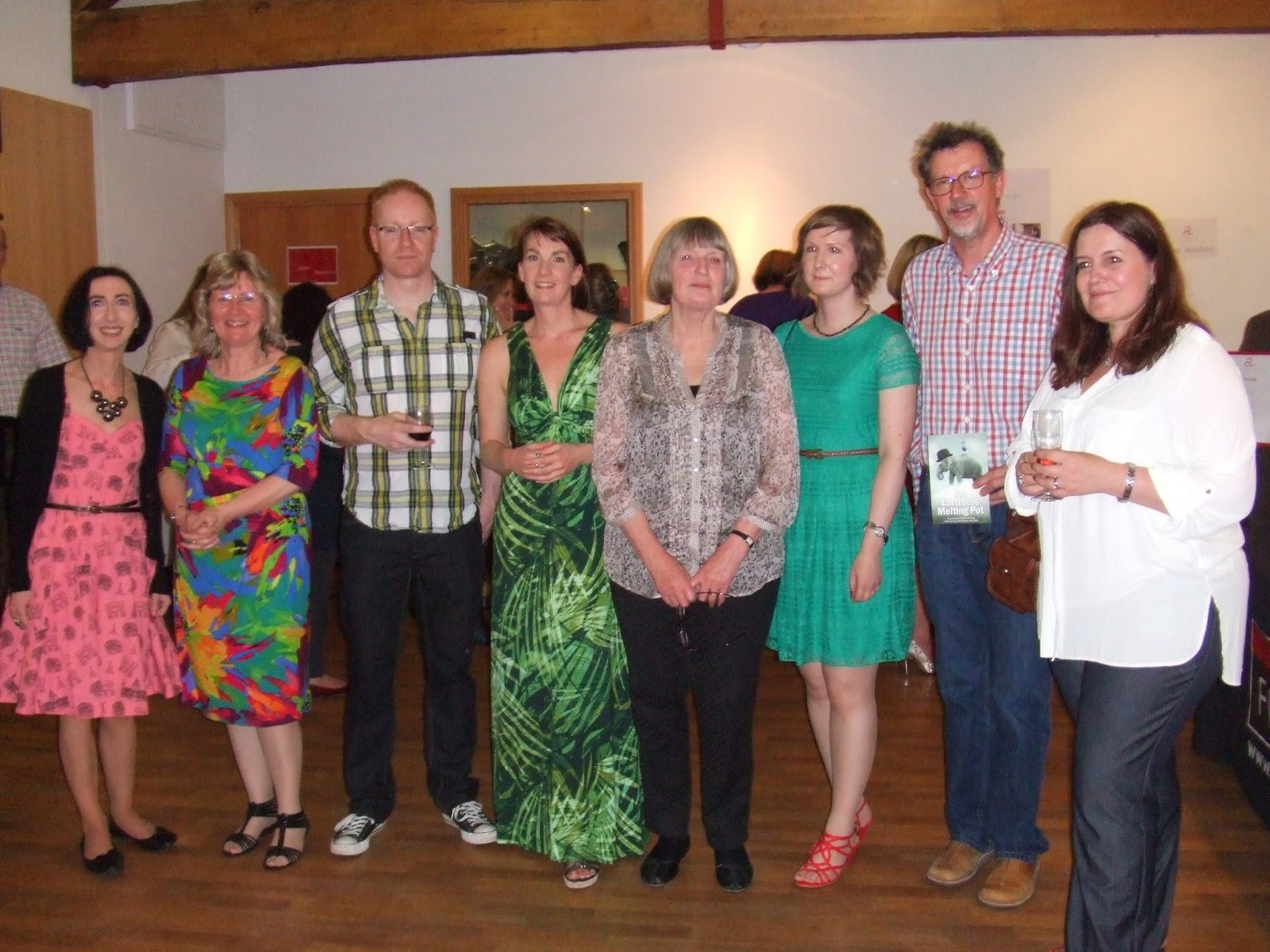
An Earthless Melting Pot Launch – winners at Foyles Bookshop London 2013

This is why I continue to enter competitions. There are so many moments during the rollercoaster of writing and releasing work out into the world that challenge our self-belief. It’s nice to receive some concrete validation from time to time. It’s also a bit of an adrenaline rush receiving emails or announcements where an editor or judge tells you they have selected you as their winner, or placed you on a short list. When I won The Writing Magazine school-themed short story competition a couple of years ago it was published in the magazine and on their website (see here). It was exciting to win, and even better when readers of the magazine looked me up on social media to tell me how much they enjoyed my story. Knowing my writing connected with others and made them feel something is what makes it all worthwhile. A big motivation to write is to feel connected to something bigger, and make sense of the world.

Being surrounded by writers at the SAW conference this weekend also reminded me the importance of this community. One of the speakers highlighted that when you are part of a like-minded tribe and you share your real-life stories (never mind fictional) with all of the ups and downs this creative life throws your way, they will understand in ways no-one else can really comprehend.

If you feel brave enough to send your work out into the world, here are some competitions/sites I have come across recently. Thanks to Catherine in her workshop for highlighting some of these. Happy writing!

THE BATH SHORT STORY AWARD | International Short Story Competition Closes soon!

Flash Fiction writing competition

Home | New Flash Fiction Review

The Plaza Prizes The Plaza Prizes – International Literary Awards – US$25,000 Prize Fund

Writing Prize — The Alpine Fellowship

Make Every Word Count (blog post 7 of series)

Unsplash Image by Sixteen Miles Out

Today’s post focuses on Flash Fiction, and how it might help you develop your writing. I started experimenting with Flash Fiction when I got serious about sending work out to publications. Tackling 100 or 200 word stories felt less daunting in terms of potentially being able to complete something during busy periods of my life. When tackling big projects like writing a novel, there are so many moments where it can be tempting to abandon the project; especially at the ‘sticky middle’ where it can feel like the whole story might never take shape, or even at the start if you can’t quite translate the ideas in your head onto the page and your characters aren’t revealing themselves in the way you’d hoped they might.

With Flash Fiction there’s no space to let your brain slow you down with doubt, as you just need to run with your idea and let the words take shape, with the challenge of still attempting to capture a meaningful ‘moment in time’ that tells some kind of story.

When I was a teenager I loved experimenting with poetry, and for me flash fiction became an extension of that creativity, as I tend to use a lot more imagery in my shorter work. In fact one of the first pieces of work I ever got published was labelled ‘Prose Poetry’, a cross-between poetry and flash fiction. Thanks go to Amy Burns for publishing Performance in her literary journal Spilling Ink (sadly the journal is no longer). Before I started to submit Performance, it won first place in a competition, which gave me the confidence to start sending it out. It was actually accepted for the Herald Saturday story section, but when a year went by without it ever appearing in print I realised the editor had forgotten about me. I was delighted when it then found a home with Spilling Ink. This was my first taste of the rollercoaster of sending work out! You can read Performance in the short story section of my website.

There have been times where I’ve cut longer stories to fit Flash Fiction entry rules, and that in itself can be a really helpful exercise. It starts to highlight unnecessary ‘filler’ words you might use a lot, and can give you more confidence in conveying a meaning or scene without over-explaining it to your reader. It teaches you in real-time how to make every word count.

 I mentioned in an earlier post that learning how to make every word count can help if you are writing pacey, fast-moving novels. If you’re writing a mystery or thriller, or tackling an unsettling topic, you want to keep your reader feeling a bit on edge, and not get bogged down in long over-written passages of narrative which have no purpose. 

If you fancy giving the form a try, check out The Flash Flood Journal It’s a great place to submit flash fiction and join in with a community of writers whose work is posted throughout National Flash Fiction Day. This year National Flash Fiction Day falls on 14 June so that gives you plenty of time to work on a piece (or two). You can read some of my flash fiction which featured in the journal over the years here

I’ll leave you with some tips I shared when I delivered a flash fiction writing workshop at a local writers group.

Top Tips

  • Make every word count – you don’t have much space for backstory and a lot of summarising and don’t get bogged down by unnecessary detail
  • Very important to ‘show’ not tell when working with limited words – show how your character is feeling by their actions and dialogue
  • Get into the action quickly – create intrigue to draw your reader in
  • Create emotion – what mood do you want to create? What do you want your reader to feel? (fear, sadness, hope, humour, romance)
  • Figure out what is at the heart of your story – what message do you want to get across? What are you trying to convey? Getting to the heart of your story helps you make every word count
  • Be creative with strong imagery and symbolism – this can draw the reader in and help you build the mood/setting
  • Still tell a story – have characters (not too many), a setting, something happening and then some kind of resolution
  • Write around a single moment in your protagonist’s day/life – often location will take on a bigger meaning, or perhaps an object
  • Often end with a surprise or impact – if you go for a twist try to avoid a cliché
  • Read some flash fiction to give you an idea of the structure

Inspiration is Everywhere #Part 3 (blog post 6 of series

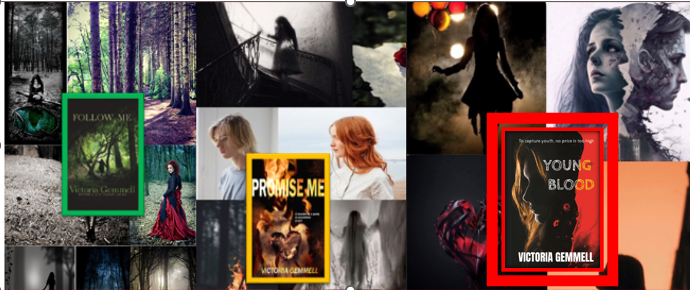
Continuing with the theme of sharing where I find inspiration for stories, today’s post is about the inspiration behind my Young Adult books. I’m cheating a bit with this post and extracting a section from a blog post I wrote back in 2022, where I went into quite a bit of depth already about the inspiration behind my debut YA mystery, Follow Me, and my second YA mystery, Promise Me. You can read the full post ‘Stranger than Fiction’ here

My latest YA Thriller, Young Blood, was also inspired by an article I read in the press, so it fits nicely with the theme of paying attention to what you read in the news. Just like I talked about in last week’s ‘inspiration’ post, the best stories can be formed from things that catch your attention in ‘real- life’, if you add in the ‘What if’ question, and let your imagination run wild…

News headlines often catch my eye and act as a catalyst. When my imagination takes over, and characters start to form, a story of fiction then unfolds, where I imagine what would happen if fictional teenagers were placed in these situations I read about.

Numerous reports of the unexplained Bridgend suicides stayed with me for years .There were twenty-six known suicides in the town between 2007-2008, and most of those who lost their life were young adults. I remembered opening newspapers at the time, wondering what on earth was going on in that town.

In my book Follow Me my 17-year-old protagonist, Kat, begins a desperate search for answers and explanations, after her twin, Abby, is the sixth in their small Scottish town to die by apparent suicide.

A big theme of my YA mystery, Promise Me, is the way in which press coverage and social media has the power to portray a certain narrative during high profile, emotional murder cases. One of the inspirations of the story was my memory of the sensationalist press coverage of convicted Scottish teen Luke Mitchell from many years ago. From 2003-2005 there was lots of press coverage around his case. Demonising language and character assassination was often used in reporters’ narratives (With headlines like ‘Devils Spawn’ appearing on front page reports).

The headline ‘Boyfriend, 15, charged (with murder of schoolgirl Jodi Jones)’, was published in the Edinburgh Evening News, (2004) before said boyfriend (Luke) even went to trial. Everyone in their small-knit town knew he was ‘the boyfriend’.

The paper took things a stop further and named him. The Press and Journal, Aberdeen, also ran a similar story. They faced contempt charges but were cleared of breaching the Criminal Procedure (Scotland) Act, that states “no newspaper report of any proceeding in court should identify anyone under the age of 16.” (In Scotland this is now 18). They were cleared of charges because judges ruled that the story was not a report of court proceedings. This is just one troubling example of how a fifteen-year-old boy, (and throughout his trial when he was sixteen), dominated headlines. Numerous false ‘facts’ were published about the case, and tabloids delighted in running sensationalist reports about Mitchell’s apparent obsession with knives, drug-taking, lack of discipline in a single parent household, even linking his music tastes to the murder.

I read a lot about the case and it made me realise how easy it could be for a small community to spread rumours relying heavily on hearsay and perceptions of a local outcast boy’s ‘reputation’, and how this could influence local prosecution investigations, and a jury. Conversations I’ve had with legal people where I questioned how anyone could truly be impartial in such a high profile case said a judge would have ensured jurors had no local connections to the case. The trial took place in Edinburgh, less than half an hour away from where the murder took place. I was reading newspaper stories an hour away from where it all unfolded and still felt emotional reactions to the reports, even if I didn’t personally know anyone.

My book Promise Me is a work of fiction, set in an affluent fictionalised Scottish village, and not about the Mitchell case, but I hope it makes people think about how damaging media and indeed, court narratives can be, and the distorted perceptions that communities can sometimes have of young people who don’t quite ‘fit’. In my job I’ve undergone unconscious bias training and I really believe the police involved in this case let a lot of their own unconscious bias (and media pressure to get a conviction), influence their decision-making. If you have an interest in finding out more about this case I recommend the brilliant podcast Through the Wall by Naomi Channell.

My latest YA thriller, Young Blood, is a story about young people in the care system who are kidnapped and taken to a secret house to become exclusive plasma donors for an elite group of wealthy adults who want to stay youthful and healthy. It’s told from the perspective of two teenagers – Ana who is outside the house and dealing with the realisation her mum may have early onset dementia; and Hope who is captured and taken to the house.

Young Blood was inspired by an article I read about an American start-up company ‘Ambrosia’, founded by a medical school graduate in 2016 which sold ‘young blood transfusions’ (from young people into older people). Charging a large sum of money for these transfusions, they claimed a range of health benefits such as treatment for Alzheimer’s. In a pitch about Ambrosia at a self-enhancement conference in 2017 Karmazin said, “We’re a company interested in making you young again.” In my day job I work with vulnerable teenagers. I see how much instability and uncertainty young people in the care system in particular can face. This sparked off the idea of having a powerful doctor set up a premium club who can access pure plasma transfusions from a select group of young people who are easy to make ‘disappear’, whilst maintaining a super-controlled environment within ‘the house.’

Links to buy my Young Adult books are here

I often take along strange news headlines to creative writing workshops I deliver in schools and get the class to choose one as inspiration for a story. A popular headline lots of pupils chose last year was, ‘Girl discovers criminal living in her attic.’ I love hearing the ideas form, and characters that start to develop. It also shows that we can all start with a similar idea, but when you create your own unique characters a truly unique story also starts to take shape…

Why not spend the week looking up interesting headlines, and see if it sparks off any great story ideas!

Inspiration is Everywhere Part 2# (blog post 5 of series)

An old observation diary

Today’s post is a continuation from last week where I shared some creative exercises that have helped me understand that when it comes to writing, and creating, you can find inspiration in the everyday ~ if you pay enough attention, stay curious, and let your imagination run wild!

When I deliver creative writing workshops I encourage participants to think of fun ways they can experiment with their writing. Often writers can put a lot of pressure on themselves, especially if working to deadlines, or expectations. It can also be daunting if you think a story should contain ‘complicated’ words or be a certain length.

I find a good way to take the pressure off, and to stop over-thinking, is to engage in writing tasks which don’t require a lot of words, and in fact make you start to look at words in a completely different way.

A challenge I took part in years ago, (just for fun, with friends), was to try and write stories composed of only three letter words (which then extended out to write stories with four letter words, five letter words – you get the idea!).

I amazed myself with being able to write not one, but quite a few, very short stories composed of three letter words. I’m sharing one of them below, which turned into a bit of a philosophical story.

3 Letter Word Story Example

Pat Woo and the Sun


One day Pat Woo saw the sun dip and tip out the sky. 
”Wow! See the sun!”

Pat Woo saw the sun run and Pat ran too. The sun set off for the day. One sun ray hit the ill cow. Pat saw the cow fly – set out for the sky. 

“Moo! Pat Woo! The cow can fly!”

Pat Woo saw the sun run and dip. Its ray hit the old rat. The old rat was lit. The rat got fit – saw the sky; his old eye now new. The rat saw the sun; saw Pat Woo.

“Pat Woo! The rat can see!”

One ray hit the cod. Pat Woo saw its fin dip; saw the cod nod and the cod got out the sea net.

“Pat Woo! The cod will not die!”
”Hot sun you are ace.” Pat Woo had joy for the sun. 

The sun had fun. Pat Woo did too – the day Pat Woo saw the sun dip and tip out the sky.

Why don’t you give this a go yourself? If you’re part of a creative writing group, it might a fun warm-up task to try to wake up the creative side of your brain.

As an extension of last week’s ‘Small Stones’ exercise, I’m going to challenge you to keep a more general ‘observation diary’. This can take the form of visual notes such as photographs, or scribbles (or notes in your phone), of interesting things you notice during your day-to-day. The Small Stones were quite creative paragraphs or lines, but in an observation diary you might want to capture musings and reflections on things in the news, things you overhear etc, anything really which you think one day could form part of a story.

Take a Photograph a Day

Was this a real girl?
Why is there a shoe in the cage with the skeleton?

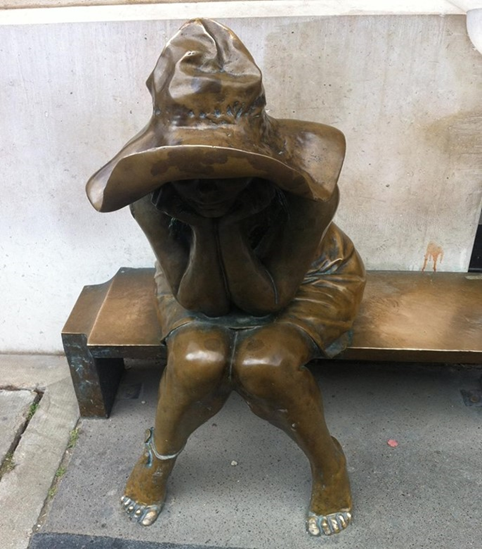
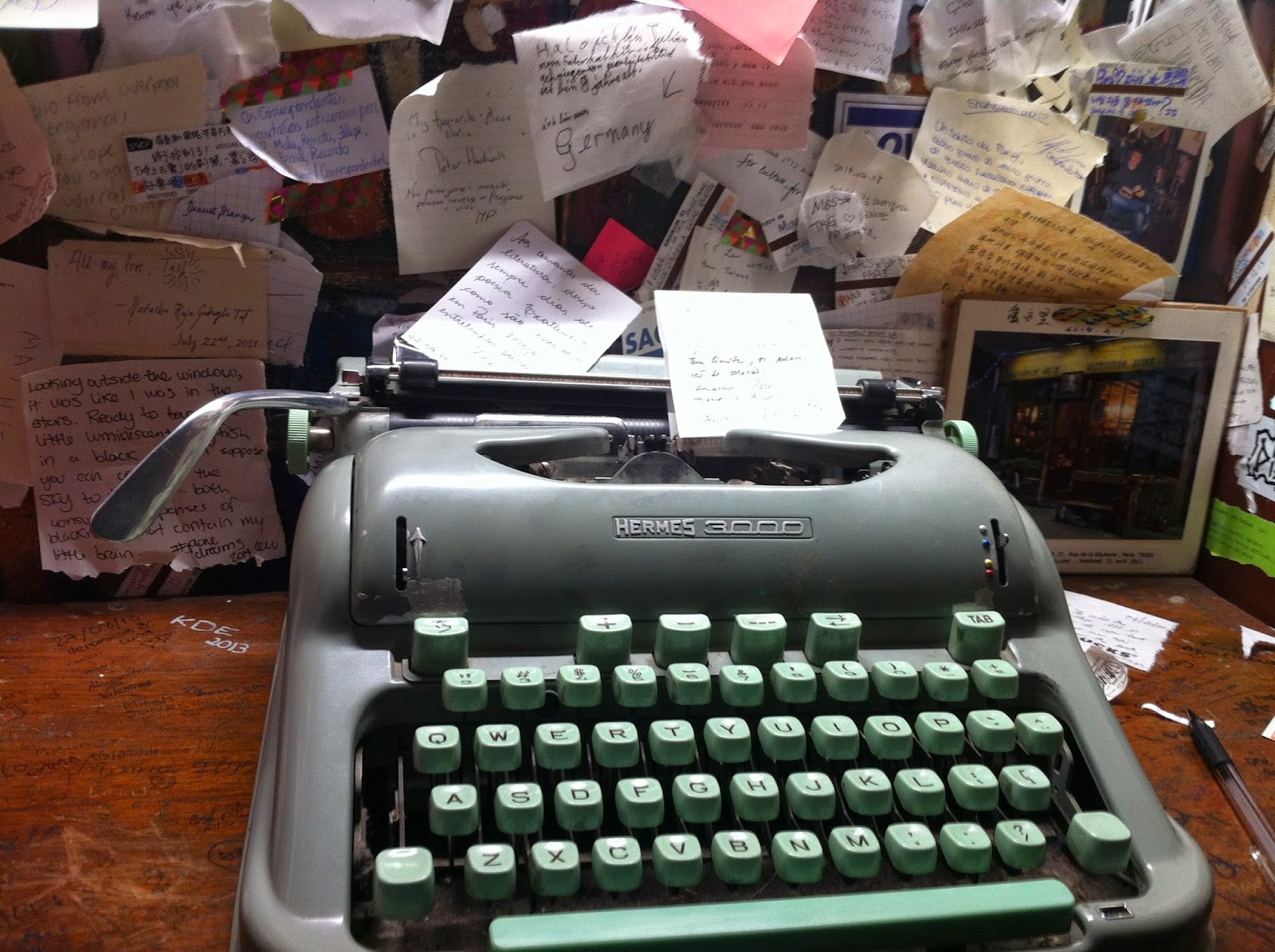
I’m a very visual writer and I love taking photographs. You can start to build a ‘photographic’ observation diary by taking at least one interesting photograph every day. This could be anything which catches your attention; an abandoned shoe lying at the side of the road, an interesting sculpture you walk past every day, a strange doll in the window of a shop… You can start thinking about the story behind the image there and then, but often it might take a while for a proper idea to form. And that’s fine. Because now you’ve stored the photograph somewhere on your phone, you can return to this later. You might even want to combine the small stones tasks (see the post here for examples), with your photographs.

I’ve shared some photographs above I took when on various trips across the years, which I then later turned into short stories.

The heart photograph was a print which hung in the staircase of a Paris hotel I stayed in during my first solo trip abroad. I spent three nights in Paris and enjoyed wandering the streets alone, and it was during this time, passing by this print every day, I started to form the idea for a short story ‘Only You’ where a jilted bride spends her honeymoon alone in Paris. The story was runner-up in a competition, and broadcast on Hospital Radio. They sent me a CD recording of an actor reading it aloud, which was quite special. I loved hearing my words come to life.

If you enjoy finding inspiration from photographs check out the Scottish Book Trust 50 word story competition here They provide monthly photographic prompts

Listen to conversations

When I say listen to conversations, I mean within reason, as obviously it’s a bit rude to invade others’ privacy. But if you’re on a train or bus where your fellow passengers insist on talking loudly to one another (or on their phone), then naturally you will probably pick up interesting snippets of conversations throughout your day.

In an old ‘observation diary’ (where I used to write down thoughts that randomly popped into my head, interesting facts or stories I came across on social media or in the news, as well as overheard conversations) I found these snippets:

A man and a woman in conversation: “Tommy, you’re being really unfair. You’re stopping me from going to Hollywood. You’re being really bad to me with the brain transplant thing. I know I’ve had at least four brain transplants behind my back.” On the surface, most passengers would dismiss this woman as talking nonsense. But what if the man she is with is a mad scientist, and she’s the subject of numerous experiments, and is starting to rebel?

A teenage girl was sitting behind me on one train journey, talking loudly into her phone, “She fell out with me when I was camping because she said I never texted, but I couldn’t text because seriously I didn’t have reception… and then I ended up sitting with her all night on a night out so she never felt left out… I hate falling out with people, the thought of someone hating me, or having a problem with me…” At this point a boy nearby asks me if I’ve got a pen. He then returns to his seat to scribble something on a bit of paper and when he gets up at his stop he chucks a note at the girl before walking off.

The girl then shrieks into her phone, telling the person on the other end, “Oh my f-ing God. A guy just threw a note at me on the way off his train. Wait, wait. His name is Ryan. I swear… wait… he must have been listening to my conversation. How rude, haha.” (Newsflash girl, I think we’re all now listening)… “He’s said, You are too beautiful to have friends who are mean to you. Add me to facebook and let me make you smile.”

Now depending how your writer brain works, this could either be the start of a romantic novel or a true-crime type stalker thriller….

Next time I’ll be writing more about the inspiration behind my books.

Happy writing!

Inspiration is everywhere #Part 1 (blog post 4 of series)

Booklet made by Rebecca Johnstone (aka Dainty Dora)

I’ve been out of action the past week with a horrible flu, hence the bigger gap between posts. This is the first day I’ve felt like attempting to get any words down on the page. I hope you’ve all had a more productive February.

The past couple of blog posts were about learning your craft, and today I’m moving on to talk about Inspiration. I’m going to focus on this theme across a number of posts as I’ve got lots of tips and tasks I want to share with you.

Where do writers get their inspiration? It’s an interesting question, as often ideas will pop in to my head and I’m not exactly sure where they’ve come from. More often than not, something I have heard, seen, or read about, in real life will spark off ideas.

In the past I have enjoyed delivering creative writing workshops around the concept that ‘Inspiration is Everywhere’. Everyday observations have definitely fuelled my creativity and provided lots of inspiration for short stories and flash fiction.

I’ll do a separate post focusing on what inspired ideas in my books as they all connect to real-life stories in the news, and headlines. (Another great task I have used in workshops – picking random bizarre headlines and allowing pupils to then come up with their own story that aligns to them).

Today I’m going to focus on a couple of tasks you can engage in every day that can hopefully help you feel creative.

Task 1 ~ Small Stones

Many years ago I was made aware of the ‘Small Stones challenge’ which showed me how much detail you can see in every day observations if you look closely enough. The idea behind the Small Stones challenge is to:

  • Notice one thing each day
  • Give your whole awareness to it
  • Write it down

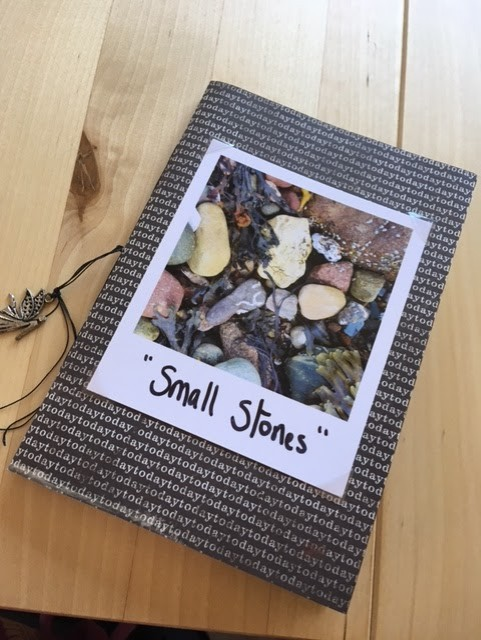
My creative friend Rebecca, aka Dainty Dora, (see her substack here), made me a lovely little Small Stones booklet for me to capture notes in which you can see at the top of this post. It’s been a while since I’ve done this exercise, but I dug out some past examples of my ‘small stones’ so I could share them below. I think it’s a great way of generating ideas and starting to form characters.

Some of my Small Stones examples:

Red Glove: child sized, waving hello from a puddle on a dark January morning. The puddles pulled her under and this is a sign -Help, come and find me…

Girl in stilettos, walking comfortably in new shoes, head held high. Her friends are running alongside still trying to catch up with who they are.

Wooden heart laced with fake red berries, tied to a fence. A cheap remembrance of a love so rich. 

Pink hair, pink trainers, black nails and fierce eyes. Sweet and sour: Do not underestimate my power.

A teenage boy, vulnerable face, dark shadows under nervous eyes, a sigh of relief flooding his body as he walks into the comfort of a group who understand: with no questions, no judgement. They speak his language of technological puzzles, navigating night monsters into oblivion, so he can live another victorious day.

When I lived in Paisley, I always noticed interesting characters and one old man stuck in my head in particular. I used to see him wheeling an empty wheelchair down the high street, walking past the market stalls. A foreign accordion player, who often sat outside the M&S, provided a haunting melody to accompany his steps, which echoed down the street. Around this time I took a regular note of small stones observations, one of which was a tangerine peel on the ground shaped like a heart: Heart shaped tangerine peel abandoned on the top step. Layers peeled back, the best bit consumed, now the rest…left to rot.

A combination of all of these observations formed a flash fiction story titled ‘Ghosts’, which was first published in the Grind Journal back in 2014. You can read Ghosts here, on my new short story page on the site.

I always say to young people in my workshops, if they notice something interesting, add in the ‘What if?’ question. This is where your writers’ curiosity and imagination clicks in. After spotting the old man a few times, always pushing the empty wheelchair, I started to ask myself the question; What if he lost his wife, and isn’t quite ready to let go? As soon as I asked myself this question, Ghosts took shape.

Task 2 ~ Participate in Creative Projects or Challenges

Many years ago I engaged in a couple of fun tasks through an American arthouse company called Art House Co-op. I took part in their Sketchbook Project where I filled a blank book with writing, photographs and drawings and posted it back to the Brooklyn Art Library to go on a ‘travelling library tour’ across America. When I was on a trip to New York in 2013 I visited the original art library and viewed lots of other participants’ sketchbooks. Unfortunately after a fire struck in their new location, lots of sketchbooks were lost, then the project shut down. It was a fun task to participate in and I enjoyed illustrating some of my Flash Fiction stories and even wrote some poetry for the first time in years (see one below, with my illustration).

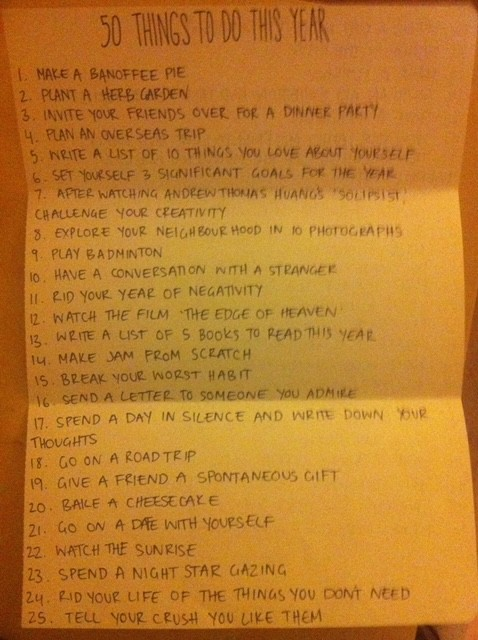
That year the Art House Co-op launched a ‘Sunday swap’ project, asking for participants to compose a list of 50 tasks for a stranger to complete. I posted my list to the company and they then mailed it out to someone, somewhere, and I then received my 50 things from a stranger, in return. I’ve put a photograph of some of my tasks above.

One particular task that really sparked off some creative ideas was the instruction to, ‘Research Natural Phenomenons.’ A natural phenomenon is basically something which occurs in nature, which is not man made. This led to lots of interesting research around things such as Tree Spiders, The Taos Hum, and the Migration of the Monarch Butterfly. Monarch Butterflies are unable to survive the colder winters in North America, so migrate to warmer climates in Central Mexico. Millions of the butterflies cluster together on trees. I enjoyed watching Youtube videos of the butterflies together in the forest and it inspired me to write a poem titled ‘Flight of the Butterfly’, which won third place in the Scottish Association of Writers poetry competition back in 2014. Years later I transformed my poem into a Flash Fiction story, using the same title and theme. This was published in the Glittery Literary Anthology in 2017. You can read ‘Flight of the Butterfly’ here

Why don’t you use some of the tasks from my photo, or do a ’50 Things’ swap with a friend? It’s a great way of getting out of your comfort zone, and doing new things, both of which are really important to keep your creative juices flowing.

A task I took part in during November 2023 was to write a blog post every day, using 30 creative prompts. See my first post here. It was an alternative to NaNoWrimo (National Novel Writing Month), where writers commit to getting a certain number of words down per day, with the aim to accumulate 50,000 words of a novel by the end of the month. I don’t think I quite achieved 50,000 words through my blog posts, but it did spark off a good few short story ideas, with one complete flash fiction piece. Feel free to use the 30 prompts from my original post as a creative challenge.

Next time I’ll continue on the theme of Inspiration, sharing some more tasks and challenges to help kickstart your creativity

Learn your craft #2 (blog post 3 of series)

Photo Shakespeare & Co bookshop, Paris (taken by me)

This post follows on from last week with the focus on perfecting your craft. Last week I shared some hints and tips from writing workshops and talks I’ve attended over the years (read here )

This week I’m going to share some highlights from two of my favourite books about ‘the craft’; Bird by Bird by Ann Lamott and On Writing by Stephen King. The reason I love these books in particular is because they are down-to-earth, honest, funny, include memoir style anecdotes from their own lives (particularly King), and neither writer pretends to know everything about writing. So I trust what they say.

Anyone who pretends to understand everything about how stories or books or poetry work is probably not doing it right, because no matter how much you try to ‘teach’ someone how to put words together, I always think there’s still going to be that indefinable piece of magic (soul, imagination, instinct – call it what you want) that can never be taught and can never truly be explained when analysing a text. But as I said last time, if you want to give your work a good chance of heading in the right direction, you can make life a little bit easier by understanding the foundations which hold it all together.

A lot of what King says in On Writing aligns with other advice I’ve heard in workshops and I recognise a lot of his points when I receive feedback, or when I read others work. I really recommend reading the whole book as it’s a great memoir alongside the hints and tips. I believe there’s various editions of it; the one I have in the house is from the year 2000 (which I think may be my husband’s copy as I used to own an earlier one I am sure). Bear in mind when you get to the part about submitting work that publishing has changed a lot since King started sending books out to publishers/working with agents, so I’m not going to reference any of that. I’ll do a separate post about being out on submission on a future post.

Adverbs and dialogue attribution

I believe the road to hell is paved with adverbs – Stephen King – pg 139

To back up this quote King uses this example; Instead of saying ‘he closes the door firmly’ Just slam the door! Other examples I’m thinking of as I write this would be He ran quickly. You could just have him run.

The over-use of adverbs is one of the biggest mistakes writers probably make. King even admits to still doing it in some of his work, even when he knows it’s a ‘thing’.

He also talks about dialogue attribution On page 140-142 he gives various examples of this:

Jekyll grated. Shayna gasped. Bill jerked out (all after lines of dialogue)

King then goes on to say, ‘writing he said, she said, is divine‘. Just letting the dialogue do the work is something that’s quite hard to do when you are anxious about getting your point across. King acknowledges that mistakes in these areas are exactly because of this, ‘fear that our reader won’t understand us.’

I also think the over-use of adverbs, and adjectives and verbs, (she whispered softly, he shouted loudly), hark back to primary school days when we were learning grammar. I don’t say this to dismiss the importance of learning grammar, (the foundation of any language), but I bet each time you were taught something like an adverb or adjective you then had to insert them into several sentences for homework. And then you got a gold star for creating interesting sentences littered with them. So it’s almost like learning new rules all over again.

Style

King talks about being conscious of using the passive tense (the body was carried from the kitchen being one example he uses of being too passive). He digs deeper into style and how paragraphs are formed. Something I learned when writing my Young Adult mystery thrillers is how shorter sentences and paragraphs can help keep the pace. No one wants to be bogged down by a lengthy description at a crucial tense moment. But then if there’s no variation in your style, it might all feel a bit too frantic, so you need to know when to slow it down too. Feeding in more description is something I’ve become a bit more conscious of, as I know I can sometimes rely too heavily on dialogue and because I’m a very visual writer I have to remember that readers aren’t always going to picture things in quite the same way.

Kings mentions ‘making every word count’ and the importance of editing your work. If you find you often ‘over-write’ a tip from me is to try writing flash fiction. Limiting yourself to 100 words or 500 words is the best exercise in making every word count, and I think it’s a great way to build your confidence as a writer. I’ll do a blog post about writing flash fiction at a later date.

Characters – digging deep

With echoes to last week’s post, both Lamott and and King talk about the importance of characters and Lamott in Bird by Bird talks about ‘writing towards vulnerability’. She really emphasises the point about writing in a ‘directly emotional way.’ This made me think of a quote I see popping up online often ( I’m not sure it can be attributed to anyone in particular): ‘What people remember is not what you’ve done, but how you made them feel’. I think that’s true of books. The ones that stayed with me over the years made me feel something, and that’s because of the characters. They’ve taken me along on their journeys and made me feel all of the emotions.

Lamott says, ‘Plot grows out of character’. King says, ‘I think the best stories always end up being about the people rather than the event, which is to say character-driven.

Obviously you need your characters to do something interesting to be interesting and that’s where the plot comes in. Like we covered in last week’s blog post, your character needs to want something, and then go on some kind of journey. But often you won’t know what they want or what the journey actually looks like, until your characters take shape, and become three-dimensional and believable.

They will probably start to surprise you, just like people in your life often surprise you (in good ways, and bad ways). They might annoy you (especially if they start to take over a bit). In my second YA book, Promise Me, one character started to take over so much that I had to completely change the relationship dynamic I had originally intended. I also had to re-write the ending because the original didn’t ring true to what one of my character’s would have done. A similar thing happened for the ending of Follow Me. This is why I always say you can plot out your novel step by step, but never be scared to deviate from the plan. Humans are unpredictable and if you story becomes unpredictable, that’s when it shows you it’s working, and you get to experience it almost like you are the reader, as well as the writer.

There are loads of books out there about learning your craft. If you’re reading this and thinking of your own favourite, please leave a recommendation in the comments.

I also subscribe to The Writing Magazine which is always packed full of helpful advice and articles. There’s also a great section with call-outs for submissions to competitions, journals, publishers etc.

So now I’ve got you thinking about your craft, what if you’re finding it hard starting on a project.

Next time I’ll be talking about inspiration, and will tell you more about how some of my ideas formed, as well as the importance of allowing yourself to have fun.

Happy writing

Learn your craft (blog post 2 of series)

In my last post I mentioned that a big part of my writing life has consisted of attending writing conferences, groups, talks, and workshops. Over the years I absorbed hints and tips and learned a lot about ‘the rules of writing.’

If you are serious about getting published, or sending your work out into the world, my advice to you is to take your time perfecting your craft.

You don’t always have to know what you’re doing for a good story to take shape as I think natural talent and instinct have a big part to play when letting a story unfold. But it can all get a bit messy if you don’t have a fundamental knowledge of the rules which lie beneath it all; like structure, pacing, dialogue, and character development. If you develop confidence in all of these areas I firmly believe this will help you actually complete that book you maybe keep starting, and never quite finish.

If you want to start submitting stories to journals, magazines, competitions, or books to agents and publishers, then you also have to pay attention to submission formatting rules and perfect your grammar. This is where structured writing groups in particular can be really helpful as there’s usually a good mix of experienced writers in attendance who will happily share their knowledge.

To prepare this post I looked through old USB sticks (tip: if you encrypt your USBs make sure you know where you’re saved the passwords!!), emails and notebooks, looking for advice I had noted down from experienced writers over the years. Here’s some highlights I want to share with you:

Structure and Pace:

Alexandra Sokoloff delivered one of the best workshops I’ve ever attended at the Scottish Association of Writers Conference back in 2015. Before writing novels, she wrote for the screen, and gave us an insight into her ‘Screenwriting Tricks for Authors’ which you can read about fully in her book and you can see a summary outline on her website/blog: Alexandra Sokoloff | Bestselling Author. I loved the way she showed us how our novels could be aligned to a three-act screenplay type structure, highlighting in particular the importance of climaxes throughout to keep readers turning the pages, and ramp up tension/conflict.

A summary of Act 1 (this is on her website so not giving away too much here): Meet the character, show the reader their ordinary world, give hints of their inner/outer desire, give them a problem and a call to adventure, and then add in a climax. She then went on to describe the components of Act 1 and 2.


At the York Writers Festival back in 2013 Julie Cohen delivered a fantastic workshop on the importance of pace:

  • To keep a novel going you need conflict
  • You need to create atmosphere, emotion and show character development
  • Nothing should be wasted; each scene should have two or more purposes
  • Functions (purposes) = Move the Plot forward, Move the Subplot forward
  • Similar to Alexandra’s workshop she mentions Conflict as Hooks – end each scene/chapter with a hook so your reader doesn’t want to put the book down

Emotion:
During workshops on Characters’ emotions- A tip: Sometimes we tend to stick in the safe ‘middle ground’, not going deep enough

Dialogue – use it to reveal more about your character. The way characters talk to one another can tell you a lot about their relationship and how they feel in situations.

Tips on all key things from an agent:
Julia Churchill, one of the biggest UK Children’s Book agents offered Twitter followers the chance to join an hour long zoom workshop (This was back in 2022 when Twitter existed and was a useful platform for writers!) I also heard Julia talk on a panel at the York Writers Festival and she sounded very professional and knowledgeable. She was one of the first agents to request a full read of my YA mystery Follow Me, but decided ultimately it was too dark for her.

  • Characters: A good character needs to come to life.  What do they want and why? And how do they achieve this? Give them a dilemma – a huge stakes thing. What is at stake? Think through the stakes of your story. It needs to have clarity. Character really matters to invest the reader. Think about your favourite character – what makes them special? She gave as an example Charlie, in Charlie and the Chocolate Factory – it was his integrity that mattered.
  • Setting – Think about incredible, vivid, sense of place settings. Setting can add a lot to the story.  
  • Theme – You want to leave the reader with something. A feeling. A message. She gave examples of books which had at the heart ‘being true to oneself’
  • Voice – This plays into a part of you at whatever age the book is targeted at. As a nine-year-old – the sense of magic, warmth, and adventure you want to feel. Teens – takes you back to sense of angst etc. Agents are always looking for authors with a ‘voice’  

Show, Don’t Tell

What does it mean? I talked about this at a workshop with Greenock Writers last year.

If you do too much ‘telling’ in a story it can slow it down, and keep the reader too removed from the action/emotion. ‘Showing’ helps your story come alive. A mix of showing and telling is okay but you need to engage the reader and help them see the story unfold in some way.

Some examples: (From Reedsy and the Writing Pro)

Telling: Michael was afraid of the dark.

Showing: As his mother switched off the light and left the room, Michael tensed. He huddled under the covers, gripped the sheets, and held his breath as the wind brushed past the curtain. 

Telling: When Mary failed her test, she was embarrassed.

Showing: When Mary saw the big red F on her work, her cheeks flushed. She crumpled the test and hid it in her desk, hoping no one noticed.

Telling: The forest is scary.

Showing: The forest is full of staring eyes. The branches look like gnarled hands, reaching out to grab me. Leaves crunch under my feet as I try to find my way home. The air smells like mildew and decay.

My tip:

Read lots, and read widely. You can learn a lot about the craft of writing simply by reading a well-written book or story. Pay attention to the structure, pacing, characters. Why do you love it? Why do you want to keep reading?

Find writers who have broken the rules; books with weird punctuation and strange structures, because once you develop confidence, you can then break the rules and be a bit experimental and creative with your style. When I read Jack Kerouac’s On the Road in my twenties, I found it quite difficult to read but I liked that his stream of consciousness style, with erratic punctuation, was carefree and raw, and it made me realise I was being too ‘self-conscious’ in my writing.

If I am too conscious of trying to write a story, it’s not working. It’s not until I have that feeling of being lost in the story and letting the characters and a subconscious part of my brain take over that I know things are clicking into place.

So follow the rules, learn your craft, but then let go, and just write!

On my next post I’ll share some favourite books which focus on Learning your Craft

#

Starting Out (blog post 1 of series)

Following on from my post last week this is the first of a series of blogs which delve a bit deeper into what the writing life has been like for me over the years. When I say ‘writing life’ it’s important to emphasise you can be living a writing life without sharing your words, or ever reaching publication.

My love for writing started with a love for reading and as a family we made regular visits to our local library, which at the time was in Inverclyde. My house was always bursting with books growing up and this was thanks to my Mum’s enthusiasm and passion for words. I realised some of my early favourites, such as the Nancy Drew series and Point Horror, have shaped a lot of my writing. All three of my Young Adult books (see here), feature teen sleuths who undercover the truth about some dark mysteries taking place in their Scottish villages.

I wanted this post to be a bit of an overview of what has been important to me over the years. Finding champions (people who encourage, and don’t dismiss your ideas and dreams), and attending writing focused groups/workshops/conferences to learn my craft, have been so important.

Through both, I’ve been supported to bring my stories to life, and found like-minded people to advise and steer me on my way. Being connected to others writers/creatives has kept me motivated and enthusiastic during times I have asked myself why do I devote so much time to this? What’s the point?

For me, writing truly feels like it is in my blood. Even if I take a break from time to time, (or nearly ‘give up’), something always calls from deep down inside me that makes me sit back down at my laptop or notebook (or notes page on a phone!) to shape words into some form of storytelling.

Here’s some key highlights along the way: See links at the bottom of the blog post to help you find groups/courses

  • My Mum has always been an important champion, always encouraging me to keep writing, and submit my work. When I was eleven my Mum took me along to a new writing group she was attending (Erskine Writers).This introduced me to a magical world of writers, and I realised people actually did this writing thing as a job, or at least submitted stories to magazines/competitions and books to actual publishers…and got their work in print. Over the years Erskine Writers has played a massive part in my development as a writer. It’s where I won my first writing competition and started to read out my work aloud to strangers for the first time, and get critiques from people other than my mum. It helped me develop confidence and taught me the importance of listening to feedback to improve my craft
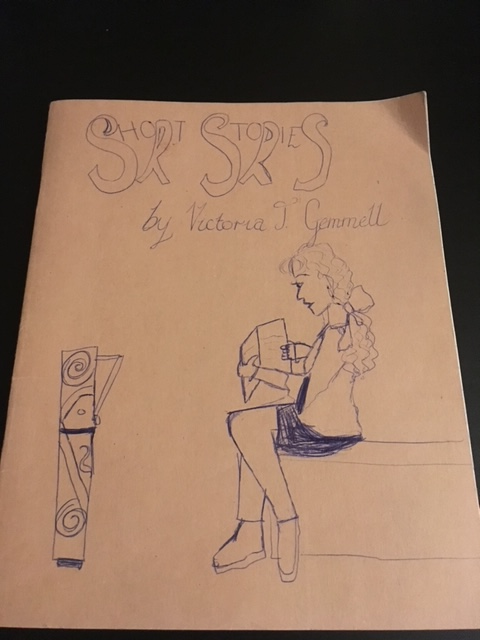
  • When I was in primary seven my older brother indulged me by reading my illustrated Horror novella – Ye olde Castle. Sadly I never kept this notebook, probably too embarrassed by the illustrations of heads rolling down a hill during the unfortunate school trip. My head teacher at the time called me to her office, (not to give me a mental health assessment thankfully.) She encouraged me to keep writing, and showed me a book that a twelve-year-old girl had published (it was about a vegetable family, and I remember being very impressed!). I continued writing many stories during this time – the photo at the top of the blog post is a notebook that did survive. Twenty- odd years later when my first book Follow Me was launched at Waterstones my head teacher attended my launch night and I was able to thank her for her encouragement during my acknowledgements. One of many full circle moments I’ve had in my writing life
  • Another teacher champion: My first year English teacher Mrs Cook told me I was going to be the next Roald Dahl (not quite happened, but this meant a lot at the time as I had grown up loving these books!) and got my class involved in acting out (and I am sure filming!) a play I had written in my own time
  • When I was about twelve or thirteen I finished my first ‘book’ Rhea the Rollerskater and my mum helped me package it and send it off to a publisher. They sent me a very lovely rejection. I love the fact my mum encouraged the process, and the publisher was encouraging, but I think I knew I really needed to give myself a bit more time to develop my craft! And also have some fun along the way. Being too focused on publication can detract from just enjoying the process.
  • When I was seventeen my mum took me along to my first Scottish Association of Writers conference. I was delighted to witness her being presented with a first prize certificate for her short story (from Ian Rankin!) This was a weekend where I first entered a world filled with experienced authors/writers and attended workshops which taught me lots about the craft of writing and storytelling. Twenty years later I was invited to be an adjudicator at the conference. Another full circle moment in my writing life!
  • In my twenties I started getting serious about sending work out and during my early thirties in particular I was on a mission to get my work in print. I felt at this point I had developed my craft enough to write an acceptable short story that could maybe see print. I’ll do a separate post on early submissions/rejections/acceptances and how to approach this
  • Around this time I kept attending the Scottish Association of Writers, as well as attending a brilliant writing festival (that an author at SAW suggested I go to) in York. Sadly this festival no longer runs but I’ve put alternative suggestions in the links below. It was here I met face-to-face with agents for the first time to pitch my novel. What this taught me is a website can tell you only so much about an agent. Meeting them in person allowed me to see how we ‘clicked’ as well as showing me how one totally understood my story, whereas the other did not!
  • Writing friendships ~ I met some of my best friends through writing groups and at a writing networking group. Finding people who are on the same wavelength and who understand the pain and enjoyment writing can bring, as well as being a safe space to share work and your highs and lows, has been such an important part of ‘keeping going’.
  • When my debut YA novel came out I was clueless really about how anything worked in terms of how to organise talks, school events and so on. I’ll do other posts about this, but at the time joining the Society of Children’s Book Writers and Illustrators (SCBWI) and attending their conference and speaking to published authors was so helpful. Fellow published authors who invited me to, and suggested me for, small festivals/talks was so amazing and helped me a lot. Librarians were also so supportive. Signing up to the Scottish Book Trust Live Literature database has helped me secure writing talks/workshops throughout the years (and get paid for them!)

As I live in Scotland I’ve included some Scottish/UK focused links below to help you find your tribe. Happy writing!

Find a Writing Group:

These lists can help you get started: https://www.scottishbooktrust.com/writing-and-authors/writing-groups-in-scotland

https://www.scottishassociationofwriters.com/find-a-writing-group/

Use social media to help you find local groups. I found an informal Glasgow Writers meet up group via facebook

Ask your local library and community centres. Paisley central library host a local group.

Attend Conferences/Writing Festivals/Courses

https://www.scottishassociationofwriters.com/saw-conference-2025/

https://www.cymerafestival.co.uk/2024-writers-conference-programme

https://www.writersandartists.co.uk/events-and-courses

Check college websites for leisure writing courses/online writing courses. This is a great way to connect with other writers. West College Scotland started an online creative writing course in November. I’ve also seen authors I know sharing courses they are running via Dundee Lifelong Learning

Attend a Retreat:

A popular one with writer friends: https://www.moniackmhor.org.uk/courses/

One I’ve got my eye on: https://www.acornwritingretreats.com/

Happy 2025

I was lucky enough to extend my festive holiday this year and flew off to sunny skies just as my office was re-opening. A dose of sunshine and relaxation was the perfect way to recharge and have space to reflect on my writing and what I want to achieve in 2025.

I often find when I’m away from everyday life the creative and ‘ideas’ side of my brain really wakes up. I even managed to ‘type’ a short story in my phone while I was sitting out on my balcony in the sun. Having space to think properly also allowed me to reflect on how I could use my blog here in a bit more of a consistent and creative way.

A lot of young people (and adults!) I come into contact with who have an interest in writing are yet to find supportive communities, and don’t know where to start when delving into the world of writing.

Often when I do school or community workshops I’m asked questions around the practical side of writing, as well as my own experiences and how I have approached things.  I realised there is a lot I could write about on here, starting with where my writing journey began, and all of the different experiences and creative projects/competitions/workshops I have found to be helpful along the way.

I am no expert by any means within the industry, or a big success, but what I’ve had are real experiences – mostly good, sometimes deflating- over a large period of my life, a lot of which I was lucky enough to be introduced to thanks to being immersed in a supportive writing community (which started with a supportive writing Mum).

Over the years I’ve submitted short stories to competitions/journals, and then started to pitch books to a range of agents/publishers, met with them face to face, made it to publication then changed course so had to go back out on submission; had zoom pitches, a chat with an editor when I made the final seven in a big competition. I’ve faced numerous rejections, been ghosted, and most recently delved into independent publishing. I’ve attended writing festivals/workshops/talks/retreats, absorbed advice from top authors, agents, publishers and other writers of all levels of experience.

After my first book was released I started to deliver creative writing workshops and talks in schools, libraries, community venues, small book festivals, rooms to an audience of three… Adjudicated competitions for writing groups, bigger conferences (and even adapted my workshop to an online version during an unexpected lockdown!). I’ve organised in-person and online book launches, written press releases, been interviewed for a magazine and over the phone by a journalist.

I’ve kept my creative momentum going by setting myself numerous silly and engaging creative challenges over the years, which is good to remind myself about, as often when writing starts to feel too serious/stressful it’s good to take some time out to remember how to be creative. I know a massive challenge of any creative is staying motivated.

That was a bit of a brain dump list but introduces some themes I hope to focus on.

I remember reading once that writing should be treated like an apprenticeship; that it’s a journey of learning. I started my ‘apprenticeship’ way back in primary school and I am still very much learning. Every new writing project I start, I want to be better.

This year I hope to start a new type of writing project, and plan to go back out on submission again to try to secure an agent, which I am sure will bring a whole lot of new experiences and learning.

You can get all of my posts into your email inbox if you subscribe (on my homepage).

I plan to give honest insights into the behind the scenes of what a writing life for me has looked like so far (and new experiences going forward), with links to any interesting groups or writing related sites/comps I come across.

The first post will be going live next week.

Wishing you lots of success in your own writing this year, and just a reminder it’s okay not to feel dynamic in January. If you are still Wintering, take that time to relax and recharge!

Wintering

A quote caught my attention recently on LinkedIn where a writer referenced Laura Strom (who is part of a Regenerative Leadership group) where she described ‘Wintering’ : ‘Wintering and resting are timeless practices that invite us to slow down, reconnect with inner nature, and tap into the depths of our creative cauldron. In a world that glorifies constant productivity and ceaseless activity, intentional rest becomes an act of rebellion, a means to disrupt the status quo. It is through rest that we challenge the notion that our worth is solely defined by our achievements and productivity.’ I’m aware author Katherine May has also penned a book called Wintering (which I’ve never read, have you? ) and I suspect from reading the blurb, it will follow a similar philosophy to the quote above.

As soon as we hit Autumn, and the days shorten, my body goes into a bit of hibernation mode. After I launched my latest book in August my automatic thoughts turned to ‘hurry up and get on with the next project’ but this is the first time for a while I have yet to actually start the next project and I’m giving myself permission to take a bit of a break. I have plenty of ideas zooming around my head which are often making it onto paper in scribbled note form. The ideas form two very different projects, which I think is a big reason why I am stalling as I can’t decide which to focus on and get on with! But I also do feel like I need a bit of a break.

I’m tired of logging into social media and wondering what to post. And I also haven’t posted on here in a while. I’ve got a day off today so decided it was time to log in to get some words down! I get so much fatigue from talking to people all day long in my day job I just crave a bit of silence sometimes from words and thoughts and often shy away from updating my social media feeds because I can’t even begin to think about how to be ‘engaging’. I’m sure I’m not alone in this, but when I see other writers I follow post regularly about all the exciting things they are achieving I always think I should do better.

But then this line from the quote really resonated: ‘challenge the notion that our worth is solely defined by our achievements and productivity’

In the writing world sometimes I think we forget to post about the joy of just creating a wonderful character, or celebrating the days where we have crafted a bewitching line of narrative, or written a scene that suddenly comes together in a seamless way that makes you doubt you even wrote it… Even that sounds like focusing too much on productivity, but it’s the magical feeling of being swept up in words that keeps me returning to projects, or starting new projects, even if I’m feeling a bit tired and fatigued. Because I know how much enjoyment it brings me, when I’m in the middle of writing a book or a story that starts to come alive and almost wants to write itself. And during the days it doesn’t; that’s okay too. The words will always come.

The good thing about the darker evenings is the feeling that it is okay to want to stay indoors and curl up with a good book or good film/TV series and not think about doing too much else. I’ve been on a bit of a reading slump this year so I feel like I need to give myself permission to slow down and enjoy soaking up other peoples’ stories for a while, before I start my next one….

And actually I have been enjoying other peoples’ stories the past few weeks as I was asked to judge a short story competition for Greenock Writers’ group. I’ll be returning there this evening (after doing a talk there back in September). I’m very much looking forward to reading out my results, and hopefully meeting the winners. It was a very welcoming, enthusiastic group and it always reminds me that another aspect of the writing world I really enjoy is meeting up with other writers, and talking about writing!

Happy November, and here’s to giving ourselves permission over the next few months for some ‘Wintering’