Riding the rollercoaster (blog post 13 of series)

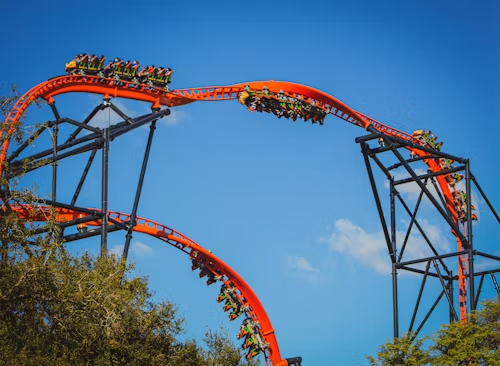
Photo by Itai Aarons on Unsplash

So far in this blog series I’ve talked about; perfecting your craft, where to find inspiration and tasks to help unleash your creative magic, the submission process, the importance of connecting with other creatives, and giving yourself space in order to actually create. One question I sometimes ask during creative workshops is What skills do you think a writer should have? And the reason I ask this, is to talk about the less obvious ones that I use all the time (such as communication skills that have nothing to do with the actual writing), but also the ‘softer’ skills that aren’t so obvious, that can help you navigate the highs and lows.

In my day job I talk about skills and strengths all the time when supporting clients to understand how to make good career decisions and set actions to move forward. Recently whilst speaking to a very intelligent client, (this is not breaching any confidentiality as there will no other identifying features other than saying they were very wise!), they said when reflecting on their own life and career paths they have realised what is the most important thing by far over anything (learning, setting goals, having ambition), is fostering resilience. He said you can set goals but inevitably life serves you a lot of curve balls, often forcing you to recalibrate your goals, or abandon them altogether. He said learning to adapt and understanding how to reframe helped him stay resilient and adapt throughout his career.

It was refreshing to hear him say this as it’s a massive part of what I try to help young people I work with in particular understand. I would add self-confidence (and belief), as another very important ingredient to allow you to have the energy to reframe.

If you want to be a writer in the sense of having ambition to be published, (by whatever means), and put your work out into the world to be consumed, two of the most important qualities to develop (alongside your craft!), is resilience and confidence.

In an online writing workshop I delivered back in 2020 (which I had to completely re-write due to the conference being transformed online during a certain pandemic!), I compared the writing journey to a rollercoaster. I am sure many writers have said the same. There are so many highs and lows, often on the same day hand in hand, that it takes a lot of resolve to keep focused on the most important thing:

Your words on the paper; not others

I just came up with that phrase today as a way of reframing my own focus. It seems obvious, when you are writing, to keep focus on your words, but it’s also easy to get pre-occupied by the words of others; reviews, or lack of reviews, rejections, sales reports mocking you with low numbers or zeros…

I’ve written in blog posts before about writers achieving goals, and then feeling they’re still not enough, because we’re always looking ahead to achieve the next one, or make a bigger success of the first one, and all the time dismissing the little wins that a year ago might have felt like a massive win. That can feel like a rollercoaster of reaching the top with one achievement and plummeting if we perceive things don’t go quite as well as planned.

In Aime McNee’s book We Need Your Art, (which I referenced a couple of months ago), in her chapter titled ‘On Failure’, she acknowledges what some of us might label disappointments, but she would rather label failures because she thinks we should embrace failure, as it can make us stronger artists, and encourage us to ‘get better’. I agree with a lot of what she says, as it ties in with one of my first posts on this series where I said I view my writing journey as an apprenticeship, where I am always learning, and as part of that I always want to improve.

She references Carol Dweck’s book Mindset. I’m familiar with Carol Dweck’s work as I attended a full day workshop years ago in my job which focused on her encouragement to foster a ‘Growth Mindset’ and how this should be applied to the school setting, in order to move more towards the attitude that it is okay to fail at things, and actually what is important is the effort you put into trying and learning.

On a recent break a couple of weeks ago I went to see the most spectacular stage show, Moulin Rouge, with my Mum, which was performed at the Edinburgh Playhouse. The whole production was electrifying; the set design, music, singing, dancing and acting. At one point I thought about the hours and sweat and pain that must have gone in to all aspects of the creation of the show, and how gratifying it must have felt for the cast (and hopefully everyone behind the scenes), to see the live reaction from the audience: the full house, the standing ovations, clapping and dancing and signing along at the end, the rapturous applause.

As a writer it is rare you get to have that kind of live reaction with your audience. Unless you do a lot of well-received readings (and I don’t think I’ve ever seen an author during a reading receiving a standing ovation lol). So we’re left to spend hours and hours labouring over our work, releasing it out into the world, and then we have no idea what impact (if any) our work has, unless someone happens to mention to us, or we read a public review. That’s hard! This is something Aimee again mentions in her On Failure chapter, saying ‘Silence is a very specific type of failure.’ (pg 205). When we put our ‘art’ out there and get zero recognition, or engagement.

I see creators on social media talking about this all the time; how they are struggling to get any audience engagement and want to just give up. Just last night I saw a comic strip post by a graphic novelist I follow on Instagram @christinmaricomics, who explores how demoralised she is feeling after the release of her graphic novel (Halfway There) feeling sales are slow, and not getting much recognition (that she perceives anyway) Part of the strip she posted said: ‘…While I don’t think most people make art for wealth or public recognition… those things help us keep making art because it gives our work credit.’ C. Mari I ordered her graphic novel after reading her post, and I’m looking forward to reading it!

When I was sitting in the audience at Moulin Rouge I thought imagine if no one had shown up to see this amazing production, how the creators would have felt, and how sad it would have been for such amazing work never to have reached a wide audience, or been appreciated.

How many creatives must feel this every day: back in the day before streaming the films which ‘released straight to DVD’ instead of the cinema, (but often became massive ‘sleeper hits’ many years later); the bookshop signings where no one shows, or the big retailers choosing to stock already established ‘celebrity’ authors, instead of stocking local authors who are the ones making real connections in local schools but will never reach bigger audiences without commercial outlets promoting them; the musicians who play to empty venues…When Snow Patrol first started to play gigs in Glasgow I was sometimes one of five in the audience at King Tuts and the lead singer Gary would often make a deflated joke about it, but still go on to pour a lot of heart and soul into his performance. Years later they now play to sell-out large stadium gigs so I’m sure he is glad he persisted, and didn’t give up.

According to multiple resources F. Scott Fizgerald’s The Great Gatsby didn’t sell well during his lifetime, and I’m sure we all know the tragic story of Vincent Van Gogh who only sold one painting during his lifetime (The Red Vineyard). How many talented artists never sell one piece of their work, or have it on display?

So many articles or posts about writing focus on surviving the submission process, and the multiple rejections, to get work out there. When I first put ‘my work out there’ I would have really appreciated a post like this, which acknowledges that feeling of rejection you will often experience when the work IS out there, which often hits a lot harder, and that is okay.

Often on social media we present all the highs of our experiences. There are many lows I never talked about when my debut came out: when my books didn’t show up at two big events I was part of (meaning I had no way of selling them to the attending audience); some of the first feedback I ever received was about the typo on the back cover (not my mistake which made it even more deflating!); or that my first ever public published review was quite a dismissive three star one (which wasn’t the issue, I tried to explain to a friend at the time. Three star reviews are part of the deal, and actually could be so much worse, but it was my FIRST one, and the only one showing against my book at the time). Even although I went on to receive many amazing reviews, I never forgot this was my first one, and that the person thought I could basically do a lot better. Agreed, but actually I am so proud of my debut, and there’s a rawness and sense of magic to my writing during that era that I don’t think I’ll ever be able to replicate.

Don’t try to be perfect or live up to others expectations. As a writer it’s your job to provoke many emotions, one of which will be disbelief from others that your work even made its way out into the world in the first place.

At least you tried. And created.

Here’s links to some work I have created

Creative Space (blog post 12 of series)

‘In the Mind of Gaudi’ Anadol immersive experience at Casa Batllo

One of the biggest challenges you may encounter when trying to write, is finding the head space to write and feel creative. This post is to reassure you that it’s okay to have this frustration. I’ve definitely been feeling this way lately, but I’m trying to just let myself do the things I need to do just now, and know I’ll get back on track soon.

I used to think free time was the problem, but often my free time needs to consist of  decompressing and switching off and this will take priority over sitting at a laptop (or notebook) for hours, carving out a story. When I’ve been sitting at a laptop all day in work, filling my head with other peoples’ words and problems, reading through what can be an average of thirty emails a day, making constant calls, taking calls, typing notes…I often need to just take a step back and give my brain some silence. Over the past few weeks we’ve had a bit of a mini heatwave in Scotland, and I feel like this is so rare I would also be silly not to take advantage of being outdoors as much as possible.

This isn’t to say I’ve not been thinking about ideas. I have, and continue to research a new project I’m working on, often scribbling or typing up notes. But I just haven’t formed anything into a coherent order or structured story in a way I’m happy with.

A weeks ago I downloaded a great book onto my kindle called We Need Your Art (see here to buy) by a writer I follow on Instagram called Aime McNee. Reading this on my commute to work helped me feel like I was carving out some time to acknowledge the need to keep connected to my creativity. At the heart of Aime’s book is giving importance to your art, and an encouragement to share your work. The book has echoes of The Artist’s Way by Julia Cameron and Big Magic by Elizabeth Gilbert, (and in fact references both), but I loved the honest and accessible way this one is written. Throughout the pages there is a continuous mantra to be confident, stay motivated, and don’t give up, no matter what obstacles you might face along the way. I wanted to read the whole book through before going back to try the re-set exercises. I’m going to set aside one of my lovely new notebooks to try the re-set challenge soon.

Another non-fiction book I’ve been enjoying delving into on my commute is a gift from a creative friend. It’s called Daily Rituals: Women at Work by Mason Currey, and documents the daily routines of well-known female ‘creatives’~ writers, painters, composers, singers, filmmakers. I’m half-way through the book and the majority of the artists mentioned dedicated most of their day to their creative practice – sometimes a solid 12 hour plus day of being immersed in a world of art. I don’t think I would want that either. So how do you find the balance?

When my husband asked me the other day, what helps you get into a writing state of mind? I had a proper think about this. When I write my best work it’s when I have switched into what I call an unconscious kind of flow state; I don’t think about writing or what I’m trying to achieve, I just let  the words flow. A bit like what he was doing when he was driving. A bit like what happens if you’re playing the piano and don’t need to look at the notes or concentrate – you let the music take over. Listening to music can also help me get into this state of mind; particularly if an album starts to become the ‘soundtrack’ of the book I’m writing as it’s then a helpful way to allow my mind to shift into that world again, and enter a certain ‘mood’ I am trying to evoke within the story.

At the moment I feel like I am in my conscious state of needing to feed my creativity, and what Cameron refers to in The Artist’s Way as ‘filling the creative well’. I’ve had weekends surrounding myself with beautiful scenery, walking beside the water, eating good food, buying little trinkets and art from gorgeous independent shops. I’ve been on an amazing trip to Barcelona soaking up the artistic genius of Gaudi, admiring his spectacular architecture, visiting the Moco Museum and viewing a range of inspiring exhibitions (one of my favourites was standing inside Studio Irma’s Diamond Matrix – an installation of hundreds of light-up diamonds); taking photographs of beautiful street art and buildings, and buying pottery and prints from local artists to take home to decorate my writing room.

One of my favourite parts on a visit to Gaudi’s Casa Batllo was a sensory immersive art experience called ‘In the Mind of Gaudi’ where I stood inside a 6 sided LED cube room, inaugurated by the artist Refik Anadol. This is one example where AI can be used positively to enhance a creative structure, as it enabled Casa Batllo to collect millions of Gaudi’s photos, videos, drawings, 3D models and so on, in order to create a large digital library of his patterns and design logic, which Anadol then used to project visual images. It truly was like we were standing inside Gaudi’s mind, with a succession of images flowing around the ceilings, floors and walls, accompanied by dreamy music akin to Sigur Ross. It gave me goosebumps, and reminded me that a world without art would be a very dull place. In the Moco Museum this quote from the founders, Kim & Lionel Logchies, can be found at various points: “We use the power of art to challenge the norm, champion the truth, open up minds, and question the world around us.”

I believe one of the biggest ways you can feed your own creativity, is to immerse yourself in the creativity of others. So if you’re feeling a little unproductive in your own work, and your brain is tired, then try and seek out some art in your local area- visit an art gallery or museum, go to the cinema, visit some quirky independent shops selling inspiring products, people watch at a café, read good books, watch a thought-provoking documentary, spend time with other creatives…

Take a break from the screen, and go and fill your head with daydreams

Deviate from the plan

I often say I know a book is working when my characters start to take over. This is why I believe you can plan a rough outline and key aspects of the plot, but you have to give your story and characters permission to deviate from the plan. Just like real life, you can try to plan ahead but often external factors will throw your plans into chaos, or often throw up something better/unexpected.

When creating fully formed characters, until you get to know them properly they’re not always going to fit into your plotlines. You’ll often see writers suggesting you construct ‘characters studies/profiles’ in advance – like what’s their favourite band, foods, key moments from their childhood, are they are a morning/afternoon person? Which can all be helpful, but until they turn up on your page and get stuck into the action of your story and start interacting with your other characters none of that is going to tell you much about where they fit in to the bigger picture of your plotlines.

For my first two YA mysteries my characters told me what was going to happen, meaning I had to deviate from my planned endings. Neither of the original endings felt right. They were both written in and left there for quite a while. I couldn’t quite figure out why the endings didn’t sit well with me until I asked myself ‘but would that character actually do that?’ And then I realised I hadn’t stayed true to them and as soon as I understood this and let go of my own pre-conceived ideas, and really listened to my subconscious, it was obvious they’d already laid out all of the clues for me. Yes, we writers really do have voices talking to us in our heads. An acceptable kind of madness, in this mad world of novel construction.

During the planning stages for Young Blood I always knew I would have two main teen protagonists, Ana and Hope. I wanted to have two contrasting personalities and two contrasting situations. Ana and Hope’s narratives run through alternate chapters. 16 year old Ana is part of a tight-knit family and hasn’t really faced many challenges in life, which gives her a bit of a self-absorbed naivety. The uncertainty of her mum’s potential early-onset dementia diagnosis really shakes up her world. She is also upset when her new friend Hope disappears, and tries to find out what happened to her.

When I first started to plan the story I always thought Ana would dominate as her determination to find out what happened to Hope is a key driver of the plot. But then when my character Hope started to take shape I think she took over a bit!

15 year old Hope’s world was torn apart when she lost her mum three years previously and she finds herself in the care system. Her experiences have been lonely and unsettling and Hope welcomes Ana’s friendship until she’s taken from school one day and finds herself in the ‘House.’

I found writing Hope’s character emotional and her strength and fire, along with her vulnerability, was something I tried really hard to capture throughout the book. Her close bond with Seb in the house, and other key characters inside, also helped to flesh out other aspects of her personality and I started to grow very fond of and protective of her. So far she is probably one of my favourite characters I have written.

Throughout the book Hope finds strength from her family’s tarot cards.

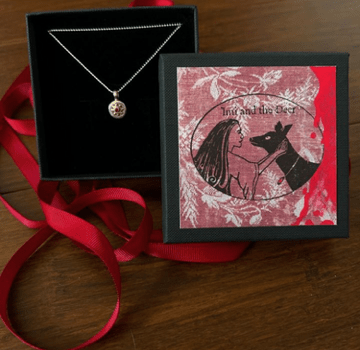
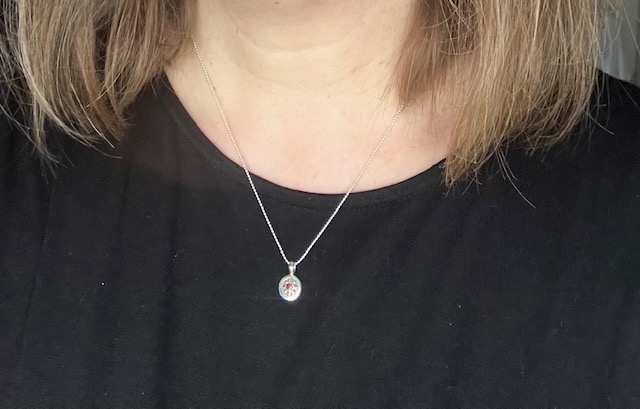
My sister-in-law who makes beautiful handmade silver jewellery (see ImiandtheDeer here) gave me great support with the structural edits of Young Blood (she is a former English teacher!) and half-joked about designing a necklace inspired by Hope as part of a new collection. I was blown away when she gifted me the beautiful ‘Hope’ pendant below at my book launch. The pendant is a one-of-a kind – a ruby set in the middle of a gold sunburst, inspired by the back of Hope’s tarot cards which have a ‘ruby red jewel in the centre of blazing suns burning bright.’

That’s me wearing it on a recent trip to Arran. It’s so lovely to have a piece of jewellery to wear inspired by one of my characters! It makes Hope seem even more real to me.

I’ll leave you with a longer extract from a scene with Hope below. Links to buy Young Blood are here

“A reassuring warmth flowed through my body as I was greeted with the familiar image of a lion with magnificent orange mane, a goddess with flowing fair hair gripping the chain wound around his neck. Strength: You have more strength, power, and courage than you know. I felt the tight knot of anger I’d been carrying around the past few weeks start to unravel as I remembered Mum’s instruction, any time she drew this card for me, tugging on my hair which matched the fire of the lion’s mane. You are the lion AND the goddess. You remember that.
I tucked the card into my schoolbooks for a good luck charm.
Tomorrow I was going to try to be both.”

Happy New Year

Happy 2024! The Christmas decorations are packed away, the chocolate boxes are in the recycling bin and early morning commutes in the dark have resumed. Returning to the day job makes me appreciate my Fridays off even more, when I get to dive back into my creative bubble.

I hadn’t intended to set myself any big writing goals or challenges this month. Really doing anything remotely productive in January is a win for me!

But then my friend Rebecca, aka, designer Dainty Dora (you can check out her awesome website here) tagged me in an Instagram ‘meet the writer’ challenge, created by the writer Beth Kempton over on Instagram (@bethkempton) The challenge runs for 15 days and has daily prompts to encourage writers to post insights into our creative lives. (I realised my first blog post of 2023 also mentions Beth when I referred to her book ‘The Way of the Fearless Writer.’ See here)

Instagram is definitely my favourite social media channel as I like the visual aspect of it. I recently joined Threads but I’m pretty bad at consistent posting. I’m still much more comfortable in a blogging forum such as this when I want to put words out into the world. It makes sense as in the real world I’m much more into one-on-one longer conversations rather than small talk with a hundred people at a party (which social media often feels like to me!).

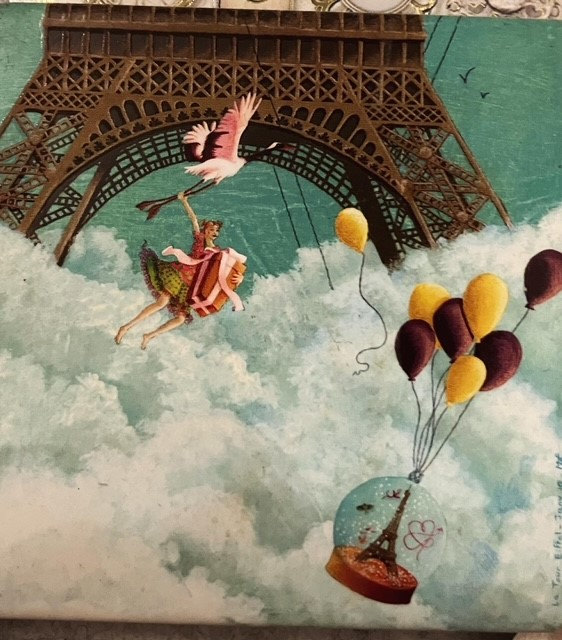
Anyway, as part of the Meet the Writer challenge I posted some photos of my writing ‘view’, which most often for me is the little pieces of art/quotes I have on my ‘creative/inspiration board’ that hangs above my desk so I’ve included them in this post. (As you can see there is a bit of a Paris theme – I love Paris and picked up the postcards/art magnet on visits).

Over the holidays I was judging a flash fiction competition for Erskine writers and I really enjoyed reading the 500 word stories. I love the challenge of writing a short piece of fiction, and I was delighted to see the range of excellent and creative stories the group had produced. It really inspired me, so when this month’s Furious Fiction challenge (from the Australian Writers’ Centre) landed in my email inbox I decided to give it a go. This challenge runs the first Friday of each month, and you are given specific words to include in a 500 word (max) story, and you have 55 hours to submit. It’s a great challenge to get words down. You can sign up to emails about it here

This month’s Writing Magazine included a 2024 Competition guide and this has also made me determined to write more short stories this year to submit. It’s easy to let novel length work dominate, but I find writing short work keeps my writing sharp and fresh!

Good luck if you have set yourself any 2024 goals.

Goals

Image from Pixabay by Gerd Altmann

Today’s prompt: Share your goals and how you plan to achieve them

Write more ~ This challenge has been a good start because I want to write more in the wider sense, so I want to keep writing novels, but also shorter more creative pieces too. To achieve this I need to stop procrastinating and doubting myself

Send my work out ~ I think in a blog post much earlier in the year I said I was going to aim for 100 rejections and in order to do that I need to actually enter competitions and submit my work. So I need to start making a note of competitions I want to enter so I don’t miss the deadlines

Read about topics that interest me ~ I want to read wider than fiction. I do sometimes read non-fiction books but not enough and I think I should make time to research topics that interest me. For instance I watched a couple of documentaries about mediums/psychics this year, and one very famous medium posted on his instagram about having an arachnoid cyst in his brain and lots of people then shared stories in his comments about how they also had this cyst or family/friends did, and they also were able to predict things. I will gladly go down these kind of rabbit holes of research to find out more. I think it’s important for writers to be curious about strange things they come across as it can often be good inspiration for creative fiction!

Try new things ~ Maybe a cooking class, tarot reading class – I think I need to make myself a list of things I want to try…

Get fitter ~ I consciously tried to up my steps and was good at doing short dance workouts at the start of the year but I need to be much more disciplined. This gets much harder in Winter! Help me… (how do you keep motivated?)

Connect with old friends~ I feel like I’m still catching up a bit from those ‘lost years of lockdowns.’ Old friends if you are reading this give me a nudge, I do want to have that catch up and let’s get it sorted!

Make art ~ I’ve got this amazing big art kit which was a Christmas present from last year that I have hardly used and art reels of amazing artists demonstrating drawing/painting activities keep popping up on my Instgram and it is making me want to experiment. So maybe I should watch more reels to get me inspired and on my way

Travel ~ Last month was the first time I had been on a plane since 2019 and it was so great being abroad again. There’s a list of places I want to fly to and that will be a definite goal for next year. Looking up flights already…

I think that’s enough for now …. what are your goals??

The little trips

Home today after a night away in Stirling (and back on my laptop for this post, so hopefully the photos might not look so squashed together!). When looking through my prompts I landed on: ‘Write about the best trip you’ve ever taken’ and I decided to put a spin on this. I’ve been lucky enough to travel abroad to some spectacular places, and maybe I will still do a post about one of those holidays, but some of my favourite trips are ones that have become a bit of a tradition – small places not too far from home which have become favourite haunts. Stirling is a city my husband and I have visited a number of times over the years and we have a favourite B&B and a couple of favourite restaurants we go to now. We enjoy dropping in on the lovely indie bookshop/cafe the Book Nook., and on this trip we discovered a new shop, called Made in Stirling which was filled with amazing art products from local artists.

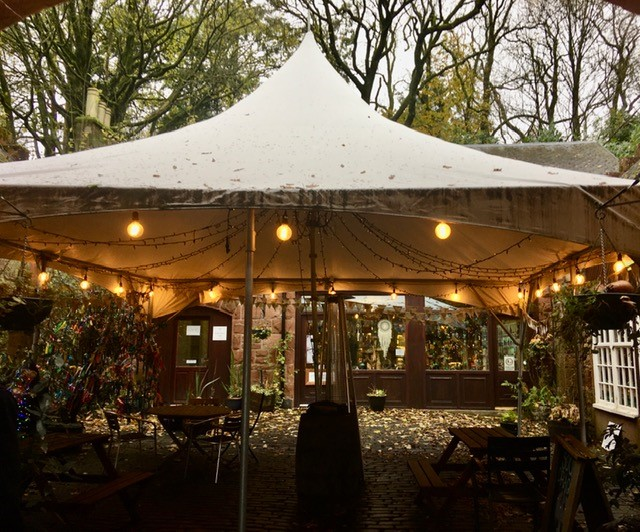
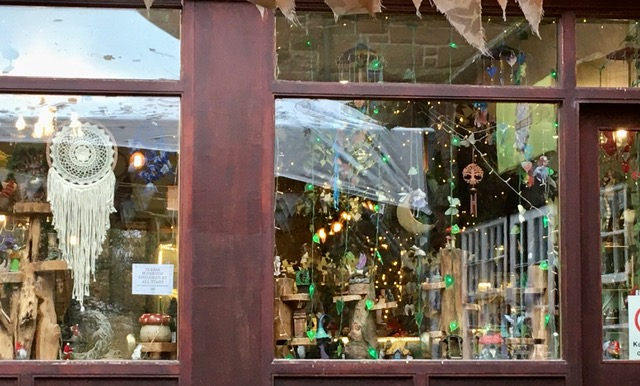
Another tradition is to drop in to Tir na NOg on the way home, which I call my ‘happy place’. I took some photos (above) but they don’t do it justice. I love the little shops here bursting with magical trinkets; candles, crystals, cute ornaments, gorgeous jewellery, cards and so on. The courtyard is always lit up which looks particularly nice in the darker, autumn months. Today it was looking quite festive, with colourful lights. The Soup Dragon cafe serves amazing food. We had too big a breakfast for lunch today, but I managed one of their very tasty brownies. As I was sitting in the courtyard I began to daydream about how great it would be to open a bookshop/cafe that captured the spirit of both The Book Nook, and Tir na NOg…. if anyone with any business sense wants to get in touch…

The best thing about the trip this weekend was we didn’t book it until the last minute and the spontaneity added to the fun.

Here’s to the next little trip….

Finding Beauty

Painting by Rory Farquhar Thomson

Today’s prompt: Take a notebook to a gallery or museum to write about something you see there

This afternoon after meeting a friend for lunch in my old hometown of Paisley, I took a wander round the Big Art Show which is a fantastic exhibition run by Outspoken Arts Scotland & Art Paisley Ltd. Hundreds of artists (both professional and amateur), submit their work to be exhibited within the Art Department in the Paisley Shopping Centre. It’s a great way to transform empty units within the centre into a creative hub of talent.

I didn’t have long to browse this afternoon before it shut, so I didn’t sit down with a notebook to write when I was there, but there were a couple of pieces that made me think fondly of the beauty that’s often forgotten in this town; a beauty I always tried to appreciate (and capture in photos) when I lived there.

The painting at the top of my post is titled Paisley Abbey in snowstorm by Rory Farquhar Thomson (This image of the painting is a screenshot from the online gallery of the Big Art Show which you can view here. It displays all of the stunning artwork that was on show in the exhibition.)

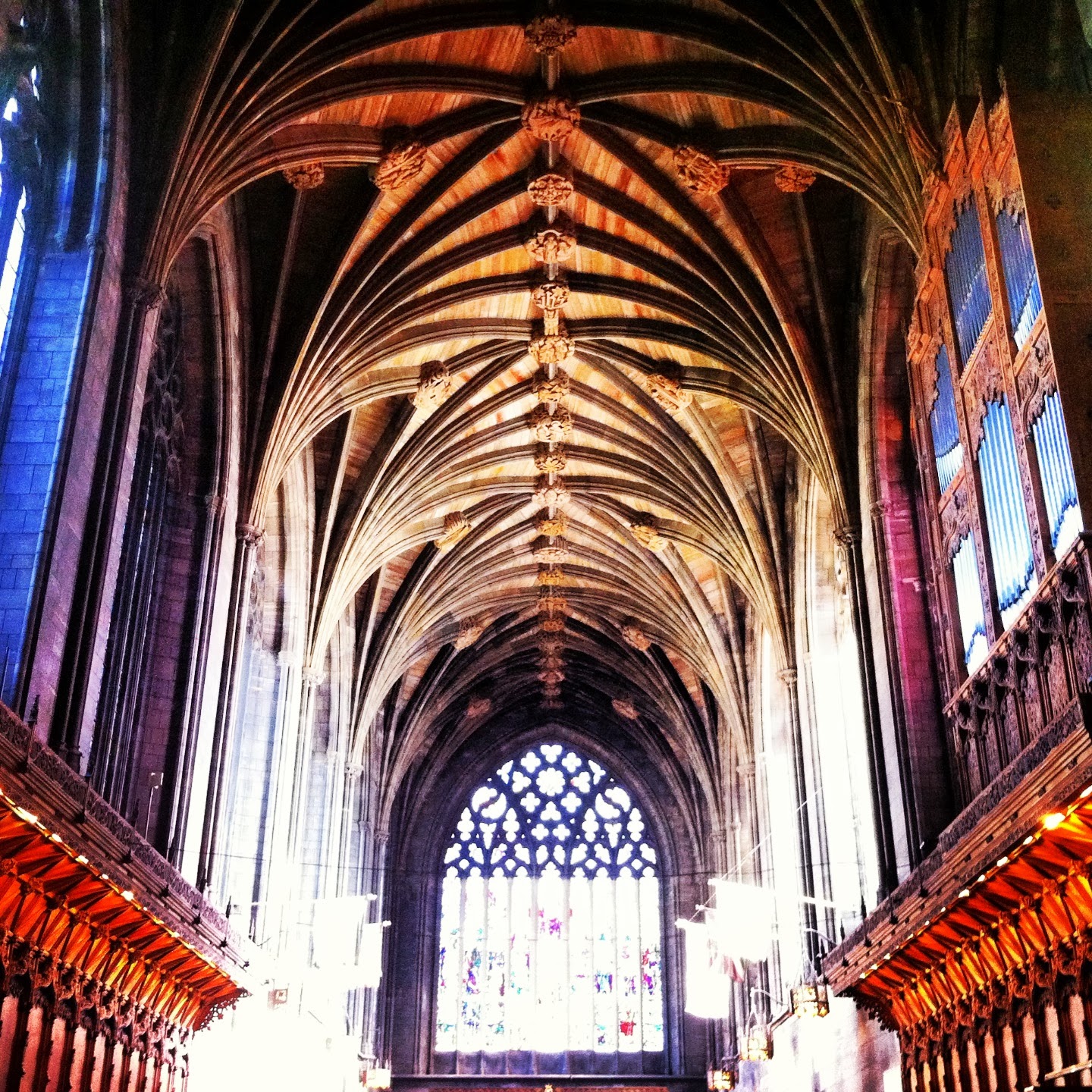
I love the atmosphere of this painting and the dream-like, ghostly quality that the artist has created with his brushstrokes. It makes the iconic building look as if it is shrouded in mystery. Back in 2013 when I was living in Paisley I wrote a post on my old blog where I had taken 10 photos and written about the places within the town. The photo below is one I took inside the Abbey. It’s such a beautiful building and I have great memories of attending the Abbey during a Medieval festival, a history of the Witches re-enactment, a friend’s graduation service, art fairs, as well as just having a wander around the beautiful building with friends and browsing the little gift shop.

The day after I got married I dropped off our legal paperwork at the Paisley registry office, and on my walk past the Abbey the sun was reflecting off the windows and I remember feeling this sense of a past part of my life smiling down on me as I walked into a new chapter.

My photo of Paisley Abbey

Another image below from the exhibition is by my artist and designer friend Rebecca Johnstone (a.k.a Dainty Dora. You can find some Paisley inspired prints at her online shop here ) Rebecca pairs her unique and eye-catching patterns with photographic imagery of iconic and familiar scenes around Paisley town centre. I love the vibrancy of the layers. This particular image won the ‘Love Local, Love Paisley’ prize at the exhibition, and it’s great to see the town coming alive through a different kind of lens.

Photographic Print – Rebecca Johnstone

I’ve been to some memorable events in the Town Hall over the years too, such as gigs and a beer festival (even although I don’t like beer that much – sampling many a variety confirmed this that day!). The Town Hall has just undergone a massive transformation and I’m hoping this might mean it will host some interesting future events

When I think back to the variety of unique events, tours, art classes, shows and buildings I have visited across Paisley it will always feel like a special place to me which inspires my creativity.

Dear Paris

Today’s prompt is to write about a city I love. So here’s my love letter to Paris.

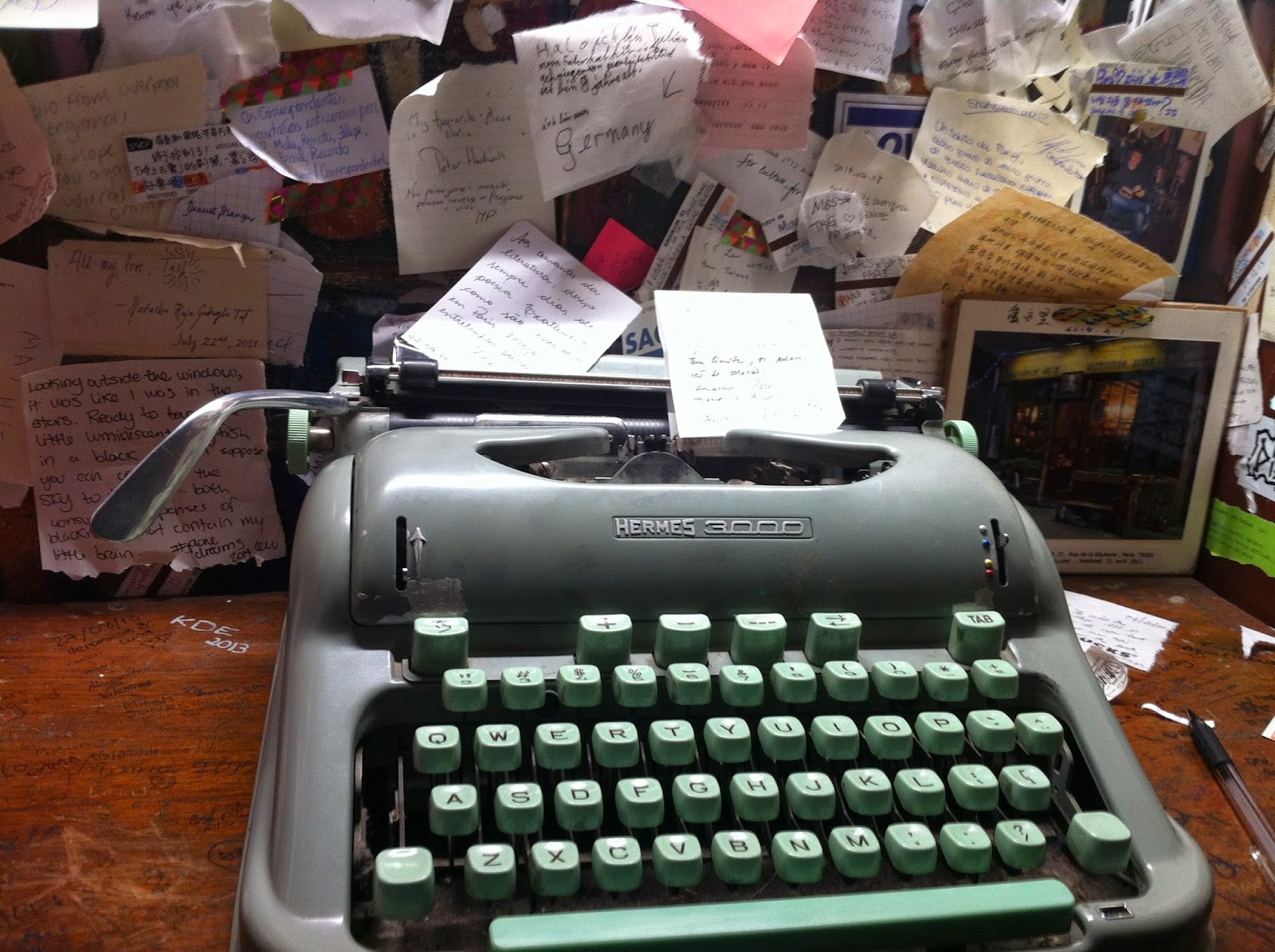
Dear Paris, I found you at a time when I craved adventure and was feeling brave enough to hop on a plane alone to go and find you. Wandering your streets I fell in love with your beauty and you made me feel at home, like we were old friends and you were reminding me of the magic in the world, telling me to stop and look and enjoy being in the moment. The lights at night dazzled; stars exploding inside the Eiffel Tower, carousels spinning gold against a darkening sky. Shakespeare and Co. captured my heart, a treasure trove of words and wonder, notes from travellers pinned up on the wall of a typewriter nook, hellos and dreams from all corners of the world. A Parisian melody played imperfectly, but beautifully, upstairs in the attic room where the piano was always occupied by amateur musicians, their music a soundtrack to the shelves packed with stories waiting to be read.

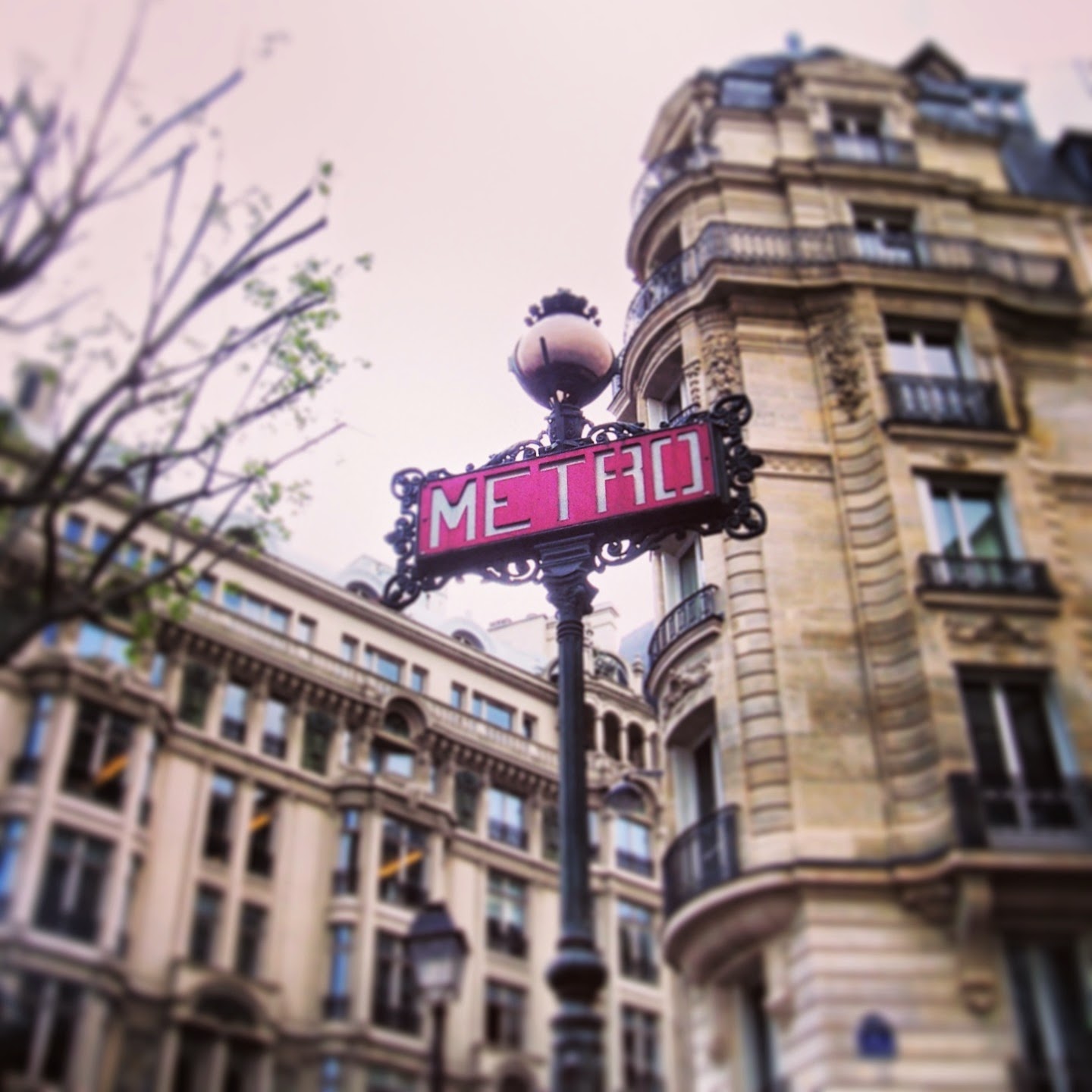
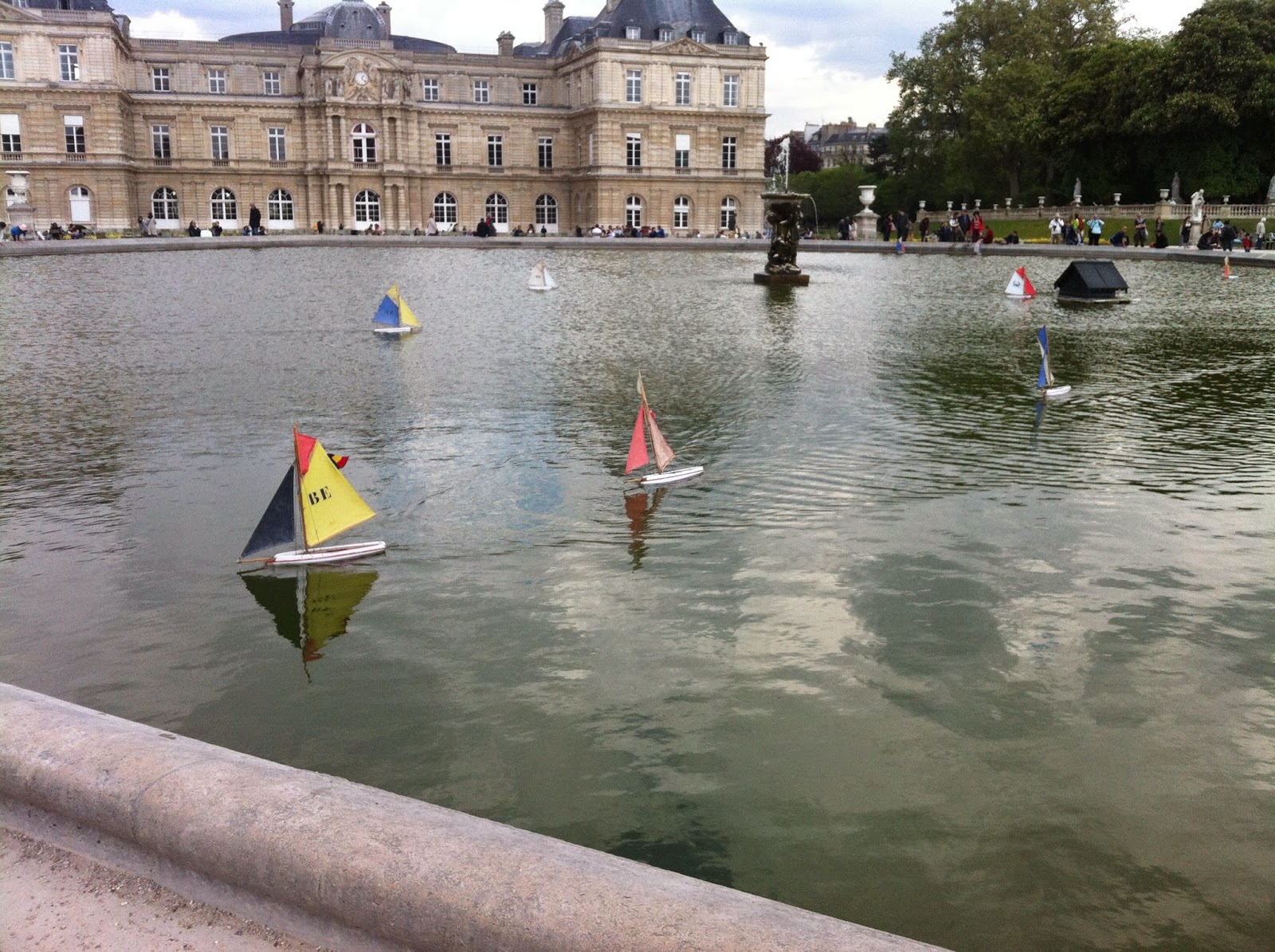
Your metro signs are more beautiful than some of the art work hanging in your galleries. Your buildings are breath taking masterpieces. Jardin de Luxembourg is as grand as it sounds and the children racing boats in the pond and the old men playing chess under the trees were some of my favourite observations during the time I spent wandering and just sitting, watching.

Along the Seine you showed me artists who were attempting to capture a part of you…like me, with my camera taking hundreds of photos which will never do you justice, as my real memories are tied up in feelings and sounds and the tiniest of details that can never be put into words or printed onto paper.

Finding Your Way

Artwork by V Gemmell

Recently I’ve hit a bit of a creative slump so for my birthday a couple of months ago I asked for a copy of ‘The Artist’s Way’ by Julia Cameron. I’d always wondered about this book and my curiosity was piqued further when a recent article (in the May issue of The Writing Magazine) featured an interview with Julia Cameron, and she spoke about her recommended practice of writing ‘Morning Pages’, where you write down a stream of consciousness on three A4 pages every day before you do anything else. This is just one practice and task Cameron recommends in order to kick-start your creativity, or in my case, try to get ‘unstuck’. In the opening, Cameron describes the book as a ‘toolkit’ for artists, and, ‘as they (readers) learn to take small risks in their Morning Pages, they are led to larger risks. A step at a time, they emerge as artists.’ The book is divided into ‘weeks’ like you are undertaking a course, with new themes and tasks introduced each time, but what stays consistent is the suggestion to complete your Morning Pages daily, and once a week set time aside for ‘An Artist Date.’ This isn’t a suggestion that you hang around gallery openings asking for artist’s phone numbers. This date is with yourself, where you set proper time aside to engage in something creative, or at least an activity you enjoy, alone (the alone part is very important).

I’d like to say after delving into the book about 5 weeks ago that I have shown impeccable discipline, but I’ve not. I am averaging about three morning pages a week, and often this is typed into my notes pages on my phone as I travel by train into work. I get up at 6.45am the mornings I’m travelling into work and I’m not a morning person so I was loathe to set my alarm 20 minutes early (as it tends take about 20 minutes to pen three pages). For me, that was going to set me up to fail at the start, and would defeat the purpose of making this something I would hopefully enjoy, and something that would energise me.

So now my morning pages often turn into late afternoon or evening pages, and it’s probably missing the point of ‘clearing my head for the day’, but it has thrown up some very interesting musings and I often use my pages to reflect on why I’ve been feeling blocked. I have to say I am failing on the regular artist dates too but I have slowly started to set more time aside to enjoy and explore all sides of my creativity (not just writing) which is really important to me as it does really help me switch off from the distractions of daily ‘noise’. My pen drawing at the top of this post was a result of one such ‘date’, and I also finally read through a book I bought from the GOMA years ago, called ‘Art From Elsewhere’, which features 70 works by International Artists, selected by curator David Elliot. I particularly liked the photos ‘Girls in Cars’ by the artist Shirin Aliabadi – you can read a short article about her and her photography here.

Sometimes I feel I waste too much time scrolling through social media (don’t we all), but then I remember the fascinating accounts, such as Humans of New York, that I follow, and how there is so much inspiration to be found in ‘the every-day’. This is something I know; finding inspiration everywhere is a big message I thread through a lot of creative workshops I have delivered, but I seem to have forgotten of late. Noticing small things in life was mentioned in one of the chapters of Cameron’s book and I do think there have been so many ‘big’ unsettling things happening in the World of late, it’s easy to let that noise dominate. And it’s easy to tell ourselves we have so many important day to day responsibilities to carry out (which, let’s face it, exhaust us,) that we don’t have time to be creative and frivolous.

Recently I remembered someone from my past connecting with me on facebook years ago when my debut novel came out, who said to me, ‘Oh I see you wrote a book. I plan to do that one day but right now I’m far too busy.’ I felt like replying with the response I’m sure many writers would like to respond with, ‘Newsflash. We are all too busy, but if you really want to do it, you will make the time.’ Guess who I’m actually writing that message to now? Though as many writers know, having time is just one aspect of what holds us back. For me, being productive is very much about getting into the right mindset.

One of my favourite tasks so far in the book has been to write a letter from me at eighty to myself (with the prompts – what would I tell myself? what dreams would I encourage?). At first I struggled with this but then I quite liked eighty year-old me; she got quite sassy as the letter went on. It got quite personal, but I wanted to share part of it, because it’s probably something all of us need to hear sometimes:

Eighty-year-old me told me those times when I look at other writers/artists, whatever, and think I can never be that good, they’re so much better than me, they’re out there being so successful her response was, They’re not better than you. They’re braver than you. And if I look up when I’m eighty and all I see on my wall is some god damn modesty medal you won in your forties I am going to be very mad and hide it in a box of regrets. I want to look up from my armchair and see a wall covered in awards and certificates or at least some kind of photographic evidence that you have continued to put yourself out there, and celebrated your creativity and talents.

I hovered over that word ‘talents’ and nearly deleted it. But I didn’t. So I guess I’m half-way on my way.