Interview with a Writer ~ Judith Vallely

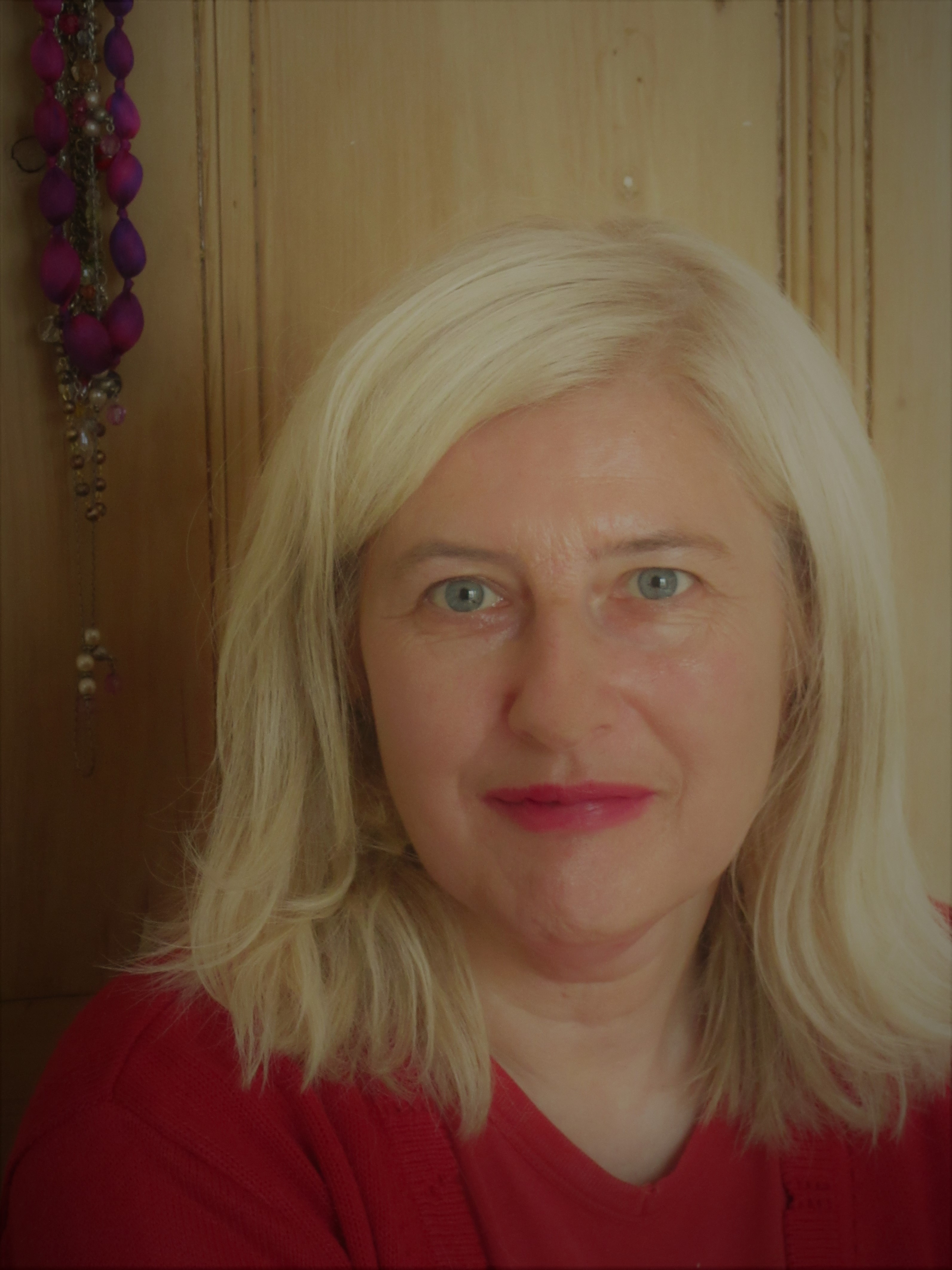
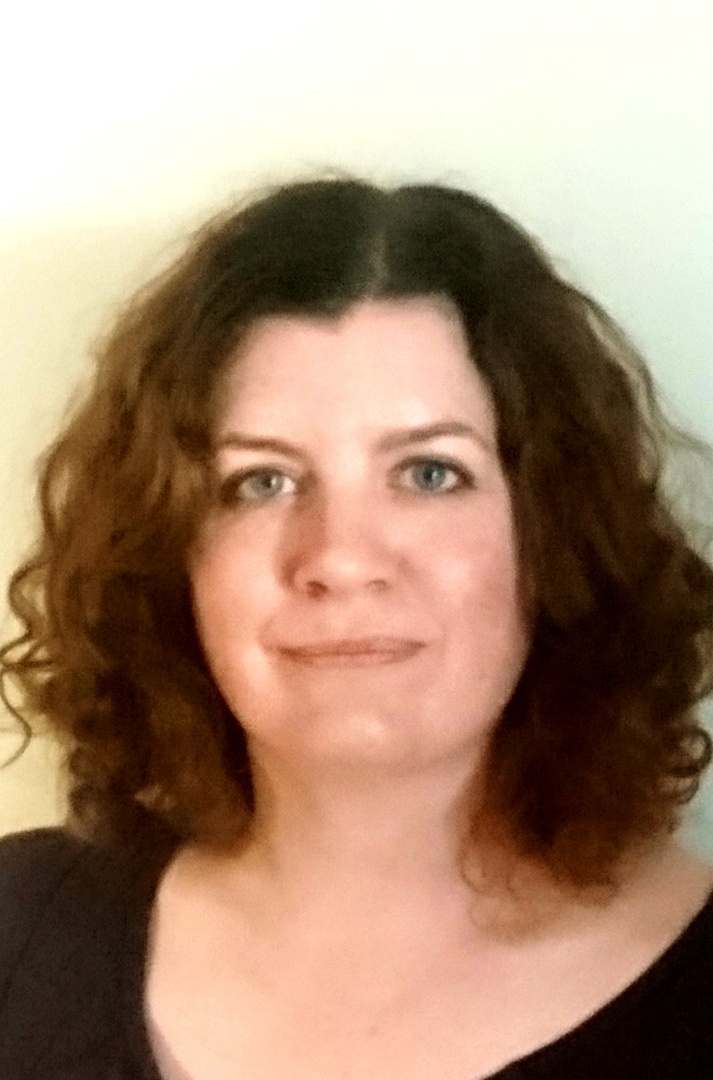
Happy New writing year! I’m delighted to kick off 2026 with an interview with writer and journalist, Judith Vallely. After featuring Judith’s writer mum, Myra Duffy, on my blog back in November (see here), it’s a pleasure to now find out more about Judith’s writing career.

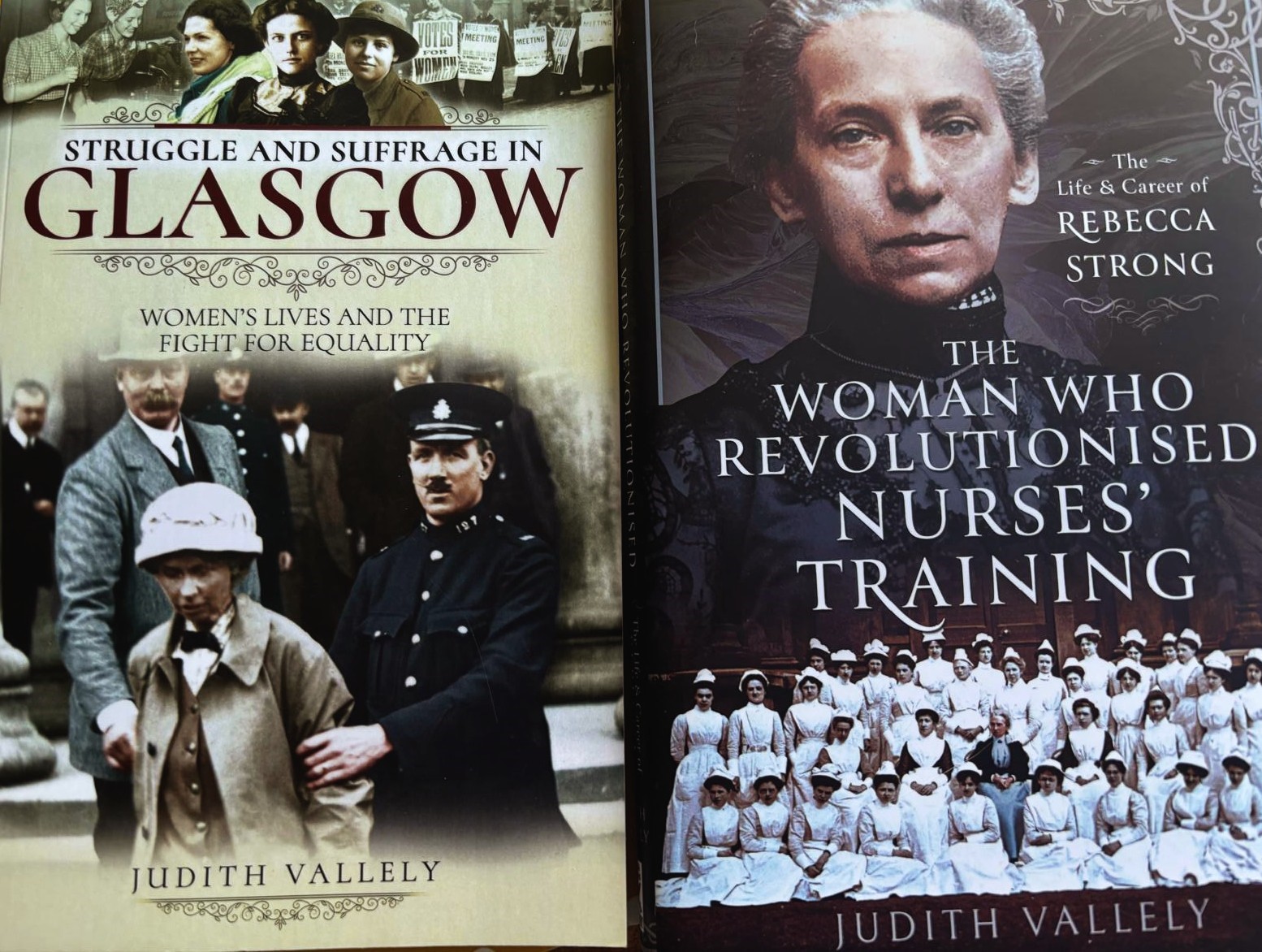
It was interesting to gain insights into Judith’s extensive journalism career, and find out more about how she has managed to balance a busy day job alongside researching and writing fascinating non-fiction books (see photos above of these books, and links below of where to buy).

I have a lot of admiration for writers who manage to multi-task, as it’s something I often struggle with; knowing how to give priority to everything I want to achieve. There’s some great tips here from Judith to keep us all motivated. If you’ve made some writing resolutions of your own this year, I wanted to extract one simple reminder from Judith: ‘If you are struggling to write, just start with a sentence…’ Read on to find out more…

Writer Biography

Judith Vallely is a writer and journalist who lives and works in Glasgow and has an MA in English and Scottish Literature from Edinburgh University, and a postgraduate diploma in newspaper journalism from Napier University, Edinburgh. 

She is the author of Struggle and Suffrage in Glasgow: Women’s Lives and the Fight for Equality and The Woman Who Revolutionised Nurses’ Training: The Life and Career of Rebecca Strong

When did you first start writing?

I’ve always loved reading and writing from a young age – scribbling down various stories. I’m told when I was around five years old I used to sneak out of bed late at night and be discovered looking at books.

What do you write?

I’ve had a 20 plus years career in journalism writing mainly news stories, but also features and travel writing. I’ve also had two non-fiction books published  and am working on improving my fiction writing skills, hopefully with a view to publication one day. 

What was your first published piece of work?

When I was 16 I did a week of work experience at the Evening Times and had a letter published about the dangers of ‘devil dogs’. It was the letter of the day, but I never did get the cash for it!

Why do you write?

Very good question! There’s various answers – I really enjoy discovering and telling stories about people and places. Sometimes I have an idea in my head which I want to get down. Sometimes it’s just because I have a deadline looming! Overall I find writing a really absorbing activity and love words — that thing known as flow, when you get totally immersed.

What, or who, has helped you on your writing journey?

Too many to mention! Journalism has been the biggest part of my writing career and I feel lucky to have started out at a time when it was normal for stories to go through an extensive editing process before being published. In the digital age, it now seems like a long ago luxury to have several editors looking at your work and (usually!) making it better.

And shout-out to my mum (myraduffywriter.com), who has always been very encouraging and a hard act to follow with her many published books! 

Share a writing low with us. What did you learn from this?

I think anyone who has written a book has experienced that moment of thinking it’s just complete rubbish and having the urge to chuck it in the bin forever. However I’ve realised it’s part of the process and that urge must usually be resisted. 

Share a writing high?

My very first story as a journalist was published on the now long defunct Ceefax service. It didn’t have a byline and was just four paragraphs long, as was the format, but it was amazing seeing what I had written out there in the big wide world.

Share some of your favourite lines from reviews, or comments you have received about your work, which boosted your confidence (tell us what piece of work it relates to)

Writing my second book on the life of Rebecca Strong was a real labour of love – I took on the project when I was working freelance but then moved into a very busy full-time job, so it required a lot of dedication (writing and editing by the pool while on holiday in Lanzarote) and the horror of pushing back deadlines (very difficult as a trained journalist) to see it to the end. By the time the book was published I could hardly bear to look at it.

So I was really pleased to get some lovely comments in reviews which made it worthwhile including one which said: “What a great read into the history of what was and how it was shaped into what we now have. Thank you for bringing this information to light, and highlighting the hard work that was put into what we now take for granted”.

Any tips for new writers? 

If you are struggling to write, just start with a sentence – it doesn’t matter how bad or good it is, get something down on the page and then take it from there. There’s nothing worse than a blank page staring at you.

And leave as much time as practical between writing and reviewing your writing – at least overnight. This isn’t always possible, especially in journalism, but I think it is hugely helpful to have fresh eyes on it – and that also should include other people where possible. 

And for all writers; any tips for keeping motivated? And how do you find time to write?

I think the answer ultimately is just to sit down and write – which is easier said than done. An external or self-imposed deadline (such as a competition entry) helps me enormously, as a result of years of journalism.  I am terrible for thinking I’ll write more when…My current ‘when’ is when I have a writing shed but having read Brian Bilston’s very funny ‘Diary of a Somebody’ I realise a/ I am not alone in this and b/ it won’t necessarily help my productivity. 

Do you have a regular writing routine, or do you write in frantic bursts? Where do you write? (A dedicated space, or on-the-go)

I would love to be a writer who gets up at 6am and spends a couple of hours crafting beautiful sentences before the day begins. In reality, I’m not a morning person and can barely string two words together without lots of coffee.  I write wherever and whenever the mood takes me, unless I am working on a book in which case I usually set dedicated time in a little work study at home. 

Any stand-out books you have read recently?

I recently read Elif Shafak’s The Island of Missing Trees for a book group and totally loved it. She writes the beautiful sentences which I aspire to. She probably begins early in the morning, I imagine. 

Where can we find out more about you, and your books?

You can buy Judith’s books here:

Publisher (Pen and Sword), website here

Amazon links: The Woman Who Revolutionised Nurses’ Training: The Life and Career of Rebecca Strong https://amzn.eu/d/h8zibOp

Struggle and Suffrage in Glasgow: Women’s Lives and the Fight for Equality https://amzn.eu/d/6sntOqf

You can find Judith on Twitter X @JudithVallely and Instagram @vallelyjudith

Interview with a Writer ~ Myra Duffy

After a short break from the blog last weekend, this week I’m delighted to welcome writer and friend Myra Duffy to my ‘Interview with a Writer’ feature. I’ve known Myra for many years, first meeting through a local writing group. I always enjoy catching up with Myra, (these days, usually at the annual Scottish Association of Writers’ conference), and we’ve had many chats about writing over the years, but I loved finding out new things from this interview. Winning a poodle as a prize for your first writing success, is a story in itself…

From the photograph of the stack of books you will see how much work Myra has penned over the years. Quite an achievement, and from the abundance of ideas referenced in the interview, it sounds like there will be many more books to come. As mentioned below, Myra is probably best known for her cosy crime series, set on the Isle of Bute, which is a great setting for a mystery series. If you love Richard Osman, then instead of buying his new book for Christmas (he’s famous enough!), give Myra’s series a go.

Myra has built up quite a fan club over on the Island and as well as finding her books via the link at the bottom of the post, if you are ever over on Bute be sure to pop into the local Bookshop Print Point where you will be able to pick up copies of Myra’s books. And if you happen to visit during the Bute Noir Crime Writing Festival, look out for her Isle of Bute Book Mystery bus tour!

Author Biography

Myra Duffy writes a variety of fiction and non-fiction but is best known for her cosy crime series set on the Isle of Bute, a small island just off the West Coast of Scotland. There are twelve novels and four novellas in the series featuring Alison Cameron, “an ordinary woman who finds herself involved in extraordinary events.” Myra says, ‘The island has a fascinating history, and this provides the inspiration for much of the action in my novels.’ Myra divides her time between Glasgow and Bute where she has long-standing family connections. She is a member of the Society of Authors and of the Crime Writers’ Association.

When did you first start writing?

I was 9 years old when I wrote my first novel ‘The Twins’. I was heavily influenced by Enid Blyton whose books I read avidly, as so many children did. I still have a copy but at 960 words I don’t think it was ever going to make the best seller list!

What do you write?

I’m probably best known for my contemporary Isle of Bute mystery series featuring Alison Cameron, but I like trying different genres. I’ve written a romance, ‘Love is Another Country’ set in a riding stables in Dumbarton, Scotland, and a contemporary novel, ‘The Lunch Club’ set in Glasgow. I’ve also written a children’s novel, ‘The Mystery of the Queen of the Inch’ set on Bute.

Last year the first in a new series was published, ‘The Lost of Paradise’ – a crime story set in Glasgow.

And at the end of 2024 I had a launch in the Bute Museum for the first in my new Bute series ‘The Ascog Inheritance’ – this time set on the island in the Victorian era. I really enjoyed doing the research for this one.

My problem is I have so many ideas: at the moment I’m concentrating on finishing the second in the Isle of Bute Victorian series as well as the sequel to ‘The Lost of Paradise’, but I have a number of other manuscripts in various stages of completion, including a Science Fiction novel and a Western!

What was your first published piece of work?

When I was 13 I won a competition organised by The Sunday Mail. The prize for this wasn’t what you’d expect – it was a dog, a poodle to be exact. Something that would most certainly not be allowed nowadays.

Why do you write?

I’d love to say I have some high-flown reasons for writing but the truth is that I write to stop the characters pestering me!

What, or who, has helped you on your writing journey?

So many people have helped me over the years. I’ve always found writers are such a supportive group. I was a member of Erskine Writers where winning in some of the competitions was a terrific boost to keep going when I had doubts. I’ve had brilliant Beta readers (I can be rather slapdash in my haste to finish the story). And I must make mention of two special writer friends: Joan Fleming (now sadly deceased) and Rosemary Gemmell (www.rosemarygemmell.co.uk) whose help has been invaluable.

Share a writing low with us. What did you learn from this?

My writing low was recent – I’ve moved house and anyone who has done that knows how stressful it can be. Especially when (as I had) you’d lived in the house for a very long time (44 years) and you have masses of stuff to dispose of. I’m only now coming back into being able to concentrate on writing.

The lesson I’ve learned is to adopt a minimalist lifestyle – except for books. They don’t count!

Share a writing high?

I don’t think anything will equal the feeling when my first novel The House at Ettrick Bay was so successful. Fortunately it continues to sell well.

Share some of your favourite lines from reviews, or comments you have received about your work, which boosted your confidence (tell us what piece of work it relates to)

I’ve been lucky to have had a number of reviews online by readers who know Bute well, commenting on the authenticity of the island setting.

The first review I had in the (sadly now longer in production) Buteman newspaper was of ‘The House at Ettrick Bay’ saying my main character was ‘someone you felt you could have a cup of tea with’ which was exactly the voice I was aiming for.

Any tips for new writers?

There’s no option but to write and to keep writing. My first couple of novels are in a drawer somewhere. They will never be published but they were good for practising the craft of writing. Above all, I’d advise any aspiring writer to join a writing group either in person or online.

I benefitted greatly from my time at Erskine Writers and am now a member of Bearsden Writers. I’m learning all the time.

And for all writers; any tips for keeping motivated? And how do you find time to write?

Don’t dwell on past mistakes! And let your piece of writing go. Most writers have a tendency to revise and revise and revise. Yes, make it as good as you can but at some point you have to send it out into the world.

It’s more about making the time to write. There’s a saying that a writer has the cleanest house in the street – it’s so easy to be distracted. I try to keep to the 1000 words a day routine but even if you only manage 100 it soon adds up.

Do you have a regular writing routine, or do you write in frantic bursts?

A bit of both – I try to have a routine but from time to time that fails and I’m left writing frantically to meet a deadline.

Where do you write? (A dedicated space, or on-the-go)

I do have a tiny study in my new home but I prefer variety – a different room or (especially when I’m on Bute) the local library.

Any stand-out books you have read recently?

Marble Hall Murders by Anthony Horowitz is one. He’s a brilliant writer and this third in the series has plenty of puzzles and red herrings to keep the reader involved.

The other stand out one for me is Yellowface by Rebecca F Kuang – a delicious take on the world of writing and publishing. It’s not a new idea but the blend of humour and intrigue kept me hooked.

Where can we find out more about you, and your books?

Click this link to buy Myra’s books

See Myra’s website here (myraduffywriter.com)

Find Myra on Facebook @myraduffywriter and occasionally on Instagram @myra.duffy.92

Interview with a Writer ~ Catarina Lilliehöök

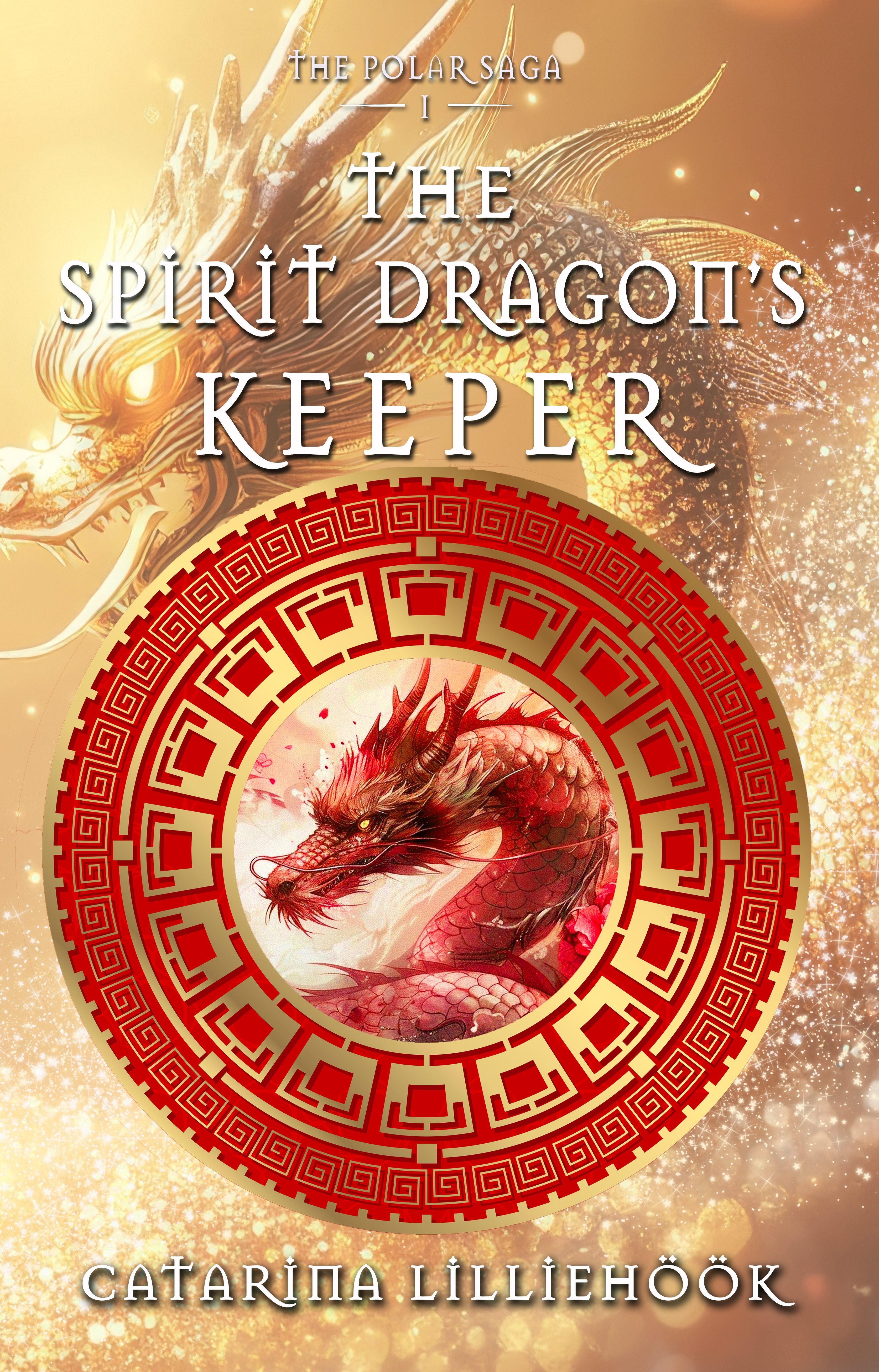
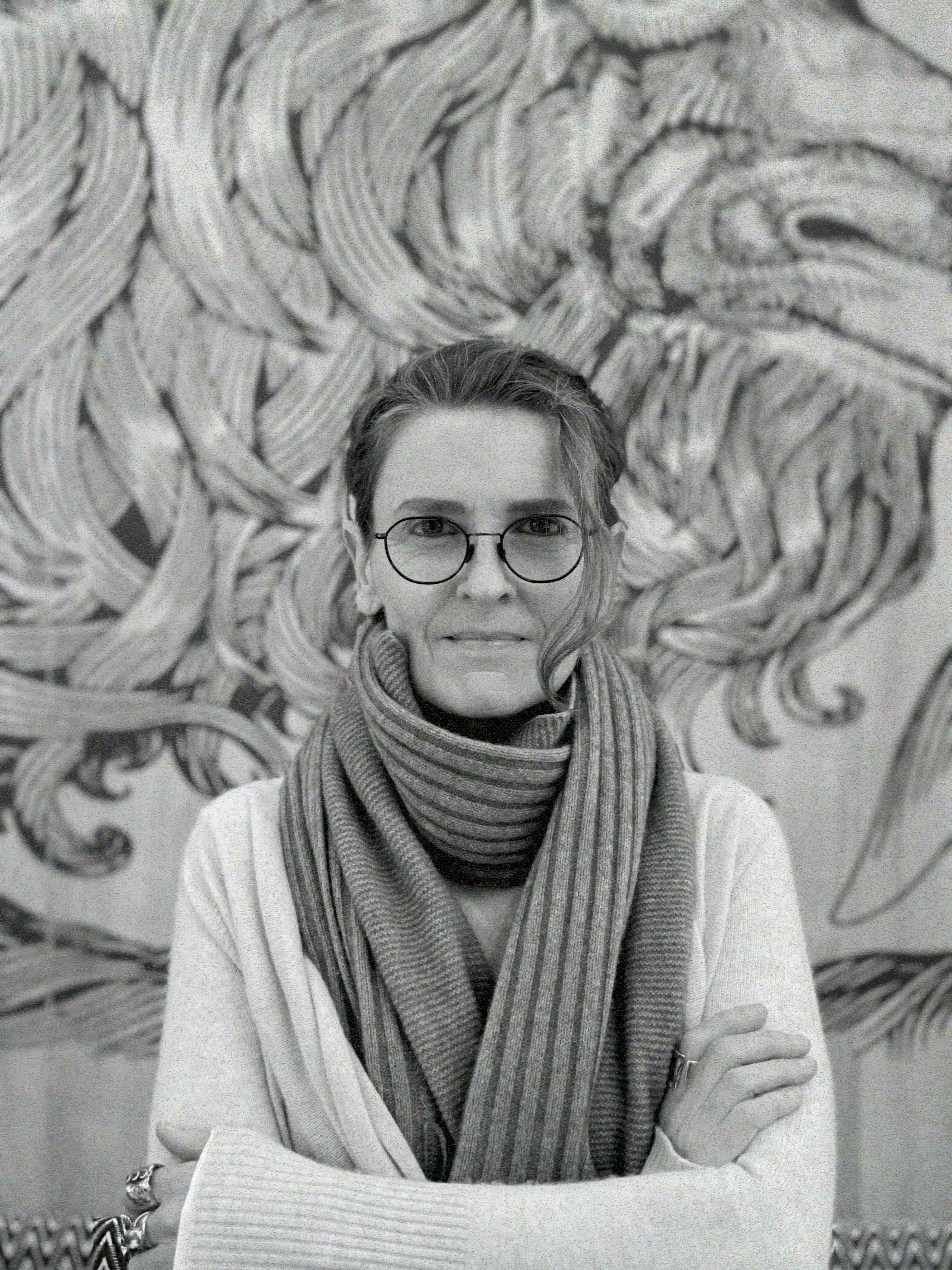
This week I’m delighted to welcome Swedish writer Catarina Lilliehöök to my blog feature. I connected with Cat through a Facebook ‘Write Magic’ group, where writers support one another and seek advice on our publishing journeys. I’m halfway through Catarina’s spellbinding fantasy adventure The Spirit Dragon’s Keeper (Book 1 of the Polar Saga series), which combines Sami folklore and Eastern philosophy and mythology. Catarina’s biography below will give you a flavour of her beautiful writing style!

Author Biography

Catarina Lilliehöök was born in Stockholm Sweden. A former journalist and the author of two books on China, she spent over twenty years wandering ancient cities, tracing dragon lore through winding alleyways and temple shadows. Fluent in Mandarin and steeped in the cultural myths of the Far East, Catarina weaves real-world knowledge into fantasy worlds that feel lived-in and vast.

She always had a pull toward the Sámi lands (Indigenous People of the Arctic)—where the wind speaks in riddles and reindeer cross frozen lakes under star-swept skies. Now settled in Switzerland, beneath towering alpine peaks and forests thick with legend, she writes at the edge of reality. Her stories are gateways—to places where rivers remain unnamed, where memory and magic blur, and where dragons still rule the sky.

When did you first start writing?

Omg—ages ago! Too long ago to even remember, lol!

What do you write?

Epic fantasy.

What was your first published piece of work?

I was a freelance writer for many years, but that was papers and magazines. My first book was about China and cultural differences. It’s in Chinese and was published in China. Then it got translated to Japanese.

Why do you write?

You mean there’s an option? 🙂

What, or who, has helped you on your writing journey?

My teachers! I have been studying for years with several mentors from the US. Courses, workshops and writer’s retreats have all been great and super helpful. I strongly believe in investing time and money in your writing journey.

Share a writing low with us. What did you learn from this?

Sometimes a teacher can be pretty brutal. I had one in particular who was very harsh in her feedback. Once I got a manuscript back from her and completely broke down in tears, flopped over my desk and cried (yes!) I felt so useless. This wallowing misery lasted for about two weeks. Then I picked myself up and began again. I have learnt from this (and several similar episodes) that it’s usually good to put aside your hurt and pride and do what the teachers suggest. Perhaps not always, but… very often… they are right…!

Share a writing high?

Every time I am in any of my fantasy worlds—woohoo! I LOVE hiding in there, especially when all the heavy lifting is done and all I have left is fine tuning. That last bit of tweaking… I could go on forever. DO NOT DISTURB 🙂

Share some of your favourite lines from reviews, or comments you have received about your work, which boosted your confidence (tell us what piece of work it relates to)

Here are a few of my favourite feedbacks on the first instalment The Spirit Dragon’s Keeper in my current fantasy series, The Polar Saga:

Great to get the China validation:

  • Having lived in Asia for 26 years, I was especially enchanted by the vivid portrayal of ancient China and its timeless traditions. The writing was so immersive, I could almost taste the vegetarian baozi!

Love the specifically singled out stuff…

  • Favorite Quote: “But in a name rests power.”

Who doesn’t love to hear this in a series?

  • I genuinely can’t wait for the next instalment – please, please tell me its coming soon!

Any tips for new writers?

Get a teacher. Do a course. Sign up for a workshop. Do all of the above.

And for all writers; any tips for keeping motivated? And how do you find time to write?

I never have a problem with motivation or focus. I think mainly because I just “write whatever comes.” I don’t stop to think or analyze as I don’t want my brain to get involved. Then it would probably instantly stall most of my ideas. I love to change it all around later, and in any case, I find it much easier to scrap than to add on.

Do you have a regular writing routine, or do you write in frantic bursts?

I usually write five days a week depending on what I am doing (which phase). But I always take time for workouts and cooking healthy food (I’m vegan. If I want anything healthy and yummy I have to cook myself). Non negotiable. I love to work out and I love to eat.

Where do you write? (A dedicated space, or on-the-go)

Always by my desk. This is very important: good chair, good computer, good light, preferably some sort of nature view (I have moved a lot so not always possible). Peace and quiet.

Any stand-out books you have read recently?

Right now I’m  reading A Discovery of Witches by Deborah Harkness & absolutely love it! It currently runs as a series on Netflix. I’ve watched it three times.

Where can we find out more about you, and your books?

Author Website: www.lilliehookbooks.com

You can buy The Spirit Dragon’s Keeper directly from Bookhub here

Social Media (Instagram, Facebook, Tik Tok) @ catarinalilliehook

Interview with a Writer ~ Rosemary Gemmell

This week I’m delighted to welcome my writer Mum, Rosemary Gemmell, technically back to my blog, as Rosemary featured in one of my first ever author interviews, as part of a blog challenge series I did a couple of years ago in November. For this reason I let her choose between mine and my husband’s questions (from last week), to mix it up a bit this time around.

My Mum has been a massive inspiration; penning a range of wonderful books, stories, poetry and articles (as well as academic essays).

It’s thanks to my Mum I felt encouraged from a very young age to develop my writing, and then have the confidence to share it with the world (I don’t think many people are lucky enough to have that type of support from a parent). We often discuss ideas, and what we’re working on. I always trust my Mum to give me insightful and honest feedback, and am very grateful for her technical wizardry and excellent editing!

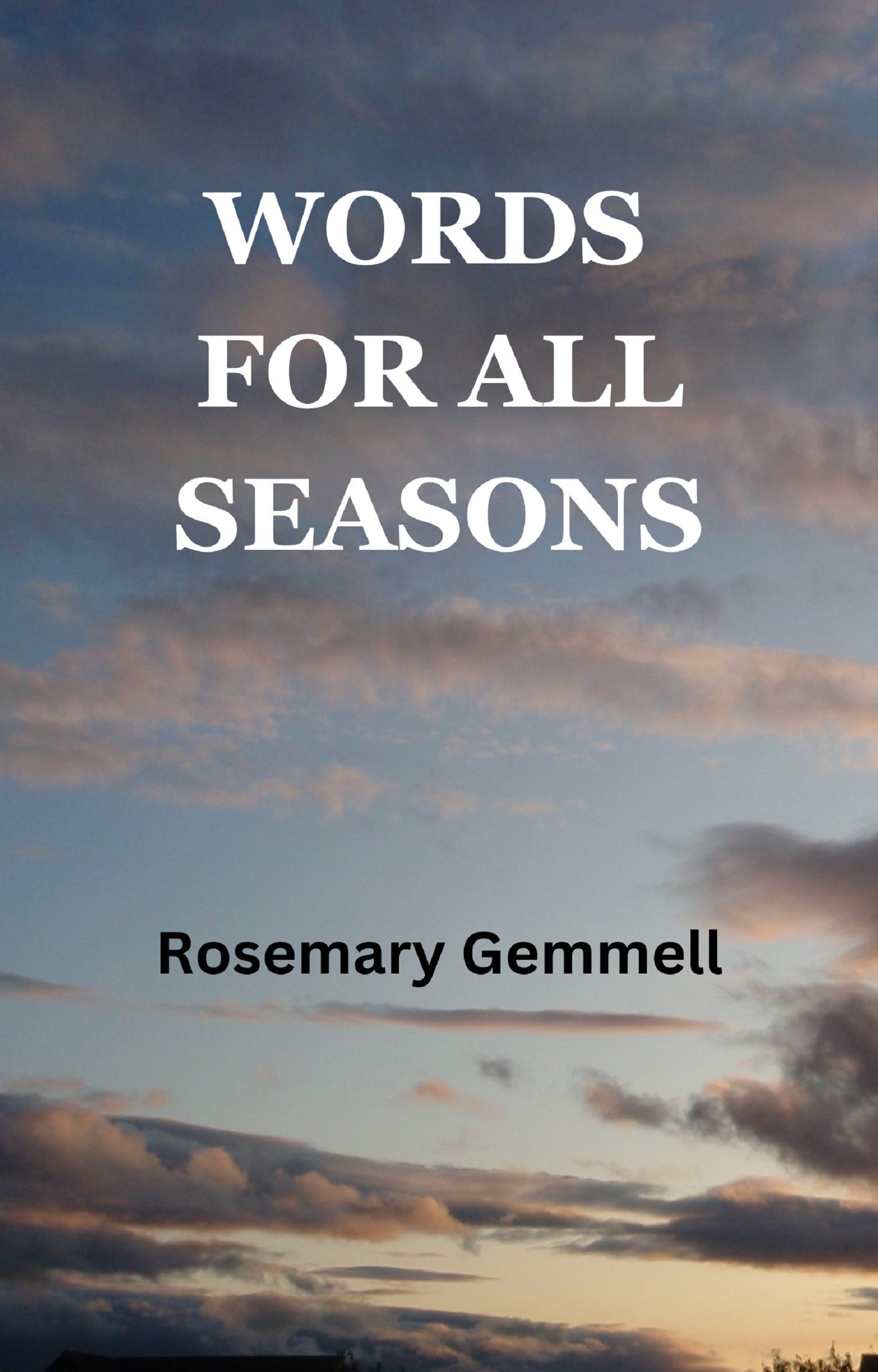
Read on to find out more about a lovely collection of Rosemary’s work titled Words for All Seasons, which would make a perfect Christmas gift!

Author Biography

Rosemary Gemmell is a Scottish novelist and freelance writer based in central Scotland. Rosemary writes contemporary and historical fiction, with occasional short stories, (many of which have won prizes), children’s fiction, articles and poems. Her short stories, articles and poems have been published in UK magazines, the US, and online.

When did you first start writing?

I first wrote creatively at high school when I went through a teenage, romantic phase and adored poetry and literature in general, so I started writing my own poetry. It was many years later before I moved on to articles, then fiction.

What do you write?

I write a little of everything: novels, short stories, articles, poetry, children’s fiction, and even a little bit of drama years ago. I’ve had lots of work published over the years and last year, I decided to put together a celebratory collection of new and previously published stories, articles and poetry along with some of my photographs to illustrate certain pieces. It was partly to highlight the different types of creative writing I enjoy and the book is divided into the four seasons – see below for a review.

Why do you write?

I write to entertain and communicate but also for self-expression and to make sense of the world, especially in non-fiction and poetry.

Share some of your favourite lines from reviews, or comments you have received about your work, which boosted your confidence (tell us what piece of work it relates to)

I’ve been lucky and honoured to have many wonderful reviews for my different books and appreciate each one as they encouraged me to keep writing. However, I don’t even mind a less praiseworthy review as long as I can learn from it.

As a change from my novels, this is a lovely review for my most recent collection, Words for all Seasons, that was published last year (in e-book, paperback and hardback):

What a treat it has been to read Words for All Seasons by Rosemary Gemmell. Her recently published collection of short stories, articles and poems is ideal for dipping into when you have a few moments to spare. The variety ensures there is something to please everyone. Conveniently divided into the four seasons, this is a book you will want to visit – and revisit – no matter what the season.

Any tips for new writers?

Keep reading, as that’s how we best learn what works and what doesn’t, and what type of writer we aspire to be.  And don’t give up at the first few hurdles – we all have to learn as we go, as in any other creative pursuit.

Do you have a regular writing routine, or do you write in frantic bursts?

Neither of the above! I’ve never really had a proper writing routine, much as I’ve often tried. I’m usually more creative in the morning but tend to write when I feel like it, or in short timespans. Sometimes, the less time I have, the better I write – perhaps because I get bored sitting too long at one task.

Where do you write? (A dedicated space, or on-the-go)

My absolute favourite way to write is in cafés or on trains with pen and paper. I’m never distracted by what’s going on around me and can happily sit in my own little bubble of creativity. Beats sitting at home on the computer, though I do have a study where I then type up what I’ve written.

Where do you get your inspiration for your books?

Inspiration for my novels often begins with characters and setting. I’m not so interested in plotting (a weakness) as characters are most important to me as a reader and writer. Once I have an initial idea, I just write and let the characters play as the story develops. I usually have a vague idea of what the story will be about and where it will be set but I like to be surprised by where each book takes me.

What do you think about the concept of AI written books?

We won’t be able to turn the clock back on AI but I hope we never get to the stage of accepting it as a way to write books, especially fiction, although I know it’s already being used. Fortunately, AI is unlikely to ever express our unique human emotions in the same way we can (I hope).

What do you do to get into a ‘creative headspace’?

If writing in my study at home, I love music playing in the background, usually classical, easy listening, or Celtic – sometimes according to what I’m writing.

Where can we find out more about you, and your books?

My website is the best option for a complete overview of all my published books:

https://www.rosemarygemmell.co.uk

Buy Words for All Seasons here

Twitter X @rosemarygemmell (I sometimes take part in #haikusaturday)

And Instagram @rosemarygemmell

Interview a Writer ~ Victoria Gemmell *yes, me


This week I’m doing something a bit different on the blog to fill a gap for a planned post (which will be coming soon…). I thought about just having a week off, but then decided to ask my husband to fire some questions at me last night, with the resulting interview posted below.

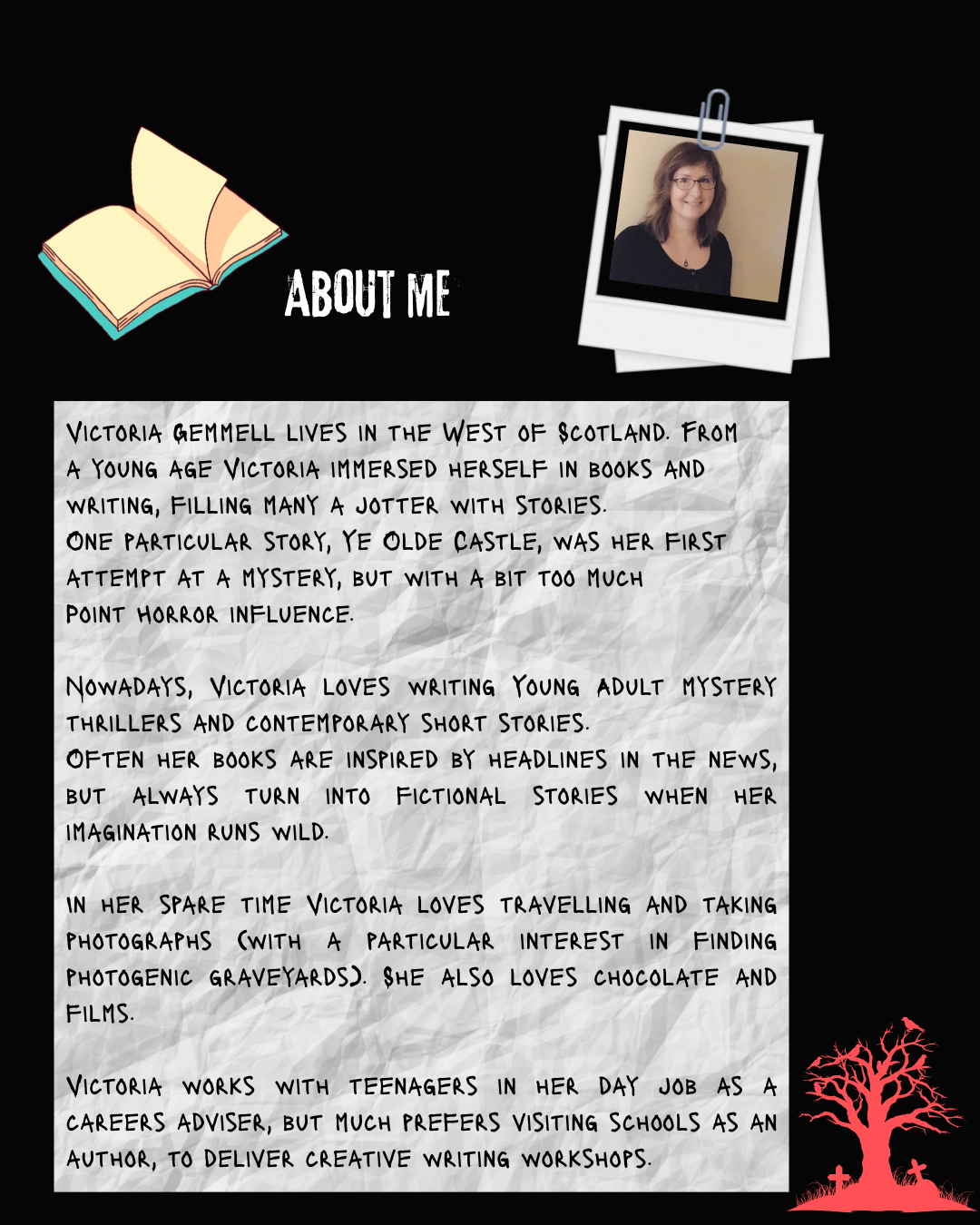
Author Biog (taken from my About Me page) :

Where do you get your inspiration for your books?

Headlines and articles in the news acted as a catalyst for the plots within all three of my YA Mystery/Thrillers. I imagined what would happen if fictional teenagers were placed at the centre of dark situations, (unexplained teen suicides in Follow Me; possible miscarriage of justice in a media obsessed teen murder case in Promise Me; the unveiling of an elite group who kidnap young people from the care system to extract their pure plasma to stay young in Young Blood) My teen protagonists start to uncover hidden truths that adults have been oblivious about, endangering themselves in the process. It’s not until my characters start to form, that the full story will start to unfold.

What do you do to get into a ‘creative headspace’?

Once a book starts to take shape I like to create a playlist for it on Spotify, choosing music which fits the ‘mood’ of the story. To this day there’s one particular Silversun Pickups album that I just need to hit play on and it takes me right back to the emotions I felt when I started to write Follow Me. Finding the right tone and ‘voice’ for a book can be challenging, and music helps me switch off the over-thinking part of my brain. When I’m thinking too much about a story I know it’s not working yet. You need to feel it.

What new book are you working on?

I’m attempting to write a middle-grade magic realism type story. I also have an idea for an adult thriller which might start to take over, so who knows which one I’ll finish first. At this rate it’ll be neither.

What do you think about the concept of AI written books?

Honestly I find it infuriating and worrying. About three years ago we started to talk about AI in work (in my day job as a careers adviser) and the impact it might start to have on certain careers. The topic was brought up on a regional staff day online and a colleague in another region flippantly said, ‘My friend has just written a children’s book with AI and is now selling it on Amazon’. I had to hold myself back as he was actually boasting about it; like it was an amazing achievement. There’s a lot of people out there who I think love the idea of writing a book, and saying they have done so, and love the idea of making money from it (ha, they’ll soon learn). The magic of writing for me is when your brain unlocks almost a super-power you don’t understand yourself; when characters form, ideas and words flow, and it all somehow connects together into a story. Often stories fall flat and don’t work out, and that’s important too. Trying, shaping and learning, and re-writing, and tapping in to your imagination. We’re already being brain-washed by algorithms and dopamine rewards online, which is disrupting our attention spans and the ability to feel ok being bored or at peace…and that’s when we do our best daydreaming and tap into our imagination. (I don’t think it’s a coincidence that I do some of my best thinking these days in the shower or bath!). I don’t want AI to steal our imaginations. It kind of feels like something from the plot of the Never Ending Story when Fantasia is threatened by ‘The Nothing’.

What do you find difficult subjects to tackle?

I shy away from writing anything which involves high-concept epic world-building (think space sci-fi series where characters have unpronounceable names.) I get bored reading this kind of thing, so I know I’d get bored writing it too, and I’d be really bad at it.

What do you enjoy writing about?

I love writing mysteries where I often don’t really know what has happened so I enjoy seeing the plot unfold as my characters develop. That’s the best kind of writing, where you feel like you’re the reader and the plot master rolled into one, and it’s amazing how much you can trust your subconscious to fill in blanks you haven’t even seen. (It’s often why I need to go back to re-write my endings as my characters take over and take me by surprise).

Where can we find your books? (click on highlighted links)

Young Blood: Amazon (paperback and kindle) on worldwide Digital platforms Order into: Waterstones Foyles

Promise Me: Amazon (paperback and kindle) on worldwide Digital platforms Order into: Waterstones Foyles

Follow Me – please contact me direct for a signed copy

Interview with a Writer ~ Fiona Lindsay

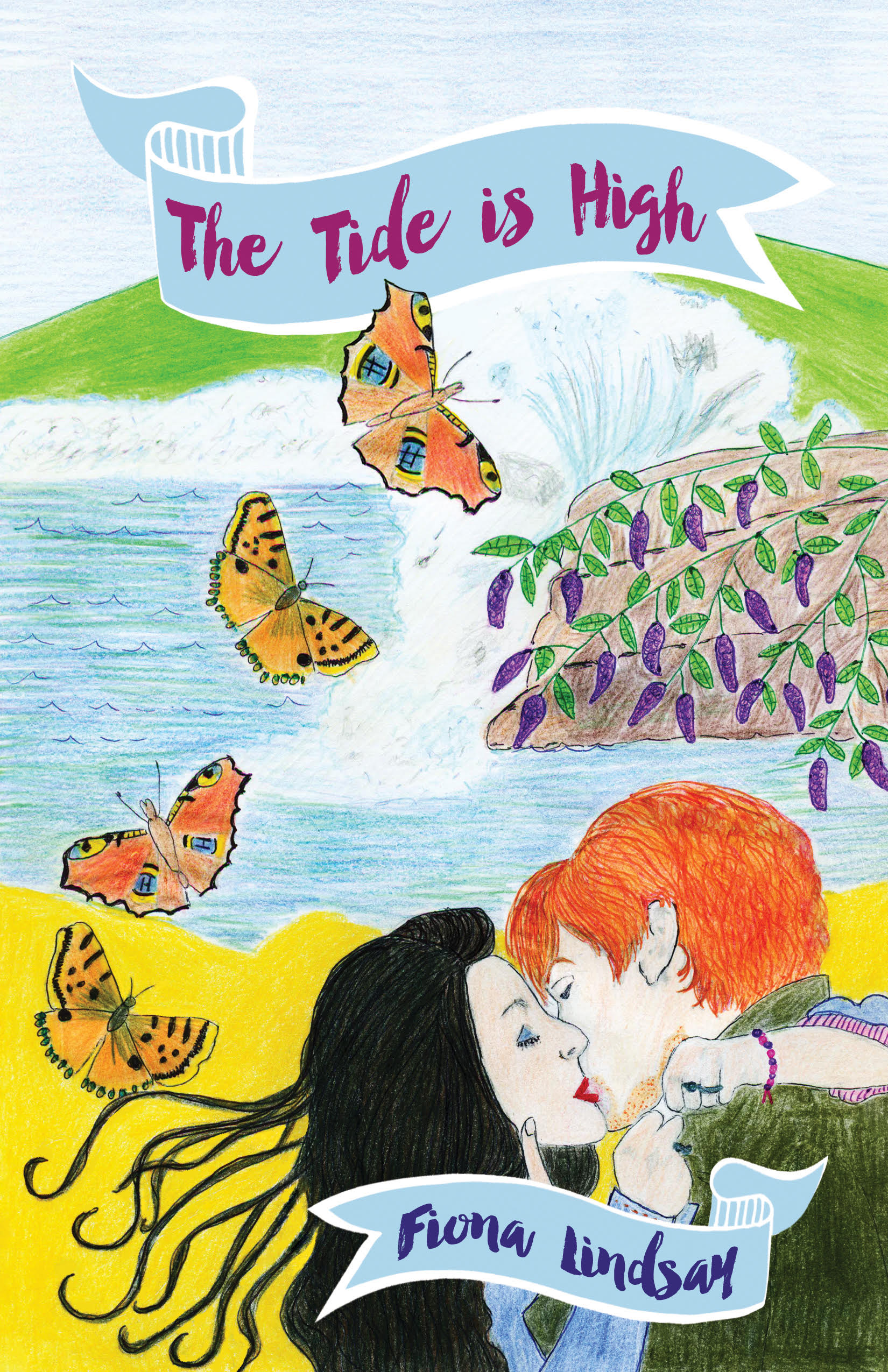
This week I’m delighted to welcome writer Fiona Lindsay to my blog. I think I first met Fiona when she came along to the book launch for my debut, (when Fiona was part of the Romantic Novelists’ Association at the same time as my Mum). That’s the nice part of being a writer and creative – when you become part of a ‘community’ of people who know one another. Case in point, Fiona collaborates with my friend, Rebecca aka Dainty Dora, for her lovely book covers (see above), for her Kirklochy series, and I also collaborate with Rebecca for some of my book covers.

Fiona’s feel-good Kirklochy series is set in a fictional village in Scotland, with an interlinking cast of lovable characters, with each book threaded with emotion, uplifting romance and humour. Read on to find out more about Fiona and her writing life. Links to buy Fiona’s books are at the bottom of the post.

Author biography

Fiona Lindsay grew up in a house full of books, has always loved reading and studied English literature at university, during which time she decided to start writing stories herself. As well as being a writer and seasoned performer, Fiona is an artist and collaborates on the design of her book covers. Fiona has also  published books for other writers.

When did you first start writing?

While at university. I loved books and had enjoyed some so much that I felt inspired to begin writing stories of my own.

What do you write?

I’ve written a series of four romantic comedies and a couple of plays, but I also write shorter stories and observational pieces.

What was your first published piece of work?

A short story called Nothing Special, in an anthology put together by Johnstone Writers’ Group.

Why do you write?

For self-expression, enjoyment and the communication of ideas. I hope to let readers into the world and the characters I’ve created and be entertained by them. Life is random and writing helps to give it some kind of shape.

What, or who, has helped you on your writing journey?

I’ve had a great deal of support and constructive feedback from Caro Ramsay and the other members of Johnstone writers’ group, and also via writing retreats led by authors Alison May and Janet Gover, but many other people have helped me over the years with insightful comments. Local writer, Tracy Patrick, skilfully edited my second novel, while other friends have done sterling work as beta readers. I’m also a member of the Romantic Novelists’ Association’s New Writers’ Scheme and have benefited from it’s critiques.

Also, the “instant feedback” received while performing is very heartening, as you can see at once if a piece of writing has landed. I appreciate the support of local writers Kathryn Metcalf and Gwen McKerrell for encouraging me to get involved.

Share a writing low with us. What did you learn from this?

I met with an agent who said that she loved my work, and would genuinely love to see more of it. I sent the book off to her, and never heard from her again (I understand that this happens to people often). But maybe it can be seen in a positive light also – that a big London agent rated me as a writer, although she didn’t follow through in the end. I learned to be resilient and I published the book – A New Flame – myself despite the disappointment.  

Share a writing high?

I wrote a short comedy play which was a spin-off from one of my novels, and it was selected by a group called Script to Stage to be performed by actors. It was great fun to see my characters brought to life, and also went down well with the audience. Otherwise, whenever someone tells me they, or someone they know, have enjoyed one of my books.

Share some of your favourite lines from reviews, or comments you have received about your work, which boosted your confidence (tell us what piece of work it relates to):

A New Flame:

I thoroughly enjoyed reading this delightful tale of many, very likeable characters. I particularly liked the aspects that highlighted the fact that not all break-ups of relationships are completely clear-cut. The happiest people are those who work through problems of unresolved issues before moving on properly takes place. Love comes in many forms and there are a number of types of love in this lovely read.

The Tide is High:

This is another wonderful story in the Kirklochy series. There are new, young, characters as well as a few familiar ones. Topics of love and grief are sensitively handled as is the transition from teenager to young adult. I read it in 24 hours as I couldn’t put it down!

Any tips for new writers?

Read widely and critically for inspiration and to learn the craft – don’t let the words wash over you. Join a writers’ group for support from other writers who can share their experience and offer constructive feedback.

And for all writers; any tips for keeping motivated? And how do you find time to write?

I think we need to acknowledge that writing is difficult and completing a novel is a lengthy job – so it will be very hard to sustain at times, but know that this is everyone’s experience and we can do it if we persevere. I’d suggest, if stuck and struggling to move forward, if you have a high-octane scene in mind for later in the book, jump ahead and write it and hopefully bring some excitement back. Also, reading an author you admire can be inspiring. Switching off and going for a walk or a swim is also helpful, as both make you think more constructively.  

Do you have a regular writing routine, or do you write in frantic bursts?

I don’t have a regular routine, but write whenever I have some free time to focus on it.

Where do you write? (A dedicated space, or on-the-go)

I live in the middle of a university campus, so I often write in the library, or else at the table in my cosy kitchen.

Any stand-out books you have read recently?

Julia, by Sandra Newman. It’s a retelling of George Orwell’s 1984, but from the point of view of Julia, Winston Smith’s lover.

Where can we find out more about you, and your books?

Links to buy Fiona’s books: (click on the title)

The Consolation Prize

Do Not Disturb

A New Flame

The Tide is High

Find Fiona on Facebook: https://www.facebook.com/tartanrouge

Interview with a Writer ~ E.S. David

This week I’m delighted to welcome another Scottish based YA author, E.S. David, who writes Young Adult fantasy. His debut Trials of Aqouril will be released next month, (the first in an adventure fantasy series), and sounds very intriguing. Read on to find out more about E.S. David’s book and writing life.

Good luck with the release!

Author Bio

E.S. David is a Scottish author of young adult fantasy, inspired by his country’s ancient fables and stories. He likes to capture the reader’s attention with complex and relatable characters and throw them into unpredictable environments to see how they cope. Outside of reading/writing, E.S. David loves watching a good film or tv series and drinking far too much tea.

When did you first start writing?

Shortly after I finished university. I used to travel down to London on the train to visit friends and family and would work on my writing during those long journeys. Over the pandemic, I spent more time working on my debut novel and trying to develop my style of writing.

What do you write?

I mostly write YA fantasy. I love thinking about sweeping lands, magical elements and morally complex characters and mixing them all together to create a story. I am currently working on an adventure fantasy series with the first book due to be published at the end of November 2025.

What was your first published piece of work? (or about to be published work)

That will be “The Trials of Aqouril”, which will be published in November this year. It’s about a teenage girl – Erica Brooks – who ends up being transported to an enthralling world called Aqouril where she discovers she has elemental powers. In order to find out why she has been brought here, she has to undergo a series of trials to learn the truth about Aqouril and how it links to her past.

Why do you write?

I write because I wanted to challenge myself to come up with something imaginative, exciting and above all, original. I see the challenge of writing a book being a bit like completing a jigsaw puzzle. Except the jigsaw pieces are blank and only show the full picture once it’s been completed! Writing encourages you to be innovative, take risks and see where your story and characters take you and that’s what I love about it.

What, or who, has helped you on your writing journey?

My family, friends and girlfriend have all been very supportive of my writing and are all excited for the debut of my first novel. I also take a lot of inspiration from stories in history to help me come up with ideas for future events in my stories.

Share a writing low with us. What did you learn from this?

The biggest low – which I’m sure is common for a lot of writers – is being rejected by agents/publishers. It’s like being turned down for a job when you’ve put so much time and effort into researching and rehearsing what you’re going to say. To be a writer, you have to be persistent and willing to take onboard constructive criticism about your writing. On the other hand, you also need to back yourself and your ideas as you might just need to find the right publisher/agent for you.

Share a writing high?

The biggest high was getting my contract through for my first novel to be published. In a month or so, I’m sure that will be replaced by my first ever publication day. However, the initial thrill of finally getting the publication of my first book underway has been a dream of mine for years and I’m very grateful that The Book Guild have given me the opportunity to share my story.

Any tips for new writers?

I feel like a new writer myself so I’m probably not the best person for advice! My biggest tip though would be to never give up on your ideas. They might not be for everyone and you might need to reflect on any critiques you are given, but if you are open to developing your writing, you give yourself a much better chance of achieving your goals.

Do you have a regular writing routine, or do you write in frantic bursts?

I try and dedicate at least one evening a week to doing some writing, whether that’s editing a chapter I’ve written or working on a new one. It can be difficult with work and other commitments, but it’s important to find time to get into your writing space and chip away at it.

Where do you write? (A dedicated space, or on-the-go)

I have a desk in my flat that I tend to write at. I also have a playlist of films scores and other music I find moving to get myself into the right mindset.

Any stand-out books you have read recently?

I’m just back from holiday where I got to read Pet Semetary for the first time. It’s my first Stephen King read as well! I thoroughly enjoyed it, even if it did give me chills!

Where can we find your book, and find out more about you?

Links to book: https://bookguild.co.uk/bookshop/young-adult/the-trials-of-aqouril

https://guardianbookshop.com/the-trials-of-aqouril-9781835743270/

https://www.waterstones.com/book/the-trials-of-aqouril/e-s-david//9781835743270

Find E.S. David on Instagram, X and Threads: @esdavidauthor

Interview with a Writer ~ Denise Brown

This week I’m delighted to welcome writer Denise Brown to my blog. Denise writes Young Adult mystery thrillers and when I read her debut I am Winter a few years ago, (now re-released as We Know What You Did), it stood out to me as it was so raw and real, with well drawn and believable characters. I always get excited when I come across other YA mystery writers who base themselves in Scotland, and loved finding out more about Denise’s writing journey, and tips! (Note to self: keep my phone off when I’m writing). It’s reassuring to discover I’m not the only one who doesn’t always follow a structured plan. Read on to gain an insight into Denise’s writing world…

Denise Brown is a freelance ghostwriter, proofreader, and copy editor, who still pinches herself some mornings that she gets to sit at her desk and write stories for a living. She often wishes that she could go back and tell her eight-year-old self that it’s okay to daydream because that’s where the magic happens.

Born in East London, Denise has now settled in Scotland where she feels certain she must’ve lived in a previous life. She loves dogs and snow globes and has a teensy obsession with Jack Skellington.

Her debut YA murder mystery I Am Winter was published by Hashtag Press in 2021, relaunched in November 2024 as We Know What You Did. Her second novel, It All Started with a Lie, followed in February 2024. Her third murder mystery No One Keeps a Secret was published in August 2025.

When did you first start writing?

I always loved books. I suffered from chronic shyness as a child – still do to be honest – and books were my escape from having to interact with people. It was the same with writing stories. But when I left school, writing wasn’t an acceptable career choice for a teenager from East London, so life took over, as it does. I got married, had babies, and repeated the process a second time. So, it wasn’t until later in life, when my children were growing up that I realised it was finally time to focus on me. I began studying for an English literature degree with the OU, took an advanced creative writing course, and have been writing ever since.

What do you write?

Personally, I write mystery thrillers for young adults, although I’m also working on a middle grade book too right now. As a ghost writer – I’ve been writing full-time since the pandemic – I mostly write niche romance and some omegaverse.

What was your first published piece of work?

It was a gritty YA novella called The Devil on Your Back, published by Salt. This was fresh out of my creative writing course and was a huge ego boost!

Why do you write?

Because writing is now like breathing. I can’t imagine a world without books or writing. I’ve been writing every day for the last twelve years, and stopping now would be like giving up food or air or my dog!

What, or who, has helped you on your writing journey?

My children have always been extremely supportive. They believed in me even when I had no belief in myself. Impostor syndrome is still there, but I think I’ve learned to deal with it more effectively these days. But I think the real turning point for me was being longlisted for the Bath Novel Award. It was the justification I needed to carry on despite the rejections because someone liked my writing and believed that my story was worth reading.

Share a writing low with us. What did you learn from this?

My first book I am Winter was noticed by a couple of people. A literary agent requested the full manuscript but decided not to proceed because she felt that it was too young adult for her list. Then I signed a contract with a relatively new publishing company, only to find a few months later that the book was too mature for their list.

What I learned from this is that a book will be discovered by the right person at the right time, and no amount of querying will ever alter this. If it isn’t a right fit for both author and publisher, then it is time to walk away and try again.

Share a writing high?

Well, the first one has to be the day I received an email from Helen and Abiola of Hashtag Press, telling me that they wanted to publish my first book I am Winter. Without them, and their relentless passion for their authors, I wouldn’t be sitting here now talking to you.

But I’d like to share another one with you also. In December 2023, I attended an Indie Book Launch with lots of other indie authors at Foyle’s Charing Cross to promote my second book It All Started with a Lie. While I was there, a reader came over and told me that she’d come specifically to meet me because she loved my first book so much. It was the best feeling, knowing that someone had read my book and enjoyed it that much!

Share some of your favourite lines from reviews, or comments you have received about your work, which boosted your confidence (tell us what piece of work it relates to)

A reader wrote this about my first book I am Winter, and it literally brought tears to my eyes because it was more than I could’ve ever hoped for when I first started writing:

“This YA novel has my heart, and Summer all my love.” (Summer is the main character)

But this (below) has to be one of my favourite quotes for It All Started with a Lie, simply because it’s honest and straight to the point, and it made me laugh:

“Every character was likeable, except the murderer. And Jed. F**k Jed. But everyone served a point (even Jed).”

Any tips for new writers?

Write every day, even if it’s a hundred words. No writing is ever wasted. And read for pleasure every day too. Because while you’re reading, your brain is subconsciously absorbing what works and what doesn’t.

And for all writers; any tips for keeping motivated? And how do you find time to write?

I write full-time, so the second question doesn’t really apply. But what works for me to keep me motivated is to never have a fixed outline to follow. I realise that this won’t work for everyone, but I find that I get easily bored if I don’t allow the characters to do their own thing within a loose storyline. Also, switch off your phone! My phone is always on silent. Which annoys my daughters when they’re trying to get hold of me while I’m working.

Do you have a regular writing routine, or do you write in frantic bursts?

I follow the Pomodoro Technique of writing in twenty-five-minute bursts and then taking a break from my laptop for five minutes to make a cup of tea, or do some hoovering, or cuddle the dog!

Where do you write? (A dedicated space, or on-the-go)

At my desk. Since my daughter recently moved out, I now have an entire room dedicated to my workspace, with views of the woods in the distance which is lovely. Unfortunately, I’m not one of those people who can write anywhere. I’ve tried writing on train journeys, but I suffer with motion sickness, so it simply doesn’t work for me, and cafés are too distracting.

Any stand-out books you have read recently?

The Mermaid of Black Conch by Monique Roffey. It’s a retelling of The Little Mermaid, and is so charming, and so beautifully written that I didn’t want it to end.

Other books that I absolutely adore are:

Imaginary Girls by Nova Ren Suma (quite possibly my favourite book ever)

We Were Liars (of course!) by E. Lockhart

And more recently:

The House in the Cerulean Sea by TJ Klune

Happyhead by Josh Silver

Where can we find your books, and find out more about you?

Denise’s books can be bought in Waterstones, WH Smiths (now TG Jones) and on Amazon

Author website: About | Denise Brown Author

Instagram: Denise Brown Author (@denisebrownuk)

Interview with a Writer ~ Lynsey Helen Mitchell

Today I’m delighted to feature debut author Lynsey Helen Mitchell on my blog. Lynsey is a friend and colleague. We work in different offices now, and I was excited when I found out Lynsey had completed her Young Adult horror book. Not for the faint-hearted, The Dark Twin, is a perfect tense read for when the nights draw in, and you want to scare yourself a bit…. Here’s Lynsey’s interview below, and I wish her lots of luck with her writing career (have to add I admire the motivation to write in the morning before work!). Links to Lynsey’s social media and where to buy her book are at the bottom of the post.

Biography

Lynsey was born in Clydebank and studied Creative Writing and English Literature at Middlesex University, graduating in 2011. She is employed as a careers adviser, and lives in the West of Scotland with her boyfriend and cat and they are expecting their first baby boy. Lynsey recently released her YA horror, The Dark Twin, which is her debut book.

When did you first start writing?

I started writing when I was a child, always enjoying any opportunity to write stories as part of my school work, and spending time at home writing stories. I would enjoy writing stories and poems about the family pets and different friends and family members.

What do you write?

I mainly enjoy writing fiction – short stories and longer pieces. I love horror and thrillers, so all of my stories are around this genre.

What was your first published piece of work?

The Dark Twin is my first published piece of work, although I’ve been published on a website for winning a short story competition before.

Why do you write?

Because I love it. I find it therapeutic to just get lost in my story and switch off from the real world.

What, or who, has helped you on your writing journey?

Speaking to other writers, like Vikki and learning about their experiences. The book On Writing by Stephen King gave me a lot of insight into the mind of one of my favourite writers and how they found their (very successful) writing style. Taking part in challenges like NaNoWriMo help me to become productive. While it doesn’t produce a finished product, it helps to start a first draft and to get a proper feel for my story.

Share a writing low with us. What did you learn from this?

After losing my mum in 2013, I had so much going on, that the last thing I could think of was sitting down to write. I took the opportunity the following year to take part in NaNoWriMo to get myself motivated again and this helped me to rediscover my love of writing.

Share a writing high?

Publishing The Dark Twin. It was the NaNoWriMo project that sat on my shelf for far too long, so I was proud of myself for finally getting it published.

Share some of your favourite lines from reviews, or comments you have received about your work, which boosted your confidence (tell us what piece of work it relates to)

Some of the comments I received about The Dark Twin include:

“I couldn’t sleep a wink after reading it.”

“Couldn’t put it down.”

Any tips for new writers?

Find a routine and style that works for you. Some writers advise to write every day, but that doesn’t work for me. I prefer to write when I feel inspired.

And for all writers; any tips for keeping motivated? And how do you find time to write?

Like I’ve said, challenges like NaNoWriMo help to motivate me to sit down and write. In the last few years, I’ve found myself being more productive in the mornings, getting up a little earlier before work and getting some writing in before I start.

Do you have a regular writing routine, or do you write in frantic bursts?

I’m definitely more of a frantic burst kind of person. If I love what I’m writing, the story comes. Sometimes I feel like I need to write it down before I forget it!

Where do you write? (A dedicated space, or on-the-go)

I definitely don’t have a dedicated space. It doesn’t work for me. Sometimes it’s the kitchen table, sometimes the couch. Just wherever I feel most comfortable.

Any stand-out books you have read recently?

A few great books I’ve read recently include Keep it in the Family by John Marrs, Incidents Around the House by Josh Malerman and A Good Girl’s Guide to Murder by Holly Jackson.

Where can we find your book, and find out more about you?

A link to buy The Dark Twin: https://www.amazon.co.uk/Dark-Twin-Lynsey-Helen-Mitchell/dp/1068161507/

Author Website: https://lynseyhelenmitchell.co.uk/

Instagram: lynseyhmitchellauthor

TikTok: @lynseywrites