Back in January I decided to write a series of posts on here which focused on what my writing life has been like over the years. I wanted to share specific aspects that I thought might be helpful for writers just starting out, and also for seasoned writers who maybe just needed a reminder that we all experience very similar highs and lows, and to offer some encouragement to keep going during times you question your sanity, or ask yourself if it’s all worth it.
Over the past couple of months I’ve found it particularly difficult to focus on my writing. I’ve been struggling with tiredness and brain fog, a combination which isn’t great when you’re trying to plot and write a new book. But I’ve been determined to keep getting words down on paper/screen, and keep telling myself the first draft does not need to be perfect.
Embarking on a new book has reminded me of two important things:
It’s important to keep showing up
Each book takes shape in a different way
For my new project I’m trying to get words down not every day, but every week. That’s a win for me just now, and keeps the momentum going. Even although I was knackered yesterday I made myself sit down at my laptop and continue with my next chapter. I’m also doing my usual; scribbling notes in various notebooks and on the notes page on my phone. These pages are filled with plot ideas, characters and locations, that don’t yet have a place on the page, but I know they might eventually fit in somewhere, and it keeps the story ‘alive’ in my head. For me this is all part of the process.
I’d say so far my ‘work in progress’ is a bit messier than usual and as the book will require a lot of detailed description (to world build), I’m finding this is slowing down my natural writing style (which is usually a bit more dialogue heavy). I’m allowing myself to skirt over parts of the descriptions and will go back to fill it in later on. I know I’ll then enjoy it more because by then I’ll be able to see the whole plot laid out in front of me, and see what I need to do to enrich the world and bring it alive (hopefully) for the reader.
I usually like to edit and perfect my story as I go along, so I’m finding it challenging to allow myself to leave messy pages sitting in amongst the more polished ones. I’m used to writing contemporary stories, and this one has a magical element sitting alongside the everyday, so it’s teaching me that it’s okay to deviate from my usual way of working, as its a completely different style of story I am writing.
So as I draw this particular series to an end, if you have been embarking on a new creative project this year, or find yourself at the start of a new writing journey, my parting advice to you is simple:
Keep showing up.
No matter how messy your project might be looking right now, write through it, and come back and tidy up later on.
Watch this space for some insights into other writers’ journeys. I’ve not quite decided what this might look like, but after capturing some of my own experiences over the years, it’s made me curious to hear from other writers, and see what words of wisdom they might have to offer too.
Happy writing!
Here are links to all of the previous posts of the series for easy access:
Today’s post is a continuation from last week where I shared some creative exercises that have helped me understand that when it comes to writing, and creating, you can find inspiration in the everyday ~ if you pay enough attention, stay curious, and let your imagination run wild!
When I deliver creative writing workshops I encourage participants to think of fun ways they can experiment with their writing. Often writers can put a lot of pressure on themselves, especially if working to deadlines, or expectations. It can also be daunting if you think a story should contain ‘complicated’ words or be a certain length.
I find a good way to take the pressure off, and to stop over-thinking, is to engage in writing tasks which don’t require a lot of words, and in fact make you start to look at words in a completely different way.
A challenge I took part in years ago, (just for fun, with friends), was to try and write stories composed of only three letter words (which then extended out to write stories with four letter words, five letter words – you get the idea!).
I amazed myself with being able to write not one, but quite a few, very short stories composed of three letter words. I’m sharing one of them below, which turned into a bit of a philosophical story.
3 Letter Word Story Example
Pat Woo and the Sun
One day Pat Woo saw the sun dip and tip out the sky. ”Wow! See the sun!”
Pat Woo saw the sun run and Pat ran too. The sun set off for the day. One sun ray hit the ill cow. Pat saw the cow fly – set out for the sky.
“Moo! Pat Woo! The cow can fly!”
Pat Woo saw the sun run and dip. Its ray hit the old rat. The old rat was lit. The rat got fit – saw the sky; his old eye now new. The rat saw the sun; saw Pat Woo.
“Pat Woo! The rat can see!”
One ray hit the cod. Pat Woo saw its fin dip; saw the cod nod and the cod got out the sea net.
“Pat Woo! The cod will not die!” ”Hot sun you are ace.” Pat Woo had joy for the sun.
The sun had fun. Pat Woo did too – the day Pat Woo saw the sun dip and tip out the sky.
Why don’t you give this a go yourself? If you’re part of a creative writing group, it might a fun warm-up task to try to wake up the creative side of your brain.
As an extension of last week’s ‘Small Stones’ exercise, I’m going to challenge you to keep a more general ‘observation diary’. This can take the form of visual notes such as photographs, or scribbles (or notes in your phone), of interesting things you notice during your day-to-day. The Small Stones were quite creative paragraphs or lines, but in an observation diary you might want to capture musings and reflections on things in the news, things you overhear etc, anything really which you think one day could form part of a story.
Take a Photograph a Day
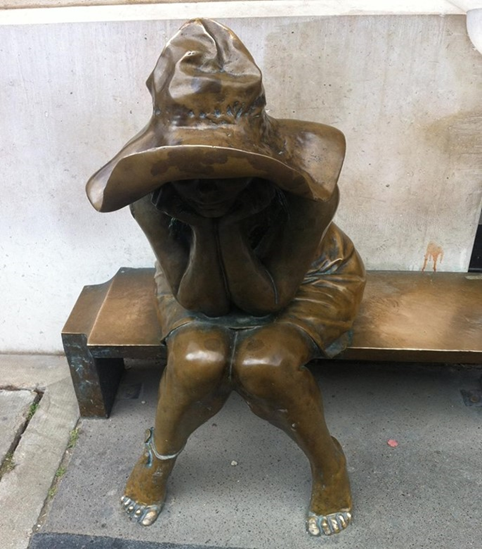
Was this a real girl?
Why is there a shoe in the cage with the skeleton?
I’m a very visual writer and I love taking photographs. You can start to build a ‘photographic’ observation diary by taking at least one interesting photograph every day. This could be anything which catches your attention; an abandoned shoe lying at the side of the road, an interesting sculpture you walk past every day, a strange doll in the window of a shop… You can start thinking about the story behind the image there and then, but often it might take a while for a proper idea to form. And that’s fine. Because now you’ve stored the photograph somewhere on your phone, you can return to this later. You might even want to combine the small stones tasks (see the post here for examples), with your photographs.
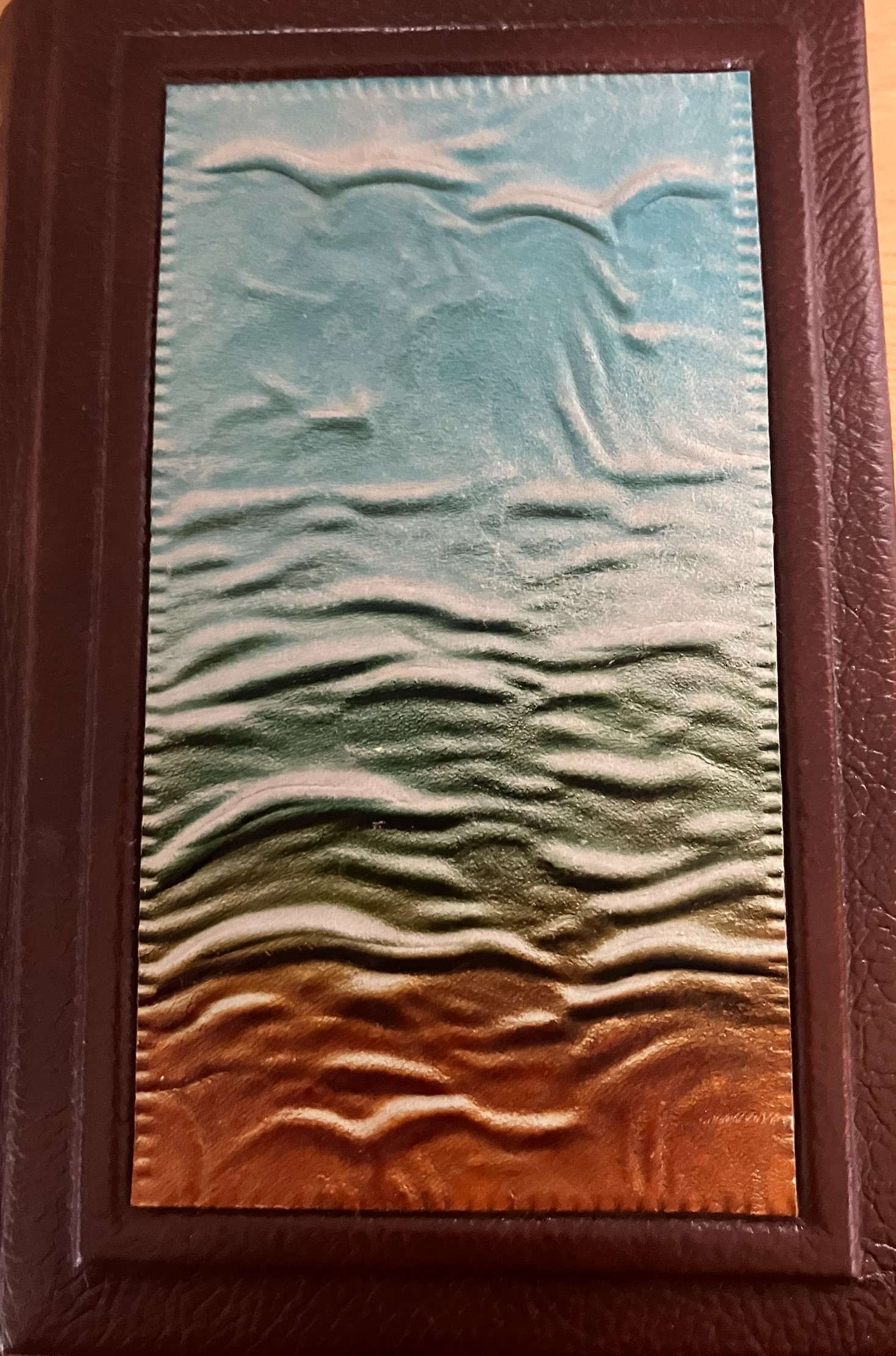
I’ve shared some photographs above I took when on various trips across the years, which I then later turned into short stories.
The heart photograph was a print which hung in the staircase of a Paris hotel I stayed in during my first solo trip abroad. I spent three nights in Paris and enjoyed wandering the streets alone, and it was during this time, passing by this print every day, I started to form the idea for a short story ‘Only You’ where a jilted bride spends her honeymoon alone in Paris. The story was runner-up in a competition, and broadcast on Hospital Radio. They sent me a CD recording of an actor reading it aloud, which was quite special. I loved hearing my words come to life.
If you enjoy finding inspiration from photographs check out the Scottish Book Trust 50 word story competition here They provide monthly photographic prompts
Listen to conversations
When I say listen to conversations, I mean within reason, as obviously it’s a bit rude to invade others’ privacy. But if you’re on a train or bus where your fellow passengers insist on talking loudly to one another (or on their phone), then naturally you will probably pick up interesting snippets of conversations throughout your day.
In an old ‘observation diary’ (where I used to write down thoughts that randomly popped into my head, interesting facts or stories I came across on social media or in the news, as well as overheard conversations) I found these snippets:
A man and a woman in conversation: “Tommy, you’re being really unfair. You’re stopping me from going to Hollywood. You’re being really bad to me with the brain transplant thing. I know I’ve had at least four brain transplants behind my back.” On the surface, most passengers would dismiss this woman as talking nonsense. But what if the man she is with is a mad scientist, and she’s the subject of numerous experiments, and is starting to rebel?
A teenage girl was sitting behind me on one train journey, talking loudly into her phone, “She fell out with me when I was camping because she said I never texted, but I couldn’t text because seriously I didn’t have reception… and then I ended up sitting with her all night on a night out so she never felt left out… I hate falling out with people, the thought of someone hating me, or having a problem with me…” At this point a boy nearby asks me if I’ve got a pen. He then returns to his seat to scribble something on a bit of paper and when he gets up at his stop he chucks a note at the girl before walking off.
The girl then shrieks into her phone, telling the person on the other end, “Oh my f-ing God. A guy just threw a note at me on the way off his train. Wait, wait. His name is Ryan. I swear… wait… he must have been listening to my conversation. How rude, haha.” (Newsflash girl, I think we’re all now listening)… “He’s said, You are too beautiful to have friends who are mean to you. Add me to facebook and let me make you smile.”
Now depending how your writer brain works, this could either be the start of a romantic novel or a true-crime type stalker thriller….
Next time I’ll be writing more about the inspiration behind my books.
I was lucky enough to extend my festive holiday this year and flew off to sunny skies just as my office was re-opening. A dose of sunshine and relaxation was the perfect way to recharge and have space to reflect on my writing and what I want to achieve in 2025.
I often find when I’m away from everyday life the creative and ‘ideas’ side of my brain really wakes up. I even managed to ‘type’ a short story in my phone while I was sitting out on my balcony in the sun. Having space to think properly also allowed me to reflect on how I could use my blog here in a bit more of a consistent and creative way.
A lot of young people (and adults!) I come into contact with who have an interest in writing are yet to find supportive communities, and don’t know where to start when delving into the world of writing.
Often when I do school or community workshops I’m asked questions around the practical side of writing, as well as my own experiences and how I have approached things. I realised there is a lot I could write about on here, starting with where my writing journey began, and all of the different experiences and creative projects/competitions/workshops I have found to be helpful along the way.
I am no expert by any means within the industry, or a big success, but what I’ve had are real experiences – mostly good, sometimes deflating- over a large period of my life, a lot of which I was lucky enough to be introduced to thanks to being immersed in a supportive writing community (which started with a supportive writing Mum).
Over the years I’ve submitted short stories to competitions/journals, and then started to pitch books to a range of agents/publishers, met with them face to face, made it to publication then changed course so had to go back out on submission; had zoom pitches, a chat with an editor when I made the final seven in a big competition. I’ve faced numerous rejections, been ghosted, and most recently delved into independent publishing. I’ve attended writing festivals/workshops/talks/retreats, absorbed advice from top authors, agents, publishers and other writers of all levels of experience.
After my first book was released I started to deliver creative writing workshops and talks in schools, libraries, community venues, small book festivals, rooms to an audience of three… Adjudicated competitions for writing groups, bigger conferences (and even adapted my workshop to an online version during an unexpected lockdown!). I’ve organised in-person and online book launches, written press releases, been interviewed for a magazine and over the phone by a journalist.
I’ve kept my creative momentum going by setting myself numerous silly and engaging creative challenges over the years, which is good to remind myself about, as often when writing starts to feel too serious/stressful it’s good to take some time out to remember how to be creative. I know a massive challenge of any creative is staying motivated.
That was a bit of a brain dump list but introduces some themes I hope to focus on.
I remember reading once that writing should be treated like an apprenticeship; that it’s a journey of learning. I started my ‘apprenticeship’ way back in primary school and I am still very much learning. Every new writing project I start, I want to be better.
This year I hope to start a new type of writing project, and plan to go back out on submission again to try to secure an agent, which I am sure will bring a whole lot of new experiences and learning.
You can get all of my posts into your email inbox if you subscribe (on my homepage).
I plan to give honest insights into the behind the scenes of what a writing life for me has looked like so far (and new experiences going forward), with links to any interesting groups or writing related sites/comps I come across.
The first post will be going live next week.
Wishing you lots of success in your own writing this year, and just a reminder it’s okay not to feel dynamic in January. If you are still Wintering, take that time to relax and recharge!





 VICTORIA GEMMELL