Interview with a Writer ~ Rosemary Gemmell

This week I’m delighted to welcome my writer Mum, Rosemary Gemmell, technically back to my blog, as Rosemary featured in one of my first ever author interviews, as part of a blog challenge series I did a couple of years ago in November. For this reason I let her choose between mine and my husband’s questions (from last week), to mix it up a bit this time around.

My Mum has been a massive inspiration; penning a range of wonderful books, stories, poetry and articles (as well as academic essays).

It’s thanks to my Mum I felt encouraged from a very young age to develop my writing, and then have the confidence to share it with the world (I don’t think many people are lucky enough to have that type of support from a parent). We often discuss ideas, and what we’re working on. I always trust my Mum to give me insightful and honest feedback, and am very grateful for her technical wizardry and excellent editing!

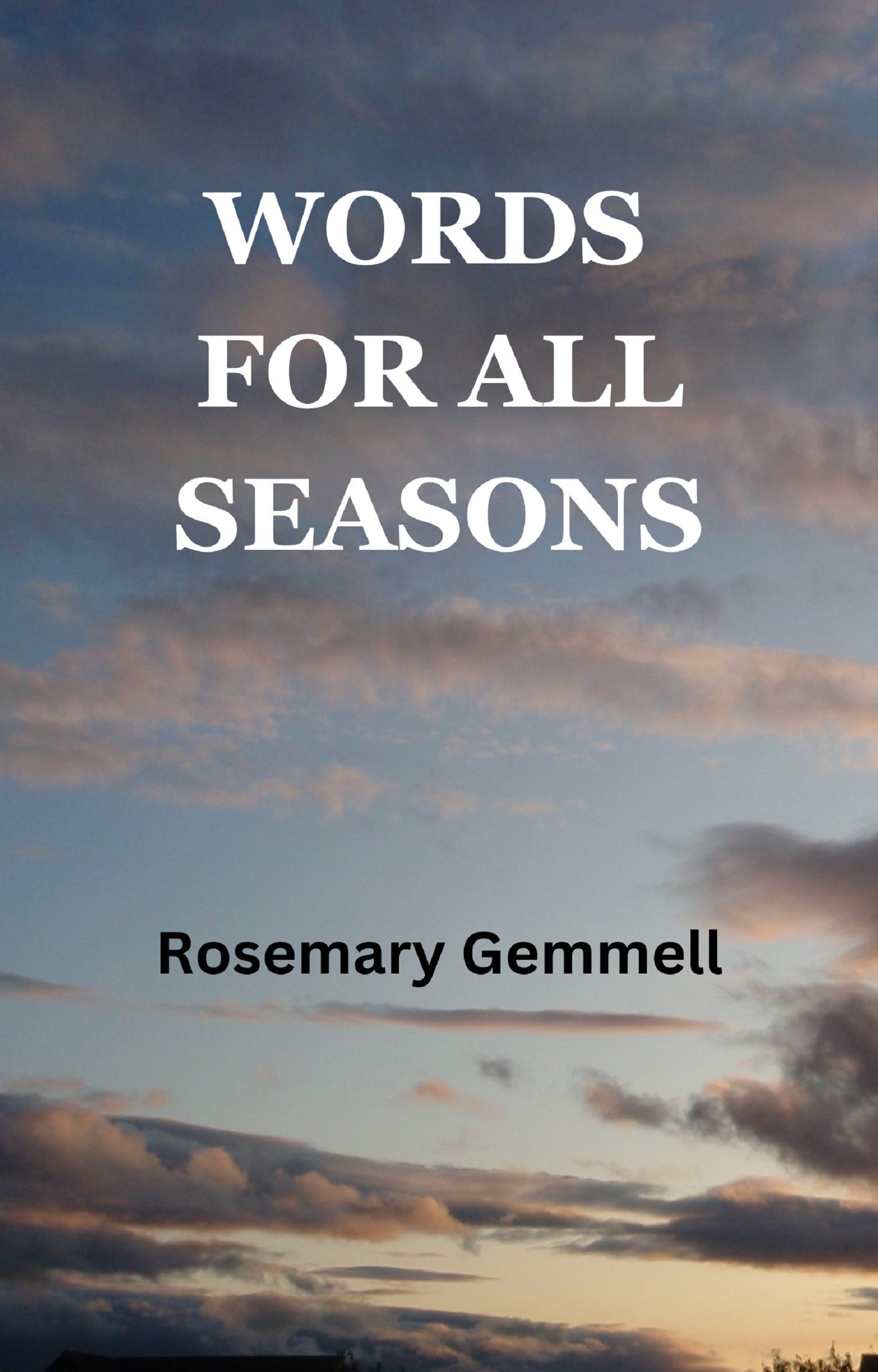
Read on to find out more about a lovely collection of Rosemary’s work titled Words for All Seasons, which would make a perfect Christmas gift!

Author Biography

Rosemary Gemmell is a Scottish novelist and freelance writer based in central Scotland. Rosemary writes contemporary and historical fiction, with occasional short stories, (many of which have won prizes), children’s fiction, articles and poems. Her short stories, articles and poems have been published in UK magazines, the US, and online.

When did you first start writing?

I first wrote creatively at high school when I went through a teenage, romantic phase and adored poetry and literature in general, so I started writing my own poetry. It was many years later before I moved on to articles, then fiction.

What do you write?

I write a little of everything: novels, short stories, articles, poetry, children’s fiction, and even a little bit of drama years ago. I’ve had lots of work published over the years and last year, I decided to put together a celebratory collection of new and previously published stories, articles and poetry along with some of my photographs to illustrate certain pieces. It was partly to highlight the different types of creative writing I enjoy and the book is divided into the four seasons – see below for a review.

Why do you write?

I write to entertain and communicate but also for self-expression and to make sense of the world, especially in non-fiction and poetry.

Share some of your favourite lines from reviews, or comments you have received about your work, which boosted your confidence (tell us what piece of work it relates to)

I’ve been lucky and honoured to have many wonderful reviews for my different books and appreciate each one as they encouraged me to keep writing. However, I don’t even mind a less praiseworthy review as long as I can learn from it.

As a change from my novels, this is a lovely review for my most recent collection, Words for all Seasons, that was published last year (in e-book, paperback and hardback):

What a treat it has been to read Words for All Seasons by Rosemary Gemmell. Her recently published collection of short stories, articles and poems is ideal for dipping into when you have a few moments to spare. The variety ensures there is something to please everyone. Conveniently divided into the four seasons, this is a book you will want to visit – and revisit – no matter what the season.

Any tips for new writers?

Keep reading, as that’s how we best learn what works and what doesn’t, and what type of writer we aspire to be.  And don’t give up at the first few hurdles – we all have to learn as we go, as in any other creative pursuit.

Do you have a regular writing routine, or do you write in frantic bursts?

Neither of the above! I’ve never really had a proper writing routine, much as I’ve often tried. I’m usually more creative in the morning but tend to write when I feel like it, or in short timespans. Sometimes, the less time I have, the better I write – perhaps because I get bored sitting too long at one task.

Where do you write? (A dedicated space, or on-the-go)

My absolute favourite way to write is in cafés or on trains with pen and paper. I’m never distracted by what’s going on around me and can happily sit in my own little bubble of creativity. Beats sitting at home on the computer, though I do have a study where I then type up what I’ve written.

Where do you get your inspiration for your books?

Inspiration for my novels often begins with characters and setting. I’m not so interested in plotting (a weakness) as characters are most important to me as a reader and writer. Once I have an initial idea, I just write and let the characters play as the story develops. I usually have a vague idea of what the story will be about and where it will be set but I like to be surprised by where each book takes me.

What do you think about the concept of AI written books?

We won’t be able to turn the clock back on AI but I hope we never get to the stage of accepting it as a way to write books, especially fiction, although I know it’s already being used. Fortunately, AI is unlikely to ever express our unique human emotions in the same way we can (I hope).

What do you do to get into a ‘creative headspace’?

If writing in my study at home, I love music playing in the background, usually classical, easy listening, or Celtic – sometimes according to what I’m writing.

Where can we find out more about you, and your books?

My website is the best option for a complete overview of all my published books:

https://www.rosemarygemmell.co.uk

Buy Words for All Seasons here

Twitter X @rosemarygemmell (I sometimes take part in #haikusaturday)

And Instagram @rosemarygemmell

Interview a Writer ~ Victoria Gemmell *yes, me


This week I’m doing something a bit different on the blog to fill a gap for a planned post (which will be coming soon…). I thought about just having a week off, but then decided to ask my husband to fire some questions at me last night, with the resulting interview posted below.

Author Biog (taken from my About Me page) :

Where do you get your inspiration for your books?

Headlines and articles in the news acted as a catalyst for the plots within all three of my YA Mystery/Thrillers. I imagined what would happen if fictional teenagers were placed at the centre of dark situations, (unexplained teen suicides in Follow Me; possible miscarriage of justice in a media obsessed teen murder case in Promise Me; the unveiling of an elite group who kidnap young people from the care system to extract their pure plasma to stay young in Young Blood) My teen protagonists start to uncover hidden truths that adults have been oblivious about, endangering themselves in the process. It’s not until my characters start to form, that the full story will start to unfold.

What do you do to get into a ‘creative headspace’?

Once a book starts to take shape I like to create a playlist for it on Spotify, choosing music which fits the ‘mood’ of the story. To this day there’s one particular Silversun Pickups album that I just need to hit play on and it takes me right back to the emotions I felt when I started to write Follow Me. Finding the right tone and ‘voice’ for a book can be challenging, and music helps me switch off the over-thinking part of my brain. When I’m thinking too much about a story I know it’s not working yet. You need to feel it.

What new book are you working on?

I’m attempting to write a middle-grade magic realism type story. I also have an idea for an adult thriller which might start to take over, so who knows which one I’ll finish first. At this rate it’ll be neither.

What do you think about the concept of AI written books?

Honestly I find it infuriating and worrying. About three years ago we started to talk about AI in work (in my day job as a careers adviser) and the impact it might start to have on certain careers. The topic was brought up on a regional staff day online and a colleague in another region flippantly said, ‘My friend has just written a children’s book with AI and is now selling it on Amazon’. I had to hold myself back as he was actually boasting about it; like it was an amazing achievement. There’s a lot of people out there who I think love the idea of writing a book, and saying they have done so, and love the idea of making money from it (ha, they’ll soon learn). The magic of writing for me is when your brain unlocks almost a super-power you don’t understand yourself; when characters form, ideas and words flow, and it all somehow connects together into a story. Often stories fall flat and don’t work out, and that’s important too. Trying, shaping and learning, and re-writing, and tapping in to your imagination. We’re already being brain-washed by algorithms and dopamine rewards online, which is disrupting our attention spans and the ability to feel ok being bored or at peace…and that’s when we do our best daydreaming and tap into our imagination. (I don’t think it’s a coincidence that I do some of my best thinking these days in the shower or bath!). I don’t want AI to steal our imaginations. It kind of feels like something from the plot of the Never Ending Story when Fantasia is threatened by ‘The Nothing’.

What do you find difficult subjects to tackle?

I shy away from writing anything which involves high-concept epic world-building (think space sci-fi series where characters have unpronounceable names.) I get bored reading this kind of thing, so I know I’d get bored writing it too, and I’d be really bad at it.

What do you enjoy writing about?

I love writing mysteries where I often don’t really know what has happened so I enjoy seeing the plot unfold as my characters develop. That’s the best kind of writing, where you feel like you’re the reader and the plot master rolled into one, and it’s amazing how much you can trust your subconscious to fill in blanks you haven’t even seen. (It’s often why I need to go back to re-write my endings as my characters take over and take me by surprise).

Where can we find your books? (click on highlighted links)

Young Blood: Amazon (paperback and kindle) on worldwide Digital platforms Order into: Waterstones Foyles

Promise Me: Amazon (paperback and kindle) on worldwide Digital platforms Order into: Waterstones Foyles

Follow Me – please contact me direct for a signed copy

Interview with a Writer ~ Lynsey Helen Mitchell

Today I’m delighted to feature debut author Lynsey Helen Mitchell on my blog. Lynsey is a friend and colleague. We work in different offices now, and I was excited when I found out Lynsey had completed her Young Adult horror book. Not for the faint-hearted, The Dark Twin, is a perfect tense read for when the nights draw in, and you want to scare yourself a bit…. Here’s Lynsey’s interview below, and I wish her lots of luck with her writing career (have to add I admire the motivation to write in the morning before work!). Links to Lynsey’s social media and where to buy her book are at the bottom of the post.

Biography

Lynsey was born in Clydebank and studied Creative Writing and English Literature at Middlesex University, graduating in 2011. She is employed as a careers adviser, and lives in the West of Scotland with her boyfriend and cat and they are expecting their first baby boy. Lynsey recently released her YA horror, The Dark Twin, which is her debut book.

When did you first start writing?

I started writing when I was a child, always enjoying any opportunity to write stories as part of my school work, and spending time at home writing stories. I would enjoy writing stories and poems about the family pets and different friends and family members.

What do you write?

I mainly enjoy writing fiction – short stories and longer pieces. I love horror and thrillers, so all of my stories are around this genre.

What was your first published piece of work?

The Dark Twin is my first published piece of work, although I’ve been published on a website for winning a short story competition before.

Why do you write?

Because I love it. I find it therapeutic to just get lost in my story and switch off from the real world.

What, or who, has helped you on your writing journey?

Speaking to other writers, like Vikki and learning about their experiences. The book On Writing by Stephen King gave me a lot of insight into the mind of one of my favourite writers and how they found their (very successful) writing style. Taking part in challenges like NaNoWriMo help me to become productive. While it doesn’t produce a finished product, it helps to start a first draft and to get a proper feel for my story.

Share a writing low with us. What did you learn from this?

After losing my mum in 2013, I had so much going on, that the last thing I could think of was sitting down to write. I took the opportunity the following year to take part in NaNoWriMo to get myself motivated again and this helped me to rediscover my love of writing.

Share a writing high?

Publishing The Dark Twin. It was the NaNoWriMo project that sat on my shelf for far too long, so I was proud of myself for finally getting it published.

Share some of your favourite lines from reviews, or comments you have received about your work, which boosted your confidence (tell us what piece of work it relates to)

Some of the comments I received about The Dark Twin include:

“I couldn’t sleep a wink after reading it.”

“Couldn’t put it down.”

Any tips for new writers?

Find a routine and style that works for you. Some writers advise to write every day, but that doesn’t work for me. I prefer to write when I feel inspired.

And for all writers; any tips for keeping motivated? And how do you find time to write?

Like I’ve said, challenges like NaNoWriMo help to motivate me to sit down and write. In the last few years, I’ve found myself being more productive in the mornings, getting up a little earlier before work and getting some writing in before I start.

Do you have a regular writing routine, or do you write in frantic bursts?

I’m definitely more of a frantic burst kind of person. If I love what I’m writing, the story comes. Sometimes I feel like I need to write it down before I forget it!

Where do you write? (A dedicated space, or on-the-go)

I definitely don’t have a dedicated space. It doesn’t work for me. Sometimes it’s the kitchen table, sometimes the couch. Just wherever I feel most comfortable.

Any stand-out books you have read recently?

A few great books I’ve read recently include Keep it in the Family by John Marrs, Incidents Around the House by Josh Malerman and A Good Girl’s Guide to Murder by Holly Jackson.

Where can we find your book, and find out more about you?

A link to buy The Dark Twin: https://www.amazon.co.uk/Dark-Twin-Lynsey-Helen-Mitchell/dp/1068161507/

Author Website: https://lynseyhelenmitchell.co.uk/

Instagram: lynseyhmitchellauthor

TikTok: @lynseywrites

Showing up (final post in series- blog post 15)

Back in January I decided to write a series of posts on here which focused on what my writing life has been like over the years. I wanted to share specific aspects that I thought might be helpful for writers just starting out, and also for seasoned writers who maybe just needed a reminder that we all experience very similar highs and lows, and to offer some encouragement to keep going during times you question your sanity, or ask yourself if it’s all worth it.

Over the past couple of months I’ve found it particularly difficult to focus on my writing. I’ve been struggling with tiredness and brain fog, a combination which isn’t great when you’re trying to plot and write a new book. But I’ve been determined to keep getting words down on paper/screen, and keep telling myself the first draft does not need to be perfect.

Embarking on a new book has reminded me of two important things:

It’s important to keep showing up

Each book takes shape in a different way

For my new project I’m trying to get words down not every day, but every week. That’s a win for me just now, and keeps the momentum going. Even although I was knackered yesterday I made myself sit down at my laptop and continue with my next chapter. I’m also doing my usual; scribbling notes in various notebooks and on the notes page on my phone. These pages are filled with plot ideas, characters and locations, that don’t yet have a place on the page, but I know they might eventually fit in somewhere, and it keeps the story ‘alive’ in my head. For me this is all part of the process.

I’d say so far my ‘work in progress’ is a bit messier than usual and as the book will require a lot of detailed description (to world build), I’m finding this is slowing down my natural writing style (which is usually a bit more dialogue heavy). I’m allowing myself to skirt over parts of the descriptions and will go back to fill it in later on. I know I’ll then enjoy it more because by then I’ll be able to see the whole plot laid out in front of me, and see what I need to do to enrich the world and bring it alive (hopefully) for the reader.

I usually like to edit and perfect my story as I go along, so I’m finding it challenging to allow myself to leave messy pages sitting in amongst the more polished ones. I’m used to writing contemporary stories, and this one has a magical element sitting alongside the everyday, so it’s teaching me that it’s okay to deviate from my usual way of working, as its a completely different style of story I am writing.

So as I draw this particular series to an end, if you have been embarking on a new creative project this year, or find yourself at the start of a new writing journey, my parting advice to you is simple:

Keep showing up.

No matter how messy your project might be looking right now, write through it, and come back and tidy up later on.

Watch this space for some insights into other writers’ journeys. I’ve not quite decided what this might look like, but after capturing some of my own experiences over the years, it’s made me curious to hear from other writers, and see what words of wisdom they might have to offer too.

Happy writing!

Here are links to all of the previous posts of the series for easy access:

Starting Out

Learn Your Craft

Learn Your Craft 2

Inspiration is Everywhere Part 1

Inspiration is Everywhere Part 2

Inspiration is Everywhere Part 3

Make Every Word Count

Competitions and Connections

Submission Stories Part 1

Submission Stories Part 2

Don’t wait for the phone to ring

Creative Space

Riding the Rollercoaster

What sells books?

Creative Space (blog post 12 of series)

‘In the Mind of Gaudi’ Anadol immersive experience at Casa Batllo

One of the biggest challenges you may encounter when trying to write, is finding the head space to write and feel creative. This post is to reassure you that it’s okay to have this frustration. I’ve definitely been feeling this way lately, but I’m trying to just let myself do the things I need to do just now, and know I’ll get back on track soon.

I used to think free time was the problem, but often my free time needs to consist of  decompressing and switching off and this will take priority over sitting at a laptop (or notebook) for hours, carving out a story. When I’ve been sitting at a laptop all day in work, filling my head with other peoples’ words and problems, reading through what can be an average of thirty emails a day, making constant calls, taking calls, typing notes…I often need to just take a step back and give my brain some silence. Over the past few weeks we’ve had a bit of a mini heatwave in Scotland, and I feel like this is so rare I would also be silly not to take advantage of being outdoors as much as possible.

This isn’t to say I’ve not been thinking about ideas. I have, and continue to research a new project I’m working on, often scribbling or typing up notes. But I just haven’t formed anything into a coherent order or structured story in a way I’m happy with.

A weeks ago I downloaded a great book onto my kindle called We Need Your Art (see here to buy) by a writer I follow on Instagram called Aime McNee. Reading this on my commute to work helped me feel like I was carving out some time to acknowledge the need to keep connected to my creativity. At the heart of Aime’s book is giving importance to your art, and an encouragement to share your work. The book has echoes of The Artist’s Way by Julia Cameron and Big Magic by Elizabeth Gilbert, (and in fact references both), but I loved the honest and accessible way this one is written. Throughout the pages there is a continuous mantra to be confident, stay motivated, and don’t give up, no matter what obstacles you might face along the way. I wanted to read the whole book through before going back to try the re-set exercises. I’m going to set aside one of my lovely new notebooks to try the re-set challenge soon.

Another non-fiction book I’ve been enjoying delving into on my commute is a gift from a creative friend. It’s called Daily Rituals: Women at Work by Mason Currey, and documents the daily routines of well-known female ‘creatives’~ writers, painters, composers, singers, filmmakers. I’m half-way through the book and the majority of the artists mentioned dedicated most of their day to their creative practice – sometimes a solid 12 hour plus day of being immersed in a world of art. I don’t think I would want that either. So how do you find the balance?

When my husband asked me the other day, what helps you get into a writing state of mind? I had a proper think about this. When I write my best work it’s when I have switched into what I call an unconscious kind of flow state; I don’t think about writing or what I’m trying to achieve, I just let  the words flow. A bit like what he was doing when he was driving. A bit like what happens if you’re playing the piano and don’t need to look at the notes or concentrate – you let the music take over. Listening to music can also help me get into this state of mind; particularly if an album starts to become the ‘soundtrack’ of the book I’m writing as it’s then a helpful way to allow my mind to shift into that world again, and enter a certain ‘mood’ I am trying to evoke within the story.

At the moment I feel like I am in my conscious state of needing to feed my creativity, and what Cameron refers to in The Artist’s Way as ‘filling the creative well’. I’ve had weekends surrounding myself with beautiful scenery, walking beside the water, eating good food, buying little trinkets and art from gorgeous independent shops. I’ve been on an amazing trip to Barcelona soaking up the artistic genius of Gaudi, admiring his spectacular architecture, visiting the Moco Museum and viewing a range of inspiring exhibitions (one of my favourites was standing inside Studio Irma’s Diamond Matrix – an installation of hundreds of light-up diamonds); taking photographs of beautiful street art and buildings, and buying pottery and prints from local artists to take home to decorate my writing room.

One of my favourite parts on a visit to Gaudi’s Casa Batllo was a sensory immersive art experience called ‘In the Mind of Gaudi’ where I stood inside a 6 sided LED cube room, inaugurated by the artist Refik Anadol. This is one example where AI can be used positively to enhance a creative structure, as it enabled Casa Batllo to collect millions of Gaudi’s photos, videos, drawings, 3D models and so on, in order to create a large digital library of his patterns and design logic, which Anadol then used to project visual images. It truly was like we were standing inside Gaudi’s mind, with a succession of images flowing around the ceilings, floors and walls, accompanied by dreamy music akin to Sigur Ross. It gave me goosebumps, and reminded me that a world without art would be a very dull place. In the Moco Museum this quote from the founders, Kim & Lionel Logchies, can be found at various points: “We use the power of art to challenge the norm, champion the truth, open up minds, and question the world around us.”

I believe one of the biggest ways you can feed your own creativity, is to immerse yourself in the creativity of others. So if you’re feeling a little unproductive in your own work, and your brain is tired, then try and seek out some art in your local area- visit an art gallery or museum, go to the cinema, visit some quirky independent shops selling inspiring products, people watch at a café, read good books, watch a thought-provoking documentary, spend time with other creatives…

Take a break from the screen, and go and fill your head with daydreams

Competitions and Connections (blog post 8 of series)

SAW Conference 2025

This weekend I attended the Scottish Association of Writers’ Conference, where writing groups from all across Scotland congregated at the Westerwood Hotel. The weekend was jam-packed full of workshops, talks from Industry experts and adjudications. I was delighted to win Second and Third prize for the humorous short story competition. One of my stories The Opposite of Cake was an extended version of a short flash I wrote a couple of years ago during my blog challenge, so a great example of how creative tasks you set yourself can lead onto bigger things.

I attended a brilliant workshop run by the talented Catherine Ogston, where she taught us about Hermit Crab Flash Fiction. This is where you borrow from an existing form or structure, such as writing a story in list form, or as an instruction. I had no idea this type of structure was given this name. The exercises in the class inspired a new idea for me. I also attended another brilliant workshop delivered by writer Colette Coen where she showed us how to use memory to inspire ideas. I came away with two new story ideas from the exercises, and enjoyed using different techniques to kick-start my creativity.

Writing competitions played a massive role in building my initial confidence when starting out as a writer, and have continued to give me much needed boosts along the way to encourage me to keep going.

I first attended the Scottish Association of Writers’ conference when I was seventeen. I didn’t pluck up the courage to start entering their competitions until my twenties and I nearly fell off my chair when I heard my name being called out as a second place winner in the SAW General Short Story competition during the early years. I was secretly relieved I hadn’t won first place as that would have meant standing up in front of hundreds of attendees to read out my work, which I wasn’t quite ready for (They no longer expect winners to read live!) It ignited a much needed belief that I could do this, I could actually write stories that people enjoyed reading.

Fast forward a few years later, I started to get short pieces published in literary journals. Then I won the SAW TC Farries trophy for my first proper attempt at writing a Young Adult novel. This gave me the courage to start submitting my book to agents and publishers, and winning this competition also gave me something significant to mention in my pitch letter.

Winning the TC Farries Trophy SAW 2011

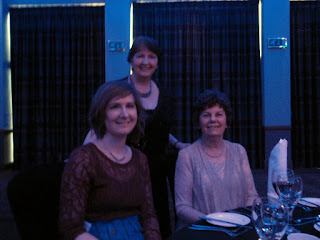
When my first book was out on submission, (which I’m sure any writer realises can be a brutal time of highs and lows), I continued writing shorter fiction. When I received Highly Commended in the WordswithJAM short story competition it gave me a lift. The best part was attending the launch night for the competition print anthology at Foyles Bookshop in London with my Mum. I asked her to come with me as I worried it might be my one and only ‘book launch’, and I wanted to celebrate properly. As it turned out, it wasn’t long after I had my own launch for my first Young Adult novel at Waterstones. I think the night in Foyles gave me that extra needed self-belief at the time.

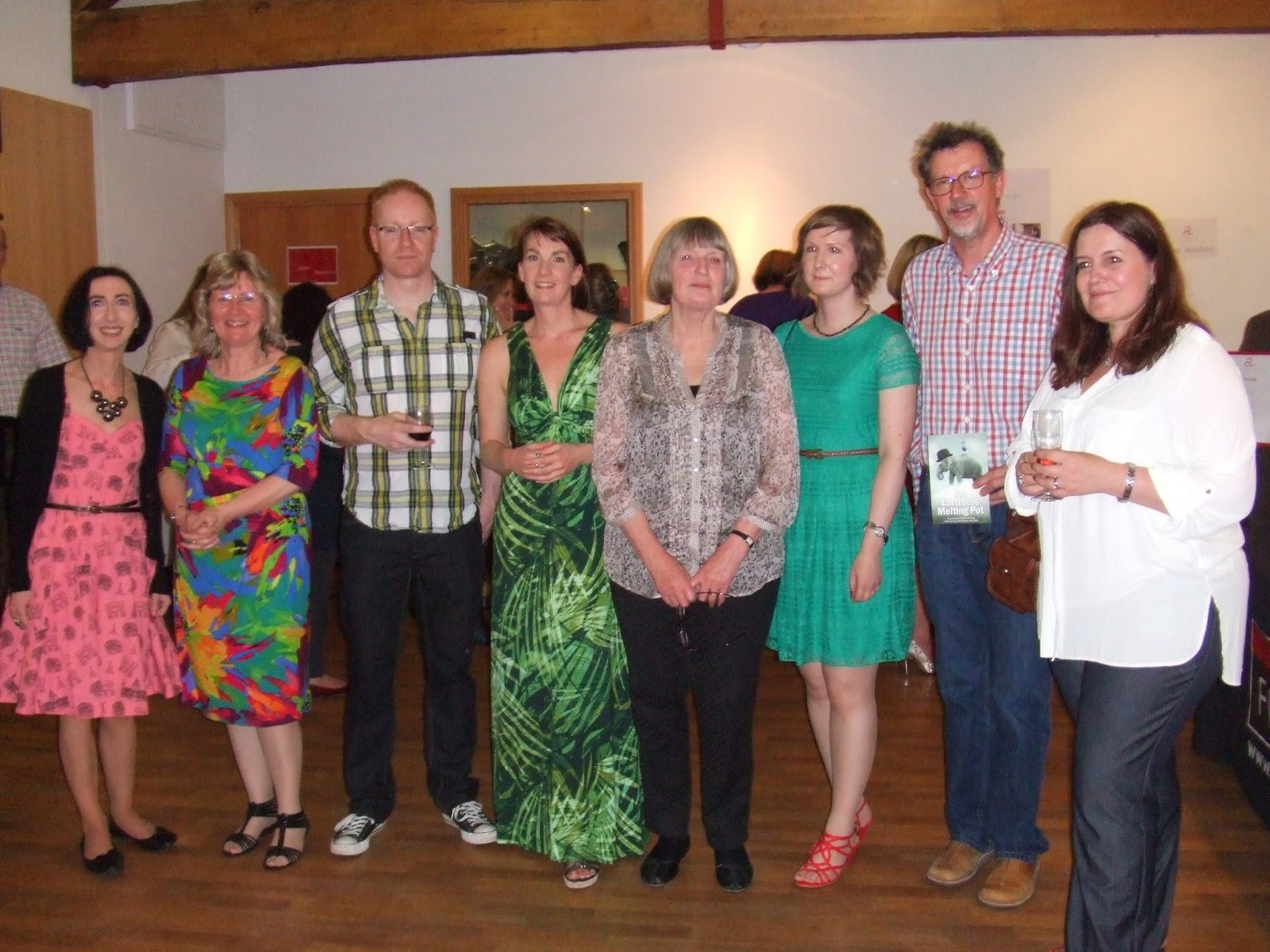
An Earthless Melting Pot Launch – winners at Foyles Bookshop London 2013

This is why I continue to enter competitions. There are so many moments during the rollercoaster of writing and releasing work out into the world that challenge our self-belief. It’s nice to receive some concrete validation from time to time. It’s also a bit of an adrenaline rush receiving emails or announcements where an editor or judge tells you they have selected you as their winner, or placed you on a short list. When I won The Writing Magazine school-themed short story competition a couple of years ago it was published in the magazine and on their website (see here). It was exciting to win, and even better when readers of the magazine looked me up on social media to tell me how much they enjoyed my story. Knowing my writing connected with others and made them feel something is what makes it all worthwhile. A big motivation to write is to feel connected to something bigger, and make sense of the world.

Being surrounded by writers at the SAW conference this weekend also reminded me the importance of this community. One of the speakers highlighted that when you are part of a like-minded tribe and you share your real-life stories (never mind fictional) with all of the ups and downs this creative life throws your way, they will understand in ways no-one else can really comprehend.

If you feel brave enough to send your work out into the world, here are some competitions/sites I have come across recently. Thanks to Catherine in her workshop for highlighting some of these. Happy writing!

THE BATH SHORT STORY AWARD | International Short Story Competition Closes soon!

Flash Fiction writing competition

Home | New Flash Fiction Review

The Plaza Prizes The Plaza Prizes – International Literary Awards – US$25,000 Prize Fund

Writing Prize — The Alpine Fellowship

Make Every Word Count (blog post 7 of series)

Unsplash Image by Sixteen Miles Out

Today’s post focuses on Flash Fiction, and how it might help you develop your writing. I started experimenting with Flash Fiction when I got serious about sending work out to publications. Tackling 100 or 200 word stories felt less daunting in terms of potentially being able to complete something during busy periods of my life. When tackling big projects like writing a novel, there are so many moments where it can be tempting to abandon the project; especially at the ‘sticky middle’ where it can feel like the whole story might never take shape, or even at the start if you can’t quite translate the ideas in your head onto the page and your characters aren’t revealing themselves in the way you’d hoped they might.

With Flash Fiction there’s no space to let your brain slow you down with doubt, as you just need to run with your idea and let the words take shape, with the challenge of still attempting to capture a meaningful ‘moment in time’ that tells some kind of story.

When I was a teenager I loved experimenting with poetry, and for me flash fiction became an extension of that creativity, as I tend to use a lot more imagery in my shorter work. In fact one of the first pieces of work I ever got published was labelled ‘Prose Poetry’, a cross-between poetry and flash fiction. Thanks go to Amy Burns for publishing Performance in her literary journal Spilling Ink (sadly the journal is no longer). Before I started to submit Performance, it won first place in a competition, which gave me the confidence to start sending it out. It was actually accepted for the Herald Saturday story section, but when a year went by without it ever appearing in print I realised the editor had forgotten about me. I was delighted when it then found a home with Spilling Ink. This was my first taste of the rollercoaster of sending work out! You can read Performance in the short story section of my website.

There have been times where I’ve cut longer stories to fit Flash Fiction entry rules, and that in itself can be a really helpful exercise. It starts to highlight unnecessary ‘filler’ words you might use a lot, and can give you more confidence in conveying a meaning or scene without over-explaining it to your reader. It teaches you in real-time how to make every word count.

 I mentioned in an earlier post that learning how to make every word count can help if you are writing pacey, fast-moving novels. If you’re writing a mystery or thriller, or tackling an unsettling topic, you want to keep your reader feeling a bit on edge, and not get bogged down in long over-written passages of narrative which have no purpose. 

If you fancy giving the form a try, check out The Flash Flood Journal It’s a great place to submit flash fiction and join in with a community of writers whose work is posted throughout National Flash Fiction Day. This year National Flash Fiction Day falls on 14 June so that gives you plenty of time to work on a piece (or two). You can read some of my flash fiction which featured in the journal over the years here

I’ll leave you with some tips I shared when I delivered a flash fiction writing workshop at a local writers group.

Top Tips

  • Make every word count – you don’t have much space for backstory and a lot of summarising and don’t get bogged down by unnecessary detail
  • Very important to ‘show’ not tell when working with limited words – show how your character is feeling by their actions and dialogue
  • Get into the action quickly – create intrigue to draw your reader in
  • Create emotion – what mood do you want to create? What do you want your reader to feel? (fear, sadness, hope, humour, romance)
  • Figure out what is at the heart of your story – what message do you want to get across? What are you trying to convey? Getting to the heart of your story helps you make every word count
  • Be creative with strong imagery and symbolism – this can draw the reader in and help you build the mood/setting
  • Still tell a story – have characters (not too many), a setting, something happening and then some kind of resolution
  • Write around a single moment in your protagonist’s day/life – often location will take on a bigger meaning, or perhaps an object
  • Often end with a surprise or impact – if you go for a twist try to avoid a cliché
  • Read some flash fiction to give you an idea of the structure

Inspiration is everywhere #Part 1 (blog post 4 of series)

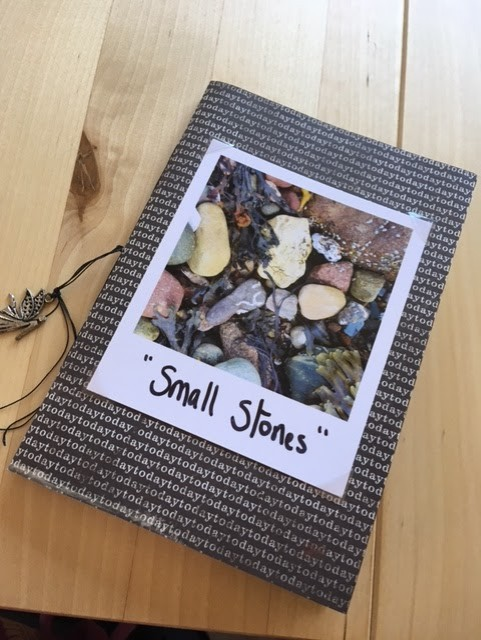
Booklet made by Rebecca Johnstone (aka Dainty Dora)

I’ve been out of action the past week with a horrible flu, hence the bigger gap between posts. This is the first day I’ve felt like attempting to get any words down on the page. I hope you’ve all had a more productive February.

The past couple of blog posts were about learning your craft, and today I’m moving on to talk about Inspiration. I’m going to focus on this theme across a number of posts as I’ve got lots of tips and tasks I want to share with you.

Where do writers get their inspiration? It’s an interesting question, as often ideas will pop in to my head and I’m not exactly sure where they’ve come from. More often than not, something I have heard, seen, or read about, in real life will spark off ideas.

In the past I have enjoyed delivering creative writing workshops around the concept that ‘Inspiration is Everywhere’. Everyday observations have definitely fuelled my creativity and provided lots of inspiration for short stories and flash fiction.

I’ll do a separate post focusing on what inspired ideas in my books as they all connect to real-life stories in the news, and headlines. (Another great task I have used in workshops – picking random bizarre headlines and allowing pupils to then come up with their own story that aligns to them).

Today I’m going to focus on a couple of tasks you can engage in every day that can hopefully help you feel creative.

Task 1 ~ Small Stones

Many years ago I was made aware of the ‘Small Stones challenge’ which showed me how much detail you can see in every day observations if you look closely enough. The idea behind the Small Stones challenge is to:

  • Notice one thing each day
  • Give your whole awareness to it
  • Write it down

My creative friend Rebecca, aka Dainty Dora, (see her substack here), made me a lovely little Small Stones booklet for me to capture notes in which you can see at the top of this post. It’s been a while since I’ve done this exercise, but I dug out some past examples of my ‘small stones’ so I could share them below. I think it’s a great way of generating ideas and starting to form characters.

Some of my Small Stones examples:

Red Glove: child sized, waving hello from a puddle on a dark January morning. The puddles pulled her under and this is a sign -Help, come and find me…

Girl in stilettos, walking comfortably in new shoes, head held high. Her friends are running alongside still trying to catch up with who they are.

Wooden heart laced with fake red berries, tied to a fence. A cheap remembrance of a love so rich. 

Pink hair, pink trainers, black nails and fierce eyes. Sweet and sour: Do not underestimate my power.

A teenage boy, vulnerable face, dark shadows under nervous eyes, a sigh of relief flooding his body as he walks into the comfort of a group who understand: with no questions, no judgement. They speak his language of technological puzzles, navigating night monsters into oblivion, so he can live another victorious day.

When I lived in Paisley, I always noticed interesting characters and one old man stuck in my head in particular. I used to see him wheeling an empty wheelchair down the high street, walking past the market stalls. A foreign accordion player, who often sat outside the M&S, provided a haunting melody to accompany his steps, which echoed down the street. Around this time I took a regular note of small stones observations, one of which was a tangerine peel on the ground shaped like a heart: Heart shaped tangerine peel abandoned on the top step. Layers peeled back, the best bit consumed, now the rest…left to rot.

A combination of all of these observations formed a flash fiction story titled ‘Ghosts’, which was first published in the Grind Journal back in 2014. You can read Ghosts here, on my new short story page on the site.

I always say to young people in my workshops, if they notice something interesting, add in the ‘What if?’ question. This is where your writers’ curiosity and imagination clicks in. After spotting the old man a few times, always pushing the empty wheelchair, I started to ask myself the question; What if he lost his wife, and isn’t quite ready to let go? As soon as I asked myself this question, Ghosts took shape.

Task 2 ~ Participate in Creative Projects or Challenges

Many years ago I engaged in a couple of fun tasks through an American arthouse company called Art House Co-op. I took part in their Sketchbook Project where I filled a blank book with writing, photographs and drawings and posted it back to the Brooklyn Art Library to go on a ‘travelling library tour’ across America. When I was on a trip to New York in 2013 I visited the original art library and viewed lots of other participants’ sketchbooks. Unfortunately after a fire struck in their new location, lots of sketchbooks were lost, then the project shut down. It was a fun task to participate in and I enjoyed illustrating some of my Flash Fiction stories and even wrote some poetry for the first time in years (see one below, with my illustration).

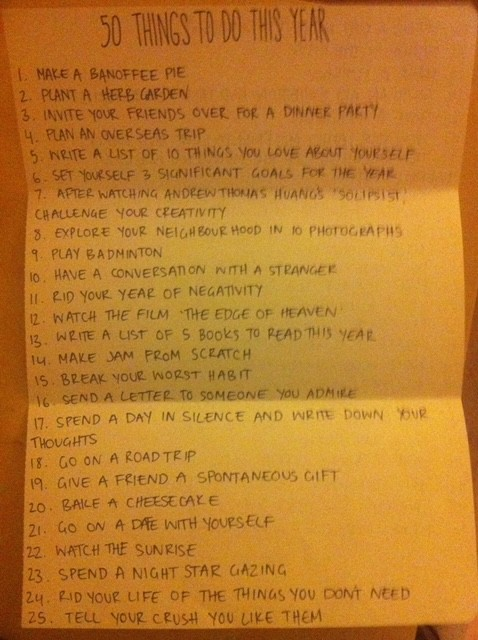
That year the Art House Co-op launched a ‘Sunday swap’ project, asking for participants to compose a list of 50 tasks for a stranger to complete. I posted my list to the company and they then mailed it out to someone, somewhere, and I then received my 50 things from a stranger, in return. I’ve put a photograph of some of my tasks above.

One particular task that really sparked off some creative ideas was the instruction to, ‘Research Natural Phenomenons.’ A natural phenomenon is basically something which occurs in nature, which is not man made. This led to lots of interesting research around things such as Tree Spiders, The Taos Hum, and the Migration of the Monarch Butterfly. Monarch Butterflies are unable to survive the colder winters in North America, so migrate to warmer climates in Central Mexico. Millions of the butterflies cluster together on trees. I enjoyed watching Youtube videos of the butterflies together in the forest and it inspired me to write a poem titled ‘Flight of the Butterfly’, which won third place in the Scottish Association of Writers poetry competition back in 2014. Years later I transformed my poem into a Flash Fiction story, using the same title and theme. This was published in the Glittery Literary Anthology in 2017. You can read ‘Flight of the Butterfly’ here

Why don’t you use some of the tasks from my photo, or do a ’50 Things’ swap with a friend? It’s a great way of getting out of your comfort zone, and doing new things, both of which are really important to keep your creative juices flowing.

A task I took part in during November 2023 was to write a blog post every day, using 30 creative prompts. See my first post here. It was an alternative to NaNoWrimo (National Novel Writing Month), where writers commit to getting a certain number of words down per day, with the aim to accumulate 50,000 words of a novel by the end of the month. I don’t think I quite achieved 50,000 words through my blog posts, but it did spark off a good few short story ideas, with one complete flash fiction piece. Feel free to use the 30 prompts from my original post as a creative challenge.

Next time I’ll continue on the theme of Inspiration, sharing some more tasks and challenges to help kickstart your creativity

Learn your craft #2 (blog post 3 of series)

Photo Shakespeare & Co bookshop, Paris (taken by me)

This post follows on from last week with the focus on perfecting your craft. Last week I shared some hints and tips from writing workshops and talks I’ve attended over the years (read here )

This week I’m going to share some highlights from two of my favourite books about ‘the craft’; Bird by Bird by Ann Lamott and On Writing by Stephen King. The reason I love these books in particular is because they are down-to-earth, honest, funny, include memoir style anecdotes from their own lives (particularly King), and neither writer pretends to know everything about writing. So I trust what they say.

Anyone who pretends to understand everything about how stories or books or poetry work is probably not doing it right, because no matter how much you try to ‘teach’ someone how to put words together, I always think there’s still going to be that indefinable piece of magic (soul, imagination, instinct – call it what you want) that can never be taught and can never truly be explained when analysing a text. But as I said last time, if you want to give your work a good chance of heading in the right direction, you can make life a little bit easier by understanding the foundations which hold it all together.

A lot of what King says in On Writing aligns with other advice I’ve heard in workshops and I recognise a lot of his points when I receive feedback, or when I read others work. I really recommend reading the whole book as it’s a great memoir alongside the hints and tips. I believe there’s various editions of it; the one I have in the house is from the year 2000 (which I think may be my husband’s copy as I used to own an earlier one I am sure). Bear in mind when you get to the part about submitting work that publishing has changed a lot since King started sending books out to publishers/working with agents, so I’m not going to reference any of that. I’ll do a separate post about being out on submission on a future post.

Adverbs and dialogue attribution

I believe the road to hell is paved with adverbs – Stephen King – pg 139

To back up this quote King uses this example; Instead of saying ‘he closes the door firmly’ Just slam the door! Other examples I’m thinking of as I write this would be He ran quickly. You could just have him run.

The over-use of adverbs is one of the biggest mistakes writers probably make. King even admits to still doing it in some of his work, even when he knows it’s a ‘thing’.

He also talks about dialogue attribution On page 140-142 he gives various examples of this:

Jekyll grated. Shayna gasped. Bill jerked out (all after lines of dialogue)

King then goes on to say, ‘writing he said, she said, is divine‘. Just letting the dialogue do the work is something that’s quite hard to do when you are anxious about getting your point across. King acknowledges that mistakes in these areas are exactly because of this, ‘fear that our reader won’t understand us.’

I also think the over-use of adverbs, and adjectives and verbs, (she whispered softly, he shouted loudly), hark back to primary school days when we were learning grammar. I don’t say this to dismiss the importance of learning grammar, (the foundation of any language), but I bet each time you were taught something like an adverb or adjective you then had to insert them into several sentences for homework. And then you got a gold star for creating interesting sentences littered with them. So it’s almost like learning new rules all over again.

Style

King talks about being conscious of using the passive tense (the body was carried from the kitchen being one example he uses of being too passive). He digs deeper into style and how paragraphs are formed. Something I learned when writing my Young Adult mystery thrillers is how shorter sentences and paragraphs can help keep the pace. No one wants to be bogged down by a lengthy description at a crucial tense moment. But then if there’s no variation in your style, it might all feel a bit too frantic, so you need to know when to slow it down too. Feeding in more description is something I’ve become a bit more conscious of, as I know I can sometimes rely too heavily on dialogue and because I’m a very visual writer I have to remember that readers aren’t always going to picture things in quite the same way.

Kings mentions ‘making every word count’ and the importance of editing your work. If you find you often ‘over-write’ a tip from me is to try writing flash fiction. Limiting yourself to 100 words or 500 words is the best exercise in making every word count, and I think it’s a great way to build your confidence as a writer. I’ll do a blog post about writing flash fiction at a later date.

Characters – digging deep

With echoes to last week’s post, both Lamott and and King talk about the importance of characters and Lamott in Bird by Bird talks about ‘writing towards vulnerability’. She really emphasises the point about writing in a ‘directly emotional way.’ This made me think of a quote I see popping up online often ( I’m not sure it can be attributed to anyone in particular): ‘What people remember is not what you’ve done, but how you made them feel’. I think that’s true of books. The ones that stayed with me over the years made me feel something, and that’s because of the characters. They’ve taken me along on their journeys and made me feel all of the emotions.

Lamott says, ‘Plot grows out of character’. King says, ‘I think the best stories always end up being about the people rather than the event, which is to say character-driven.

Obviously you need your characters to do something interesting to be interesting and that’s where the plot comes in. Like we covered in last week’s blog post, your character needs to want something, and then go on some kind of journey. But often you won’t know what they want or what the journey actually looks like, until your characters take shape, and become three-dimensional and believable.

They will probably start to surprise you, just like people in your life often surprise you (in good ways, and bad ways). They might annoy you (especially if they start to take over a bit). In my second YA book, Promise Me, one character started to take over so much that I had to completely change the relationship dynamic I had originally intended. I also had to re-write the ending because the original didn’t ring true to what one of my character’s would have done. A similar thing happened for the ending of Follow Me. This is why I always say you can plot out your novel step by step, but never be scared to deviate from the plan. Humans are unpredictable and if you story becomes unpredictable, that’s when it shows you it’s working, and you get to experience it almost like you are the reader, as well as the writer.

There are loads of books out there about learning your craft. If you’re reading this and thinking of your own favourite, please leave a recommendation in the comments.

I also subscribe to The Writing Magazine which is always packed full of helpful advice and articles. There’s also a great section with call-outs for submissions to competitions, journals, publishers etc.

So now I’ve got you thinking about your craft, what if you’re finding it hard starting on a project.

Next time I’ll be talking about inspiration, and will tell you more about how some of my ideas formed, as well as the importance of allowing yourself to have fun.

Happy writing

Learn your craft (blog post 2 of series)

In my last post I mentioned that a big part of my writing life has consisted of attending writing conferences, groups, talks, and workshops. Over the years I absorbed hints and tips and learned a lot about ‘the rules of writing.’

If you are serious about getting published, or sending your work out into the world, my advice to you is to take your time perfecting your craft.

You don’t always have to know what you’re doing for a good story to take shape as I think natural talent and instinct have a big part to play when letting a story unfold. But it can all get a bit messy if you don’t have a fundamental knowledge of the rules which lie beneath it all; like structure, pacing, dialogue, and character development. If you develop confidence in all of these areas I firmly believe this will help you actually complete that book you maybe keep starting, and never quite finish.

If you want to start submitting stories to journals, magazines, competitions, or books to agents and publishers, then you also have to pay attention to submission formatting rules and perfect your grammar. This is where structured writing groups in particular can be really helpful as there’s usually a good mix of experienced writers in attendance who will happily share their knowledge.

To prepare this post I looked through old USB sticks (tip: if you encrypt your USBs make sure you know where you’re saved the passwords!!), emails and notebooks, looking for advice I had noted down from experienced writers over the years. Here’s some highlights I want to share with you:

Structure and Pace:

Alexandra Sokoloff delivered one of the best workshops I’ve ever attended at the Scottish Association of Writers Conference back in 2015. Before writing novels, she wrote for the screen, and gave us an insight into her ‘Screenwriting Tricks for Authors’ which you can read about fully in her book and you can see a summary outline on her website/blog: Alexandra Sokoloff | Bestselling Author. I loved the way she showed us how our novels could be aligned to a three-act screenplay type structure, highlighting in particular the importance of climaxes throughout to keep readers turning the pages, and ramp up tension/conflict.

A summary of Act 1 (this is on her website so not giving away too much here): Meet the character, show the reader their ordinary world, give hints of their inner/outer desire, give them a problem and a call to adventure, and then add in a climax. She then went on to describe the components of Act 1 and 2.


At the York Writers Festival back in 2013 Julie Cohen delivered a fantastic workshop on the importance of pace:

  • To keep a novel going you need conflict
  • You need to create atmosphere, emotion and show character development
  • Nothing should be wasted; each scene should have two or more purposes
  • Functions (purposes) = Move the Plot forward, Move the Subplot forward
  • Similar to Alexandra’s workshop she mentions Conflict as Hooks – end each scene/chapter with a hook so your reader doesn’t want to put the book down

Emotion:
During workshops on Characters’ emotions- A tip: Sometimes we tend to stick in the safe ‘middle ground’, not going deep enough

Dialogue – use it to reveal more about your character. The way characters talk to one another can tell you a lot about their relationship and how they feel in situations.

Tips on all key things from an agent:
Julia Churchill, one of the biggest UK Children’s Book agents offered Twitter followers the chance to join an hour long zoom workshop (This was back in 2022 when Twitter existed and was a useful platform for writers!) I also heard Julia talk on a panel at the York Writers Festival and she sounded very professional and knowledgeable. She was one of the first agents to request a full read of my YA mystery Follow Me, but decided ultimately it was too dark for her.

  • Characters: A good character needs to come to life.  What do they want and why? And how do they achieve this? Give them a dilemma – a huge stakes thing. What is at stake? Think through the stakes of your story. It needs to have clarity. Character really matters to invest the reader. Think about your favourite character – what makes them special? She gave as an example Charlie, in Charlie and the Chocolate Factory – it was his integrity that mattered.
  • Setting – Think about incredible, vivid, sense of place settings. Setting can add a lot to the story.  
  • Theme – You want to leave the reader with something. A feeling. A message. She gave examples of books which had at the heart ‘being true to oneself’
  • Voice – This plays into a part of you at whatever age the book is targeted at. As a nine-year-old – the sense of magic, warmth, and adventure you want to feel. Teens – takes you back to sense of angst etc. Agents are always looking for authors with a ‘voice’  

Show, Don’t Tell

What does it mean? I talked about this at a workshop with Greenock Writers last year.

If you do too much ‘telling’ in a story it can slow it down, and keep the reader too removed from the action/emotion. ‘Showing’ helps your story come alive. A mix of showing and telling is okay but you need to engage the reader and help them see the story unfold in some way.

Some examples: (From Reedsy and the Writing Pro)

Telling: Michael was afraid of the dark.

Showing: As his mother switched off the light and left the room, Michael tensed. He huddled under the covers, gripped the sheets, and held his breath as the wind brushed past the curtain. 

Telling: When Mary failed her test, she was embarrassed.

Showing: When Mary saw the big red F on her work, her cheeks flushed. She crumpled the test and hid it in her desk, hoping no one noticed.

Telling: The forest is scary.

Showing: The forest is full of staring eyes. The branches look like gnarled hands, reaching out to grab me. Leaves crunch under my feet as I try to find my way home. The air smells like mildew and decay.

My tip:

Read lots, and read widely. You can learn a lot about the craft of writing simply by reading a well-written book or story. Pay attention to the structure, pacing, characters. Why do you love it? Why do you want to keep reading?

Find writers who have broken the rules; books with weird punctuation and strange structures, because once you develop confidence, you can then break the rules and be a bit experimental and creative with your style. When I read Jack Kerouac’s On the Road in my twenties, I found it quite difficult to read but I liked that his stream of consciousness style, with erratic punctuation, was carefree and raw, and it made me realise I was being too ‘self-conscious’ in my writing.

If I am too conscious of trying to write a story, it’s not working. It’s not until I have that feeling of being lost in the story and letting the characters and a subconscious part of my brain take over that I know things are clicking into place.

So follow the rules, learn your craft, but then let go, and just write!

On my next post I’ll share some favourite books which focus on Learning your Craft

#