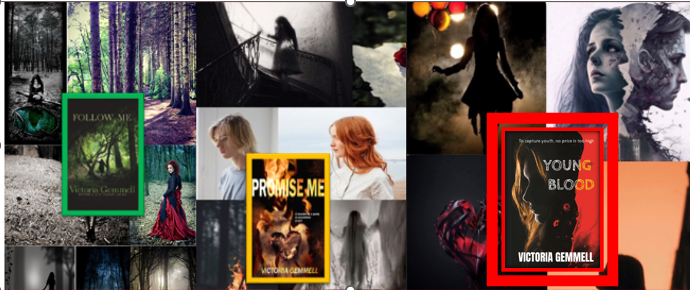
Don’t wait for the phone to ring (blog post 11 of series)

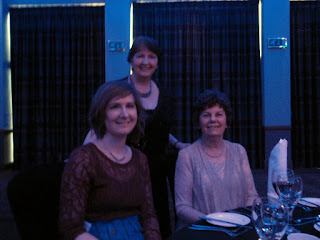
Young Blood Launch —- 2024

Back to the blog today after a short trip away. If you missed my last two posts about book submission stories you can read post 1 here and post 2 here.

When I started to write Young Blood I attended an open submissions event in Edinburgh, where I got to pitch face-to-face to a YA agent I was keen to meet. It was the first time I had pitched a book that wasn’t finished, and when she asked me to send through a full submission I had to confess it wasn’t ready, and then took months to send. She did remember me and my book (which was a good sign), but the version I sent was nowhere near as tight as my eventual final draft for this book, and I received a rejection (a nice, personalised one, which I appreciated).

So a lesson, be patient, and wait until your book is fully ready before pitching to an agent you like.

This period of time crossed over with the ‘in limbo situation’ with Promise Me, so by the time Young Blood was fully ready (i.e. had been through multiple edits, with in depth feedback on both structural and grammatical aspects, resulting in fleshing out bits, re-writing parts), I was then set on continuing with independent publishing. Also around this time I saw Reese Witherspoon post a reel on her Instagram with the words, Don’t wait for the phone to ring. (In reference to her starting up her own production company, so she could take control over her own roles, and ensure she was able to continue to make quality work).

By this point I had purchased a batch of ISBN numbers (this works out cheaper than purchasing one-offs). If you are serious about independent publishing and plan to go wide with distribution, you will need ISBN numbers – see here on the Nielsen site for more info. As quoted on the link to Nielsen, ‘Systems used by publishers, booksellers and libraries all rely on the ISBN to identify books ensuring they select and stock the correct title and edition.

Here are some of my personal reasons I decided to continue with Independent publishing for Young Blood:

  • I wasn’t under pressure to hit deadlines or do events This was a pressure I didn’t want at this particular time in my life because in 2023 I was organising my wedding, and my day job felt like it was getting busier (zapping my brain capacity). I didn’t want to feel beholden to anyone (I’m now moving more towards wanting to get fully back out there!)
  • I got to control when I released the book, and put it out on various platforms I didn’t need to rush a release date, but also I didn’t have to wait another 6 years for my book to see the light of day. I was able to put it out in print and on all digital channels
  • I had full control of purchasing my author copies in advance of my launch (So I got to control how many were available, and no worrying about them turning up on time for a big event)
  • I was able to see proof copies before they went to print Mistakes happen; but at least I was able to make immediate fixes to any spotted
  • I was in full control of cover design (this is something that wasn’t an issue with traditional publishing, but it was still fun to be able to come up with the concept, and collaborate with my friend Dainty Dora to produce the final design).
  • I get access to statements of all of my sales, and often from Amazon in real-time. Amazon KDP have a dashboard you can log in to which breaks down your daily and monthly sales in to ebook and print sales. This can be helpful if I try something to market my book, to see if it actually had any impact! I also get regular statements from Ingram Spark and Draft2Digital (who I am with for wider distribution) This article from the Bookseller published a survey exposing writers’ frustrations with lack of clarity around royalty statements, and delayed payments
  • I got to write the story the way I wanted to tell it Young Blood did not fit into the word count most agents and publishers were saying was ‘acceptable’ for contemporary Young Adult novels. There are many conflicting opinions about YA word count. With rising print costs, and opinions about diminishing attention spans amongst young people, some are saying it is ‘safer’ to publish shorter books. If you are an unknown writer, publishers are probably less likely to take the risk of a bigger spend. But when I did a quick check of some of the best-selling and most successful YA books over the years, guess what….nearly all of them were near 100,000 words. And for Young Blood to have the depth I wanted it to have, I needed the layers a bigger word count allowed (it sits at 100,000 words). A couple of people have said they feel it’s my strongest book so far, and I know this is because I put the layers in
  • Readers don’t care I mentioned this in my last post, that hardcore readers just want to read books, and often don’t have a clue or care about who you are published by (or not published by) What readers will care about is unprofessional editing, and production. So if you’re going to do this yourself, then do it right, and don’t work alone. I got so much support with edits and formatting, and the technical uploads (thanks Mum! See Rosemary’s books here ), as well as the design aspects. Even although platforms such as KDP and Ingram provide you with templates, you need to understand the technical nuances to ensure everything looks right

Now here’s my reasons why for my next project I’m going to try the traditional path to publication again:

  • I want wider readership To get wider readership I need someone bigger (i.e. an agent, and publisher, maybe just a publisher) to get behind me and help me promote and publicise my work to others. I don’t have the confidence to do this alone. I can’t deal with translation rights, distribution to bookshops is complicated, and some publications that list book releases will forever ignore me as an indie
  • Linked to above – I want to get into bookshops When Promise Me and Young Blood came out, this wasn’t an aim. I understand how hard it is to get into bookshops (even when with a traditional publisher), and my priority for these books was actually to get into libraries (especially school libraries). Bookshops have to be business minded and will only stock books they know will sell, and these tend to be ones which are getting a lot of exposure. They also need to trust the quality, and unless they read mine cover to cover, they’re not going to take my word for it. But for my next project (if it goes well, and ever sees the light of day) I would need a local bookshop in my area to get behind me as they seem to have all of the distribution tied up with local primary school events. Even although I am on wider distribution, so bookshops can find me on their distribution system, I have my books set to ‘no returns’. I have global distribution and if I allowed returns two things could happen: Bookshops could order in lots of my books, but if they don’t sell, they then return direct to me (the publisher) and charge me postage as well as RRP cost of all books unsold I’ve heard horror stories about a certain retailer managing to bankrupt small publishers by ordering in crates of books, keeping them in storage and forgetting about them, then returning them unopened to the publisher (which lands them with a massive unexpected bill). This is another insane part of the business that makes me wonder how anyone actually makes any money!
  • I want to kick the Imposter Syndrome I love doing events in schools and the community. Usually I feel confident but I was really nervous being part of the Paisley Book Festival School events last year because I was just waiting for someone to compare me to the bigger names on the programme, and ask me what I was doing there. Being validated by a publisher opens doors to big events; there is no getting around this.
  • And finally...I feel ready! Back in January when I wrote a post outlining my plan for this series, I talked about how writing should be treated like an apprenticeship, and that it’s a journey of learning. It’s easy for writers I think to share knowledge about the process and craft, and pass on hint and tips, similar to what I have been writing these past few months. What isn’t often talked about, is the emotional impact of sending your work out into the world, and the emotional impact of attempting to make a serious career out of writing, when challenges and setbacks extend way beyond your initial rejections. You’ll often hear writers say writing the actual book is the easy part, and I agree and think it’s because that’s the fun part (when things are going to plan!!) You can enjoy just creating, and get lost in the creative process. At the other end, once your words are released, they become a product to be consumed, and with this comes expectation. And that’s when it all can feel a bit overwhelming, and the pressure and disappointments can set in. Now, I feel ready for the emotional parts, because none of it feels so raw anymore. And because so many writers are opening up and being honest about the full picture of what it means to be part of the industry, it makes it all feel a little less daunting, knowing it’s okay to embrace both the failures and the successes.

So onwards I go. And onwards I hope you go too!

Links to my books are here

Submission Stories #Part 1 (blog post 9 of series)

In these posts I’m moving more into a personal ‘behind the scenes look’ at my submission experiences for my three Young Adult books. I’ll do a post for each book. I’m doing these posts because I love to read about other author’s journeys. I find it motivates me and makes me feel less alone in what is quite a mad creative world. Also for all three books I’ve had very different experiences, which resulted in me taking more personal control.

Prior to ‘Book 1’ there were other books, but I refer to them as my practice novels. I completed my first typed ‘novel’ (as opposed to the many, let’s call them ‘novellas’, I had written in jotters) when I was about thirteen, and received my first rejection from a major publisher.  I wrote a magic realism contemporary novel in my early twenties and sent this out to a few publishers and one agent. I randomly met the agent’s assistant at an event and he said he pulled my book out of the slush pile and enjoyed it. (The agent making the decisions, didn’t). Years later I bumped into him at another event and he asked what happened to it. I am sure you are thinking I should have persisted with this one. But I felt I could write better, and by that point I had started to focus more on writing Young Adult, because most of the ideas that were forming in my head seemed to lend themselves better to having teen protagonists. So here’s some highlights of my submission journey with my debut Young Adult novel, which eventually did reach publication back in 2015.

Book 1 – Follow Me

When I first started writing Follow Me something took over. It was the first time a book seemed to take on a life of its own and perhaps because I was living alone at the time, once I had established a basic plot, characters, and written my prologue (which set the tone and gave my protagonist a ‘voice’), every time I sat down I was able to immerse myself fully in the world.

A couple of people who read Follow Me talked about the ‘hypnotic’ characters and feeling like the writing contained some kind of undefinable ‘magic’. I mention this, not to ‘big up’ my book (though I will always have a soft spot for this story), but because it aligns to how I felt early on when ideas and chapters unfolded. I could feel the magic driving this one, and I knew deep down this was going to be ‘the one’; the book I was going to get published, because it was the first time I properly felt like I knew what I was doing structurally, and was excited by the story and characters. Also, something in my mindset had changed. I had started to send out short stories, and was reaching publication, and being placed in competitions. I was starting to believe I could be a ‘serious writer’.

When I had nearly finished my first draft I submitted the book to the TC Farries competition at the Scottish Association of Writer’s conference and won first place.

A well-established children’s author was the adjudicator, and said it contained the ‘magic’ needed to captivate a YA audience. This gave me the confidence to finish it, fine tune my manuscript and start subbing to agents. Colleagues at the time discovered print-outs of my first few chapters and their excitement at reading, and wanting to continue reading (along with my Mum’s encouragement, and another writing friend) all kept me going…

And then when I started to sub to agents I got emails from about three asking very quickly to read the full manuscript. I was on tenterhooks waiting for replies as you can imagine.  But then the rejections started coming in.

Here’s a snapshot of some rejections.

Unfortunately, the premise involving twins is too similar to another title on our list. We wish you the best of luck with placing your work.

Many thanks for sending me your submission, which I read with interest. I’m afraid, however, that I didn’t feel passionately enough about it to offer you representation. You write well, but I’ve just taken on a book which deals with teen suicide so this feels too close to it for me. Our business is subjective by nature and another agent may well feel differently. I wish you the best of luck with that.

I realise now how lucky I was to get some personalised feedback. The landscape of publishing has changed a lot and it can be rare now to get any response.

The most disappointing knock-back was a rejection from an agent I met face to face at a York Writing Festival who was so excited when she read my first three chapters, and was so lovely in person. The type of agent I would have been happy to work with! Interestingly I really didn’t gel with a different agent at my other 1:1 and she suggested quite a graphic, dramatic change to part of my opening which made me feel uncomfortable. This experience showed me the importance of finding the right agent or publisher. Someone you connect with, and who understands your story.

This was the rejection email from the excited agent (I had to wait over 6 months for this, and it felt like a loooong wait):

As you know, I was really excited by your novel when we met in York, and I very much enjoyed reading the complete manuscript. It’s stayed with me and I’ve been ruminating on it since. The premise to the novel is really interesting and I think you write very well for this market. I love sister/twin stories too! I do think there is a lot of potential here, but I’m afraid I don’t think, at the moment, this stands out in what is a crowded market. I’m sorry to disappoint you, but do bear in mind that another agent may feel differently.

I was gutted to get such a positive rejection.

I kept going.

A BIG publisher were doing a call-out for a new teen digital-only imprint, and wanted the full manuscript emailed.

I received this exciting response from one of their editors: Thank you for sending Follow Me to xx for our consideration. I enjoyed reading it and think that your accessible voice matched with the dark and emotional subject matter makes it well suited to the list. …..  (The email then contained some editorial suggestions)…Of course we would discuss all of this later should we decide to acquire Follow Me but I just wanted to check with you before I share the script with the rest of the team whether Follow Me is still available for publication and if you would be open to editorial suggestions such as those I’ve mentioned.

I responded positively. A month later I got this response:

I just wanted to let you know that because it’s been so hectic here, I haven’t taken Follow Me to our acquisitions meeting yet, but I hope to do so next Wednesday and so I should have a decision for your shortly after that.

Then… SILENCE.  Six months later, still nothing.

Around this time I met a different publisher, who ended up taking Follow Me, at a networking event. I nearly didn’t speak to him, because I had already submitted Follow Me to them via their website submission process, but he said he didn’t remember reading it, they’d had server issues, so to email through the whole manuscript.

I emailed the big publishing house to let them know a Scottish publisher had shown interest, and another editor got back to me apologising saying the first editor had gone on maternity leave. She asked me to keep her posted on what happened, and she would read my submission again. Because I was offered print publication (and because the big house had just kept me hanging) I accepted the offer from the Scottish publisher. I had received an email from the Scottish publisher one night saying they had finished reading Follow Me and asked to meet me. Because of the ‘nearly there moments I’d had already’, I still wouldn’t let myself believe it was going to be positive news. But it  was at the face to face meeting I received an offer for publication.

It was fast-moving from there. The meeting took place at the start of April, with a publication date set for October the same year (this is very rare). It was a whirlwind which led to lots of doors opening for me in terms of opportunities to do talks and workshops in schools and in the community. I’ll talk more about those another time. The rollercoaster of ups AND downs continued, something I don’t think many people prepare you for, when you reach the goal of publication.

And sadly, with my second book I found myself back out on submission. I’ll focus on parts of that story in post 2.

I’ll leave you with some things I learned along the way from the first part of this journey:

My tips:

Spend time preparing your submission. Perfect your synopsis and intro email, along with the sample chapters. Follow the submission rules (you’re doing yourself and your book a disservice if you can’t take the time to read these properly and get them right).

If an agent, editor, or publisher takes the time to give you feedback, know that this means they really do see potential in your work and if the feedback contains constructive criticism, take time to reflect and take on board what they say

If you’re pitching to agents and you have the opportunity to pitch to them in person (to allow a face to face conversation) take it! A five minute conversation can tell you so much about the other person, and a two-way conversation allows you to see if they are on the same wavelength about your book

If you’ve spent time perfecting your craft, your book is well-written and enticing, your success now is going to rely a lot on being in the right place at the right time, connecting with the right agent/publisher, and persistence

Related to this: make the most of any writing related networking events you are invited to. Sometimes introductions to the right people means you are noticed and remembered when submitting/pitching

Don’t send your book out to one agent at a time. Any agent who says they want an exclusive read is worth avoiding (unless you’ve made some sort of personal connection with them, but even then I would say no- you’ll find out why in my next blog post). They can take six months, or more, to get back to you (IF AT ALL – the ghosting is real). A lot of very successful authors have had their manuscripts rejected 20 + times, so do your maths on that one. if they were sending them out one at a time, waiting months for responses

Forge friendships with creatives who understand the pain of the ups and downs of this journey. If you detect jealousy and negativity try to spend more time with people who lift you up. Trust me, at ALL times in this weird creative world, even when folk think you are doing well, you need to surround yourself with positive people

And to help us all keep the faith, some famous rejections:

Lisa Genova, Still Alice: about 100 rejections (or non-replies) from agents (info from Lithub.com)

After getting very little positive feedback, Genova opted to self-publish her book. Eventually, it was acquired and re-issued by Gallery Books, an imprint of Simon & Schuster, and proceeded to spend 40 weeks on the New York Times best seller list, and was made into a film.

Audrey Niffenegger, The Time Traveler’s Wife: 25 rejections from agents.

After getting rejected by 25 agents, Niffenegger sent the book directly to a small San Francisco publisher, where an editor discovered and loved it. It became a best seller and was also made into a film.

One of my favourite books of recent years was Lessons in Chemistry. Here’s an interview with author Bonnie Garmus at Maria Shriver’s Sunday Paper (you can read the full interview here https://www.mariashriversundaypaper.com/bonnie-garmus-lessons-in-chemistry/) – Did you indeed receive 98 rejections before Lessons in Chemistry?

“Yes! And they were all from agents. What happened was I had written a novel that was approximately 700 pages…Finally, agent number 98 said that she would read part of it…She wrote back the next day and said, ‘You write well, but you don’t understand this industry…’ The email was pretty nasty, but it was also a very big help. She said, ‘No one’s going to look at a debut author’s 700-page novel—ever. Do yourself a favor and write a novel of appropriate length, and you can send me that when you finish’—which I never did. But that all turned into Lessons in Chemistry. I started completely new. “

Reading these stats makes me realise I’ve never been this persistent. Talent, persistence and resilience. These are the magic ingredients.

Competitions and Connections (blog post 8 of series)

SAW Conference 2025

This weekend I attended the Scottish Association of Writers’ Conference, where writing groups from all across Scotland congregated at the Westerwood Hotel. The weekend was jam-packed full of workshops, talks from Industry experts and adjudications. I was delighted to win Second and Third prize for the humorous short story competition. One of my stories The Opposite of Cake was an extended version of a short flash I wrote a couple of years ago during my blog challenge, so a great example of how creative tasks you set yourself can lead onto bigger things.

I attended a brilliant workshop run by the talented Catherine Ogston, where she taught us about Hermit Crab Flash Fiction. This is where you borrow from an existing form or structure, such as writing a story in list form, or as an instruction. I had no idea this type of structure was given this name. The exercises in the class inspired a new idea for me. I also attended another brilliant workshop delivered by writer Colette Coen where she showed us how to use memory to inspire ideas. I came away with two new story ideas from the exercises, and enjoyed using different techniques to kick-start my creativity.

Writing competitions played a massive role in building my initial confidence when starting out as a writer, and have continued to give me much needed boosts along the way to encourage me to keep going.

I first attended the Scottish Association of Writers’ conference when I was seventeen. I didn’t pluck up the courage to start entering their competitions until my twenties and I nearly fell off my chair when I heard my name being called out as a second place winner in the SAW General Short Story competition during the early years. I was secretly relieved I hadn’t won first place as that would have meant standing up in front of hundreds of attendees to read out my work, which I wasn’t quite ready for (They no longer expect winners to read live!) It ignited a much needed belief that I could do this, I could actually write stories that people enjoyed reading.

Fast forward a few years later, I started to get short pieces published in literary journals. Then I won the SAW TC Farries trophy for my first proper attempt at writing a Young Adult novel. This gave me the courage to start submitting my book to agents and publishers, and winning this competition also gave me something significant to mention in my pitch letter.

Winning the TC Farries Trophy SAW 2011

When my first book was out on submission, (which I’m sure any writer realises can be a brutal time of highs and lows), I continued writing shorter fiction. When I received Highly Commended in the WordswithJAM short story competition it gave me a lift. The best part was attending the launch night for the competition print anthology at Foyles Bookshop in London with my Mum. I asked her to come with me as I worried it might be my one and only ‘book launch’, and I wanted to celebrate properly. As it turned out, it wasn’t long after I had my own launch for my first Young Adult novel at Waterstones. I think the night in Foyles gave me that extra needed self-belief at the time.

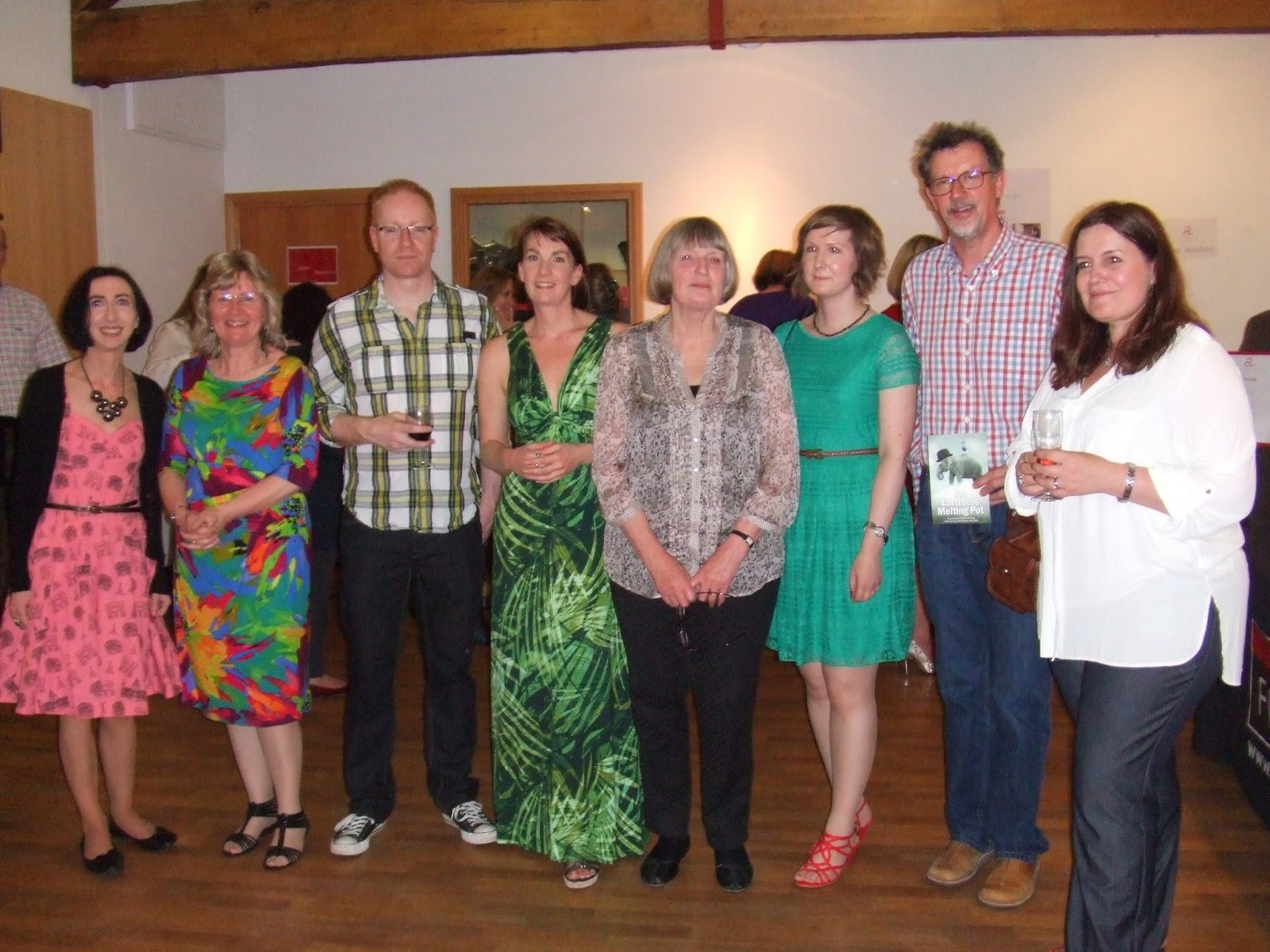
An Earthless Melting Pot Launch – winners at Foyles Bookshop London 2013

This is why I continue to enter competitions. There are so many moments during the rollercoaster of writing and releasing work out into the world that challenge our self-belief. It’s nice to receive some concrete validation from time to time. It’s also a bit of an adrenaline rush receiving emails or announcements where an editor or judge tells you they have selected you as their winner, or placed you on a short list. When I won The Writing Magazine school-themed short story competition a couple of years ago it was published in the magazine and on their website (see here). It was exciting to win, and even better when readers of the magazine looked me up on social media to tell me how much they enjoyed my story. Knowing my writing connected with others and made them feel something is what makes it all worthwhile. A big motivation to write is to feel connected to something bigger, and make sense of the world.

Being surrounded by writers at the SAW conference this weekend also reminded me the importance of this community. One of the speakers highlighted that when you are part of a like-minded tribe and you share your real-life stories (never mind fictional) with all of the ups and downs this creative life throws your way, they will understand in ways no-one else can really comprehend.

If you feel brave enough to send your work out into the world, here are some competitions/sites I have come across recently. Thanks to Catherine in her workshop for highlighting some of these. Happy writing!

THE BATH SHORT STORY AWARD | International Short Story Competition Closes soon!

Flash Fiction writing competition

Home | New Flash Fiction Review

The Plaza Prizes The Plaza Prizes – International Literary Awards – US$25,000 Prize Fund

Writing Prize — The Alpine Fellowship

Inspiration is Everywhere #Part 3 (blog post 6 of series

Continuing with the theme of sharing where I find inspiration for stories, today’s post is about the inspiration behind my Young Adult books. I’m cheating a bit with this post and extracting a section from a blog post I wrote back in 2022, where I went into quite a bit of depth already about the inspiration behind my debut YA mystery, Follow Me, and my second YA mystery, Promise Me. You can read the full post ‘Stranger than Fiction’ here

My latest YA Thriller, Young Blood, was also inspired by an article I read in the press, so it fits nicely with the theme of paying attention to what you read in the news. Just like I talked about in last week’s ‘inspiration’ post, the best stories can be formed from things that catch your attention in ‘real- life’, if you add in the ‘What if’ question, and let your imagination run wild…

News headlines often catch my eye and act as a catalyst. When my imagination takes over, and characters start to form, a story of fiction then unfolds, where I imagine what would happen if fictional teenagers were placed in these situations I read about.

Numerous reports of the unexplained Bridgend suicides stayed with me for years .There were twenty-six known suicides in the town between 2007-2008, and most of those who lost their life were young adults. I remembered opening newspapers at the time, wondering what on earth was going on in that town.

In my book Follow Me my 17-year-old protagonist, Kat, begins a desperate search for answers and explanations, after her twin, Abby, is the sixth in their small Scottish town to die by apparent suicide.

A big theme of my YA mystery, Promise Me, is the way in which press coverage and social media has the power to portray a certain narrative during high profile, emotional murder cases. One of the inspirations of the story was my memory of the sensationalist press coverage of convicted Scottish teen Luke Mitchell from many years ago. From 2003-2005 there was lots of press coverage around his case. Demonising language and character assassination was often used in reporters’ narratives (With headlines like ‘Devils Spawn’ appearing on front page reports).

The headline ‘Boyfriend, 15, charged (with murder of schoolgirl Jodi Jones)’, was published in the Edinburgh Evening News, (2004) before said boyfriend (Luke) even went to trial. Everyone in their small-knit town knew he was ‘the boyfriend’.

The paper took things a stop further and named him. The Press and Journal, Aberdeen, also ran a similar story. They faced contempt charges but were cleared of breaching the Criminal Procedure (Scotland) Act, that states “no newspaper report of any proceeding in court should identify anyone under the age of 16.” (In Scotland this is now 18). They were cleared of charges because judges ruled that the story was not a report of court proceedings. This is just one troubling example of how a fifteen-year-old boy, (and throughout his trial when he was sixteen), dominated headlines. Numerous false ‘facts’ were published about the case, and tabloids delighted in running sensationalist reports about Mitchell’s apparent obsession with knives, drug-taking, lack of discipline in a single parent household, even linking his music tastes to the murder.

I read a lot about the case and it made me realise how easy it could be for a small community to spread rumours relying heavily on hearsay and perceptions of a local outcast boy’s ‘reputation’, and how this could influence local prosecution investigations, and a jury. Conversations I’ve had with legal people where I questioned how anyone could truly be impartial in such a high profile case said a judge would have ensured jurors had no local connections to the case. The trial took place in Edinburgh, less than half an hour away from where the murder took place. I was reading newspaper stories an hour away from where it all unfolded and still felt emotional reactions to the reports, even if I didn’t personally know anyone.

My book Promise Me is a work of fiction, set in an affluent fictionalised Scottish village, and not about the Mitchell case, but I hope it makes people think about how damaging media and indeed, court narratives can be, and the distorted perceptions that communities can sometimes have of young people who don’t quite ‘fit’. In my job I’ve undergone unconscious bias training and I really believe the police involved in this case let a lot of their own unconscious bias (and media pressure to get a conviction), influence their decision-making. If you have an interest in finding out more about this case I recommend the brilliant podcast Through the Wall by Naomi Channell.

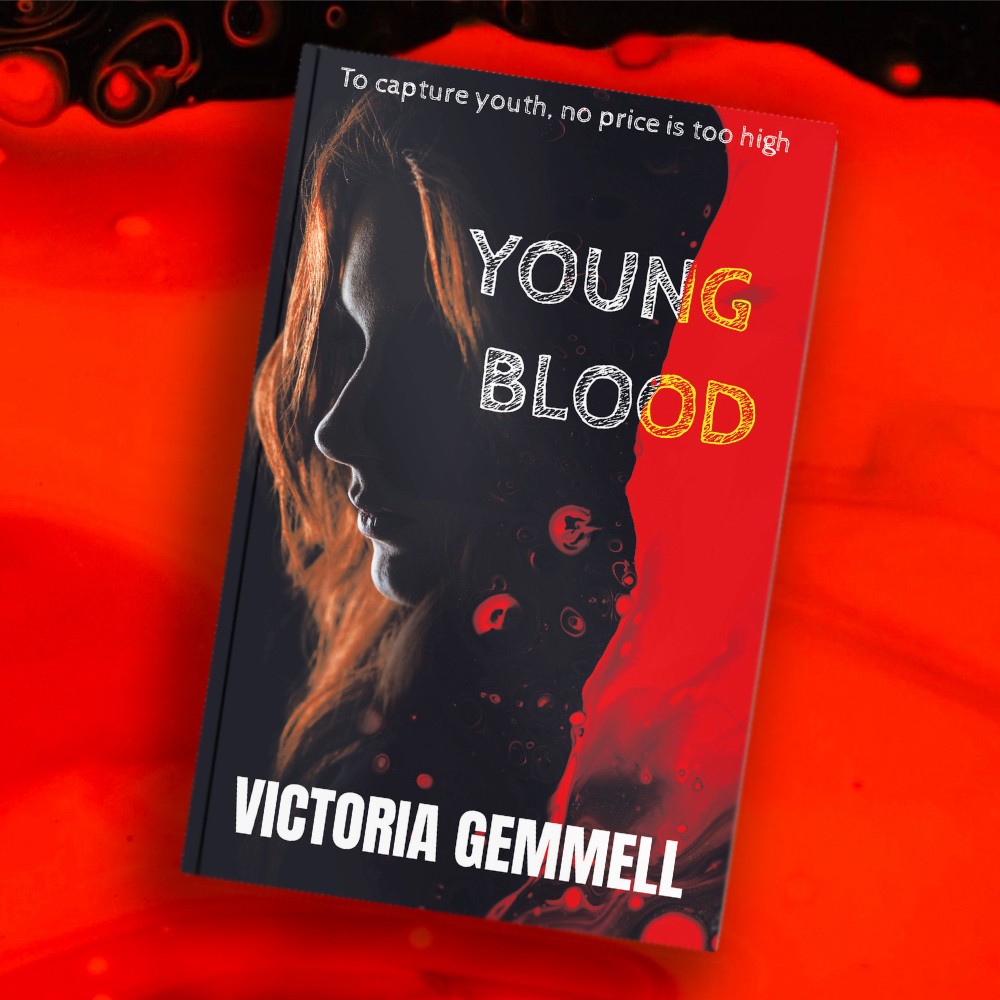
My latest YA thriller, Young Blood, is a story about young people in the care system who are kidnapped and taken to a secret house to become exclusive plasma donors for an elite group of wealthy adults who want to stay youthful and healthy. It’s told from the perspective of two teenagers – Ana who is outside the house and dealing with the realisation her mum may have early onset dementia; and Hope who is captured and taken to the house.

Young Blood was inspired by an article I read about an American start-up company ‘Ambrosia’, founded by a medical school graduate in 2016 which sold ‘young blood transfusions’ (from young people into older people). Charging a large sum of money for these transfusions, they claimed a range of health benefits such as treatment for Alzheimer’s. In a pitch about Ambrosia at a self-enhancement conference in 2017 Karmazin said, “We’re a company interested in making you young again.” In my day job I work with vulnerable teenagers. I see how much instability and uncertainty young people in the care system in particular can face. This sparked off the idea of having a powerful doctor set up a premium club who can access pure plasma transfusions from a select group of young people who are easy to make ‘disappear’, whilst maintaining a super-controlled environment within ‘the house.’

Links to buy my Young Adult books are here

I often take along strange news headlines to creative writing workshops I deliver in schools and get the class to choose one as inspiration for a story. A popular headline lots of pupils chose last year was, ‘Girl discovers criminal living in her attic.’ I love hearing the ideas form, and characters that start to develop. It also shows that we can all start with a similar idea, but when you create your own unique characters a truly unique story also starts to take shape…

Why not spend the week looking up interesting headlines, and see if it sparks off any great story ideas!

Inspiration is Everywhere Part 2# (blog post 5 of series)

An old observation diary

Today’s post is a continuation from last week where I shared some creative exercises that have helped me understand that when it comes to writing, and creating, you can find inspiration in the everyday ~ if you pay enough attention, stay curious, and let your imagination run wild!

When I deliver creative writing workshops I encourage participants to think of fun ways they can experiment with their writing. Often writers can put a lot of pressure on themselves, especially if working to deadlines, or expectations. It can also be daunting if you think a story should contain ‘complicated’ words or be a certain length.

I find a good way to take the pressure off, and to stop over-thinking, is to engage in writing tasks which don’t require a lot of words, and in fact make you start to look at words in a completely different way.

A challenge I took part in years ago, (just for fun, with friends), was to try and write stories composed of only three letter words (which then extended out to write stories with four letter words, five letter words – you get the idea!).

I amazed myself with being able to write not one, but quite a few, very short stories composed of three letter words. I’m sharing one of them below, which turned into a bit of a philosophical story.

3 Letter Word Story Example

Pat Woo and the Sun


One day Pat Woo saw the sun dip and tip out the sky. 
”Wow! See the sun!”

Pat Woo saw the sun run and Pat ran too. The sun set off for the day. One sun ray hit the ill cow. Pat saw the cow fly – set out for the sky. 

“Moo! Pat Woo! The cow can fly!”

Pat Woo saw the sun run and dip. Its ray hit the old rat. The old rat was lit. The rat got fit – saw the sky; his old eye now new. The rat saw the sun; saw Pat Woo.

“Pat Woo! The rat can see!”

One ray hit the cod. Pat Woo saw its fin dip; saw the cod nod and the cod got out the sea net.

“Pat Woo! The cod will not die!”
”Hot sun you are ace.” Pat Woo had joy for the sun. 

The sun had fun. Pat Woo did too – the day Pat Woo saw the sun dip and tip out the sky.

Why don’t you give this a go yourself? If you’re part of a creative writing group, it might a fun warm-up task to try to wake up the creative side of your brain.

As an extension of last week’s ‘Small Stones’ exercise, I’m going to challenge you to keep a more general ‘observation diary’. This can take the form of visual notes such as photographs, or scribbles (or notes in your phone), of interesting things you notice during your day-to-day. The Small Stones were quite creative paragraphs or lines, but in an observation diary you might want to capture musings and reflections on things in the news, things you overhear etc, anything really which you think one day could form part of a story.

Take a Photograph a Day

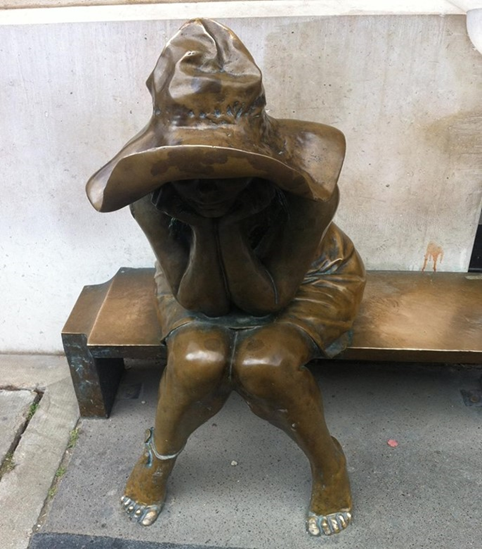
Was this a real girl?
Why is there a shoe in the cage with the skeleton?

I’m a very visual writer and I love taking photographs. You can start to build a ‘photographic’ observation diary by taking at least one interesting photograph every day. This could be anything which catches your attention; an abandoned shoe lying at the side of the road, an interesting sculpture you walk past every day, a strange doll in the window of a shop… You can start thinking about the story behind the image there and then, but often it might take a while for a proper idea to form. And that’s fine. Because now you’ve stored the photograph somewhere on your phone, you can return to this later. You might even want to combine the small stones tasks (see the post here for examples), with your photographs.

I’ve shared some photographs above I took when on various trips across the years, which I then later turned into short stories.

The heart photograph was a print which hung in the staircase of a Paris hotel I stayed in during my first solo trip abroad. I spent three nights in Paris and enjoyed wandering the streets alone, and it was during this time, passing by this print every day, I started to form the idea for a short story ‘Only You’ where a jilted bride spends her honeymoon alone in Paris. The story was runner-up in a competition, and broadcast on Hospital Radio. They sent me a CD recording of an actor reading it aloud, which was quite special. I loved hearing my words come to life.

If you enjoy finding inspiration from photographs check out the Scottish Book Trust 50 word story competition here They provide monthly photographic prompts

Listen to conversations

When I say listen to conversations, I mean within reason, as obviously it’s a bit rude to invade others’ privacy. But if you’re on a train or bus where your fellow passengers insist on talking loudly to one another (or on their phone), then naturally you will probably pick up interesting snippets of conversations throughout your day.

In an old ‘observation diary’ (where I used to write down thoughts that randomly popped into my head, interesting facts or stories I came across on social media or in the news, as well as overheard conversations) I found these snippets:

A man and a woman in conversation: “Tommy, you’re being really unfair. You’re stopping me from going to Hollywood. You’re being really bad to me with the brain transplant thing. I know I’ve had at least four brain transplants behind my back.” On the surface, most passengers would dismiss this woman as talking nonsense. But what if the man she is with is a mad scientist, and she’s the subject of numerous experiments, and is starting to rebel?

A teenage girl was sitting behind me on one train journey, talking loudly into her phone, “She fell out with me when I was camping because she said I never texted, but I couldn’t text because seriously I didn’t have reception… and then I ended up sitting with her all night on a night out so she never felt left out… I hate falling out with people, the thought of someone hating me, or having a problem with me…” At this point a boy nearby asks me if I’ve got a pen. He then returns to his seat to scribble something on a bit of paper and when he gets up at his stop he chucks a note at the girl before walking off.

The girl then shrieks into her phone, telling the person on the other end, “Oh my f-ing God. A guy just threw a note at me on the way off his train. Wait, wait. His name is Ryan. I swear… wait… he must have been listening to my conversation. How rude, haha.” (Newsflash girl, I think we’re all now listening)… “He’s said, You are too beautiful to have friends who are mean to you. Add me to facebook and let me make you smile.”

Now depending how your writer brain works, this could either be the start of a romantic novel or a true-crime type stalker thriller….

Next time I’ll be writing more about the inspiration behind my books.

Happy writing!

Learn your craft #2 (blog post 3 of series)

Photo Shakespeare & Co bookshop, Paris (taken by me)

This post follows on from last week with the focus on perfecting your craft. Last week I shared some hints and tips from writing workshops and talks I’ve attended over the years (read here )

This week I’m going to share some highlights from two of my favourite books about ‘the craft’; Bird by Bird by Ann Lamott and On Writing by Stephen King. The reason I love these books in particular is because they are down-to-earth, honest, funny, include memoir style anecdotes from their own lives (particularly King), and neither writer pretends to know everything about writing. So I trust what they say.

Anyone who pretends to understand everything about how stories or books or poetry work is probably not doing it right, because no matter how much you try to ‘teach’ someone how to put words together, I always think there’s still going to be that indefinable piece of magic (soul, imagination, instinct – call it what you want) that can never be taught and can never truly be explained when analysing a text. But as I said last time, if you want to give your work a good chance of heading in the right direction, you can make life a little bit easier by understanding the foundations which hold it all together.

A lot of what King says in On Writing aligns with other advice I’ve heard in workshops and I recognise a lot of his points when I receive feedback, or when I read others work. I really recommend reading the whole book as it’s a great memoir alongside the hints and tips. I believe there’s various editions of it; the one I have in the house is from the year 2000 (which I think may be my husband’s copy as I used to own an earlier one I am sure). Bear in mind when you get to the part about submitting work that publishing has changed a lot since King started sending books out to publishers/working with agents, so I’m not going to reference any of that. I’ll do a separate post about being out on submission on a future post.

Adverbs and dialogue attribution

I believe the road to hell is paved with adverbs – Stephen King – pg 139

To back up this quote King uses this example; Instead of saying ‘he closes the door firmly’ Just slam the door! Other examples I’m thinking of as I write this would be He ran quickly. You could just have him run.

The over-use of adverbs is one of the biggest mistakes writers probably make. King even admits to still doing it in some of his work, even when he knows it’s a ‘thing’.

He also talks about dialogue attribution On page 140-142 he gives various examples of this:

Jekyll grated. Shayna gasped. Bill jerked out (all after lines of dialogue)

King then goes on to say, ‘writing he said, she said, is divine‘. Just letting the dialogue do the work is something that’s quite hard to do when you are anxious about getting your point across. King acknowledges that mistakes in these areas are exactly because of this, ‘fear that our reader won’t understand us.’

I also think the over-use of adverbs, and adjectives and verbs, (she whispered softly, he shouted loudly), hark back to primary school days when we were learning grammar. I don’t say this to dismiss the importance of learning grammar, (the foundation of any language), but I bet each time you were taught something like an adverb or adjective you then had to insert them into several sentences for homework. And then you got a gold star for creating interesting sentences littered with them. So it’s almost like learning new rules all over again.

Style

King talks about being conscious of using the passive tense (the body was carried from the kitchen being one example he uses of being too passive). He digs deeper into style and how paragraphs are formed. Something I learned when writing my Young Adult mystery thrillers is how shorter sentences and paragraphs can help keep the pace. No one wants to be bogged down by a lengthy description at a crucial tense moment. But then if there’s no variation in your style, it might all feel a bit too frantic, so you need to know when to slow it down too. Feeding in more description is something I’ve become a bit more conscious of, as I know I can sometimes rely too heavily on dialogue and because I’m a very visual writer I have to remember that readers aren’t always going to picture things in quite the same way.

Kings mentions ‘making every word count’ and the importance of editing your work. If you find you often ‘over-write’ a tip from me is to try writing flash fiction. Limiting yourself to 100 words or 500 words is the best exercise in making every word count, and I think it’s a great way to build your confidence as a writer. I’ll do a blog post about writing flash fiction at a later date.

Characters – digging deep

With echoes to last week’s post, both Lamott and and King talk about the importance of characters and Lamott in Bird by Bird talks about ‘writing towards vulnerability’. She really emphasises the point about writing in a ‘directly emotional way.’ This made me think of a quote I see popping up online often ( I’m not sure it can be attributed to anyone in particular): ‘What people remember is not what you’ve done, but how you made them feel’. I think that’s true of books. The ones that stayed with me over the years made me feel something, and that’s because of the characters. They’ve taken me along on their journeys and made me feel all of the emotions.

Lamott says, ‘Plot grows out of character’. King says, ‘I think the best stories always end up being about the people rather than the event, which is to say character-driven.

Obviously you need your characters to do something interesting to be interesting and that’s where the plot comes in. Like we covered in last week’s blog post, your character needs to want something, and then go on some kind of journey. But often you won’t know what they want or what the journey actually looks like, until your characters take shape, and become three-dimensional and believable.

They will probably start to surprise you, just like people in your life often surprise you (in good ways, and bad ways). They might annoy you (especially if they start to take over a bit). In my second YA book, Promise Me, one character started to take over so much that I had to completely change the relationship dynamic I had originally intended. I also had to re-write the ending because the original didn’t ring true to what one of my character’s would have done. A similar thing happened for the ending of Follow Me. This is why I always say you can plot out your novel step by step, but never be scared to deviate from the plan. Humans are unpredictable and if you story becomes unpredictable, that’s when it shows you it’s working, and you get to experience it almost like you are the reader, as well as the writer.

There are loads of books out there about learning your craft. If you’re reading this and thinking of your own favourite, please leave a recommendation in the comments.

I also subscribe to The Writing Magazine which is always packed full of helpful advice and articles. There’s also a great section with call-outs for submissions to competitions, journals, publishers etc.

So now I’ve got you thinking about your craft, what if you’re finding it hard starting on a project.

Next time I’ll be talking about inspiration, and will tell you more about how some of my ideas formed, as well as the importance of allowing yourself to have fun.

Happy writing

Learn your craft (blog post 2 of series)

In my last post I mentioned that a big part of my writing life has consisted of attending writing conferences, groups, talks, and workshops. Over the years I absorbed hints and tips and learned a lot about ‘the rules of writing.’

If you are serious about getting published, or sending your work out into the world, my advice to you is to take your time perfecting your craft.

You don’t always have to know what you’re doing for a good story to take shape as I think natural talent and instinct have a big part to play when letting a story unfold. But it can all get a bit messy if you don’t have a fundamental knowledge of the rules which lie beneath it all; like structure, pacing, dialogue, and character development. If you develop confidence in all of these areas I firmly believe this will help you actually complete that book you maybe keep starting, and never quite finish.

If you want to start submitting stories to journals, magazines, competitions, or books to agents and publishers, then you also have to pay attention to submission formatting rules and perfect your grammar. This is where structured writing groups in particular can be really helpful as there’s usually a good mix of experienced writers in attendance who will happily share their knowledge.

To prepare this post I looked through old USB sticks (tip: if you encrypt your USBs make sure you know where you’re saved the passwords!!), emails and notebooks, looking for advice I had noted down from experienced writers over the years. Here’s some highlights I want to share with you:

Structure and Pace:

Alexandra Sokoloff delivered one of the best workshops I’ve ever attended at the Scottish Association of Writers Conference back in 2015. Before writing novels, she wrote for the screen, and gave us an insight into her ‘Screenwriting Tricks for Authors’ which you can read about fully in her book and you can see a summary outline on her website/blog: Alexandra Sokoloff | Bestselling Author. I loved the way she showed us how our novels could be aligned to a three-act screenplay type structure, highlighting in particular the importance of climaxes throughout to keep readers turning the pages, and ramp up tension/conflict.

A summary of Act 1 (this is on her website so not giving away too much here): Meet the character, show the reader their ordinary world, give hints of their inner/outer desire, give them a problem and a call to adventure, and then add in a climax. She then went on to describe the components of Act 1 and 2.


At the York Writers Festival back in 2013 Julie Cohen delivered a fantastic workshop on the importance of pace:

  • To keep a novel going you need conflict
  • You need to create atmosphere, emotion and show character development
  • Nothing should be wasted; each scene should have two or more purposes
  • Functions (purposes) = Move the Plot forward, Move the Subplot forward
  • Similar to Alexandra’s workshop she mentions Conflict as Hooks – end each scene/chapter with a hook so your reader doesn’t want to put the book down

Emotion:
During workshops on Characters’ emotions- A tip: Sometimes we tend to stick in the safe ‘middle ground’, not going deep enough

Dialogue – use it to reveal more about your character. The way characters talk to one another can tell you a lot about their relationship and how they feel in situations.

Tips on all key things from an agent:
Julia Churchill, one of the biggest UK Children’s Book agents offered Twitter followers the chance to join an hour long zoom workshop (This was back in 2022 when Twitter existed and was a useful platform for writers!) I also heard Julia talk on a panel at the York Writers Festival and she sounded very professional and knowledgeable. She was one of the first agents to request a full read of my YA mystery Follow Me, but decided ultimately it was too dark for her.

  • Characters: A good character needs to come to life.  What do they want and why? And how do they achieve this? Give them a dilemma – a huge stakes thing. What is at stake? Think through the stakes of your story. It needs to have clarity. Character really matters to invest the reader. Think about your favourite character – what makes them special? She gave as an example Charlie, in Charlie and the Chocolate Factory – it was his integrity that mattered.
  • Setting – Think about incredible, vivid, sense of place settings. Setting can add a lot to the story.  
  • Theme – You want to leave the reader with something. A feeling. A message. She gave examples of books which had at the heart ‘being true to oneself’
  • Voice – This plays into a part of you at whatever age the book is targeted at. As a nine-year-old – the sense of magic, warmth, and adventure you want to feel. Teens – takes you back to sense of angst etc. Agents are always looking for authors with a ‘voice’  

Show, Don’t Tell

What does it mean? I talked about this at a workshop with Greenock Writers last year.

If you do too much ‘telling’ in a story it can slow it down, and keep the reader too removed from the action/emotion. ‘Showing’ helps your story come alive. A mix of showing and telling is okay but you need to engage the reader and help them see the story unfold in some way.

Some examples: (From Reedsy and the Writing Pro)

Telling: Michael was afraid of the dark.

Showing: As his mother switched off the light and left the room, Michael tensed. He huddled under the covers, gripped the sheets, and held his breath as the wind brushed past the curtain. 

Telling: When Mary failed her test, she was embarrassed.

Showing: When Mary saw the big red F on her work, her cheeks flushed. She crumpled the test and hid it in her desk, hoping no one noticed.

Telling: The forest is scary.

Showing: The forest is full of staring eyes. The branches look like gnarled hands, reaching out to grab me. Leaves crunch under my feet as I try to find my way home. The air smells like mildew and decay.

My tip:

Read lots, and read widely. You can learn a lot about the craft of writing simply by reading a well-written book or story. Pay attention to the structure, pacing, characters. Why do you love it? Why do you want to keep reading?

Find writers who have broken the rules; books with weird punctuation and strange structures, because once you develop confidence, you can then break the rules and be a bit experimental and creative with your style. When I read Jack Kerouac’s On the Road in my twenties, I found it quite difficult to read but I liked that his stream of consciousness style, with erratic punctuation, was carefree and raw, and it made me realise I was being too ‘self-conscious’ in my writing.

If I am too conscious of trying to write a story, it’s not working. It’s not until I have that feeling of being lost in the story and letting the characters and a subconscious part of my brain take over that I know things are clicking into place.

So follow the rules, learn your craft, but then let go, and just write!

On my next post I’ll share some favourite books which focus on Learning your Craft

#

Happy 2025

I was lucky enough to extend my festive holiday this year and flew off to sunny skies just as my office was re-opening. A dose of sunshine and relaxation was the perfect way to recharge and have space to reflect on my writing and what I want to achieve in 2025.

I often find when I’m away from everyday life the creative and ‘ideas’ side of my brain really wakes up. I even managed to ‘type’ a short story in my phone while I was sitting out on my balcony in the sun. Having space to think properly also allowed me to reflect on how I could use my blog here in a bit more of a consistent and creative way.

A lot of young people (and adults!) I come into contact with who have an interest in writing are yet to find supportive communities, and don’t know where to start when delving into the world of writing.

Often when I do school or community workshops I’m asked questions around the practical side of writing, as well as my own experiences and how I have approached things.  I realised there is a lot I could write about on here, starting with where my writing journey began, and all of the different experiences and creative projects/competitions/workshops I have found to be helpful along the way.

I am no expert by any means within the industry, or a big success, but what I’ve had are real experiences – mostly good, sometimes deflating- over a large period of my life, a lot of which I was lucky enough to be introduced to thanks to being immersed in a supportive writing community (which started with a supportive writing Mum).

Over the years I’ve submitted short stories to competitions/journals, and then started to pitch books to a range of agents/publishers, met with them face to face, made it to publication then changed course so had to go back out on submission; had zoom pitches, a chat with an editor when I made the final seven in a big competition. I’ve faced numerous rejections, been ghosted, and most recently delved into independent publishing. I’ve attended writing festivals/workshops/talks/retreats, absorbed advice from top authors, agents, publishers and other writers of all levels of experience.

After my first book was released I started to deliver creative writing workshops and talks in schools, libraries, community venues, small book festivals, rooms to an audience of three… Adjudicated competitions for writing groups, bigger conferences (and even adapted my workshop to an online version during an unexpected lockdown!). I’ve organised in-person and online book launches, written press releases, been interviewed for a magazine and over the phone by a journalist.

I’ve kept my creative momentum going by setting myself numerous silly and engaging creative challenges over the years, which is good to remind myself about, as often when writing starts to feel too serious/stressful it’s good to take some time out to remember how to be creative. I know a massive challenge of any creative is staying motivated.

That was a bit of a brain dump list but introduces some themes I hope to focus on.

I remember reading once that writing should be treated like an apprenticeship; that it’s a journey of learning. I started my ‘apprenticeship’ way back in primary school and I am still very much learning. Every new writing project I start, I want to be better.

This year I hope to start a new type of writing project, and plan to go back out on submission again to try to secure an agent, which I am sure will bring a whole lot of new experiences and learning.

You can get all of my posts into your email inbox if you subscribe (on my homepage).

I plan to give honest insights into the behind the scenes of what a writing life for me has looked like so far (and new experiences going forward), with links to any interesting groups or writing related sites/comps I come across.

The first post will be going live next week.

Wishing you lots of success in your own writing this year, and just a reminder it’s okay not to feel dynamic in January. If you are still Wintering, take that time to relax and recharge!

Wintering

A quote caught my attention recently on LinkedIn where a writer referenced Laura Strom (who is part of a Regenerative Leadership group) where she described ‘Wintering’ : ‘Wintering and resting are timeless practices that invite us to slow down, reconnect with inner nature, and tap into the depths of our creative cauldron. In a world that glorifies constant productivity and ceaseless activity, intentional rest becomes an act of rebellion, a means to disrupt the status quo. It is through rest that we challenge the notion that our worth is solely defined by our achievements and productivity.’ I’m aware author Katherine May has also penned a book called Wintering (which I’ve never read, have you? ) and I suspect from reading the blurb, it will follow a similar philosophy to the quote above.

As soon as we hit Autumn, and the days shorten, my body goes into a bit of hibernation mode. After I launched my latest book in August my automatic thoughts turned to ‘hurry up and get on with the next project’ but this is the first time for a while I have yet to actually start the next project and I’m giving myself permission to take a bit of a break. I have plenty of ideas zooming around my head which are often making it onto paper in scribbled note form. The ideas form two very different projects, which I think is a big reason why I am stalling as I can’t decide which to focus on and get on with! But I also do feel like I need a bit of a break.

I’m tired of logging into social media and wondering what to post. And I also haven’t posted on here in a while. I’ve got a day off today so decided it was time to log in to get some words down! I get so much fatigue from talking to people all day long in my day job I just crave a bit of silence sometimes from words and thoughts and often shy away from updating my social media feeds because I can’t even begin to think about how to be ‘engaging’. I’m sure I’m not alone in this, but when I see other writers I follow post regularly about all the exciting things they are achieving I always think I should do better.

But then this line from the quote really resonated: ‘challenge the notion that our worth is solely defined by our achievements and productivity’

In the writing world sometimes I think we forget to post about the joy of just creating a wonderful character, or celebrating the days where we have crafted a bewitching line of narrative, or written a scene that suddenly comes together in a seamless way that makes you doubt you even wrote it… Even that sounds like focusing too much on productivity, but it’s the magical feeling of being swept up in words that keeps me returning to projects, or starting new projects, even if I’m feeling a bit tired and fatigued. Because I know how much enjoyment it brings me, when I’m in the middle of writing a book or a story that starts to come alive and almost wants to write itself. And during the days it doesn’t; that’s okay too. The words will always come.

The good thing about the darker evenings is the feeling that it is okay to want to stay indoors and curl up with a good book or good film/TV series and not think about doing too much else. I’ve been on a bit of a reading slump this year so I feel like I need to give myself permission to slow down and enjoy soaking up other peoples’ stories for a while, before I start my next one….

And actually I have been enjoying other peoples’ stories the past few weeks as I was asked to judge a short story competition for Greenock Writers’ group. I’ll be returning there this evening (after doing a talk there back in September). I’m very much looking forward to reading out my results, and hopefully meeting the winners. It was a very welcoming, enthusiastic group and it always reminds me that another aspect of the writing world I really enjoy is meeting up with other writers, and talking about writing!

Happy November, and here’s to giving ourselves permission over the next few months for some ‘Wintering’

Blog Feature

I’m delighted to be featured on my Mum, Rosemary Gemmell’s blog today, which reveals a bit more about the inspiration and research behind Young Blood. You can read full the post here

I feel very lucky having the support from my mum. We both write and it’s great having someone to share work and writing experiences with. You can view the full range of books my Mum has written on her website above. Even although we write quite different things, with a different style, I always enjoy reading and editing her work, and really appreciate the feedback I receive on all of my work. Without the support with editing, technical advice and lots more, I don’t think Young Blood would ever have made it to the final stages!

Here’s a snippet below from the blog post, where I talk about the inspiration behind Young Blood:

What was the inspiration behind your new book?

My initial idea for Young Blood stemmed from an article I read, about an American start-up company ‘Ambrosia’ founded by a medical school graduate, Karmazin, in 2016 which sold ‘young blood plasma transfusions’ (from young people into older people).

Charging a large sum of money for these transfusions, they claimed a range of health benefits such as offering treatment for Alzheimer’s. In a pitch about Ambrosia at a self-enhancement conference in 2017, Karmazin said, “We’re a company interested in making you young again.”

This sparked off the idea of having a powerful doctor set up a premium club for wealthy individuals to access pure plasma transfusions, capturing young people from the care system to be the donors, maintaining a super-controlled environment within ‘the house’.

In my day job I work with vulnerable teenagers on a daily basis. I see how much uncertainty and instability young people in the care system can face and how depressingly easy it could be for them to ‘disappear’ and for powerful individuals in authority to cover this up

Charging a large sum of money for these transfusions, they claimed a range of health benefits such as offering treatment for Alzheimer’s. In a pitch about Ambrosia at a self-enhancement conference in 2017, Karmazin said, “We’re a company interested in making you young again.”

This sparked off the idea of having a powerful doctor set up a premium club for wealthy individuals to access pure plasma transfusions, capturing young people from the care system to be the donors, maintaining a super-controlled environment within ‘the house’.

In my day job I work with vulnerable teenagers on a daily basis. I see how much uncertainty and instability young people in the care system can face and how depressingly easy it could be for them to ‘disappear’ and for powerful individuals in authority to cover this up

If you continue to read through the interview you’ll see I have a dream director in mind if my books were ever made into films (we can all dream!!). I love the bold, quirky and eye-catching directorial style of Emerald Fennell (Promising Young Woman, Saltburn), so if you are reading this Emerald, get in touch 😉 I was delighted to see a crime writer I know share a photo of Young Blood on social media last week, saying it was a captivating read and that anyone commissioning films should check it out, so you never know! When I’m writing books I often see the story ‘playing out’ in my head like a film.

I had a great launch weekend last week for Young Blood. I’m going to post separately about that later in the week with some photos.

For now I will leave you with my book trailer