Interview with a Writer ~ Rachel Sargeant

After months of blogging about own my writing journey I thought it would be interesting to gain an insight from other writers about their paths to publication, inviting them to take part in an ‘Interview with a Writer’ feature. Today, I’m delighted to welcome prolific and talented writer Rachel Sargeant to my blog and I hope you enjoy reading about her journey as much as I did. Rachel has been a supportive online writing friend and reading her answers below really cements the importance of surrounding yourself with an encouraging community.

Read on to find out more about Rachel and her fabulous books (I’m reading The Roommates just now and it’s a page-turner!).

Rachel Sargeant is the author of The Perfect NeighboursThe Good TeacherThe RoommatesHer Deadly Friend; and Her Charming Man. After many years in Germany, she now lives in Gloucestershire. Her hobbies are visiting country houses and coffeeshops, watching amateur theatre and travelling with her husband to visit their grown-up children in various places around the world. She also likes chatting about books with readers and writers on her blog.

Thank you, Victoria, for inviting me to take part in an interview. I look forward to reading your interviews with the other authors taking part.

When did you first start writing?

Writing was my favourite activity at primary school. In my own time at home, I wrote a comedy sketch, a musical and… a bodice-ripper. I think the idea for that came from a story I read in a magazine in the dentist’s waiting room. When I got to secondary school, homework took up time, so I forgot about writing.

Years later, I moved to Germany and became a mum. On a rare night out, I went to a summer ball. A palm reader was present as part of the entertainment. She read my palm and was insistent I should write, so I did. That was 26 years ago, and I haven’t stopped since.

What do you write?

Crime, suspense and psychological thrillers

What was your first published piece of work?

A few months after the palm reader in Germany told me to write, I went to a writing workshop in Shrewsbury. The tutor was crime writer David Armstrong, the father of a (at the time) young, hopeful screenwriter by the name of Jesse Armstong, much later of Succession fame. David set a five-minute exercise about a crime scene. Feedback from him and the other students on my effort was really encouraging.

On the way home I bought a copy of Writing Magazine and saw an advert for their Crime Short Story competition. Buoyed up by the positive comments from the workshop, I expanded my hundred-word exercise into a sixteen-hundred-word story and, in a stroke of beginner’s luck, won the competition. That story became my first published piece of work when it appeared in the magazine’s competition supplement.

Why do you write?

I love getting ideas for plots, characters and settings from my head onto a piece of paper. I don’t really know why, but I feel as enthusiastic about writing now as I did as the eleven-year-old producing risqué historical fiction.

What, or who, has helped you on your writing journey?

My husband provides the means and opportunity for me to write and is my biggest cheerleader. As a press officer by profession, he comes up with innovative ways to promote my books.

Lots of other people have helped and continue to help. The greatest influence on my writing has been the students I met on my distance learning Creative Writing MA in 2013. When we were allocated to syndicates to exchange work, the four students in my syndicate transformed my writing life. They gave constructive but encouraging feedback, and I read their submissions in genres and styles I hadn’t encountered before.

Ten years on from the end of the course, I still exchange work with three of them. They’ve read the early drafts of all my novels and my PhD thesis. They are Fergus Smith, Peter Garrett and Jessie Payne, all excellent writers.

Share a writing low with us.

I worked on my MA portfolio for two years, but six weeks before it was due to be handed in, my tutor told me to rewrite it.

What did you learn from this?

What kept me going was the balanced perspective and support of my syndicate. They read vast sections of the re-write. The fourth member of the syndicate, Jenny, said to me. “I admire your resilience.” I’d never thought of myself as resilient, but at that moment realised I was. I keep that in mind whenever I have a writing setback.

The experience also taught me flexibility. There is a need to frame writing for specific audiences. I was tasked with rewriting my project to give it its best chance in front of the MA examiners. After the course, with more feedback from my writing buddies, I rewrote the portfolio again as a commercial thriller and secured an agent. The book was published by HarperCollins and became a bestseller.

Share a writing high?

I’m enjoying a writing high at the moment. The novel I spent four years writing as part of my PhD has found a home. The publisher, Hera Books, made the announcement this week. An Ordinary House will be published in 2026 under my new penname Rae Starling. Readers and authors have been leaving comments to congratulate me. It’s lovely to feel part of the book world.

Share some of your favourite lines from reviews, or comments you have received about your work, which boosted your confidence (tell us what piece of work it relates to)

I was touched when the late Nicki Richards, a lovely blogger and sadly missed, named The Roommates as one of her favourite reads of 2019.

I’ve been overwhelmed by the kind comments about my Gloucestershire Crime Series from readers I’ve met in person. I sometimes do book signings close to my home in Gloucestershire. Although I’ve lived here 15 years, I’m not from the county and I’ve taken liberties with Gloucestershire landmarks, renaming some, moving others around and completely inventing a few. I’m always nervous how my authorial reshuffle will go down with local people, but they’ve told me they enjoy working out what places inspired the settings.

Any tips for new writers?

Read, read, read and write, write, write.

The best way to get a feel for a genre is to immerse yourself in reading recent titles in that genre. You’ll absorb the rhythm, tone, characterisation, structure and descriptive style.  

And keep having a go yourself. In my experience, first drafts are hard; editing is easier, but you can’t edit a blank page.

And for all writers; any tips for keeping motivated?

Join writers’ groups. Perhaps take a formal course and meet fellow writing students. Engage with writers and readers on social media. Review other people’s books. Big up their new publications. Being part of a lovely tribe is a great way to feel motivated.

And how do you find time to write?

I’ve been writing full-time since October 2018. Before that, I wrote in the evenings after work. Before that I snatched an hour when my children were at after-school clubs.

Do you have a regular writing routine, or do you write in frantic bursts?

I usually deal with social media and read emails before I get out of bed, then sit at my desk from 9.30am. Apart from stopping to go to the shop or deal with chores, I’ll work through until 6pm. If I have a deadline, I might work in the evening too. I usually take weekends off.

Where do you write? (A dedicated space, or on-the-go)

A spare bedroom is my study. If the weather’s nice, I write or edit in the garden. Sometimes I’ll take a change of scene with a coffeeshop visit or simply sit in a different room in the house.

Any stand-out books you have read recently?

My standout read of the year so far is Her Many Faces by Nicci Cloke – clever angle, clever plot.

Other humdingers include:

The Crime Writer by Diane Jeffrey

Coram House by Bailey Seybolt

The Surfacing by Claire Ackroyd

Unknown by Heather Critchlow

I could go on. My Best Books of the Year post in December is going to be long.

Where can we find your books and find out more about you?

Link to buy Rachel’s books: https://t.co/89T86a9pon

Website: https://www.rachelsargeant.co.uk/

Twitter: @RachelSargeant3

Facebook: https://www.facebook.com/rachelsargeantauthor/

Bluesky: @drrachelsargeant.bsky.social

Instagram: https://www.instagram.com/rachelsargeant3/

Threads: rachelsargeant3

BookBub: @rachelsargeant3

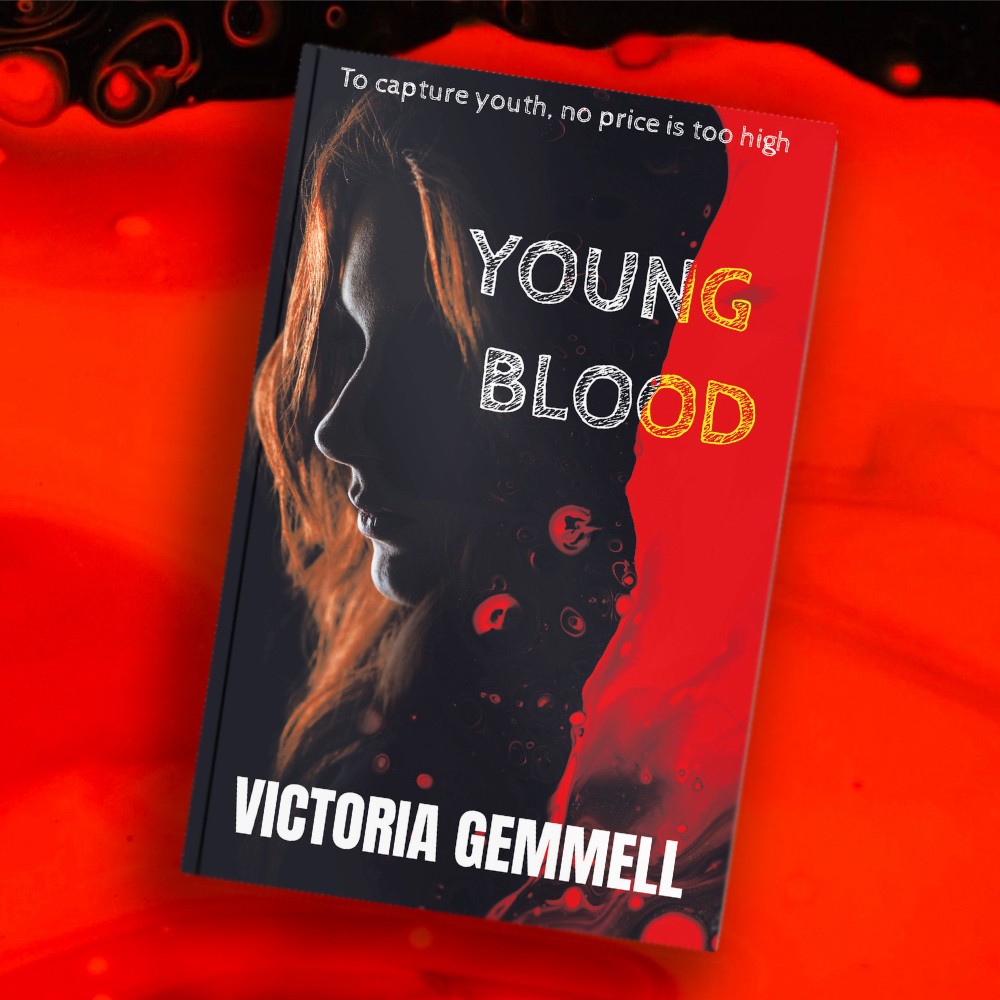
Happy 1 year book-versary to Young Blood

This time last year I released my Young Adult crossover thriller Young Blood out into the world so I thought I’d do a post to mark the milestone.

This week I am also running a give-away alongside Ornate Alchemy on Instagram, where you can win one of their beautiful custom-made Bloodstone pendants , and a signed copy of Young Blood. If you live in the UK head over to our Instagram pages to enter: @victoriagemmellauthor @ornatealchemy You have until 5pm Friday!

It always feels strange once a book reaches publication. You spend years perfecting the story, (I’ve not yet mastered a quick turn-around), pouring a lot of heart and soul into the pages, spending hours with the characters in their world, and then suddenly it’s not just in your head anymore; it’s out there on paper for anyone to read. And then you go through a mix of emotions when you realise people are buying the book and actually reading it. What will they think? Will they enjoy it? Will they get past chapter one? Will they like that character as much as you enjoyed writing them? Will they get angry and emotional in the right places? It always delights me (and fills me with relief), when someone tells me they finished my book and loved it. This happened actually at the weekend when a friend’s mother-in-law told me how much she enjoyed Young Blood and was interested enough about the story to ask me about the inspiration behind it.

She said something along the lines of, ‘You write in a lovely way.’ These kinds of comments are so appreciated; I don’t think people realise how much writers need to hear this sometimes. Not to feed our egos, but to motivate us to keep going. I’m at the early stages of writing a new book just now and it always feels like a tricky stage, when nothing is fully formed and you are constantly questioning if this is any good or if it’s the most boring trite that you’ve ever attempted. The characters haven’t all appeared yet, and the ones who have, are still not showing you their true motivations; the setting is still taking shape, the plot has lots of holes and you’re not quite sure what’s next, but you are hoping if you keep writing all will be revealed.

In Scotland, where I live, we’re not very good at celebrating our achievements, often downplaying ourselves in self deprecating ways. Oh you enjoyed my 100,000 word novel, och that was nothing really. Just a little thing I did. Actually it was a big thing, and I locked myself away in a room by myself for hours on end to get the words just right and showed up, and didn’t give up, and saw it all the way through to the final end of being able to hold the finished copy in my hands…

Here’s some extracts from some favourite feedback and reviews I’ve received about Young Blood since it’s release. One of them was written by my Dad; you might think that’s embarrassing and a total faux pas to even mention, a bit like the bad example pitch emails to agents ‘My Mum told me this is the best thing she’s ever read in her life so I know this is going to be a best-seller.’ But actually my Dad hasn’t read much of my work over the years (no slight to him; he doesn’t read much teen fiction, believe it or not! And now he is retired he also has more time on his hands). I think he was maybe a wee bit surprised by how much he actually enjoyed Young Blood, and I was delighted that he did.

The standard of writing is superb, with excellent descriptions of characters and locations without becoming boring. As the mystery progresses you desperately want to find out what is going to happen. This thriller is a compelling read for the YA market and adults alike and I’m not just saying this because I’m Victoria’s Dad! Great Christmas Gift! (hey people get your Christmas shopping in early! – that’s me adding in this comment)

Wow!

Only 19% in and I was on tenterhooks and by half way through I was desperate to know what happened and took it to bed with me. Definitely not conducive for sleep but I just couldn’t put it down.
I loved the twists and turns that had me gasping. Credit for the author. I definitely recommend. A brilliant read!

Thrilling and involving, this is one not to miss.

Young Blood, the latest YA novel by author Victoria Gemmell is not a story for the faint-hearted….These characters are not cardboard cut-outs. They are richly developed, with flaws as well as virtues. Faced with almost impossible choices, a group of teenagers find the courage to challenge the powerful figures behind the conspiracy even though they know that their chances of winning are almost zero.

I was gripped by the story from the start- was a real page turner and was desperate to read on and discover how the plot developed! Can’t wait to read more from this author!

Captivating. This book is made for the big screen.

Great read! Really gripping and loved the character of Hope. Would make a fab film. (Hi, Netflix, are you reading?)

Loved it. Every bit as accomplished as a Good Girl’s Guide to Murder

Have I tempted you yet to take a chance on Young Blood?

If so here’s the links to Amazon to buy: and wider digital channels here: Order into bookshops here and here Abbey Books in Paisley might also still have a copy kicking about

(P.s It’s only £1.99 on kindle just now which is way cheaper than a nice coffee, and it will get your heart racing just as much as caffeine, and the buzz will last longer…)

Inspiration is Everywhere #Part 3 (blog post 6 of series

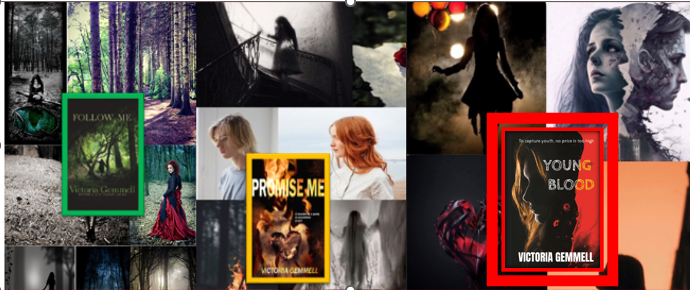
Continuing with the theme of sharing where I find inspiration for stories, today’s post is about the inspiration behind my Young Adult books. I’m cheating a bit with this post and extracting a section from a blog post I wrote back in 2022, where I went into quite a bit of depth already about the inspiration behind my debut YA mystery, Follow Me, and my second YA mystery, Promise Me. You can read the full post ‘Stranger than Fiction’ here

My latest YA Thriller, Young Blood, was also inspired by an article I read in the press, so it fits nicely with the theme of paying attention to what you read in the news. Just like I talked about in last week’s ‘inspiration’ post, the best stories can be formed from things that catch your attention in ‘real- life’, if you add in the ‘What if’ question, and let your imagination run wild…

News headlines often catch my eye and act as a catalyst. When my imagination takes over, and characters start to form, a story of fiction then unfolds, where I imagine what would happen if fictional teenagers were placed in these situations I read about.

Numerous reports of the unexplained Bridgend suicides stayed with me for years .There were twenty-six known suicides in the town between 2007-2008, and most of those who lost their life were young adults. I remembered opening newspapers at the time, wondering what on earth was going on in that town.

In my book Follow Me my 17-year-old protagonist, Kat, begins a desperate search for answers and explanations, after her twin, Abby, is the sixth in their small Scottish town to die by apparent suicide.

A big theme of my YA mystery, Promise Me, is the way in which press coverage and social media has the power to portray a certain narrative during high profile, emotional murder cases. One of the inspirations of the story was my memory of the sensationalist press coverage of convicted Scottish teen Luke Mitchell from many years ago. From 2003-2005 there was lots of press coverage around his case. Demonising language and character assassination was often used in reporters’ narratives (With headlines like ‘Devils Spawn’ appearing on front page reports).

The headline ‘Boyfriend, 15, charged (with murder of schoolgirl Jodi Jones)’, was published in the Edinburgh Evening News, (2004) before said boyfriend (Luke) even went to trial. Everyone in their small-knit town knew he was ‘the boyfriend’.

The paper took things a stop further and named him. The Press and Journal, Aberdeen, also ran a similar story. They faced contempt charges but were cleared of breaching the Criminal Procedure (Scotland) Act, that states “no newspaper report of any proceeding in court should identify anyone under the age of 16.” (In Scotland this is now 18). They were cleared of charges because judges ruled that the story was not a report of court proceedings. This is just one troubling example of how a fifteen-year-old boy, (and throughout his trial when he was sixteen), dominated headlines. Numerous false ‘facts’ were published about the case, and tabloids delighted in running sensationalist reports about Mitchell’s apparent obsession with knives, drug-taking, lack of discipline in a single parent household, even linking his music tastes to the murder.

I read a lot about the case and it made me realise how easy it could be for a small community to spread rumours relying heavily on hearsay and perceptions of a local outcast boy’s ‘reputation’, and how this could influence local prosecution investigations, and a jury. Conversations I’ve had with legal people where I questioned how anyone could truly be impartial in such a high profile case said a judge would have ensured jurors had no local connections to the case. The trial took place in Edinburgh, less than half an hour away from where the murder took place. I was reading newspaper stories an hour away from where it all unfolded and still felt emotional reactions to the reports, even if I didn’t personally know anyone.

My book Promise Me is a work of fiction, set in an affluent fictionalised Scottish village, and not about the Mitchell case, but I hope it makes people think about how damaging media and indeed, court narratives can be, and the distorted perceptions that communities can sometimes have of young people who don’t quite ‘fit’. In my job I’ve undergone unconscious bias training and I really believe the police involved in this case let a lot of their own unconscious bias (and media pressure to get a conviction), influence their decision-making. If you have an interest in finding out more about this case I recommend the brilliant podcast Through the Wall by Naomi Channell.

My latest YA thriller, Young Blood, is a story about young people in the care system who are kidnapped and taken to a secret house to become exclusive plasma donors for an elite group of wealthy adults who want to stay youthful and healthy. It’s told from the perspective of two teenagers – Ana who is outside the house and dealing with the realisation her mum may have early onset dementia; and Hope who is captured and taken to the house.

Young Blood was inspired by an article I read about an American start-up company ‘Ambrosia’, founded by a medical school graduate in 2016 which sold ‘young blood transfusions’ (from young people into older people). Charging a large sum of money for these transfusions, they claimed a range of health benefits such as treatment for Alzheimer’s. In a pitch about Ambrosia at a self-enhancement conference in 2017 Karmazin said, “We’re a company interested in making you young again.” In my day job I work with vulnerable teenagers. I see how much instability and uncertainty young people in the care system in particular can face. This sparked off the idea of having a powerful doctor set up a premium club who can access pure plasma transfusions from a select group of young people who are easy to make ‘disappear’, whilst maintaining a super-controlled environment within ‘the house.’

Links to buy my Young Adult books are here

I often take along strange news headlines to creative writing workshops I deliver in schools and get the class to choose one as inspiration for a story. A popular headline lots of pupils chose last year was, ‘Girl discovers criminal living in her attic.’ I love hearing the ideas form, and characters that start to develop. It also shows that we can all start with a similar idea, but when you create your own unique characters a truly unique story also starts to take shape…

Why not spend the week looking up interesting headlines, and see if it sparks off any great story ideas!

Blog Feature

I’m delighted to be featured on my Mum, Rosemary Gemmell’s blog today, which reveals a bit more about the inspiration and research behind Young Blood. You can read full the post here

I feel very lucky having the support from my mum. We both write and it’s great having someone to share work and writing experiences with. You can view the full range of books my Mum has written on her website above. Even although we write quite different things, with a different style, I always enjoy reading and editing her work, and really appreciate the feedback I receive on all of my work. Without the support with editing, technical advice and lots more, I don’t think Young Blood would ever have made it to the final stages!

Here’s a snippet below from the blog post, where I talk about the inspiration behind Young Blood:

What was the inspiration behind your new book?

My initial idea for Young Blood stemmed from an article I read, about an American start-up company ‘Ambrosia’ founded by a medical school graduate, Karmazin, in 2016 which sold ‘young blood plasma transfusions’ (from young people into older people).

Charging a large sum of money for these transfusions, they claimed a range of health benefits such as offering treatment for Alzheimer’s. In a pitch about Ambrosia at a self-enhancement conference in 2017, Karmazin said, “We’re a company interested in making you young again.”

This sparked off the idea of having a powerful doctor set up a premium club for wealthy individuals to access pure plasma transfusions, capturing young people from the care system to be the donors, maintaining a super-controlled environment within ‘the house’.

In my day job I work with vulnerable teenagers on a daily basis. I see how much uncertainty and instability young people in the care system can face and how depressingly easy it could be for them to ‘disappear’ and for powerful individuals in authority to cover this up

Charging a large sum of money for these transfusions, they claimed a range of health benefits such as offering treatment for Alzheimer’s. In a pitch about Ambrosia at a self-enhancement conference in 2017, Karmazin said, “We’re a company interested in making you young again.”

This sparked off the idea of having a powerful doctor set up a premium club for wealthy individuals to access pure plasma transfusions, capturing young people from the care system to be the donors, maintaining a super-controlled environment within ‘the house’.

In my day job I work with vulnerable teenagers on a daily basis. I see how much uncertainty and instability young people in the care system can face and how depressingly easy it could be for them to ‘disappear’ and for powerful individuals in authority to cover this up

If you continue to read through the interview you’ll see I have a dream director in mind if my books were ever made into films (we can all dream!!). I love the bold, quirky and eye-catching directorial style of Emerald Fennell (Promising Young Woman, Saltburn), so if you are reading this Emerald, get in touch 😉 I was delighted to see a crime writer I know share a photo of Young Blood on social media last week, saying it was a captivating read and that anyone commissioning films should check it out, so you never know! When I’m writing books I often see the story ‘playing out’ in my head like a film.

I had a great launch weekend last week for Young Blood. I’m going to post separately about that later in the week with some photos.

For now I will leave you with my book trailer