Don’t wait for the phone to ring (blog post 11 of series)

Young Blood Launch —- 2024

Back to the blog today after a short trip away. If you missed my last two posts about book submission stories you can read post 1 here and post 2 here.

When I started to write Young Blood I attended an open submissions event in Edinburgh, where I got to pitch face-to-face to a YA agent I was keen to meet. It was the first time I had pitched a book that wasn’t finished, and when she asked me to send through a full submission I had to confess it wasn’t ready, and then took months to send. She did remember me and my book (which was a good sign), but the version I sent was nowhere near as tight as my eventual final draft for this book, and I received a rejection (a nice, personalised one, which I appreciated).

So a lesson, be patient, and wait until your book is fully ready before pitching to an agent you like.

This period of time crossed over with the ‘in limbo situation’ with Promise Me, so by the time Young Blood was fully ready (i.e. had been through multiple edits, with in depth feedback on both structural and grammatical aspects, resulting in fleshing out bits, re-writing parts), I was then set on continuing with independent publishing. Also around this time I saw Reese Witherspoon post a reel on her Instagram with the words, Don’t wait for the phone to ring. (In reference to her starting up her own production company, so she could take control over her own roles, and ensure she was able to continue to make quality work).

By this point I had purchased a batch of ISBN numbers (this works out cheaper than purchasing one-offs). If you are serious about independent publishing and plan to go wide with distribution, you will need ISBN numbers – see here on the Nielsen site for more info. As quoted on the link to Nielsen, ‘Systems used by publishers, booksellers and libraries all rely on the ISBN to identify books ensuring they select and stock the correct title and edition.

Here are some of my personal reasons I decided to continue with Independent publishing for Young Blood:

  • I wasn’t under pressure to hit deadlines or do events This was a pressure I didn’t want at this particular time in my life because in 2023 I was organising my wedding, and my day job felt like it was getting busier (zapping my brain capacity). I didn’t want to feel beholden to anyone (I’m now moving more towards wanting to get fully back out there!)
  • I got to control when I released the book, and put it out on various platforms I didn’t need to rush a release date, but also I didn’t have to wait another 6 years for my book to see the light of day. I was able to put it out in print and on all digital channels
  • I had full control of purchasing my author copies in advance of my launch (So I got to control how many were available, and no worrying about them turning up on time for a big event)
  • I was able to see proof copies before they went to print Mistakes happen; but at least I was able to make immediate fixes to any spotted
  • I was in full control of cover design (this is something that wasn’t an issue with traditional publishing, but it was still fun to be able to come up with the concept, and collaborate with my friend Dainty Dora to produce the final design).
  • I get access to statements of all of my sales, and often from Amazon in real-time. Amazon KDP have a dashboard you can log in to which breaks down your daily and monthly sales in to ebook and print sales. This can be helpful if I try something to market my book, to see if it actually had any impact! I also get regular statements from Ingram Spark and Draft2Digital (who I am with for wider distribution) This article from the Bookseller published a survey exposing writers’ frustrations with lack of clarity around royalty statements, and delayed payments
  • I got to write the story the way I wanted to tell it Young Blood did not fit into the word count most agents and publishers were saying was ‘acceptable’ for contemporary Young Adult novels. There are many conflicting opinions about YA word count. With rising print costs, and opinions about diminishing attention spans amongst young people, some are saying it is ‘safer’ to publish shorter books. If you are an unknown writer, publishers are probably less likely to take the risk of a bigger spend. But when I did a quick check of some of the best-selling and most successful YA books over the years, guess what….nearly all of them were near 100,000 words. And for Young Blood to have the depth I wanted it to have, I needed the layers a bigger word count allowed (it sits at 100,000 words). A couple of people have said they feel it’s my strongest book so far, and I know this is because I put the layers in
  • Readers don’t care I mentioned this in my last post, that hardcore readers just want to read books, and often don’t have a clue or care about who you are published by (or not published by) What readers will care about is unprofessional editing, and production. So if you’re going to do this yourself, then do it right, and don’t work alone. I got so much support with edits and formatting, and the technical uploads (thanks Mum! See Rosemary’s books here ), as well as the design aspects. Even although platforms such as KDP and Ingram provide you with templates, you need to understand the technical nuances to ensure everything looks right

Now here’s my reasons why for my next project I’m going to try the traditional path to publication again:

  • I want wider readership To get wider readership I need someone bigger (i.e. an agent, and publisher, maybe just a publisher) to get behind me and help me promote and publicise my work to others. I don’t have the confidence to do this alone. I can’t deal with translation rights, distribution to bookshops is complicated, and some publications that list book releases will forever ignore me as an indie
  • Linked to above – I want to get into bookshops When Promise Me and Young Blood came out, this wasn’t an aim. I understand how hard it is to get into bookshops (even when with a traditional publisher), and my priority for these books was actually to get into libraries (especially school libraries). Bookshops have to be business minded and will only stock books they know will sell, and these tend to be ones which are getting a lot of exposure. They also need to trust the quality, and unless they read mine cover to cover, they’re not going to take my word for it. But for my next project (if it goes well, and ever sees the light of day) I would need a local bookshop in my area to get behind me as they seem to have all of the distribution tied up with local primary school events. Even although I am on wider distribution, so bookshops can find me on their distribution system, I have my books set to ‘no returns’. I have global distribution and if I allowed returns two things could happen: Bookshops could order in lots of my books, but if they don’t sell, they then return direct to me (the publisher) and charge me postage as well as RRP cost of all books unsold I’ve heard horror stories about a certain retailer managing to bankrupt small publishers by ordering in crates of books, keeping them in storage and forgetting about them, then returning them unopened to the publisher (which lands them with a massive unexpected bill). This is another insane part of the business that makes me wonder how anyone actually makes any money!
  • I want to kick the Imposter Syndrome I love doing events in schools and the community. Usually I feel confident but I was really nervous being part of the Paisley Book Festival School events last year because I was just waiting for someone to compare me to the bigger names on the programme, and ask me what I was doing there. Being validated by a publisher opens doors to big events; there is no getting around this.
  • And finally...I feel ready! Back in January when I wrote a post outlining my plan for this series, I talked about how writing should be treated like an apprenticeship, and that it’s a journey of learning. It’s easy for writers I think to share knowledge about the process and craft, and pass on hint and tips, similar to what I have been writing these past few months. What isn’t often talked about, is the emotional impact of sending your work out into the world, and the emotional impact of attempting to make a serious career out of writing, when challenges and setbacks extend way beyond your initial rejections. You’ll often hear writers say writing the actual book is the easy part, and I agree and think it’s because that’s the fun part (when things are going to plan!!) You can enjoy just creating, and get lost in the creative process. At the other end, once your words are released, they become a product to be consumed, and with this comes expectation. And that’s when it all can feel a bit overwhelming, and the pressure and disappointments can set in. Now, I feel ready for the emotional parts, because none of it feels so raw anymore. And because so many writers are opening up and being honest about the full picture of what it means to be part of the industry, it makes it all feel a little less daunting, knowing it’s okay to embrace both the failures and the successes.

So onwards I go. And onwards I hope you go too!

Links to my books are here

Submission Stories # Part 2 (blog post 10 of series)

This post is about the Journey of Book 2: Promise Me. You can buy my books here.

I’ve tried to strike a balance in this post, of being completely transparent, but not too negative, as ultimately I’m writing these posts to encourage anyone reading to keep going, and to not give up, whichever direction you decide to go with your writing.

When my debut Follow Me was released in 2015 I knew my publisher was interested in reading my next stand-alone, Promise Me.  I was now doing talks and creative workshops in schools and the community, chatting to librarians and slowly building ‘an audience’. Reviews were also starting to come in for Follow Me, and teenagers talked to me about the book at events. (I also got interviewed for Teen Titles magazine at one school).

For the first time in my writing life I was suddenly acutely aware of who might read my new book when it was released, and what their expectations might be. This put a low-level pressure on my creativity; something I had never really experienced before.

I was also trying to juggle the events, (always feeling I was never doing enough compared to other writers I was connected to on social media), whilst working full time. I stupidly went for a promotion at my day job (and got it), all before Promise Me was done and dusted. But it was a time in my life where I felt super-motivated and had more energy (I was younger!!), and the excitement of having a ‘book out’ always spurred me on.

When I had nearly finished my first draft of Promise Me I entered it into the SAW Pitlochry and won second place. The crime writer who adjudicated told me she could imagine her teenage daughter really enjoying having a teen sleuth at the centre of trying to solve the mystery of a crime that had already occurred. I felt this was a good selling point too, and it kept me motivated to get the book finished. I signed the contract for publication in 2017.

Fast-forward two years, copy edits done, release dates promised, then passed, with no response, and so began a repeat cycle. In amongst this a lovely librarian offered to launch Promise Me in her community library in a local area where I had done several events; another librarian wanted to book me for her new festival which would tie in to local schools to promote the release of the book. My publisher knew all of this, and still silence.

I never feel comfortable going into detail about this in a public forum, but needless to say, this was a not a great time for my creative confidence (especially when I genuinely did not know how to explain to the librarians, or to anyone, what was happening, as I had no idea what was happening!).

Every time I heard the question, ‘When’s your next book coming out?’, deep down I felt like a failure.  

I realise now that the people who persistently asked this question hadn’t even read my first book, and had no intention of buying my next one, but the amount of pressure and frustration I felt at the time was immense.

My advice: ignore the external pressures, unless it’s from someone who is involved in bringing your next book to life, and they’re actually nudging out of necessity, or to give you encouragement

The thought of going back out on submission filled me with dread (as the average time of your book seeing the light of day after acceptance, never mind how long it takes to get there, can usually be around 2 years) But I knew I had hit a brick wall with the current situation.

So, at the end of 2019 I took the rights back for Promise Me. I was also in the middle of writing my new YA thriller (Young Blood).

I started to send out Promise Me again to select agents (I was being fussy), but mostly got rejections, or no response. Then I noticed a new publisher was running an open submissions competition for Young Adult novels. I scoured the rules and realised it was open for published writers, as long as you didn’t have an Agent. (Most big competitions like Chicken House and Bath Novel etc. are only open for unpublished writerssee the end of the post for links to these).  

The publisher was professional and dynamic, and making waves, so I excitedly sent off my work.

Fast forward a few months later I received an email to let me know I’d made the long list. The day I moved into my new house in 2020 I received an email from the editor saying I had made the final seven. It was a massive boost. I didn’t win, but the editor had a chat with me and said the book sellers and librarians on the judging panel were very positive about my book. She also offered me some really helpful editorial feedback.

At this point some writers in my network were taking control back, and independently publishing their work. I had watched my Mum do this to a high standard, and she kept saying it was another option I could try.

Not long after this, I entered a call-out for a Zoom pitch event with a big agency. I was selected by the agent to have a chat.

Weirdly she recognised my name as she had been copied in to one of the emails relating to the acquisitions meeting for Follow Me at ‘the big publisher’ I mentioned in my last post. (She was an editor with them at the time).

The agent was really enthusiastic about Promise Me, said she loved the first few chapters and premise, and asked me to send through the full manuscript.

A few months went by with no emails, so I sent a polite ‘nudge’. I received an apology, saying she was behind in reading. I appreciated the update.

Then another six months went by, so I sent another polite email. And never received a response.

To this day, I never did get a response.

I totally understand that agents are busy people. Plenty of agents have ignored me during ‘cold submissions’ which is fine, because most will clearly state on their website, if you have not heard from us in X amount of weeks, we’re not interested.

But when you’ve had a full manuscript request, and a face-to-face chat (it was on Zoom because we were still in semi-lockdown), I think it’s rude to leave someone hanging.

At the time I wish I had used this website called Query Tracker see here You can sign up for free and it provides information on pitching to agents, but also people leave feedback on response times and reply rates from agents they’ve subbed to. The aforementioned agent now runs her own agency, and interestingly lots of people have posted on this site with the exact same experience as me; ghosted after full requests following on from personal contact during pitch events.

During lockdown when life slowed down, it gave me proper time to reflect on what I actually wanted from my writing career. I asked one of my career guidance friends to give me a coaching interview, and this helped me unpick my motivations and priorities.

She asked me an important question: What was stopping me from taking control myself, and independently publishing?

I realised the biggest thing stopping me was fear of perceived external judgement. Who does she think she is….Clearly she’s not good enough if she has to do this herself… We’re not interested in self-published books at this bookshop. But when I unpicked this further I realised none of my worries related to my actual readers. These thoughts related to other writers I knew, random people in my life…mostly ones who had never even read my first book, or cared about it enough to support any attempts at promotion, and gatekeepers (like bookshops *I’ll focus a bit more on the gatekeeper aspect in my next post*).

Returning to the point that the folk who usually ask the most demanding and nosey questions about my writing life (and probably yours), …How many books have you sold? Why’s your next one not out yet?  Are you not quitting your day job yet? Why aren’t you in a window display or the Buy one Get one free in Waterstones? Are you not speaking at X book festival?

..are usually the ones who haven’t even read my work, and are never going to buy my books, even if I get a 5 figure book deal and it’s optioned for film...

In fact those people would probably be the first to ask: How much did you get for your film deal?

I want to point out here that I don’t mind being asked questions about my writing at all, if the intention is good. And I 100% don’t expect everyone in my life to champion my work!  It just made me realise, I shouldn’t care so much about what people think about me and my work, definitely not to the point of stopping me exploring new ways of getting my book out there.

A few months later, I bit the bullet and started the process of Independently publishing Promise Me. It had already gone through many professional copy-edits, I’d received further editorial feedback after the open submissions competition, and I was very fortunate that my Mum is great at editing, and is a genius when it comes to all of the technical support needed to format and publish.

I had already dabbled in releasing a short story collection, and my designer friend Dainty Dora (see site here) aka Rebecca,  supported with a great cover design for this, so I enlisted Rebecca’s support again for the cover of Promise Me.

Promise Me was released into the world in October 2021 and I went with wider distribution, meaning it’s fully available everywhere. I hosted an online launch on release day through Facebook which generated enough sales to put my sales ranking on Amazon alongside big sellers like Holly Jackson. (If you like A Good Girl’s Guide to Murder you might like my books, just sayin’) Those kind of figures are fleeting, but it gave me a huge boost on the day to know people were interested enough to buy my new book.

A screenshot of Promise Me in the Top Ten – glad I captured this moment

A librarian friend also invited me to take part in an online group workshop for a teen writing group, and last Spring I was part of the Paisley book festival schools programme, with Promise Me promoted and bought into libraries. During another school event not long after publication, a highlight was seeing teachers sitting reading my book when I arrived to the class for the session, telling me how much they were enjoying it. Last year an English teacher in a school I’m connected to in my day job said that Promise Me is never on the school library shelves and she often sees pupils reading it. After such a long up-and-down road with this book, every single moment like that means so much to me.

Next time I’ll post a bit more about my experiences of Independent Publishing.

In the meantime, I hope this post hasn’t put you off trying the traditional route, as it’s something I know I will attempt again (due to some of the cons that come with Independent Publishing).

If you’re unpublished and have a novel ready to send I recommend trying one of these big competitions which are closing soon

Chicken House Books Competition – for Children/YA books– closing 2nd June

Bath Novel Award – for both Young Adult and General (adult) fiction Closing 31st May

Bridport Prize – General Novel – Closing 31st May

Keep an eye out on Mslexia Competitions – they have run both General novel and Children’s/YA in the past

Happy Writing!

Public speaking

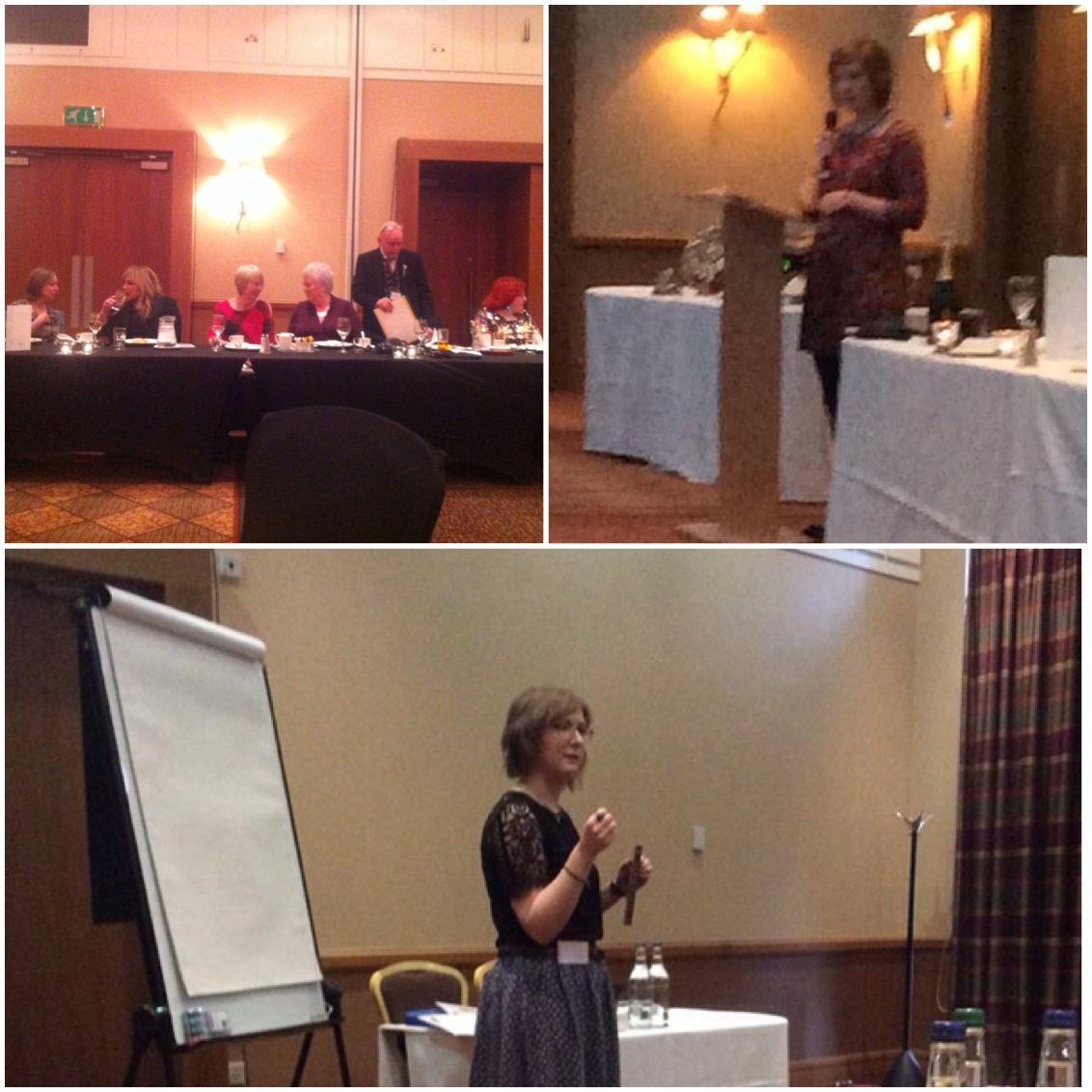
Me, several years ago adjudicating and delivering my workshop at the Scottish Association of Writers conference

Today’s prompt is ‘Write about a time you had to speak to a large crowd’ And here’s a post about not just one time, but a few times…

When I was younger there were times when I really hated the thought of public speaking, and other occasions where I quite enjoyed it. This is sometimes the contradiction of being me- I often think I am a bit of a social introvert. Depending on circumstances you can get the ‘quiet’ me, or the ‘confident, communicative me’. (Often if there are very loud folk dominating the room you’ll only get to meet the ‘quiet me’, especially if you start making comments about how ‘I need to come out of my shell.’ No, actually, you need to go back in your shell).

I can think of two different occasions, a year apart in school in English where I had to do the ‘oral presentation’ part of the curriculum and the first time I was so nervous I barely looked up; the second time I was raring to go and had maps and diagrams up on the board. That was the first time I think I understood how to properly ‘command’ an audience.

Fast forward a few years to University and for most of my degree in Media and Communication I hated delivering presentations to my seminar groups. Then in my last year I got to deliver a presentation on a topic I had really researched and was enthused by – Post Modernity (and I got to talk about Andy Warhol as part of this). It was by far the best presentation I had delivered and some people came up at the end to tell me it was the first time they understood what that module was actually about. One woman ( who I didn’t really know that well as we had joint classes sometimes with social science students) was kind enough to say she was going to remember my name as she was positive I would be famous one day. (Still waiting, ha!). ‘First year me’ would have been shocked if I tried to reassure her this moment would happen and that I would get there in the end.

Fast forward another few years and I was back at University again, this time studying a post graduate one year course, training to become a careers adviser (my current day job). This was a very intense, full-on course which I loved. There was no time to feel shy or nervous; we all got thrown right in with client contact, even being filmed interviewing pupils (Uni got permission of course) and we then had to watch the recordings (and analyse them!!) together with our small crit groups so we could hone our practice. Another big part of the course was to get assessed delivering group work to classes in schools. During my first few years as a careers adviser I also had to deliver career talks to full assemblies, and more recently deliver a presentation to a packed room of parents.

Little did I know during my training and early years in the job how useful this experience was going to be for my other ‘career’. When you write for hours in isolation, often not speaking to anyone, (when I lived alone), you kind of forget what can happen when your work then gets published and your readers want to actually interact with you. I felt very fortunate when my first book was published to be invited to deliver creative writing workshops and author talks in both schools and in the community.

Talking to large groups of teenagers can be very unpredictable. You have to learn to ‘read the room’ pretty quickly, and at any group talk/session prepare for IT to fail. This has happened to me several times. One of my biggest author talks was to a full assembly hall of second years and the school IT system died just as they walked into the hall (so cue no flashy powerpoint presentation from me). The librarian who organised it was panicked, then relieved when I told her it was fine, I always had a back-up plan. (a careers adviser 101 rule). Another time the school IT systems decided to do updates on the library computer system.

I’ve had lots of great experiences talking to groups as part of my writing life. One of my favourite events was when I got to speak at a ‘Read to Succeed’ evening – this was to both young people and adults at a school and I was asked to tell them about the part reading played in me becoming a writer. So I got to speak from the heart and talk about two of my passions in life – reading and writing – and it was really one of the most enjoyable evenings I’ve had. One of the girls who attended that night found one of my author social media pages and sent me a message to tell me I had inspired her to start reading again, and maybe even try writing, and it was one of the best messages I’ve ever received in my writing life.

Another favourite experience was returning to the Scottish Association of Writers conference to deliver my adjudication for a competition I had been asked to judge (and deliver a creative workshop). I attended my first conference when I was 17 and returned over the years, winning my first ever writing competition there. (and winning meant reading your story in front of the packed conference which was a very scary moment at the time!). It meant a lot to return to the conference as an adjudicator and felt like a real ‘full circle’ moment.

The night that really topped all experiences of talking to a large group was launch night for ‘Follow Me’ at Waterstones. As any writer knows there are a lot of ups and downs in the writing life, and that night was definitely up there with one of my most memorable nights – mainly because it was so unique to have some many people I loved from so many walks of my life in the one room together, cheering me on as one of my ultimate dreams became a reality. I always joke that no matter what happens in my writing future, at least I have that night to remember!

And yes, I do still get scared and nervous when I speak to large crowds, but now I think I have learned to develop a ‘performance’ persona where I know I can get through it and actually enjoy the experience. And there’s nothing quite like the buzz of feeling like you have made a connection with the audience in some small way.