Competitions and Connections (blog post 8 of series)

SAW Conference 2025

This weekend I attended the Scottish Association of Writers’ Conference, where writing groups from all across Scotland congregated at the Westerwood Hotel. The weekend was jam-packed full of workshops, talks from Industry experts and adjudications. I was delighted to win Second and Third prize for the humorous short story competition. One of my stories The Opposite of Cake was an extended version of a short flash I wrote a couple of years ago during my blog challenge, so a great example of how creative tasks you set yourself can lead onto bigger things.

I attended a brilliant workshop run by the talented Catherine Ogston, where she taught us about Hermit Crab Flash Fiction. This is where you borrow from an existing form or structure, such as writing a story in list form, or as an instruction. I had no idea this type of structure was given this name. The exercises in the class inspired a new idea for me. I also attended another brilliant workshop delivered by writer Colette Coen where she showed us how to use memory to inspire ideas. I came away with two new story ideas from the exercises, and enjoyed using different techniques to kick-start my creativity.

Writing competitions played a massive role in building my initial confidence when starting out as a writer, and have continued to give me much needed boosts along the way to encourage me to keep going.

I first attended the Scottish Association of Writers’ conference when I was seventeen. I didn’t pluck up the courage to start entering their competitions until my twenties and I nearly fell off my chair when I heard my name being called out as a second place winner in the SAW General Short Story competition during the early years. I was secretly relieved I hadn’t won first place as that would have meant standing up in front of hundreds of attendees to read out my work, which I wasn’t quite ready for (They no longer expect winners to read live!) It ignited a much needed belief that I could do this, I could actually write stories that people enjoyed reading.

Fast forward a few years later, I started to get short pieces published in literary journals. Then I won the SAW TC Farries trophy for my first proper attempt at writing a Young Adult novel. This gave me the courage to start submitting my book to agents and publishers, and winning this competition also gave me something significant to mention in my pitch letter.

Winning the TC Farries Trophy SAW 2011

When my first book was out on submission, (which I’m sure any writer realises can be a brutal time of highs and lows), I continued writing shorter fiction. When I received Highly Commended in the WordswithJAM short story competition it gave me a lift. The best part was attending the launch night for the competition print anthology at Foyles Bookshop in London with my Mum. I asked her to come with me as I worried it might be my one and only ‘book launch’, and I wanted to celebrate properly. As it turned out, it wasn’t long after I had my own launch for my first Young Adult novel at Waterstones. I think the night in Foyles gave me that extra needed self-belief at the time.
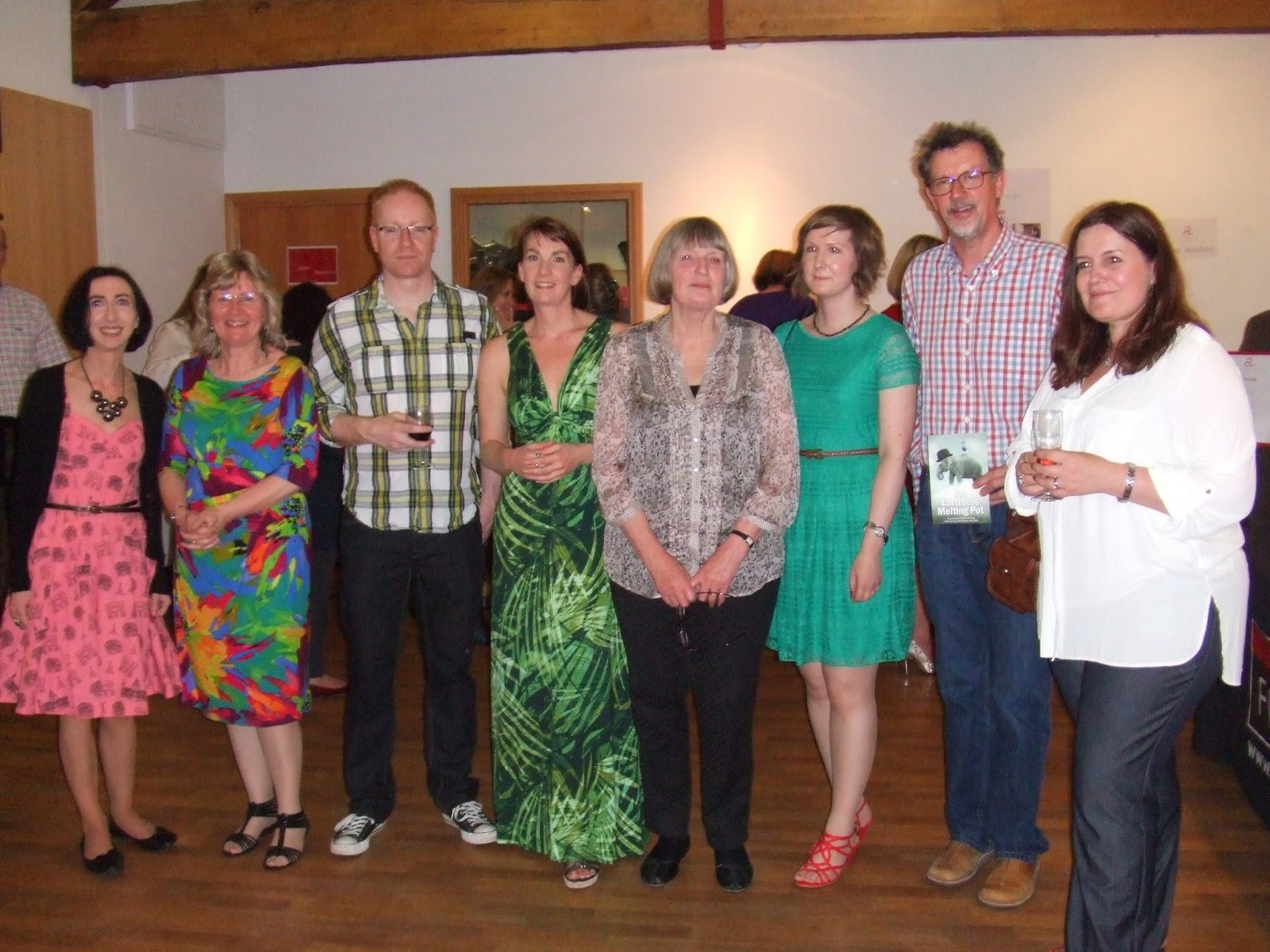
An Earthless Melting Pot Launch – winners at Foyles Bookshop London 2013

This is why I continue to enter competitions. There are so many moments during the rollercoaster of writing and releasing work out into the world that challenge our self-belief. It’s nice to receive some concrete validation from time to time. It’s also a bit of an adrenaline rush receiving emails or announcements where an editor or judge tells you they have selected you as their winner, or placed you on a short list. When I won The Writing Magazine school-themed short story competition a couple of years ago it was published in the magazine and on their website (see here). It was exciting to win, and even better when readers of the magazine looked me up on social media to tell me how much they enjoyed my story. Knowing my writing connected with others and made them feel something is what makes it all worthwhile. A big motivation to write is to feel connected to something bigger, and make sense of the world.

Being surrounded by writers at the SAW conference this weekend also reminded me the importance of this community. One of the speakers highlighted that when you are part of a like-minded tribe and you share your real-life stories (never mind fictional) with all of the ups and downs this creative life throws your way, they will understand in ways no-one else can really comprehend.

If you feel brave enough to send your work out into the world, here are some competitions/sites I have come across recently. Thanks to Catherine in her workshop for highlighting some of these. Happy writing!

THE BATH SHORT STORY AWARD | International Short Story Competition Closes soon!

Flash Fiction writing competition

Home | New Flash Fiction Review

The Plaza Prizes The Plaza Prizes – International Literary Awards – US$25,000 Prize Fund
Writing Prize — The Alpine Fellowship

Make Every Word Count (blog post 7 of series)

Unsplash Image by Sixteen Miles Out

Today’s post focuses on Flash Fiction, and how it might help you develop your writing. I started experimenting with Flash Fiction when I got serious about sending work out to publications. Tackling 100 or 200 word stories felt less daunting in terms of potentially being able to complete something during busy periods of my life. When tackling big projects like writing a novel, there are so many moments where it can be tempting to abandon the project; especially at the ‘sticky middle’ where it can feel like the whole story might never take shape, or even at the start if you can’t quite translate the ideas in your head onto the page and your characters aren’t revealing themselves in the way you’d hoped they might.

With Flash Fiction there’s no space to let your brain slow you down with doubt, as you just need to run with your idea and let the words take shape, with the challenge of still attempting to capture a meaningful ‘moment in time’ that tells some kind of story.

When I was a teenager I loved experimenting with poetry, and for me flash fiction became an extension of that creativity, as I tend to use a lot more imagery in my shorter work. In fact one of the first pieces of work I ever got published was labelled ‘Prose Poetry’, a cross-between poetry and flash fiction. Thanks go to Amy Burns for publishing Performance in her literary journal Spilling Ink (sadly the journal is no longer). Before I started to submit Performance, it won first place in a competition, which gave me the confidence to start sending it out. It was actually accepted for the Herald Saturday story section, but when a year went by without it ever appearing in print I realised the editor had forgotten about me. I was delighted when it then found a home with Spilling Ink. This was my first taste of the rollercoaster of sending work out! You can read Performance in the short story section of my website.

There have been times where I’ve cut longer stories to fit Flash Fiction entry rules, and that in itself can be a really helpful exercise. It starts to highlight unnecessary ‘filler’ words you might use a lot, and can give you more confidence in conveying a meaning or scene without over-explaining it to your reader. It teaches you in real-time how to make every word count.

 I mentioned in an earlier post that learning how to make every word count can help if you are writing pacey, fast-moving novels. If you’re writing a mystery or thriller, or tackling an unsettling topic, you want to keep your reader feeling a bit on edge, and not get bogged down in long over-written passages of narrative which have no purpose. 

If you fancy giving the form a try, check out The Flash Flood Journal It’s a great place to submit flash fiction and join in with a community of writers whose work is posted throughout National Flash Fiction Day. This year National Flash Fiction Day falls on 14 June so that gives you plenty of time to work on a piece (or two). You can read some of my flash fiction which featured in the journal over the years here

I’ll leave you with some tips I shared when I delivered a flash fiction writing workshop at a local writers group.

Top Tips

  • Make every word count – you don’t have much space for backstory and a lot of summarising and don’t get bogged down by unnecessary detail
  • Very important to ‘show’ not tell when working with limited words – show how your character is feeling by their actions and dialogue
  • Get into the action quickly – create intrigue to draw your reader in
  • Create emotion – what mood do you want to create? What do you want your reader to feel? (fear, sadness, hope, humour, romance)
  • Figure out what is at the heart of your story – what message do you want to get across? What are you trying to convey? Getting to the heart of your story helps you make every word count
  • Be creative with strong imagery and symbolism – this can draw the reader in and help you build the mood/setting
  • Still tell a story – have characters (not too many), a setting, something happening and then some kind of resolution
  • Write around a single moment in your protagonist’s day/life – often location will take on a bigger meaning, or perhaps an object
  • Often end with a surprise or impact – if you go for a twist try to avoid a cliché
  • Read some flash fiction to give you an idea of the structure

Inspiration is everywhere #Part 1 (blog post 4 of series)

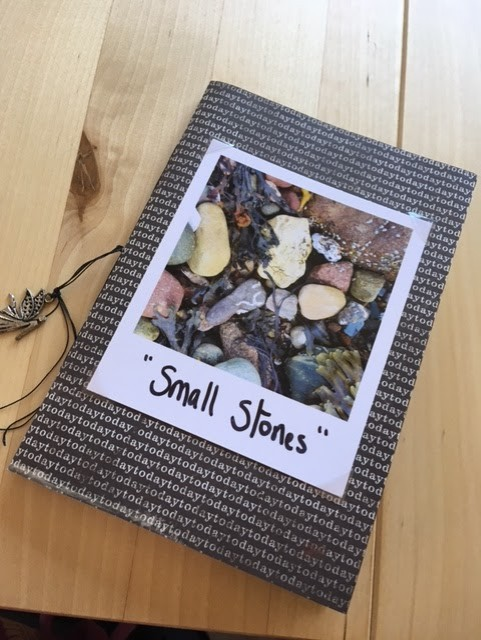
Booklet made by Rebecca Johnstone (aka Dainty Dora)

I’ve been out of action the past week with a horrible flu, hence the bigger gap between posts. This is the first day I’ve felt like attempting to get any words down on the page. I hope you’ve all had a more productive February.

The past couple of blog posts were about learning your craft, and today I’m moving on to talk about Inspiration. I’m going to focus on this theme across a number of posts as I’ve got lots of tips and tasks I want to share with you.

Where do writers get their inspiration? It’s an interesting question, as often ideas will pop in to my head and I’m not exactly sure where they’ve come from. More often than not, something I have heard, seen, or read about, in real life will spark off ideas.

In the past I have enjoyed delivering creative writing workshops around the concept that ‘Inspiration is Everywhere’. Everyday observations have definitely fuelled my creativity and provided lots of inspiration for short stories and flash fiction.

I’ll do a separate post focusing on what inspired ideas in my books as they all connect to real-life stories in the news, and headlines. (Another great task I have used in workshops – picking random bizarre headlines and allowing pupils to then come up with their own story that aligns to them).

Today I’m going to focus on a couple of tasks you can engage in every day that can hopefully help you feel creative.

Task 1 ~ Small Stones

Many years ago I was made aware of the ‘Small Stones challenge’ which showed me how much detail you can see in every day observations if you look closely enough. The idea behind the Small Stones challenge is to:

  • Notice one thing each day
  • Give your whole awareness to it
  • Write it down

My creative friend Rebecca, aka Dainty Dora, (see her substack here), made me a lovely little Small Stones booklet for me to capture notes in which you can see at the top of this post. It’s been a while since I’ve done this exercise, but I dug out some past examples of my ‘small stones’ so I could share them below. I think it’s a great way of generating ideas and starting to form characters.

Some of my Small Stones examples:

Red Glove: child sized, waving hello from a puddle on a dark January morning. The puddles pulled her under and this is a sign -Help, come and find me…

Girl in stilettos, walking comfortably in new shoes, head held high. Her friends are running alongside still trying to catch up with who they are.

Wooden heart laced with fake red berries, tied to a fence. A cheap remembrance of a love so rich. 

Pink hair, pink trainers, black nails and fierce eyes. Sweet and sour: Do not underestimate my power.

A teenage boy, vulnerable face, dark shadows under nervous eyes, a sigh of relief flooding his body as he walks into the comfort of a group who understand: with no questions, no judgement. They speak his language of technological puzzles, navigating night monsters into oblivion, so he can live another victorious day.

When I lived in Paisley, I always noticed interesting characters and one old man stuck in my head in particular. I used to see him wheeling an empty wheelchair down the high street, walking past the market stalls. A foreign accordion player, who often sat outside the M&S, provided a haunting melody to accompany his steps, which echoed down the street. Around this time I took a regular note of small stones observations, one of which was a tangerine peel on the ground shaped like a heart: Heart shaped tangerine peel abandoned on the top step. Layers peeled back, the best bit consumed, now the rest…left to rot.

A combination of all of these observations formed a flash fiction story titled ‘Ghosts’, which was first published in the Grind Journal back in 2014. You can read Ghosts here, on my new short story page on the site.

I always say to young people in my workshops, if they notice something interesting, add in the ‘What if?’ question. This is where your writers’ curiosity and imagination clicks in. After spotting the old man a few times, always pushing the empty wheelchair, I started to ask myself the question; What if he lost his wife, and isn’t quite ready to let go? As soon as I asked myself this question, Ghosts took shape.

Task 2 ~ Participate in Creative Projects or Challenges

Many years ago I engaged in a couple of fun tasks through an American arthouse company called Art House Co-op. I took part in their Sketchbook Project where I filled a blank book with writing, photographs and drawings and posted it back to the Brooklyn Art Library to go on a ‘travelling library tour’ across America. When I was on a trip to New York in 2013 I visited the original art library and viewed lots of other participants’ sketchbooks. Unfortunately after a fire struck in their new location, lots of sketchbooks were lost, then the project shut down. It was a fun task to participate in and I enjoyed illustrating some of my Flash Fiction stories and even wrote some poetry for the first time in years (see one below, with my illustration).

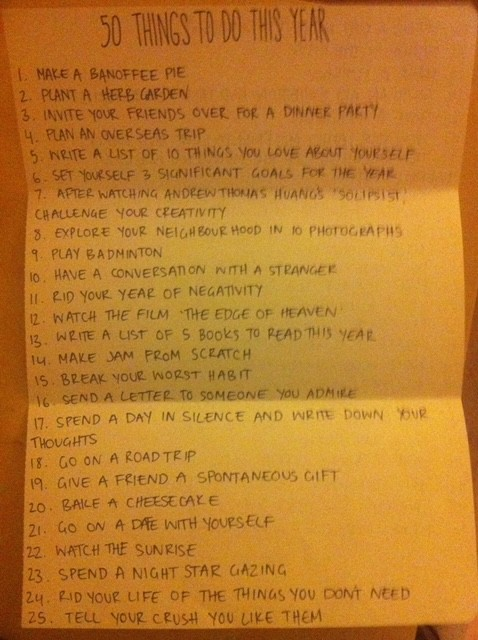
That year the Art House Co-op launched a ‘Sunday swap’ project, asking for participants to compose a list of 50 tasks for a stranger to complete. I posted my list to the company and they then mailed it out to someone, somewhere, and I then received my 50 things from a stranger, in return. I’ve put a photograph of some of my tasks above.

One particular task that really sparked off some creative ideas was the instruction to, ‘Research Natural Phenomenons.’ A natural phenomenon is basically something which occurs in nature, which is not man made. This led to lots of interesting research around things such as Tree Spiders, The Taos Hum, and the Migration of the Monarch Butterfly. Monarch Butterflies are unable to survive the colder winters in North America, so migrate to warmer climates in Central Mexico. Millions of the butterflies cluster together on trees. I enjoyed watching Youtube videos of the butterflies together in the forest and it inspired me to write a poem titled ‘Flight of the Butterfly’, which won third place in the Scottish Association of Writers poetry competition back in 2014. Years later I transformed my poem into a Flash Fiction story, using the same title and theme. This was published in the Glittery Literary Anthology in 2017. You can read ‘Flight of the Butterfly’ here

Why don’t you use some of the tasks from my photo, or do a ’50 Things’ swap with a friend? It’s a great way of getting out of your comfort zone, and doing new things, both of which are really important to keep your creative juices flowing.

A task I took part in during November 2023 was to write a blog post every day, using 30 creative prompts. See my first post here. It was an alternative to NaNoWrimo (National Novel Writing Month), where writers commit to getting a certain number of words down per day, with the aim to accumulate 50,000 words of a novel by the end of the month. I don’t think I quite achieved 50,000 words through my blog posts, but it did spark off a good few short story ideas, with one complete flash fiction piece. Feel free to use the 30 prompts from my original post as a creative challenge.

Next time I’ll continue on the theme of Inspiration, sharing some more tasks and challenges to help kickstart your creativity

Happy New Year

Happy 2024! The Christmas decorations are packed away, the chocolate boxes are in the recycling bin and early morning commutes in the dark have resumed. Returning to the day job makes me appreciate my Fridays off even more, when I get to dive back into my creative bubble.

I hadn’t intended to set myself any big writing goals or challenges this month. Really doing anything remotely productive in January is a win for me!

But then my friend Rebecca, aka, designer Dainty Dora (you can check out her awesome website here) tagged me in an Instagram ‘meet the writer’ challenge, created by the writer Beth Kempton over on Instagram (@bethkempton) The challenge runs for 15 days and has daily prompts to encourage writers to post insights into our creative lives. (I realised my first blog post of 2023 also mentions Beth when I referred to her book ‘The Way of the Fearless Writer.’ See here)

Instagram is definitely my favourite social media channel as I like the visual aspect of it. I recently joined Threads but I’m pretty bad at consistent posting. I’m still much more comfortable in a blogging forum such as this when I want to put words out into the world. It makes sense as in the real world I’m much more into one-on-one longer conversations rather than small talk with a hundred people at a party (which social media often feels like to me!).

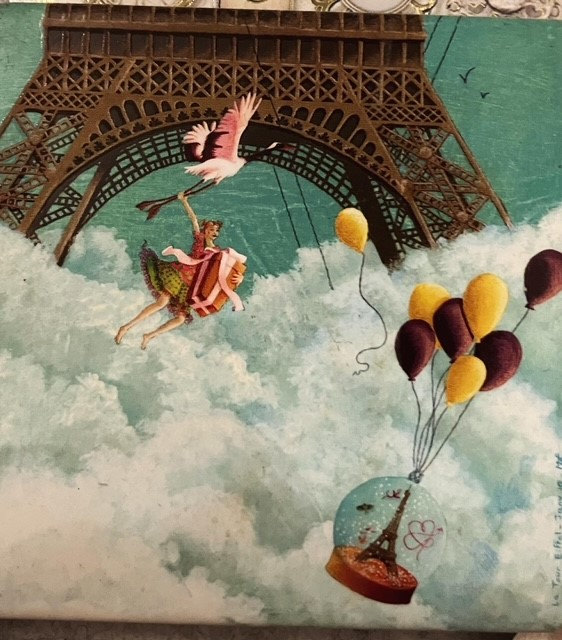
Anyway, as part of the Meet the Writer challenge I posted some photos of my writing ‘view’, which most often for me is the little pieces of art/quotes I have on my ‘creative/inspiration board’ that hangs above my desk so I’ve included them in this post. (As you can see there is a bit of a Paris theme – I love Paris and picked up the postcards/art magnet on visits).

Over the holidays I was judging a flash fiction competition for Erskine writers and I really enjoyed reading the 500 word stories. I love the challenge of writing a short piece of fiction, and I was delighted to see the range of excellent and creative stories the group had produced. It really inspired me, so when this month’s Furious Fiction challenge (from the Australian Writers’ Centre) landed in my email inbox I decided to give it a go. This challenge runs the first Friday of each month, and you are given specific words to include in a 500 word (max) story, and you have 55 hours to submit. It’s a great challenge to get words down. You can sign up to emails about it here

This month’s Writing Magazine included a 2024 Competition guide and this has also made me determined to write more short stories this year to submit. It’s easy to let novel length work dominate, but I find writing short work keeps my writing sharp and fresh!

Good luck if you have set yourself any 2024 goals.

Make every word count

Today I’ve chosen a prompt from later down my list as I wanted to write something that was fun and creative. I’ve posted a couple of attempts below of 6 word stories.

I’m going to be delivering a workshop on writing flash fiction in the coming week and attempting this exercise was a really great way of trying to make every word count!

Burnt dinner tossed onto anniversary roses

Banning books, silencing. Words are louder

On the wrong train, finding home

Party cancelled, cake never tasted better

Discarded heels, leaving behind restrictive rules