Interview with a Writer ~ Rosemary Gemmell

This week I’m delighted to welcome my writer Mum, Rosemary Gemmell, technically back to my blog, as Rosemary featured in one of my first ever author interviews, as part of a blog challenge series I did a couple of years ago in November. For this reason I let her choose between mine and my husband’s questions (from last week), to mix it up a bit this time around.

My Mum has been a massive inspiration; penning a range of wonderful books, stories, poetry and articles (as well as academic essays).

It’s thanks to my Mum I felt encouraged from a very young age to develop my writing, and then have the confidence to share it with the world (I don’t think many people are lucky enough to have that type of support from a parent). We often discuss ideas, and what we’re working on. I always trust my Mum to give me insightful and honest feedback, and am very grateful for her technical wizardry and excellent editing!

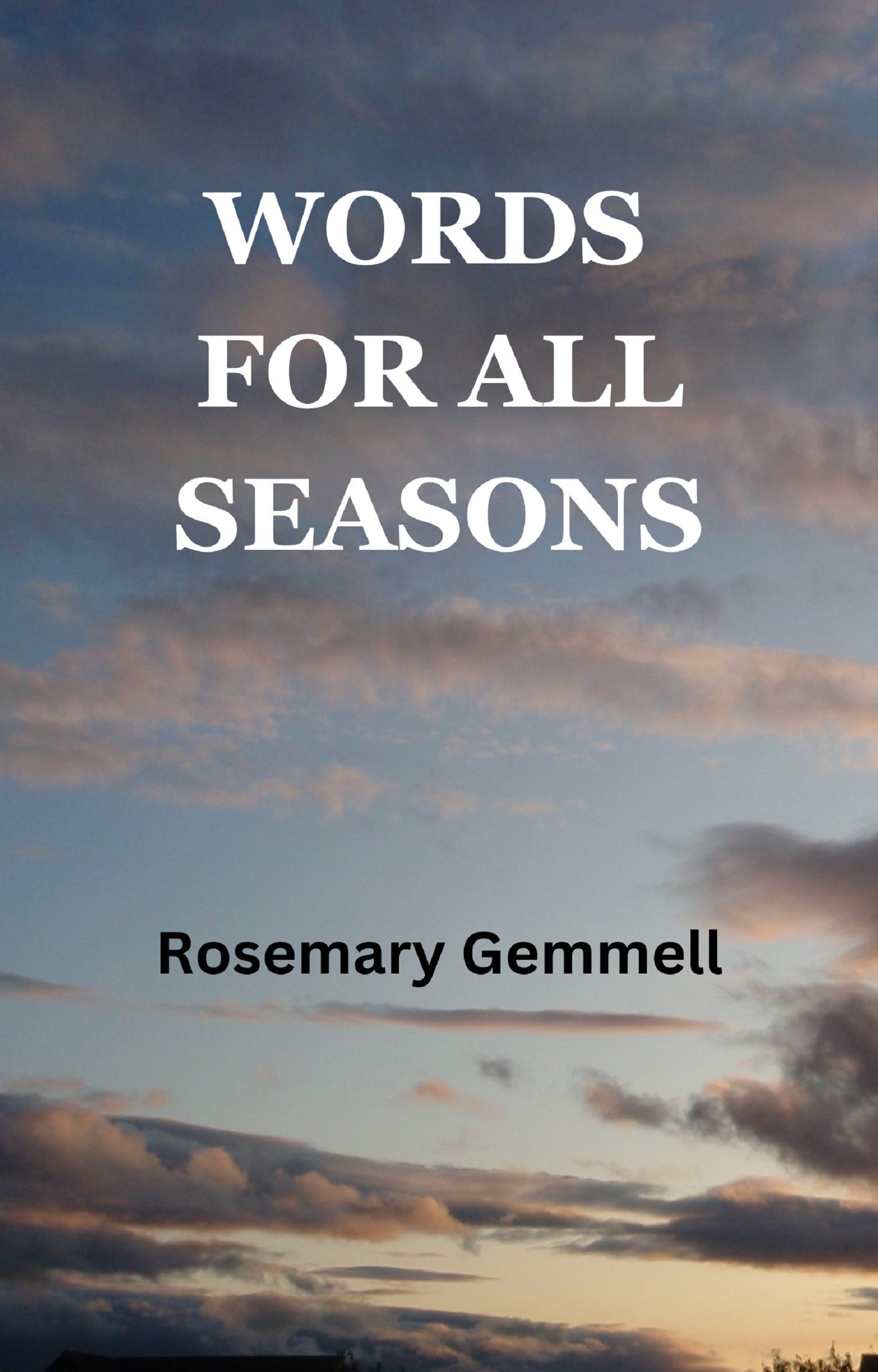
Read on to find out more about a lovely collection of Rosemary’s work titled Words for All Seasons, which would make a perfect Christmas gift!

Author Biography

Rosemary Gemmell is a Scottish novelist and freelance writer based in central Scotland. Rosemary writes contemporary and historical fiction, with occasional short stories, (many of which have won prizes), children’s fiction, articles and poems. Her short stories, articles and poems have been published in UK magazines, the US, and online.

When did you first start writing?

I first wrote creatively at high school when I went through a teenage, romantic phase and adored poetry and literature in general, so I started writing my own poetry. It was many years later before I moved on to articles, then fiction.

What do you write?

I write a little of everything: novels, short stories, articles, poetry, children’s fiction, and even a little bit of drama years ago. I’ve had lots of work published over the years and last year, I decided to put together a celebratory collection of new and previously published stories, articles and poetry along with some of my photographs to illustrate certain pieces. It was partly to highlight the different types of creative writing I enjoy and the book is divided into the four seasons – see below for a review.

Why do you write?

I write to entertain and communicate but also for self-expression and to make sense of the world, especially in non-fiction and poetry.

Share some of your favourite lines from reviews, or comments you have received about your work, which boosted your confidence (tell us what piece of work it relates to)

I’ve been lucky and honoured to have many wonderful reviews for my different books and appreciate each one as they encouraged me to keep writing. However, I don’t even mind a less praiseworthy review as long as I can learn from it.

As a change from my novels, this is a lovely review for my most recent collection, Words for all Seasons, that was published last year (in e-book, paperback and hardback):

What a treat it has been to read Words for All Seasons by Rosemary Gemmell. Her recently published collection of short stories, articles and poems is ideal for dipping into when you have a few moments to spare. The variety ensures there is something to please everyone. Conveniently divided into the four seasons, this is a book you will want to visit – and revisit – no matter what the season.

Any tips for new writers?

Keep reading, as that’s how we best learn what works and what doesn’t, and what type of writer we aspire to be.  And don’t give up at the first few hurdles – we all have to learn as we go, as in any other creative pursuit.

Do you have a regular writing routine, or do you write in frantic bursts?

Neither of the above! I’ve never really had a proper writing routine, much as I’ve often tried. I’m usually more creative in the morning but tend to write when I feel like it, or in short timespans. Sometimes, the less time I have, the better I write – perhaps because I get bored sitting too long at one task.

Where do you write? (A dedicated space, or on-the-go)

My absolute favourite way to write is in cafés or on trains with pen and paper. I’m never distracted by what’s going on around me and can happily sit in my own little bubble of creativity. Beats sitting at home on the computer, though I do have a study where I then type up what I’ve written.

Where do you get your inspiration for your books?

Inspiration for my novels often begins with characters and setting. I’m not so interested in plotting (a weakness) as characters are most important to me as a reader and writer. Once I have an initial idea, I just write and let the characters play as the story develops. I usually have a vague idea of what the story will be about and where it will be set but I like to be surprised by where each book takes me.

What do you think about the concept of AI written books?

We won’t be able to turn the clock back on AI but I hope we never get to the stage of accepting it as a way to write books, especially fiction, although I know it’s already being used. Fortunately, AI is unlikely to ever express our unique human emotions in the same way we can (I hope).

What do you do to get into a ‘creative headspace’?

If writing in my study at home, I love music playing in the background, usually classical, easy listening, or Celtic – sometimes according to what I’m writing.

Where can we find out more about you, and your books?

My website is the best option for a complete overview of all my published books:

https://www.rosemarygemmell.co.uk

Buy Words for All Seasons here

Twitter X @rosemarygemmell (I sometimes take part in #haikusaturday)

And Instagram @rosemarygemmell
Inspiration is Everywhere Part 2# (blog post 5 of series)

An old observation diary

Today’s post is a continuation from last week where I shared some creative exercises that have helped me understand that when it comes to writing, and creating, you can find inspiration in the everyday ~ if you pay enough attention, stay curious, and let your imagination run wild!

When I deliver creative writing workshops I encourage participants to think of fun ways they can experiment with their writing. Often writers can put a lot of pressure on themselves, especially if working to deadlines, or expectations. It can also be daunting if you think a story should contain ‘complicated’ words or be a certain length.

I find a good way to take the pressure off, and to stop over-thinking, is to engage in writing tasks which don’t require a lot of words, and in fact make you start to look at words in a completely different way.

A challenge I took part in years ago, (just for fun, with friends), was to try and write stories composed of only three letter words (which then extended out to write stories with four letter words, five letter words – you get the idea!).

I amazed myself with being able to write not one, but quite a few, very short stories composed of three letter words. I’m sharing one of them below, which turned into a bit of a philosophical story.

3 Letter Word Story Example

Pat Woo and the Sun


One day Pat Woo saw the sun dip and tip out the sky. 
”Wow! See the sun!”

Pat Woo saw the sun run and Pat ran too. The sun set off for the day. One sun ray hit the ill cow. Pat saw the cow fly – set out for the sky. 

“Moo! Pat Woo! The cow can fly!”

Pat Woo saw the sun run and dip. Its ray hit the old rat. The old rat was lit. The rat got fit – saw the sky; his old eye now new. The rat saw the sun; saw Pat Woo.

“Pat Woo! The rat can see!”

One ray hit the cod. Pat Woo saw its fin dip; saw the cod nod and the cod got out the sea net.

“Pat Woo! The cod will not die!”
”Hot sun you are ace.” Pat Woo had joy for the sun. 

The sun had fun. Pat Woo did too – the day Pat Woo saw the sun dip and tip out the sky.

Why don’t you give this a go yourself? If you’re part of a creative writing group, it might a fun warm-up task to try to wake up the creative side of your brain.

As an extension of last week’s ‘Small Stones’ exercise, I’m going to challenge you to keep a more general ‘observation diary’. This can take the form of visual notes such as photographs, or scribbles (or notes in your phone), of interesting things you notice during your day-to-day. The Small Stones were quite creative paragraphs or lines, but in an observation diary you might want to capture musings and reflections on things in the news, things you overhear etc, anything really which you think one day could form part of a story.

Take a Photograph a Day

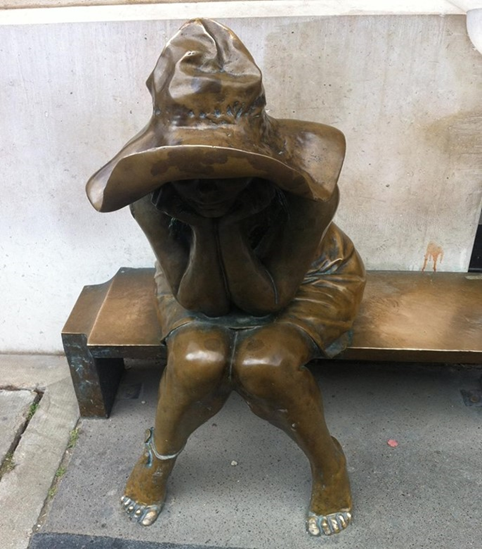
Was this a real girl?
Why is there a shoe in the cage with the skeleton?

I’m a very visual writer and I love taking photographs. You can start to build a ‘photographic’ observation diary by taking at least one interesting photograph every day. This could be anything which catches your attention; an abandoned shoe lying at the side of the road, an interesting sculpture you walk past every day, a strange doll in the window of a shop… You can start thinking about the story behind the image there and then, but often it might take a while for a proper idea to form. And that’s fine. Because now you’ve stored the photograph somewhere on your phone, you can return to this later. You might even want to combine the small stones tasks (see the post here for examples), with your photographs.

I’ve shared some photographs above I took when on various trips across the years, which I then later turned into short stories.

The heart photograph was a print which hung in the staircase of a Paris hotel I stayed in during my first solo trip abroad. I spent three nights in Paris and enjoyed wandering the streets alone, and it was during this time, passing by this print every day, I started to form the idea for a short story ‘Only You’ where a jilted bride spends her honeymoon alone in Paris. The story was runner-up in a competition, and broadcast on Hospital Radio. They sent me a CD recording of an actor reading it aloud, which was quite special. I loved hearing my words come to life.

If you enjoy finding inspiration from photographs check out the Scottish Book Trust 50 word story competition here They provide monthly photographic prompts

Listen to conversations

When I say listen to conversations, I mean within reason, as obviously it’s a bit rude to invade others’ privacy. But if you’re on a train or bus where your fellow passengers insist on talking loudly to one another (or on their phone), then naturally you will probably pick up interesting snippets of conversations throughout your day.

In an old ‘observation diary’ (where I used to write down thoughts that randomly popped into my head, interesting facts or stories I came across on social media or in the news, as well as overheard conversations) I found these snippets:

A man and a woman in conversation: “Tommy, you’re being really unfair. You’re stopping me from going to Hollywood. You’re being really bad to me with the brain transplant thing. I know I’ve had at least four brain transplants behind my back.” On the surface, most passengers would dismiss this woman as talking nonsense. But what if the man she is with is a mad scientist, and she’s the subject of numerous experiments, and is starting to rebel?

A teenage girl was sitting behind me on one train journey, talking loudly into her phone, “She fell out with me when I was camping because she said I never texted, but I couldn’t text because seriously I didn’t have reception… and then I ended up sitting with her all night on a night out so she never felt left out… I hate falling out with people, the thought of someone hating me, or having a problem with me…” At this point a boy nearby asks me if I’ve got a pen. He then returns to his seat to scribble something on a bit of paper and when he gets up at his stop he chucks a note at the girl before walking off.

The girl then shrieks into her phone, telling the person on the other end, “Oh my f-ing God. A guy just threw a note at me on the way off his train. Wait, wait. His name is Ryan. I swear… wait… he must have been listening to my conversation. How rude, haha.” (Newsflash girl, I think we’re all now listening)… “He’s said, You are too beautiful to have friends who are mean to you. Add me to facebook and let me make you smile.”

Now depending how your writer brain works, this could either be the start of a romantic novel or a true-crime type stalker thriller….

Next time I’ll be writing more about the inspiration behind my books.

Happy writing!

Finding Your Way

Artwork by V Gemmell

Recently I’ve hit a bit of a creative slump so for my birthday a couple of months ago I asked for a copy of ‘The Artist’s Way’ by Julia Cameron. I’d always wondered about this book and my curiosity was piqued further when a recent article (in the May issue of The Writing Magazine) featured an interview with Julia Cameron, and she spoke about her recommended practice of writing ‘Morning Pages’, where you write down a stream of consciousness on three A4 pages every day before you do anything else. This is just one practice and task Cameron recommends in order to kick-start your creativity, or in my case, try to get ‘unstuck’. In the opening, Cameron describes the book as a ‘toolkit’ for artists, and, ‘as they (readers) learn to take small risks in their Morning Pages, they are led to larger risks. A step at a time, they emerge as artists.’ The book is divided into ‘weeks’ like you are undertaking a course, with new themes and tasks introduced each time, but what stays consistent is the suggestion to complete your Morning Pages daily, and once a week set time aside for ‘An Artist Date.’ This isn’t a suggestion that you hang around gallery openings asking for artist’s phone numbers. This date is with yourself, where you set proper time aside to engage in something creative, or at least an activity you enjoy, alone (the alone part is very important).

I’d like to say after delving into the book about 5 weeks ago that I have shown impeccable discipline, but I’ve not. I am averaging about three morning pages a week, and often this is typed into my notes pages on my phone as I travel by train into work. I get up at 6.45am the mornings I’m travelling into work and I’m not a morning person so I was loathe to set my alarm 20 minutes early (as it tends take about 20 minutes to pen three pages). For me, that was going to set me up to fail at the start, and would defeat the purpose of making this something I would hopefully enjoy, and something that would energise me.

So now my morning pages often turn into late afternoon or evening pages, and it’s probably missing the point of ‘clearing my head for the day’, but it has thrown up some very interesting musings and I often use my pages to reflect on why I’ve been feeling blocked. I have to say I am failing on the regular artist dates too but I have slowly started to set more time aside to enjoy and explore all sides of my creativity (not just writing) which is really important to me as it does really help me switch off from the distractions of daily ‘noise’. My pen drawing at the top of this post was a result of one such ‘date’, and I also finally read through a book I bought from the GOMA years ago, called ‘Art From Elsewhere’, which features 70 works by International Artists, selected by curator David Elliot. I particularly liked the photos ‘Girls in Cars’ by the artist Shirin Aliabadi – you can read a short article about her and her photography here.

Sometimes I feel I waste too much time scrolling through social media (don’t we all), but then I remember the fascinating accounts, such as Humans of New York, that I follow, and how there is so much inspiration to be found in ‘the every-day’. This is something I know; finding inspiration everywhere is a big message I thread through a lot of creative workshops I have delivered, but I seem to have forgotten of late. Noticing small things in life was mentioned in one of the chapters of Cameron’s book and I do think there have been so many ‘big’ unsettling things happening in the World of late, it’s easy to let that noise dominate. And it’s easy to tell ourselves we have so many important day to day responsibilities to carry out (which, let’s face it, exhaust us,) that we don’t have time to be creative and frivolous.

Recently I remembered someone from my past connecting with me on facebook years ago when my debut novel came out, who said to me, ‘Oh I see you wrote a book. I plan to do that one day but right now I’m far too busy.’ I felt like replying with the response I’m sure many writers would like to respond with, ‘Newsflash. We are all too busy, but if you really want to do it, you will make the time.’ Guess who I’m actually writing that message to now? Though as many writers know, having time is just one aspect of what holds us back. For me, being productive is very much about getting into the right mindset.

One of my favourite tasks so far in the book has been to write a letter from me at eighty to myself (with the prompts – what would I tell myself? what dreams would I encourage?). At first I struggled with this but then I quite liked eighty year-old me; she got quite sassy as the letter went on. It got quite personal, but I wanted to share part of it, because it’s probably something all of us need to hear sometimes:

Eighty-year-old me told me those times when I look at other writers/artists, whatever, and think I can never be that good, they’re so much better than me, they’re out there being so successful her response was, They’re not better than you. They’re braver than you. And if I look up when I’m eighty and all I see on my wall is some god damn modesty medal you won in your forties I am going to be very mad and hide it in a box of regrets. I want to look up from my armchair and see a wall covered in awards and certificates or at least some kind of photographic evidence that you have continued to put yourself out there, and celebrated your creativity and talents.

I hovered over that word ‘talents’ and nearly deleted it. But I didn’t. So I guess I’m half-way on my way.