For anyone who reads this blog regularly you’ll know I have been featuring interviews with writers since September 2025. I’ve taken a bit of a break from the interviews just now to focus on some of my own writing commitments. I also miss just doing my own random blog posts, so even although I will return with other interviews in the future, it won’t be such a regular feature going forward.
I put together this post as a way of highlighting some great advice from all of the featured writers, to help keep me motivated, and hopefully you too! When starting new projects, or struggling to find one that sticks, (something I am experiencing just now…), it’s good to remind ourselves we’re not alone in this experience, and to keep going!
This post is also an easy way to click on provided links to read through all of the interviews (and check out the writers’ work!). Thank you again to the writers who took the time to let me interview them. Happy reading (and writing).
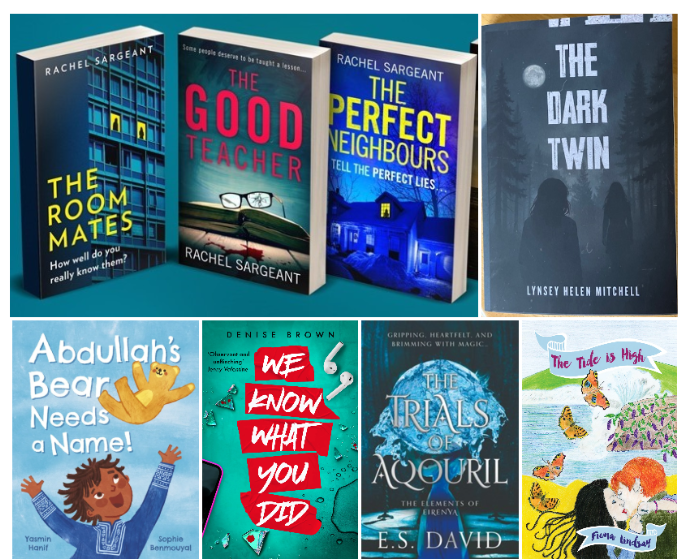
“Read, read, read and write, write, write. In my experience, first drafts are hard; editing is easier, but you can’t edit a blank page. Join writers’ groups. Perhaps take a formal course and meet fellow writing students. Being part of a lovely tribe is a great way to feel motivated.” Rachel Sargeant, Author or Suspense and Crime Fiction Read full interview here Buy Rachel’s books here
“Find a routine and style that works for you… Challenges like NaNoWriMo help to motivate me to sit down and write. In the last few years, I’ve found myself being more productive in the mornings, getting up a little earlier before work and getting some writing in before I start.” Lynsey Helen Mitchell, YA Horror Writer Read full interview here Buy Lynsey’s YA horror here
“I would say keep writing, learning, experimenting in your practice …Soak it all up and enjoy the process – from that will come your creativity and possibly your best pieces. Find like-minded people to write with, whether that’s informal creative writing groups, workshops, retreats – somewhere where others are writing too, which helps you stay motivated and accountable.” Yasmin Hanif, Children’s Writer Read full interview here Buy Yasmin’s debut picture book here
“Write every day, even if it’s a hundred words. No writing is ever wasted. And read for pleasure every day too. What works for me to keep me motivated is to never have a fixed outline to follow. I realise that this won’t work for everyone, but I find that I get easily bored if I don’t allow the characters to do their own thing within a loose storyline. Also, switch off your phone!” Denise Brown, Author of YA Mystery Thrillers Read full interview here Buy Denise’s books here
“My biggest tip …would be to never give up on your ideas. They might not be for everyone and you might need to reflect on any critiques you are given, but if you are open to developing your writing, you give yourself a much better chance of achieving your goals.” ES David, Author of YA Fantasy Adventure Read full interview here Buy ES David’s debut YA Fantasy here
“Read widely and critically for inspiration and to learn the craft –…acknowledge that writing is difficult and completing a novel is a lengthy job – so it will be very hard to sustain at times, but know that this is everyone’s experience and we can do it if we persevere. I’d suggest, if stuck and struggling to move forward, if you have a high-octane scene in mind for later in the book, jump ahead and write it and hopefully bring some excitement back.” Fiona Lindsay, Romance Author Read full interview here Buy Fiona’s Scottish romance series here
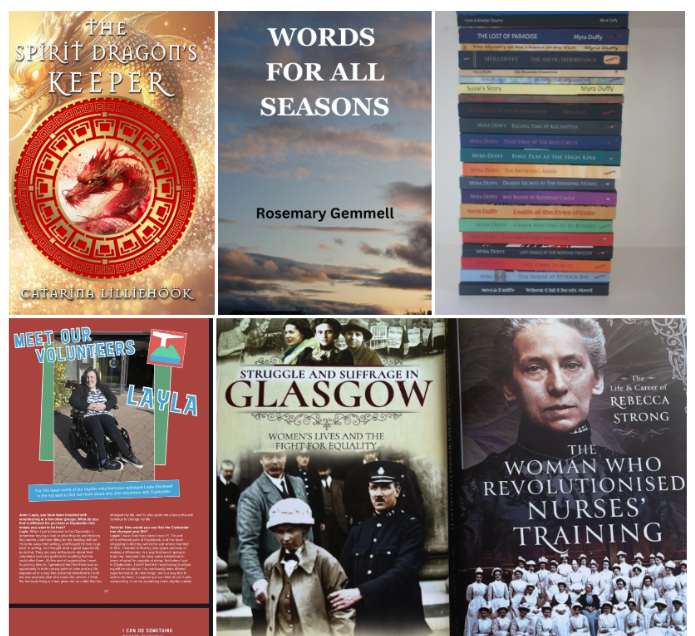
“Get a teacher. Do a course. Sign up for a workshop. Do all of the above. Write whatever comes. I don’t stop to think or analyze as I don’t want my brain to get involved. Then it would probably instantly stall most of my ideas.” Catarina Lilliehook, Fantasy Adventure Writer Read full interview here Buy Catarina’s debut mystical fantasy book here
“Keep reading, as that’s how we best learn what works and what doesn’t, and what type of writer we aspire to be. And don’t give up at the first few hurdles – we all have to learn as we go, as in any other creative pursuit.” Rosemary Gemmell, Author of Contemporary and Historical Fiction Read full interview here Buy Rosemary’s books here
“There’s no option but to write and to keep writing… Above all, I’d advise any aspiring writer to join a writing group either in person or online. Don’t dwell on past mistakes! And let your piece of writing go. Most writers have a tendency to revise and revise and revise. Yes, make it as good as you can but at some point you have to send it out into the world.” Myra Duffy, Author of Cosy Crime Read full interview here Buy Myra’s books here
“…the answer to do things, is always do it…If you’ve got nothing to work on, no one can help you. You’ve got to start somewhere. I used to think fear was this negative thing, but what I realised is I can be afraid, and still achieve….Stop seeing fear as a problem, see it as a challenge. Everyone’s afraid. Once you’ve done it, you’re not afraid of it again.” Layla Blackwell, Writer, Journalist and Disability Empowerment Coach Read Part 1 Interview here and Part 2 here See Layla’s coaching website here
“If you are struggling to write, just start with a sentence – it doesn’t matter how bad or good it is, get something down on the page and then take it from there. An external or self-imposed deadline (such as a competition entry) helps me enormously, as a result of years of journalism. I am terrible for thinking I’ll write more when…My current ‘when’ is when I have a writing shed but having read Brian Bilston’s very funny ‘Diary of a Somebody’ I realise a/ I am not alone in this and b/ it won’t necessarily help my productivity.” Judith Vallely, Journalist and Author of Historical non-fiction Read the full interview here Buy Judith’s books here
Happy New writing year! I’m delighted to kick off 2026 with an interview with writer and journalist, Judith Vallely. After featuring Judith’s writer mum, Myra Duffy, on my blog back in November (see here), it’s a pleasure to now find out more about Judith’s writing career.
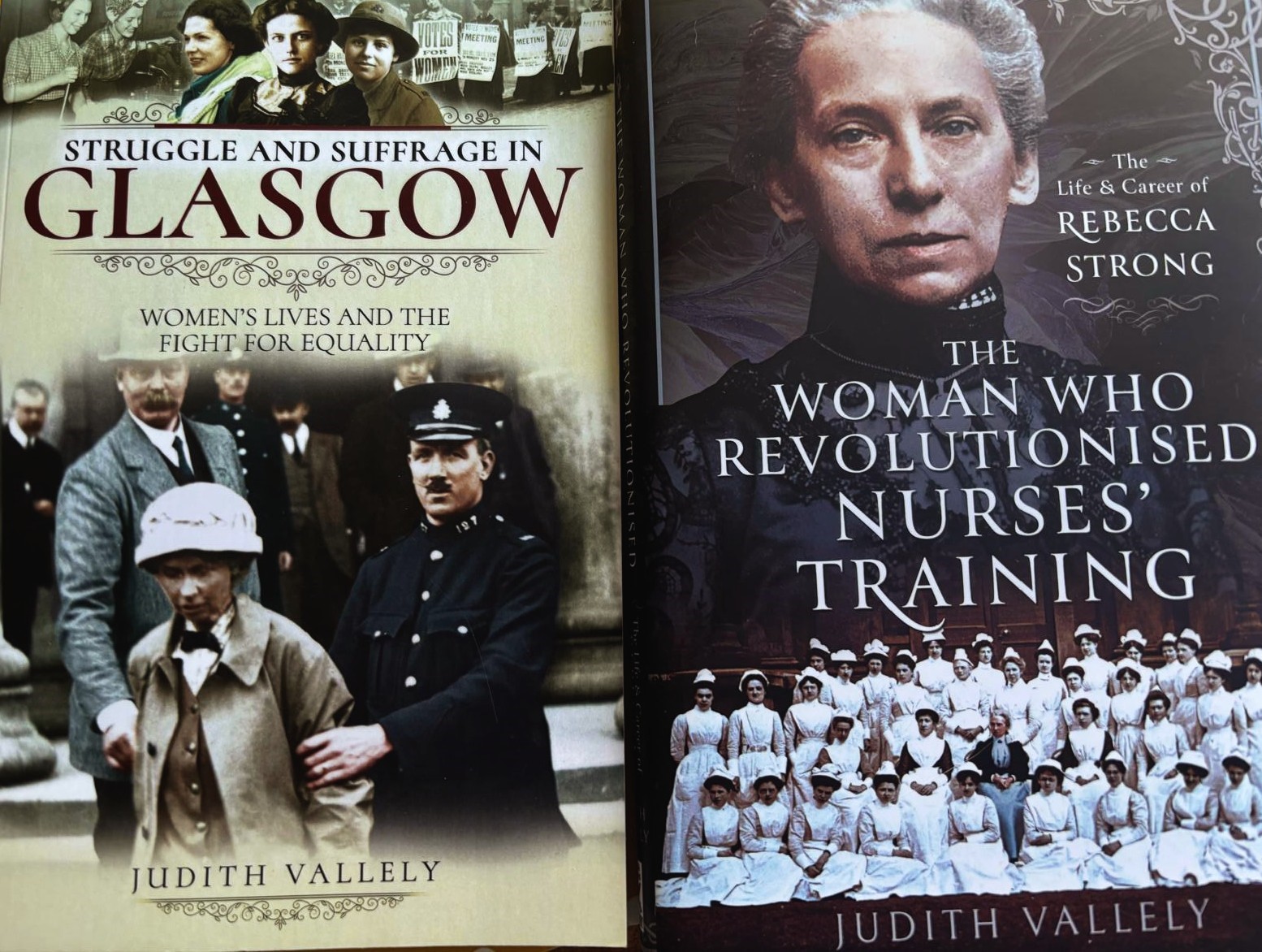
It was interesting to gain insights into Judith’s extensive journalism career, and find out more about how she has managed to balance a busy day job alongside researching and writing fascinating non-fiction books (see photos above of these books, and links below of where to buy).
I have a lot of admiration for writers who manage to multi-task, as it’s something I often struggle with; knowing how to give priority to everything I want to achieve. There’s some great tips here from Judith to keep us all motivated. If you’ve made some writing resolutions of your own this year, I wanted to extract one simple reminder from Judith: ‘If you are struggling to write, just start with a sentence…’ Read on to find out more…
Writer Biography
Judith Vallely is a writer and journalist who lives and works in Glasgow and has an MA in English and Scottish Literaturefrom Edinburgh University, and a postgraduate diploma in newspaper journalism from Napier University, Edinburgh.
I’ve always loved reading and writing from a young age – scribbling down various stories. I’m told when I was around five years old I used to sneak out of bed late at night and be discovered looking at books.
What do you write?
I’ve had a 20 plus years career in journalism writing mainly news stories, but also features and travel writing. I’ve also had two non-fiction books published and am working on improving my fiction writing skills, hopefully with a view to publication one day.
What was your first published piece of work?
When I was 16 I did a week of work experience at the Evening Times and had a letter published about the dangers of ‘devil dogs’. It was the letter of the day, but I never did get the cash for it!
Why do you write?
Very good question! There’s various answers – I really enjoy discovering and telling stories about people and places. Sometimes I have an idea in my head which I want to get down. Sometimes it’s just because I have a deadline looming! Overall I find writing a really absorbing activity and love words — that thing known as flow, when you get totally immersed.
What, or who, has helped you on your writing journey?
Too many to mention! Journalism has been the biggest part of my writing career and I feel lucky to have started out at a time when it was normal for stories to go through an extensive editing process before being published. In the digital age, it now seems like a long ago luxury to have several editors looking at your work and (usually!) making it better.
And shout-out to my mum (myraduffywriter.com), who has always been very encouraging and a hard act to follow with her many published books!
Share a writing low with us. What did you learn from this?
I think anyone who has written a book has experienced that moment of thinking it’s just complete rubbish and having the urge to chuck it in the bin forever. However I’ve realised it’s part of the process and that urge must usually be resisted.
Share a writing high?
My very first story as a journalist was published on the now long defunct Ceefax service. It didn’t have a byline and was just four paragraphs long, as was the format, but it was amazing seeing what I had written out there in the big wide world.
Share some of your favourite lines from reviews, or comments you have received about your work, which boosted your confidence (tell us what piece of work it relates to)
Writing my second book on the life of Rebecca Strong was a real labour of love – I took on the project when I was working freelance but then moved into a very busy full-time job, so it required a lot of dedication (writing and editing by the pool while on holiday in Lanzarote) and the horror of pushing back deadlines (very difficult as a trained journalist) to see it to the end. By the time the book was published I could hardly bear to look at it.
So I was really pleased to get some lovely comments in reviews which made it worthwhile including one which said: “What a great read into the history of what was and how it was shaped into what we now have. Thank you for bringing this information to light, and highlighting the hard work that was put into what we now take for granted”.
Any tips for new writers?
If you are struggling to write, just start with a sentence – it doesn’t matter how bad or good it is, get something down on the page and then take it from there. There’s nothing worse than a blank page staring at you.
And leave as much time as practical between writing and reviewing your writing – at least overnight. This isn’t always possible, especially in journalism, but I think it is hugely helpful to have fresh eyes on it – and that also should include other people where possible.
And for all writers; any tips for keeping motivated? And how do you find time to write?
I think the answer ultimately is just to sit down and write – which is easier said than done. An external or self-imposed deadline (such as a competition entry) helps me enormously, as a result of years of journalism. I am terrible for thinking I’ll write more when…My current ‘when’ is when I have a writing shed but having read Brian Bilston’s very funny ‘Diary of a Somebody’ I realise a/ I am not alone in this and b/ it won’t necessarily help my productivity.
Do you have a regular writing routine, or do you write in frantic bursts? Where do you write? (A dedicated space, or on-the-go)
I would love to be a writer who gets up at 6am and spends a couple of hours crafting beautiful sentences before the day begins. In reality, I’m not a morning person and can barely string two words together without lots of coffee. I write wherever and whenever the mood takes me, unless I am working on a book in which case I usually set dedicated time in a little work study at home.
Any stand-out books you have read recently?
I recently read Elif Shafak’s The Island of Missing Trees for a book group and totally loved it. She writes the beautiful sentences which I aspire to. She probably begins early in the morning, I imagine.
Where can we find out more about you, and your books?
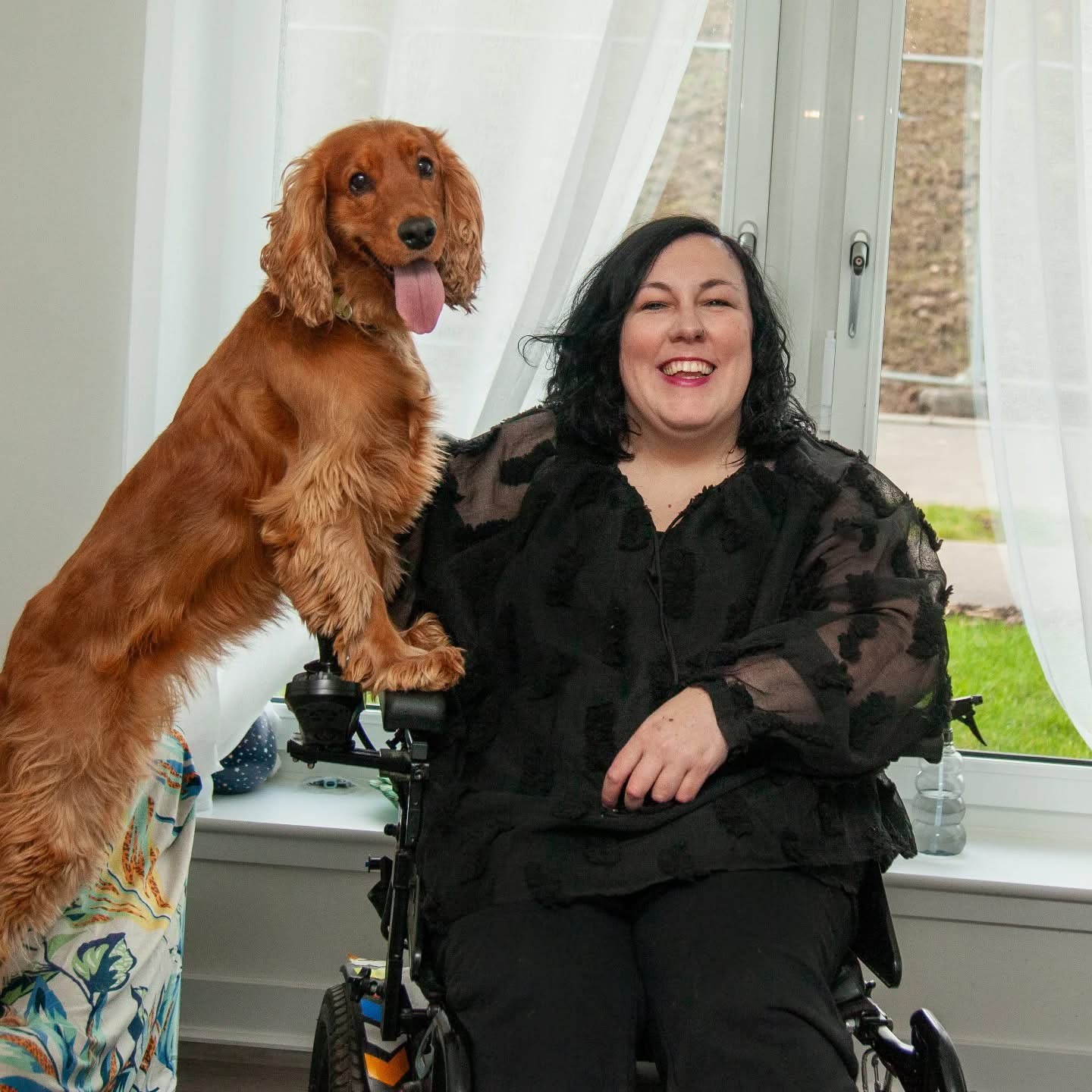
Layla with her gorgeous dog Mable Photography: Caroline FinnFrom the Clydesider Magazine Issue 32
Last week I decided to do something a bit different. I asked my writer friend, Layla Blackwell, if I could interview her for my blog, but this time I wanted to have a more in-depth conversation, so we chatted via Zoom for over an hour. As well as finding out more about Layla’s writing journey, I asked her if she would also tell me about her recent endeavours as a Disability Empowerment Coach, (see Layla’s Coaching website, Layla BE Coaching here). I have to thank Layla for trusting me to transcribe an interview containing over 6,000 words of pure honesty, vulnerability and humour. Not all of our chat made it onto the blog, (we had gossip to catch up on too!), but there was still enough that I wanted to divide this interview into a Part 1 and Part 2, to give Layla’s story the full impact it deserves. So please come back tomorrow evening when Part 2 goes live.
Having this chat, and then re-visiting Layla’s words as I typed them up for the blog, had me feeling so proud, in awe and inspired. I met Layla way back in 2011 (I think!), at a writing networking event I used to regularly attend in Glasgow, called Weegie Wednesday. (I met lots of great writers here, and have fond memories of the years I attended). I love seeing the amazing things Layla has accomplished so far, and I am in no doubt that the best is yet to come for Layla’s writing and coaching/advocacy career. Watch this space.
Biography
Bravery is often defined as ‘courageous behaviour or character.’ For Layla, it’s been a lifelong practice. Born prematurely in November 1987, Layla weighed no more than a bag of sugar. She wasn’t expected to survive. At age two, Layla was diagnosed with cerebral palsy.
Growing up with disabilities meant Layla was surrounded by professionals, and a protective Mum, who all told her what she wanted, thought, and felt. Layla became a people-pleaser, cautious and fearful of a world that wasn’t designed for her. But the moments that changed Layla’s life all came from facing her fears head-on.
From seeing her first piece of creative fiction in print at the age of 21, to joining a women’s wheelchair basketball club at the age of 28, Layla discovered that disability wasn’t just something to ‘overcome’- it could be a point of pride. She found her voice, strength and a community. It showed Layla she was capable of more than she ever believed.
Since then, Layla has been become a published journalist, an advocate, and now a certified ICF life coach.
Why do you write?
I started writing for two reasons. One; talking frustrates me…as much as I do it, and I do a lot of it, talking frustrates me, because it’s difficult to get words right all the time. And I find that a lot of the time, when I have conversations, like when I have this one today, I’ll probably go away and think, you know, I really wanted to say some other stuff, and I forgot to. Or I’ve gone off on a tangent. When you write, you have time to go back and think; this is what I want to put across.
Secondly, from a disability perspective, writing is one of the careers that puts you on an even keel, because you don’t have access issues, and nobody knows you have a disability unless you declare it. It was one of the only careers where I felt everybody was kind of equal to me immediately.
When did you first start writing?
Professionally speaking, I started writing when I was 21, and when I joined Glasgow Writers’ Group. That’s when I learned what professional writing entailed, and then I got published when I was 21.
That leads me on nicely to my next question; what was your first published piece of work?
A short story which appeared in the anthology, A Thousand Cranes: Scottish Writers for Japan (published in 2011 by Cargo Publishing). One of the members of the Glasgow Writers’ Group had links to Japan, and it’s a charity anthology, raising money to support victims of the Haiti tsunami.
I will say my first piece was heavily, heavily edited by editors. Very kindly done, but heavily edited. I don’t actually remember too much about it, because I wrote it one way, and it turned out another. (Layla goes on to talk about how much she learned from initial feedback during this group later on).
Another story almost didn’t get published when I was 21. This was another anthology, with an Australian Press, and was again through a member of the Glasgow Writers’ Group who put me in touch with their publisher and I wrote a couple of pieces for them. After a couple of submissions, they said they were going to publish my work. The editor had given me lots of edits to work on. At first, my work came back absolutely heaving with red pen. And that’s quite difficult when you start off, because it immediately just knocks your confidence, and you think, I might actually just be rubbish at this. It kind of knocked the wind out my sails a wee bit.
I went back and corrected what he asked, but then accidentally sent through the wrong version for my final submission (making it look like I hadn’t fixed any of the issues!). His response to that was he wasn’t prepared to edit it again, but he did, and it went in (there was a lot going on behind the scenes). It taught me the importance of always responding to things professionally.
What did you learn from your experiences connecting with the Writers group (and editors)?
You very quickly learn not to take the red pen personally.
I had been in the Glasgow Writer’s group for a year and nobody would ever give me feedback on what I wrote. And it really annoyed me, because these were quite well known, successful writers, and I really wanted to learn from them. So eventually I was just like, I never get feedback, and I don’t understand why!
And they said, Well, mostly it’s because we don’t want to upset you. Nobody wants to upset you, because we like you.
And I was like, Right, fine, but at the same time I won’t learn, so what are you trying to say?
And basically, it was because the way I was writing was not great. When I was younger in school, people used to take notes for me, scribing for me (due to Layla’s cerebral palsy). So, I actually didn’t really learn sentence structure particularly well.
When I wrote things for the group to read, it was really long sentences and commas were in places they shouldn’t be. Looking back, it must have really frustrated everybody to the point where they could almost not read my work. Instead of saying to me, they were thinking, We don’t want to upset her, and we don’t want to put her off.
I was like, You should have just said to me, and I could have fixed this a year ago!
So then effectively, what I did was I removed all commas from my work for a year ‘till I learned how they worked, and I just kept the sentences really short.
And then I said, Can you at least read this? Is it readable? They said yes!
Then I started to put the occasional comma back in…
It was a turning point, and I then actually started to get feedback on things.
People often think I’m this frail wee thing that they need to be careful of. And I’m like, Just tell me!
What’s really nice now is when I submit work to my editors (at the Clydesider), my editor makes me laugh as she tells me she loves it when I send my work as she doesn’t need to do anything to it. That’s great. I mean, when I think back.
We’ve covered some of this question already in the answers above, but, Who, or what, has helped you on your writing journey?
To be honest, you helped with a bunch of things (thank you Layla). There have been a lot of people that have helped me on my journey, like my friend Fleur, who I first met through the Glasgow Writers’ Group, and then she also came along to Weegie Wednesday, the writing network event (where we met). Fleur gave me feedback on a lot of things. I’ve been really, really lucky.
But I think, to be honest, it’s my own ability to ask for help and the desire to improve and to learn that has helped me a lot to develop my writing.
If I’m writing a particular format, like when I started doing interviews, I didn’t just write it. I went away and I looked and learned: This is how you structure an interview. I paid attention to the structure, before I sent it off (to my editor).
Do you have any stand-out experiences relating to your writing?
The most recent interview I did for the Clydesider, with Sister Rita, talking to her about her work at St Margaret’s Hospice in Clydebank. I was actually front cover for that issue, as I was a featured volunteer in it, and then I had my article with Sister Rita.
I feel like I’ve outdone myself after that. (You can read Layla’s brilliant article ‘A Call to Peace’ here , in the Clydesider magazine).
What advice would you give other writers starting out?
There’s definitely a difference between when you start to write professionally and when you write for fun. And I’m now at the point where people will say to me, you’re a writer, can you look at my work? I now understand how the people in the Glasgow Writers’ group felt when I submitted my work at first.
The first question I always ask is, why are you doing this? Are you doing this for fun? Or are you doing this because you want to be published?
Because if you want to get published, the feedback I would give you is different. If you’re writing for fun, then I’m just going to tell you – the answer is just to write. To be published, you have to look at the format, and different things, that take you from the slush pile to somebody actually taking your work seriously.
But also it just changed my mentality from writing for the sake of writing, to how you write to be published, and actually also the level of detachment you have to have to actually get published. Being really precious about what you’re writing, to a certain extent, is stupid, because it’s going to go through various versions.
What experiences were pivotal for you to expand into different types of writing (moving away from fiction), and also into your coaching work?
When I went through a breakup this year, I decided, right, if you’re going to implode your entire life, then you better make the next bit you do better, like, psychologically. I’d say to myself, Being afraid isn’t necessary anymore, because you faced kind of the worst.
You know, I’ve done a lot this year that I never really thought I was capable of. I’ve done some speaking engagements where I spoke in front of 70 women. (Layla gave me permission to embed an extract of a video she sent me of the intro to the talk she delivered during International Women’s Day. See the bottom of the post for this video).
That experience kind of changed my life. It was weird how it came about. I had been in counselling and wasn’t quite ready to go things alone, so my counsellor introduced me to her daughter, Anne, who is a life coach, who could support me, but also tell me a bit about how to do coaching (something I was becoming interested in).
I think I had been Anne’s client for about a week, and this is the magic and scary thing about life coaching, how this all transpired for me…
Anne said, ‘What goals do you have?’ I told her I wanted to be an advocate for disabled people, but that I’m shit scared of public speaking. It really scares me. I don’t like doing it, but I told her, I need to do it.
Anne came back to me, and said, I’m running an event for International Women’s Day, and I need a speaker.
At first, I was like, Oh, that’s nice.
Then Anne said, That speaker is you.
My initial response was, I beg your pardon?
Anne related it to me saying I wanted to do coaching and explained to me that This was coaching. I set a goal; I achieve the goal. She told me she would help me go through my speech so I felt ready and happy to do it, and then on the day, she was going to be there to support me. She said, So you’re going to be able to achieve that goal. That’s coaching.
I realised this is what I’d been wanting my entire life, is literally somebody to go, You’re afraid of doing that. So, I’ll help you, and go with you. Then it’s less scary.
The thing that really changed my life that day was in the section of my talk, called, Ask a disabled person a potentially embarrassing question. (Layla joked this really needs an acronym.)
I thought I would get silly questions like, ‘Do you sleep with your wheelchair?’ Which I had once and I chose not to answer, because it filled me with rage. So anyway, I expected silly questions, and then a woman stood up and said, ‘I’ve got a son with disabilities, and I’m just wondering if you have any advice as to how to advocate for him properly?’
One of the things I remember in this moment was everybody was kind of in my eye level (as we were sitting facing one another), which was nice, and strange. And I remember looking at her face, and in my brain, I thought ‘Oh!’, because I was just really expecting a silly question.
I admitted this to her, and then said, ‘But you’ve asked me a really important question, so if you don’t mind, I’m going to take a wee minute so I can give you a good answer, rather than just the first answer that pops into my head.’
And so I took a wee minute and I said, ‘Look, the best answer I can give you, and is the same answer I actually told my sister in regards to my niece, because my niece has a disability. The advice I gave to her is essentially to teach your child who they are; backwards, forwards, upside down, in every situation.
‘Teach your son who he is, I said, ‘Because the world is going to spend all of its time telling him who he should be, what he wants, what he needs, what that means, what his life should be like, and if he doesn’t know the answers for himself, he’s not going to be able to live the life that he deserves to live.That’s all my 38 years of experience in every room I have been in.’
I had a wee moment where I was choked up because I realised I’d hopefully just changed that wee boy’s life, even although he’ll never meet me.
I’m sure you would have had the whole room in tears (Layla confirmed she did).
I know you’ll be changing lots of people’s lives with your words, Layla.
Here’s an extract of a video from the introduction of Layla’s inspiring talk from that day:
Layla at an International Women’s Day talk, earlier in the year
I’m going to finish Part 1 of Layla’s interview here.
Part 2 will be going live tomorrow evening. Please come back to read more about another pivotal moment in Layla’s life, which she refers to as her ‘three seconds of bravery’, where her perspective about her disability changed, which ultimately led her down new pathways with her writing, and to become a Disability Empowerment Coach.
After a short break from the blog last weekend, this week I’m delighted to welcome writer and friend Myra Duffy to my ‘Interview with a Writer’ feature. I’ve known Myra for many years, first meeting through a local writing group. I always enjoy catching up with Myra, (these days, usually at the annual Scottish Association of Writers’ conference), and we’ve had many chats about writing over the years, but I loved finding out new things from this interview. Winning a poodle as a prize for your first writing success, is a story in itself…
From the photograph of the stack of books you will see how much work Myra has penned over the years. Quite an achievement, and from the abundance of ideas referenced in the interview, it sounds like there will be many more books to come. As mentioned below, Myra is probably best known for her cosy crime series, set on the Isle of Bute, which is a great setting for a mystery series. If you love Richard Osman, then instead of buying his new book for Christmas (he’s famous enough!), give Myra’s series a go.
Myra has built up quite a fan club over on the Island and as well as finding her books via the link at the bottom of the post, if you are ever over on Bute be sure to pop into the local Bookshop Print Point where you will be able to pick up copies of Myra’s books. And if you happen to visit during the Bute Noir Crime Writing Festival, look out for her Isle of Bute Book Mystery bus tour!
Author Biography
Myra Duffy writes a variety of fiction and non-fiction but is best known for her cosy crime series set on the Isle of Bute, a small island just off the West Coast of Scotland. There are twelve novels and four novellas in the series featuring Alison Cameron, “an ordinary woman who finds herself involved in extraordinary events.” Myra says, ‘The island has a fascinating history, and this provides the inspiration for much of the action in my novels.’ Myra divides her time between Glasgow and Bute where she has long-standing family connections. She is a member of the Society of Authors and of the Crime Writers’ Association.
When did you first start writing?
I was 9 years old when I wrote my first novel ‘The Twins’. I was heavily influenced by Enid Blyton whose books I read avidly, as so many children did. I still have a copy but at 960 words I don’t think it was ever going to make the best seller list!
What do you write?
I’m probably best known for my contemporary Isle of Bute mystery series featuring Alison Cameron, but I like trying different genres. I’ve written a romance, ‘Love is Another Country’ set in a riding stables in Dumbarton, Scotland, and a contemporary novel, ‘The Lunch Club’ set in Glasgow. I’ve also written a children’s novel, ‘The Mystery of the Queen of the Inch’ set on Bute.
Last year the first in a new series was published, ‘The Lost of Paradise’ – a crime story set in Glasgow.
And at the end of 2024 I had a launch in the Bute Museum for the first in my new Bute series ‘The Ascog Inheritance’ – this time set on the island in the Victorian era. I really enjoyed doing the research for this one.
My problem is I have so many ideas: at the moment I’m concentrating on finishing the second in the Isle of Bute Victorian series as well as the sequel to ‘The Lost of Paradise’, but I have a number of other manuscripts in various stages of completion, including a Science Fiction novel and a Western!
What was your first published piece of work?
When I was 13 I won a competition organised by The Sunday Mail. The prize for this wasn’t what you’d expect – it was a dog, a poodle to be exact. Something that would most certainly not be allowed nowadays.
Why do you write?
I’d love to say I have some high-flown reasons for writing but the truth is that I write to stop the characters pestering me!
What, or who, has helped you on your writing journey?
So many people have helped me over the years. I’ve always found writers are such a supportive group. I was a member of Erskine Writers where winning in some of the competitions was a terrific boost to keep going when I had doubts. I’ve had brilliant Beta readers (I can be rather slapdash in my haste to finish the story). And I must make mention of two special writer friends: Joan Fleming (now sadly deceased) and Rosemary Gemmell (www.rosemarygemmell.co.uk) whose help has been invaluable.
Share a writing low with us. What did you learn from this?
My writing low was recent – I’ve moved house and anyone who has done that knows how stressful it can be. Especially when (as I had) you’d lived in the house for a very long time (44 years) and you have masses of stuff to dispose of. I’m only now coming back into being able to concentrate on writing.
The lesson I’ve learned is to adopt a minimalist lifestyle – except for books. They don’t count!
Share a writing high?
I don’t think anything will equal the feeling when my first novel The House at Ettrick Bay was so successful. Fortunately it continues to sell well.
Share some of your favourite lines from reviews, or comments you have received about your work, which boosted your confidence (tell us what piece of work it relates to)
I’ve been lucky to have had a number of reviews online by readers who know Bute well, commenting on the authenticity of the island setting.
The first review I had in the (sadly now longer in production) Buteman newspaper was of ‘The House at Ettrick Bay’ saying my main character was ‘someone you felt you could have a cup of tea with’ which was exactly the voice I was aiming for.
Any tips for new writers?
There’s no option but to write and to keep writing. My first couple of novels are in a drawer somewhere. They will never be published but they were good for practising the craft of writing. Above all, I’d advise any aspiring writer to join a writing group either in person or online.
I benefitted greatly from my time at Erskine Writers and am now a member of Bearsden Writers. I’m learning all the time.
And for all writers; any tips for keeping motivated? And how do you find time to write?
Don’t dwell on past mistakes! And let your piece of writing go. Most writers have a tendency to revise and revise and revise. Yes, make it as good as you can but at some point you have to send it out into the world.
It’s more about making the time to write. There’s a saying that a writer has the cleanest house in the street – it’s so easy to be distracted. I try to keep to the 1000 words a day routine but even if you only manage 100 it soon adds up.
Do you have a regular writing routine, or do you write in frantic bursts?
A bit of both – I try to have a routine but from time to time that fails and I’m left writing frantically to meet a deadline.
Where do you write? (A dedicated space, or on-the-go)
I do have a tiny study in my new home but I prefer variety – a different room or (especially when I’m on Bute) the local library.
Any stand-out books you have read recently?
Marble Hall Murders by Anthony Horowitz is one. He’s a brilliant writer and this third in the series has plenty of puzzles and red herrings to keep the reader involved.
The other stand out one for me is Yellowface by Rebecca F Kuang – a delicious take on the world of writing and publishing. It’s not a new idea but the blend of humour and intrigue kept me hooked.
Where can we find out more about you, and your books?
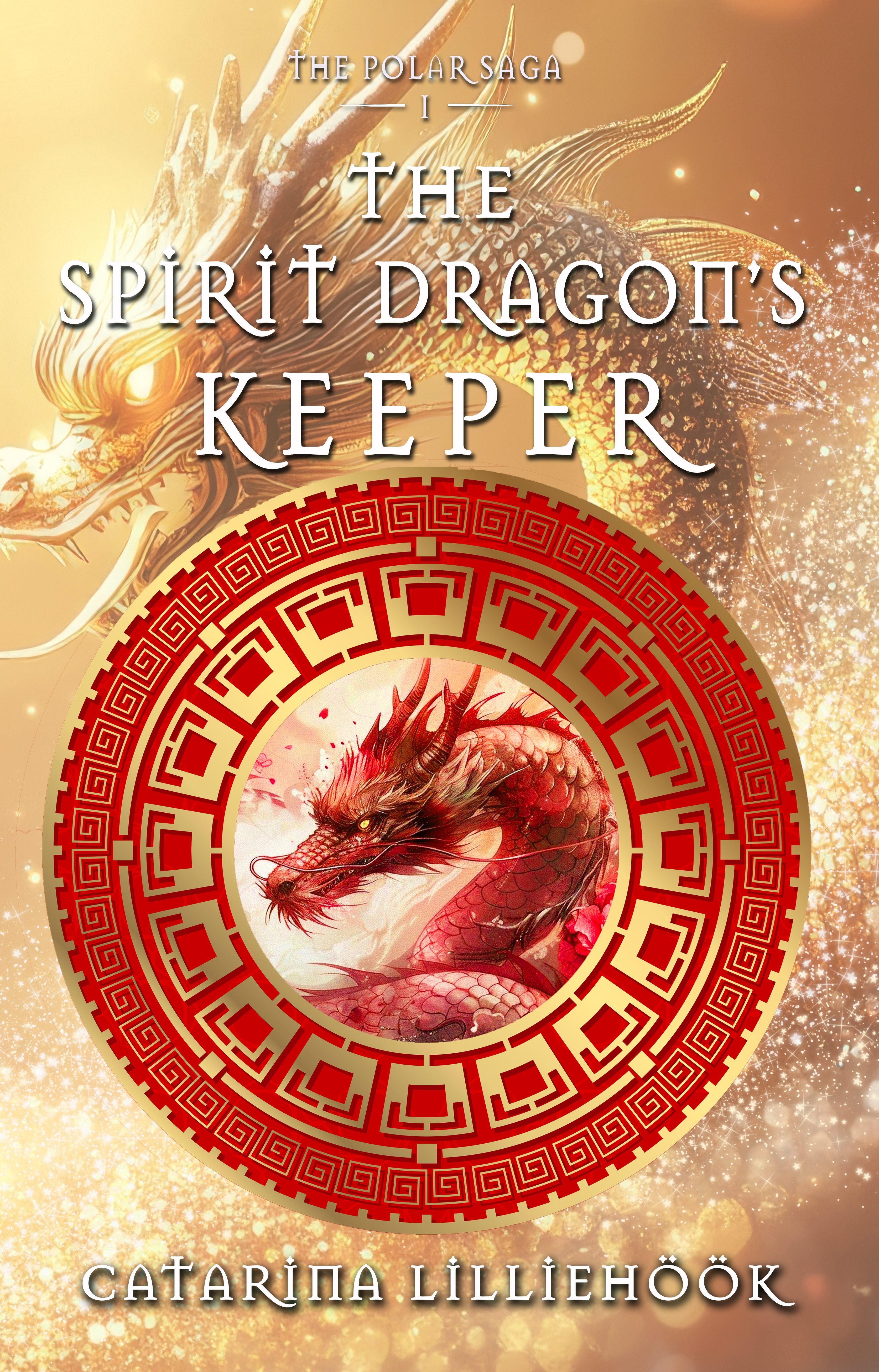
This week I’m delighted to welcome Swedish writer Catarina Lilliehöök to my blog feature. I connected with Cat through a Facebook ‘Write Magic’ group, where writers support one another and seek advice on our publishing journeys. I’m halfway through Catarina’s spellbinding fantasy adventure The Spirit Dragon’s Keeper (Book 1 of the Polar Saga series), which combines Sami folklore and Eastern philosophy and mythology. Catarina’s biography below will give you a flavour of her beautiful writing style!
Author Biography
Catarina Lilliehöök was born in Stockholm Sweden. A former journalist and the author of two books on China, she spent over twenty years wandering ancient cities, tracing dragon lore through winding alleyways and temple shadows. Fluent in Mandarin and steeped in the cultural myths of the Far East, Catarina weaves real-world knowledge into fantasy worlds that feel lived-in and vast.
She always had a pull toward the Sámi lands (Indigenous People of the Arctic)—where the wind speaks in riddles and reindeer cross frozen lakes under star-swept skies. Now settled in Switzerland, beneath towering alpine peaks and forests thick with legend, she writes at the edge of reality. Her stories are gateways—to places where rivers remain unnamed, where memory and magic blur, and where dragons still rule the sky.
When did you first start writing?
Omg—ages ago! Too long ago to even remember, lol!
What do you write?
Epic fantasy.
What was your first published piece of work?
I was a freelance writer for many years, but that was papers and magazines. My first book was about China and cultural differences. It’s in Chinese and was published in China. Then it got translated to Japanese.
Why do you write?
You mean there’s an option? 🙂
What, or who, has helped you on your writing journey?
My teachers! I have been studying for years with several mentors from the US. Courses, workshops and writer’s retreats have all been great and super helpful. I strongly believe in investing time and money in your writing journey.
Share a writing low with us. What did you learn from this?
Sometimes a teacher can be pretty brutal. I had one in particular who was very harsh in her feedback. Once I got a manuscript back from her and completely broke down in tears, flopped over my desk and cried (yes!) I felt so useless. This wallowing misery lasted for about two weeks. Then I picked myself up and began again. I have learnt from this (and several similar episodes) that it’s usually good to put aside your hurt and pride and do what the teachers suggest. Perhaps not always, but… very often… they are right…!
Share a writing high?
Every time I am in any of my fantasy worlds—woohoo! I LOVE hiding in there, especially when all the heavy lifting is done and all I have left is fine tuning. That last bit of tweaking… I could go on forever. DO NOT DISTURB 🙂
Share some of your favourite lines from reviews, or comments you have received about your work, which boosted your confidence (tell us what piece of work it relates to)
Here are a few of my favourite feedbacks on the first instalment The Spirit Dragon’s Keeper in my current fantasy series, The Polar Saga:
Great to get the China validation:
Having lived in Asia for 26 years, I was especially enchanted by the vivid portrayal of ancient China and its timeless traditions. The writing was so immersive, I could almost taste the vegetarian baozi!
Love the specifically singled out stuff…
Favorite Quote:“But in a name rests power.”
Who doesn’t love to hear this in a series?
I genuinely can’t wait for the next instalment – please, please tell me its coming soon!
Any tips for new writers?
Get a teacher. Do a course. Sign up for a workshop. Do all of the above.
And for all writers; any tips for keeping motivated? And how do you find time to write?
I never have a problem with motivation or focus. I think mainly because I just “write whatever comes.” I don’t stop to think or analyze as I don’t want my brain to get involved. Then it would probably instantly stall most of my ideas. I love to change it all around later, and in any case, I find it much easier to scrap than to add on.
Do you have a regular writing routine, or do you write in frantic bursts?
I usually write five days a week depending on what I am doing (which phase). But I always take time for workouts and cooking healthy food (I’m vegan. If I want anything healthy and yummy I have to cook myself). Non negotiable. I love to work out and I love to eat.
Where do you write? (A dedicated space, or on-the-go)
Always by my desk. This is very important: good chair, good computer, good light, preferably some sort of nature view (I have moved a lot so not always possible). Peace and quiet.
Any stand-out books you have read recently?
Right now I’m reading A Discovery of Witches by Deborah Harkness & absolutely love it! It currently runs as a series on Netflix. I’ve watched it three times.
Where can we find out more about you, and your books?
This week I’m delighted to welcome another Scottish based YA author, E.S. David, who writes Young Adult fantasy. His debut Trials of Aqouril will be released next month, (the first in an adventure fantasy series), and sounds very intriguing. Read on to find out more about E.S. David’s book and writing life.
Good luck with the release!
Author Bio
E.S. David is a Scottish author of young adult fantasy, inspired by his country’s ancient fables and stories. He likes to capture the reader’s attention with complex and relatable characters and throw them into unpredictable environments to see how they cope. Outside of reading/writing, E.S. David loves watching a good film or tv series and drinking far too much tea.
When did you first start writing?
Shortly after I finished university. I used to travel down to London on the train to visit friends and family and would work on my writing during those long journeys. Over the pandemic, I spent more time working on my debut novel and trying to develop my style of writing.
What do you write?
I mostly write YA fantasy. I love thinking about sweeping lands, magical elements and morally complex characters and mixing them all together to create a story. I am currently working on an adventure fantasy series with the first book due to be published at the end of November 2025.
What was your first published piece of work? (or about to be published work)
That will be “The Trials of Aqouril”, which will be published in November this year. It’s about a teenage girl – Erica Brooks – who ends up being transported to an enthralling world called Aqouril where she discovers she has elemental powers. In order to find out why she has been brought here, she has to undergo a series of trials to learn the truth about Aqouril and how it links to her past.
Why do you write?
I write because I wanted to challenge myself to come up with something imaginative, exciting and above all, original. I see the challenge of writing a book being a bit like completing a jigsaw puzzle. Except the jigsaw pieces are blank and only show the full picture once it’s been completed! Writing encourages you to be innovative, take risks and see where your story and characters take you and that’s what I love about it.
What, or who, has helped you on your writing journey?
My family, friends and girlfriend have all been very supportive of my writing and are all excited for the debut of my first novel. I also take a lot of inspiration from stories in history to help me come up with ideas for future events in my stories.
Share a writing low with us. What did you learn from this?
The biggest low – which I’m sure is common for a lot of writers – is being rejected by agents/publishers. It’s like being turned down for a job when you’ve put so much time and effort into researching and rehearsing what you’re going to say. To be a writer, you have to be persistent and willing to take onboard constructive criticism about your writing. On the other hand, you also need to back yourself and your ideas as you might just need to find the right publisher/agent for you.
Share a writing high?
The biggest high was getting my contract through for my first novel to be published. In a month or so, I’m sure that will be replaced by my first ever publication day. However, the initial thrill of finally getting the publication of my first book underway has been a dream of mine for years and I’m very grateful that The Book Guild have given me the opportunity to share my story.
Any tips for new writers?
I feel like a new writer myself so I’m probably not the best person for advice! My biggest tip though would be to never give up on your ideas. They might not be for everyone and you might need to reflect on any critiques you are given, but if you are open to developing your writing, you give yourself a much better chance of achieving your goals.
Do you have a regular writing routine, or do you write in frantic bursts?
I try and dedicate at least one evening a week to doing some writing, whether that’s editing a chapter I’ve written or working on a new one. It can be difficult with work and other commitments, but it’s important to find time to get into your writing space and chip away at it.
Where do you write? (A dedicated space, or on-the-go)
I have a desk in my flat that I tend to write at. I also have a playlist of films scores and other music I find moving to get myself into the right mindset.
Any stand-out books you have read recently?
I’m just back from holiday where I got to read Pet Semetary for the first time. It’s my first Stephen King read as well! I thoroughly enjoyed it, even if it did give me chills!
Where can we find your book, and find out more about you?
Today I’m really excited to welcome my friend and writer, Yasmin Hanif, onto my blog. I first met Yasmin at an informal Writers’ meet up group, where we do writing sprints and chat about our projects, and the ups and downs of the writing life in general! (and drink nice tea and eat snacks). Yasmin has been so encouraging about my own books and writing; a real cheerleader for other writers, and this has helped me stay motivated (more than she probably realises!). I was so delighted when Yasmin told me her amazing news that Floris were going to publish her debut picture book, Abdullah’s Bear Needs A Name! and even more delighted to attend her launch at Waterstones the other week (thank you Yasmin’s Mum for the very tasty Samosas and Pakoras, and to Floris for the cake!). It’s a beautiful book and I wish Yasmin lots of success with her writing career. Read on to find out more about Yasmin’s writing journey, with links to buy her book at the bottom of the post.
Yasmin is a Scottish writer and educator, specialising in children’s literature. She was shortlisted for the Kavya Arts Prize in 2023 for her story which became her debut picture book, Abdullah’s Bear Needs A Name! (Floris, 2025). She has contributed to various poems in anthologies including ‘Daisy’s Mum’ in Stay At Home (Cranachan Publishing, 2020). She was a writer in residence at a primary school and worked on their project to promote diversity and inclusion within children’s writing and publishing, which won the SAMEE Aspiring Writers Award and the Scottish Education Curriculum Innovation Award 2022.
When did you first start writing?
I don’t remember exactly when I first started writing but I remember that I started storytelling from a young age. My sisters and I would make up stories and act out the characters that we had created when we were little. I think that started my love for stories and writing.
What do you write?
I write all genres of children’s writing from picture books, poetry, middle grade to young adult. I also delve into short stories and poetry for adults too.
What was your first published piece of work?
I think my first written, fictional piece of work was a poem called ‘Daisy’s Mum’ in the Stay at Home anthology by Cranachan Publishing. This was a collection of specially curated poems and stories by 40 writers based in Scotland to help children aged 8-12 deal with the lockdown during the pandemic.
Why do you write?
There are so many reasons why I write from seeing the joy on people – especially kids’ faces – to the connection it brings between people, ideas, and experiences. I love the sense of humanity it brings out – the connectivity through emotions. I also love engaging with people when writing is performed whether that’s through readings or the discussions it brings about.
On a broader stroke, I think writing and bringing literature to as many people as possible is important for education and improving literacy levels; particularly making children more critical thinkers, and for them to be empowered for their future. Finally, I also enjoy creating something from scratch and I hope that my words have a positive impact on those reading them.
What, or who, has helped you on your writing journey?
So many people and things from writing communities to courses. However, I think the biggest thing that has helped me is finding like-minded people who also write in your chosen genre. They have been very supportive and it’s useful and encouraging to speak to different people at different stages of their writing career. I also worked with a local primary school in the West of Scotland when I started out as a writer. The experience I gained from that was also invaluable.
Share a writing low with us. What did you learn from this?
I had been subbing out my stories for a while and at that time I had also become unemployed from my main (non-writing) job. I kept getting rejection after rejection and it really felt like I was going nowhere. I was just about to give up when I got an email from a publisher saying they loved my book and were taking it to an acquisitions meeting. I really needed that. I learned that hard times can last a long, long time but the most important thing is that they don’t last. So never give up or at least keep going.
Share a writing high?
I recently had my debut book launch at Waterstones, and it was a real dream come true for me. I had friends and family there and did a Q&A and reading from the book. It was a surreal moment being on that stage answering questions and engaging with the audience. There was also homemade food which was themed with the Eid feast in the book and a bookish cake with good chatter. I was on a high from it for about 2 and half days after it!
Share some of your favourite lines from reviews, or comments you have received about your work, which boosted your confidence (tell us what piece of work it relates to)
As I mentioned, I recently had my debut picture book, Abdullah’s Bear Needs A Name! published (illustrated by the very talented Sophie Benmouyal) and received a wonderful review by Kids’ Literature Scotland:
“A beautiful and necessary book. It is wonderful when Scottish children from all cultural backgrounds see themselves reflected in stories…This gorgeous picture book is an encouraging step on that journey.”
Any tips for new writers?
I would say keep writing, learning, experimenting in your practice and meeting like-minded people. Soak it all up and enjoy the process – from that will come your creativity and possibly your best pieces.
And for all writers; any tips for keeping motivated? And how do you find time to write?
Motivation and finding the time to write can be two of the most challenging things. Through motivation you write, and conversely through writing you find motivation, so it goes hand in hand. As I mentioned about find likeminded people to write with, whether that’s informal creative writing groups, workshops, retreats – somewhere where others are writing too, which helps you stay motivated and accountable.
Do you have a regular writing routine, or do you write in frantic bursts?
I do write in frantic bursts! I always use the phrase, ‘I try to steal time if I can’ – what that means is finding little pockets of time whether that’s 5mins or 25mins!
Where do you write? (A dedicated space, or on-the-go)
I mostly write at home, but I find I do need to switch it up occasionally to keep inspired so I’ll write in my local library or with a friend in a public space like a university or café.
Any stand-out books you have read recently?
I like reading autobiographies and memoirs, and really enjoyed Matthew Perry’s memoir, Friends, Lovers and the Big Terrible Thing. I found it incredibly honest, raw and captivating.
For children’s literature, I’m currently reading The Highland Falcon Thief by M.G. Leonard and Sam Sedgman. I’ve only started reading it but so far so good!
Where can we find your book and find out more about you?
After months of blogging about own my writing journey I thought it would be interesting to gain an insight from other writers about their paths to publication, inviting them to take part in an ‘Interview with a Writer’ feature. Today, I’m delighted to welcome prolific and talented writer Rachel Sargeant to my blog and I hope you enjoy reading about her journey as much as I did. Rachel has been a supportive online writing friend and reading her answers below really cements the importance of surrounding yourself with an encouraging community.
Read on to find out more about Rachel and her fabulous books (I’m reading The Roommates just now and it’s a page-turner!).
Rachel Sargeant is the author of The Perfect Neighbours; The Good Teacher; The Roommates; Her Deadly Friend; and Her Charming Man. After many years in Germany, she now lives in Gloucestershire. Her hobbies are visiting country houses and coffeeshops, watching amateur theatre and travelling with her husband to visit their grown-up children in various places around the world. She also likes chatting about books with readers and writers on her blog.
Thank you, Victoria, for inviting me to take part in an interview. I look forward to reading your interviews with the other authors taking part.
When did you first start writing?
Writing was my favourite activity at primary school. In my own time at home, I wrote a comedy sketch, a musical and… a bodice-ripper. I think the idea for that came from a story I read in a magazine in the dentist’s waiting room. When I got to secondary school, homework took up time, so I forgot about writing.
Years later, I moved to Germany and became a mum. On a rare night out, I went to a summer ball. A palm reader was present as part of the entertainment. She read my palm and was insistent I should write, so I did. That was 26 years ago, and I haven’t stopped since.
What do you write?
Crime, suspense and psychological thrillers
What was your first published piece of work?
A few months after the palm reader in Germany told me to write, I went to a writing workshop in Shrewsbury. The tutor was crime writer David Armstrong, the father of a (at the time) young, hopeful screenwriter by the name of Jesse Armstong, much later of Succession fame. David set a five-minute exercise about a crime scene. Feedback from him and the other students on my effort was really encouraging.
On the way home I bought a copy of Writing Magazine and saw an advert for their Crime Short Story competition. Buoyed up by the positive comments from the workshop, I expanded my hundred-word exercise into a sixteen-hundred-word story and, in a stroke of beginner’s luck, won the competition. That story became my first published piece of work when it appeared in the magazine’s competition supplement.
Why do you write?
I love getting ideas for plots, characters and settings from my head onto a piece of paper. I don’t really know why, but I feel as enthusiastic about writing now as I did as the eleven-year-old producing risqué historical fiction.
What, or who, has helped you on your writing journey?
My husband provides the means and opportunity for me to write and is my biggest cheerleader. As a press officer by profession, he comes up with innovative ways to promote my books.
Lots of other people have helped and continue to help. The greatest influence on my writing has been the students I met on my distance learning Creative Writing MA in 2013. When we were allocated to syndicates to exchange work, the four students in my syndicate transformed my writing life. They gave constructive but encouraging feedback, and I read their submissions in genres and styles I hadn’t encountered before.
Ten years on from the end of the course, I still exchange work with three of them. They’ve read the early drafts of all my novels and my PhD thesis. They are Fergus Smith, Peter Garrett and Jessie Payne, all excellent writers.
Share a writing low with us.
I worked on my MA portfolio for two years, but six weeks before it was due to be handed in, my tutor told me to rewrite it.
What did you learn from this?
What kept me going was the balanced perspective and support of my syndicate. They read vast sections of the re-write. The fourth member of the syndicate, Jenny, said to me. “I admire your resilience.” I’d never thought of myself as resilient, but at that moment realised I was. I keep that in mind whenever I have a writing setback.
The experience also taught me flexibility. There is a need to frame writing for specific audiences. I was tasked with rewriting my project to give it its best chance in front of the MA examiners. After the course, with more feedback from my writing buddies, I rewrote the portfolio again as a commercial thriller and secured an agent. The book was published by HarperCollins and became a bestseller.
Share a writing high?
I’m enjoying a writing high at the moment. The novel I spent four years writing as part of my PhD has found a home. The publisher, Hera Books, made the announcement this week. An Ordinary House will be published in 2026 under my new penname Rae Starling. Readers and authors have been leaving comments to congratulate me. It’s lovely to feel part of the book world.
Share some of your favourite lines from reviews, or comments you have received about your work, which boosted your confidence (tell us what piece of work it relates to)
I was touched when the late Nicki Richards, a lovely blogger and sadly missed, named The Roommates as one of her favourite reads of 2019.
I’ve been overwhelmed by the kind comments about my Gloucestershire Crime Series from readers I’ve met in person. I sometimes do book signings close to my home in Gloucestershire. Although I’ve lived here 15 years, I’m not from the county and I’ve taken liberties with Gloucestershire landmarks, renaming some, moving others around and completely inventing a few. I’m always nervous how my authorial reshuffle will go down with local people, but they’ve told me they enjoy working out what places inspired the settings.
Any tips for new writers?
Read, read, read and write, write, write.
The best way to get a feel for a genre is to immerse yourself in reading recent titles in that genre. You’ll absorb the rhythm, tone, characterisation, structure and descriptive style.
And keep having a go yourself. In my experience, first drafts are hard; editing is easier, but you can’t edit a blank page.
And for all writers; any tips for keeping motivated?
Join writers’ groups. Perhaps take a formal course and meet fellow writing students. Engage with writers and readers on social media. Review other people’s books. Big up their new publications. Being part of a lovely tribe is a great way to feel motivated.
And how do you find time to write?
I’ve been writing full-time since October 2018. Before that, I wrote in the evenings after work. Before that I snatched an hour when my children were at after-school clubs.
Do you have a regular writing routine, or do you write in frantic bursts?
I usually deal with social media and read emails before I get out of bed, then sit at my desk from 9.30am. Apart from stopping to go to the shop or deal with chores, I’ll work through until 6pm. If I have a deadline, I might work in the evening too. I usually take weekends off.
Where do you write? (A dedicated space, or on-the-go)
A spare bedroom is my study. If the weather’s nice, I write or edit in the garden. Sometimes I’ll take a change of scene with a coffeeshop visit or simply sit in a different room in the house.
Any stand-out books you have read recently?
My standout read of the year so far is Her Many Faces by Nicci Cloke – clever angle, clever plot.
Other humdingers include:
The Crime Writer by Diane Jeffrey
Coram House by Bailey Seybolt
The Surfacing by Claire Ackroyd
Unknown by Heather Critchlow
I could go on. My Best Books of the Year post in December is going to be long.
Where can we find your books and find out more about you?
Back in January I decided to write a series of posts on here which focused on what my writing life has been like over the years. I wanted to share specific aspects that I thought might be helpful for writers just starting out, and also for seasoned writers who maybe just needed a reminder that we all experience very similar highs and lows, and to offer some encouragement to keep going during times you question your sanity, or ask yourself if it’s all worth it.
Over the past couple of months I’ve found it particularly difficult to focus on my writing. I’ve been struggling with tiredness and brain fog, a combination which isn’t great when you’re trying to plot and write a new book. But I’ve been determined to keep getting words down on paper/screen, and keep telling myself the first draft does not need to be perfect.
Embarking on a new book has reminded me of two important things:
It’s important to keep showing up
Each book takes shape in a different way
For my new project I’m trying to get words down not every day, but every week. That’s a win for me just now, and keeps the momentum going. Even although I was knackered yesterday I made myself sit down at my laptop and continue with my next chapter. I’m also doing my usual; scribbling notes in various notebooks and on the notes page on my phone. These pages are filled with plot ideas, characters and locations, that don’t yet have a place on the page, but I know they might eventually fit in somewhere, and it keeps the story ‘alive’ in my head. For me this is all part of the process.
I’d say so far my ‘work in progress’ is a bit messier than usual and as the book will require a lot of detailed description (to world build), I’m finding this is slowing down my natural writing style (which is usually a bit more dialogue heavy). I’m allowing myself to skirt over parts of the descriptions and will go back to fill it in later on. I know I’ll then enjoy it more because by then I’ll be able to see the whole plot laid out in front of me, and see what I need to do to enrich the world and bring it alive (hopefully) for the reader.
I usually like to edit and perfect my story as I go along, so I’m finding it challenging to allow myself to leave messy pages sitting in amongst the more polished ones. I’m used to writing contemporary stories, and this one has a magical element sitting alongside the everyday, so it’s teaching me that it’s okay to deviate from my usual way of working, as its a completely different style of story I am writing.
So as I draw this particular series to an end, if you have been embarking on a new creative project this year, or find yourself at the start of a new writing journey, my parting advice to you is simple:
Keep showing up.
No matter how messy your project might be looking right now, write through it, and come back and tidy up later on.
Watch this space for some insights into other writers’ journeys. I’ve not quite decided what this might look like, but after capturing some of my own experiences over the years, it’s made me curious to hear from other writers, and see what words of wisdom they might have to offer too.
Happy writing!
Here are links to all of the previous posts of the series for easy access:
This time last year I released my Young Adult crossover thriller Young Blood out into the world so I thought I’d do a post to mark the milestone.
This week I am also running a give-away alongside Ornate Alchemy on Instagram, where you can win one of their beautiful custom-made Bloodstone pendants , and a signed copy of Young Blood. If you live in the UK head over to our Instagram pages to enter: @victoriagemmellauthor@ornatealchemy You have until 5pm Friday!
It always feels strange once a book reaches publication. You spend years perfecting the story, (I’ve not yet mastered a quick turn-around), pouring a lot of heart and soul into the pages, spending hours with the characters in their world, and then suddenly it’s not just in your head anymore; it’s out there on paper for anyone to read. And then you go through a mix of emotions when you realise people are buying the book and actually reading it. What will they think? Will they enjoy it? Will they get past chapter one? Will they like that character as much as you enjoyed writing them? Will they get angry and emotional in the right places? It always delights me (and fills me with relief), when someone tells me they finished my book and loved it. This happened actually at the weekend when a friend’s mother-in-law told me how much she enjoyed Young Blood and was interested enough about the story to ask me about the inspiration behind it.
She said something along the lines of, ‘You write in a lovely way.’ These kinds of comments are so appreciated; I don’t think people realise how much writers need to hear this sometimes. Not to feed our egos, but to motivate us to keep going. I’m at the early stages of writing a new book just now and it always feels like a tricky stage, when nothing is fully formed and you are constantly questioning if this is any good or if it’s the most boring trite that you’ve ever attempted. The characters haven’t all appeared yet, and the ones who have, are still not showing you their true motivations; the setting is still taking shape, the plot has lots of holes and you’re not quite sure what’s next, but you are hoping if you keep writing all will be revealed.
In Scotland, where I live, we’re not very good at celebrating our achievements, often downplaying ourselves in self deprecating ways. Oh you enjoyed my 100,000 word novel, och that was nothing really. Just a little thing I did. Actually it was a big thing, and I locked myself away in a room by myself for hours on end to get the words just right and showed up, and didn’t give up, and saw it all the way through to the final end of being able to hold the finished copy in my hands…
Here’s some extracts from some favourite feedback and reviews I’ve received about Young Blood since it’s release. One of them was written by my Dad; you might think that’s embarrassing and a total faux pas to even mention, a bit like the bad example pitch emails to agents ‘My Mum told me this is the best thing she’s ever read in her life so I know this is going to be a best-seller.’ But actually my Dad hasn’t read much of my work over the years (no slight to him; he doesn’t read much teen fiction, believe it or not! And now he is retired he also has more time on his hands). I think he was maybe a wee bit surprised by how much he actually enjoyed Young Blood, and I was delighted that he did.
The standard of writing is superb, with excellent descriptions of characters and locations without becoming boring. As the mystery progresses you desperately want to find out what is going to happen. This thriller is a compelling read for the YA market and adults alike and I’m not just saying this because I’m Victoria’s Dad! Great Christmas Gift! (hey people get your Christmas shopping in early! – that’s me adding in this comment)
Wow!
Only 19% in and I was on tenterhooks and by half way through I was desperate to know what happened and took it to bed with me. Definitely not conducive for sleep but I just couldn’t put it down. I loved the twists and turns that had me gasping. Credit for the author. I definitely recommend. A brilliant read!
Thrilling and involving, this is one not to miss.
Young Blood, the latest YA novel by author Victoria Gemmell is not a story for the faint-hearted….These characters are not cardboard cut-outs. They are richly developed, with flaws as well as virtues. Faced with almost impossible choices, a group of teenagers find the courage to challenge the powerful figures behind the conspiracy even though they know that their chances of winning are almost zero.
I was gripped by the story from the start- was a real page turner and was desperate to read on and discover how the plot developed! Can’t wait to read more from this author!
Captivating. This book is made for the big screen.
Great read! Really gripping and loved the character of Hope. Would make a fab film. (Hi, Netflix, are you reading?)
Loved it. Every bit as accomplished as a Good Girl’s Guide to Murder
Have I tempted you yet to take a chance on Young Blood?
If so here’s the links to Amazon to buy: and wider digital channels here: Order into bookshops here and here Abbey Books in Paisley might also still have a copy kicking about
(P.s It’s only £1.99 on kindle just now which is way cheaper than a nice coffee, and it will get your heart racing just as much as caffeine, and the buzz will last longer…)





 VICTORIA GEMMELL