Inspiration is everywhere #Part 1 (blog post 4 of series)

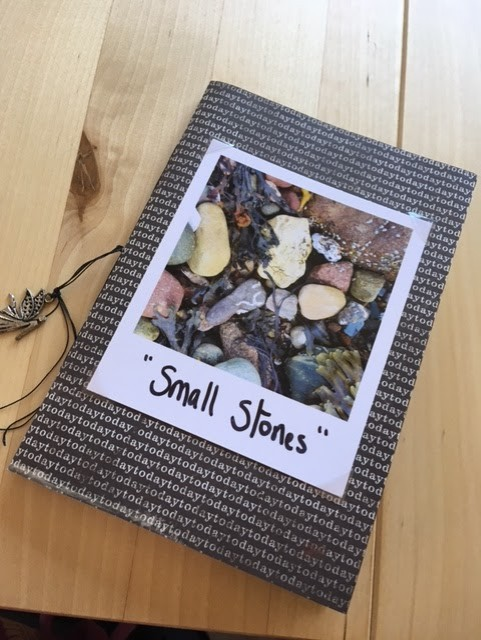
Booklet made by Rebecca Johnstone (aka Dainty Dora)

I’ve been out of action the past week with a horrible flu, hence the bigger gap between posts. This is the first day I’ve felt like attempting to get any words down on the page. I hope you’ve all had a more productive February.

The past couple of blog posts were about learning your craft, and today I’m moving on to talk about Inspiration. I’m going to focus on this theme across a number of posts as I’ve got lots of tips and tasks I want to share with you.

Where do writers get their inspiration? It’s an interesting question, as often ideas will pop in to my head and I’m not exactly sure where they’ve come from. More often than not, something I have heard, seen, or read about, in real life will spark off ideas.

In the past I have enjoyed delivering creative writing workshops around the concept that ‘Inspiration is Everywhere’. Everyday observations have definitely fuelled my creativity and provided lots of inspiration for short stories and flash fiction.

I’ll do a separate post focusing on what inspired ideas in my books as they all connect to real-life stories in the news, and headlines. (Another great task I have used in workshops – picking random bizarre headlines and allowing pupils to then come up with their own story that aligns to them).

Today I’m going to focus on a couple of tasks you can engage in every day that can hopefully help you feel creative.

Task 1 ~ Small Stones

Many years ago I was made aware of the ‘Small Stones challenge’ which showed me how much detail you can see in every day observations if you look closely enough. The idea behind the Small Stones challenge is to:

  • Notice one thing each day
  • Give your whole awareness to it
  • Write it down

My creative friend Rebecca, aka Dainty Dora, (see her substack here), made me a lovely little Small Stones booklet for me to capture notes in which you can see at the top of this post. It’s been a while since I’ve done this exercise, but I dug out some past examples of my ‘small stones’ so I could share them below. I think it’s a great way of generating ideas and starting to form characters.

Some of my Small Stones examples:

Red Glove: child sized, waving hello from a puddle on a dark January morning. The puddles pulled her under and this is a sign -Help, come and find me…

Girl in stilettos, walking comfortably in new shoes, head held high. Her friends are running alongside still trying to catch up with who they are.

Wooden heart laced with fake red berries, tied to a fence. A cheap remembrance of a love so rich. 

Pink hair, pink trainers, black nails and fierce eyes. Sweet and sour: Do not underestimate my power.

A teenage boy, vulnerable face, dark shadows under nervous eyes, a sigh of relief flooding his body as he walks into the comfort of a group who understand: with no questions, no judgement. They speak his language of technological puzzles, navigating night monsters into oblivion, so he can live another victorious day.

When I lived in Paisley, I always noticed interesting characters and one old man stuck in my head in particular. I used to see him wheeling an empty wheelchair down the high street, walking past the market stalls. A foreign accordion player, who often sat outside the M&S, provided a haunting melody to accompany his steps, which echoed down the street. Around this time I took a regular note of small stones observations, one of which was a tangerine peel on the ground shaped like a heart: Heart shaped tangerine peel abandoned on the top step. Layers peeled back, the best bit consumed, now the rest…left to rot.

A combination of all of these observations formed a flash fiction story titled ‘Ghosts’, which was first published in the Grind Journal back in 2014. You can read Ghosts here, on my new short story page on the site.

I always say to young people in my workshops, if they notice something interesting, add in the ‘What if?’ question. This is where your writers’ curiosity and imagination clicks in. After spotting the old man a few times, always pushing the empty wheelchair, I started to ask myself the question; What if he lost his wife, and isn’t quite ready to let go? As soon as I asked myself this question, Ghosts took shape.

Task 2 ~ Participate in Creative Projects or Challenges
Many years ago I engaged in a couple of fun tasks through an American arthouse company called Art House Co-op. I took part in their Sketchbook Project where I filled a blank book with writing, photographs and drawings and posted it back to the Brooklyn Art Library to go on a ‘travelling library tour’ across America. When I was on a trip to New York in 2013 I visited the original art library and viewed lots of other participants’ sketchbooks. Unfortunately after a fire struck in their new location, lots of sketchbooks were lost, then the project shut down. It was a fun task to participate in and I enjoyed illustrating some of my Flash Fiction stories and even wrote some poetry for the first time in years (see one below, with my illustration).

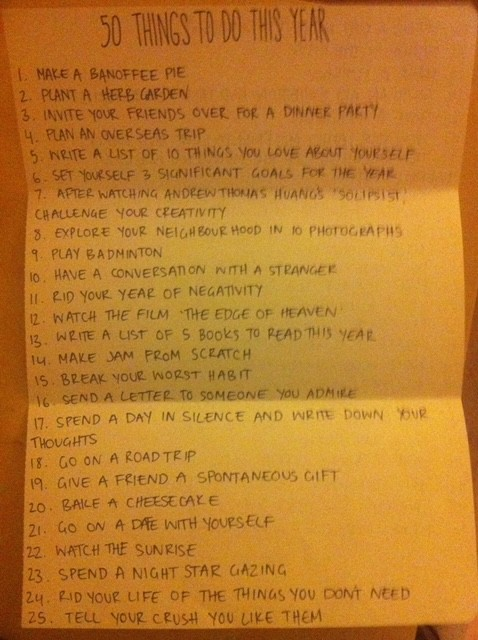
That year the Art House Co-op launched a ‘Sunday swap’ project, asking for participants to compose a list of 50 tasks for a stranger to complete. I posted my list to the company and they then mailed it out to someone, somewhere, and I then received my 50 things from a stranger, in return. I’ve put a photograph of some of my tasks above.

One particular task that really sparked off some creative ideas was the instruction to, ‘Research Natural Phenomenons.’ A natural phenomenon is basically something which occurs in nature, which is not man made. This led to lots of interesting research around things such as Tree Spiders, The Taos Hum, and the Migration of the Monarch Butterfly. Monarch Butterflies are unable to survive the colder winters in North America, so migrate to warmer climates in Central Mexico. Millions of the butterflies cluster together on trees. I enjoyed watching Youtube videos of the butterflies together in the forest and it inspired me to write a poem titled ‘Flight of the Butterfly’, which won third place in the Scottish Association of Writers poetry competition back in 2014. Years later I transformed my poem into a Flash Fiction story, using the same title and theme. This was published in the Glittery Literary Anthology in 2017. You can read ‘Flight of the Butterfly’ here

Why don’t you use some of the tasks from my photo, or do a ’50 Things’ swap with a friend? It’s a great way of getting out of your comfort zone, and doing new things, both of which are really important to keep your creative juices flowing.

A task I took part in during November 2023 was to write a blog post every day, using 30 creative prompts. See my first post here. It was an alternative to NaNoWrimo (National Novel Writing Month), where writers commit to getting a certain number of words down per day, with the aim to accumulate 50,000 words of a novel by the end of the month. I don’t think I quite achieved 50,000 words through my blog posts, but it did spark off a good few short story ideas, with one complete flash fiction piece. Feel free to use the 30 prompts from my original post as a creative challenge.

Next time I’ll continue on the theme of Inspiration, sharing some more tasks and challenges to help kickstart your creativity
Creative Storytellers

Last Thursday on World Book Day I visited Loudoun Academy to speak to third years about the magic of reading and writing.

As I was putting together my presentation beforehand I felt an old part of me come back to life. This was my first in-person creative writing workshop since pre-lockdown times (my last one in a school was February 2020, a month before the world shut down). Being ‘back out there’ made me realise how much I had missed connecting with a live audience.

The best bit of workshops is when I set the pupils a writing task and they come alive with ideas. My wish at school workshops is that I leave the participants feeling excited by words and it was great to see the pupils scribbling down ideas, (in some cases half-written stories), and chat to one another (and me) about characters and plots they planned to develop. I know from continued contact with the school library assistant that a lot of them have kept writing their stories and it is great to see. And nothing beats the buzz of walking in to a room and seeing a member of the audience half- way through reading your book (a teacher in this case) and then getting to chat to them about it afterwards.

I know I’m not alone in feeling that the past couple of years have brought changes that have felt unsettling and unpredictable, and just when the world was trying to snap back to some kind of ‘normal’, economic pressures have created even more unpredictability. In a fast-paced performance driven society I hate how we often don’t give each other or ourselves enough permission to slow down and catch our breath. This is a stressful time of year for many people in education and I love that schools allow pupils time out to participate in workshops like this. Being able to get lost for an hour or so in your imagination and being allowed to daydream has never felt quite so important and delivering this workshop was a big reminder to me how important expressing yourself creatively can be, and how it can bring so much joy, without needing to have any kind of measurable outcome.

Think about how you spend your downtime (and what helps you unwind). So much of that is connected with creative storytelling; whether that is getting lost in a book, laughing with loved ones recounting silly events, becoming absorbed in a compelling TV series of film, listening to uplifting music, playing a complicated computer game, seeing a photograph or piece of art or creating art that makes you feel.

I think the creative storytellers of the world keep it a brighter place, and I hope those kids continue to understand the power of their words and keep writing their stories.

Bibliotherapy and Bookshops

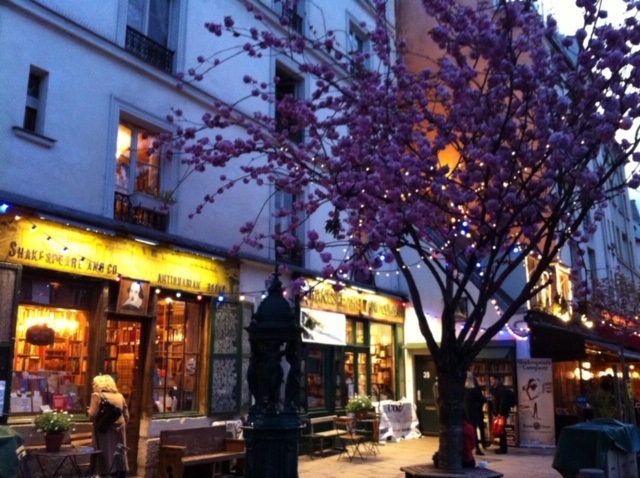
Shakespeare and Co. Bookshop, Paris – taken on my visit in 2012

A social media post caught my eye last week in which someone mentioned they had been gifted an appointment with a Bibliotherapist in a book shop. Curious, I started to do some research on google and came across The School of Life bibliotherapy service (see here), where you can book a consultation with a bibliotherapist who will ‘explore your relationship with books so far and your unique reader identity will be sketched.’ Dream job, anyone?

Other sites relating to psychology and therapy go into detail about the more formal practice of Bibliotherapy being used as part of a structured psychiatric treatment where creative storytelling and the selection of specific texts are prescribed. The recognition that writing and books (and other forms of storytelling) can have a positive impact on mental well-being is something I think is so important. In past creative workshops I have often discussed with the groups how writing can give them a voice, and how books can open up worlds and introduce characters that can help them to feel understood, or offer new perspectives, or simply just provide some much needed fun and escapism if they are having a bad day!

A visit to a welcoming bookshop can be just as enjoyable as the experience of reading. At the top of my post is a photograph of one of my all-time favourite bookshops, Shakespeare and Company in Paris. I first visited here back in 2012 on a solo trip to Paris where I stayed around the corner. The bookshop is full of lots of interesting nooks and crannies, including alcoves with typewriters and walls plastered with pinned notes from visitors around the world. During one of my visits a teenage girl played a haunting tune on the piano upstairs and I remember sitting in the room, surrounded by books and strangers and thinking I could stay there forever.

During the summer I have visited some lovely bookshops a bit closer to home, where I’ve enjoyed chatting to the passionate owners and booksellers (about books, and also writing and publishing!)

I am sure they are offering their customers a good dose of Bibliotherapy on a daily basis without even realising.

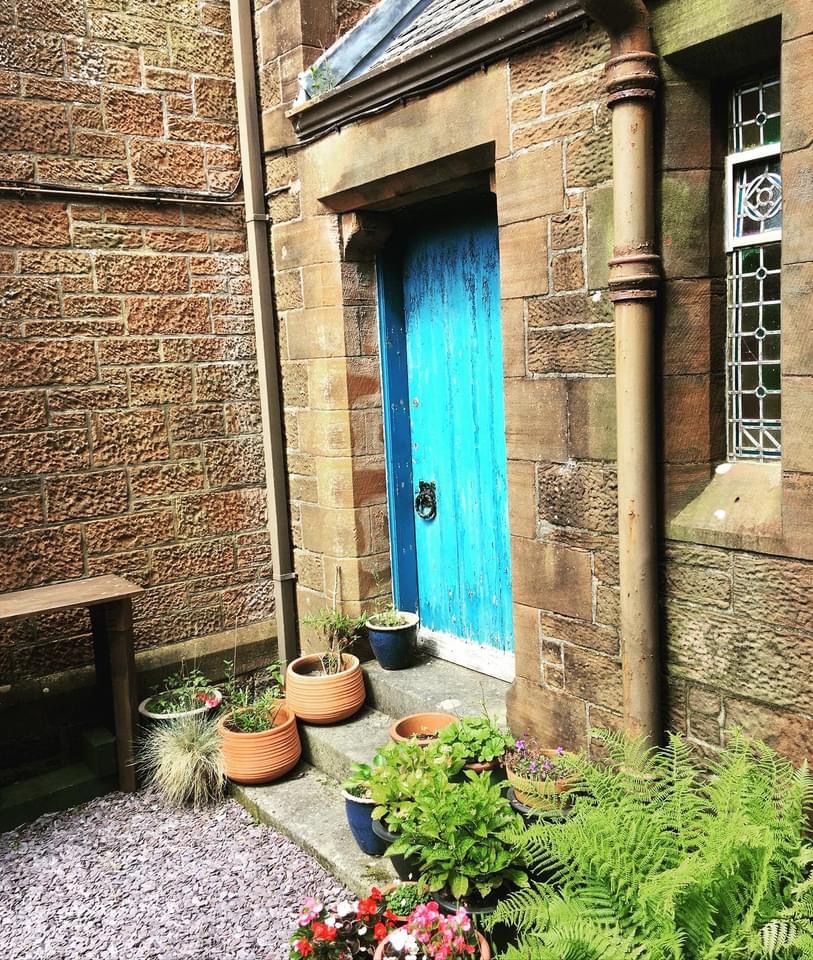
I’ve posted photos and links to the bookshops below.

What’s your favourite bookshop?

If you can’t visit the bookshops you can still support them online by placing a book order via their page on Bookshop.org:

Seahorse Bookstore

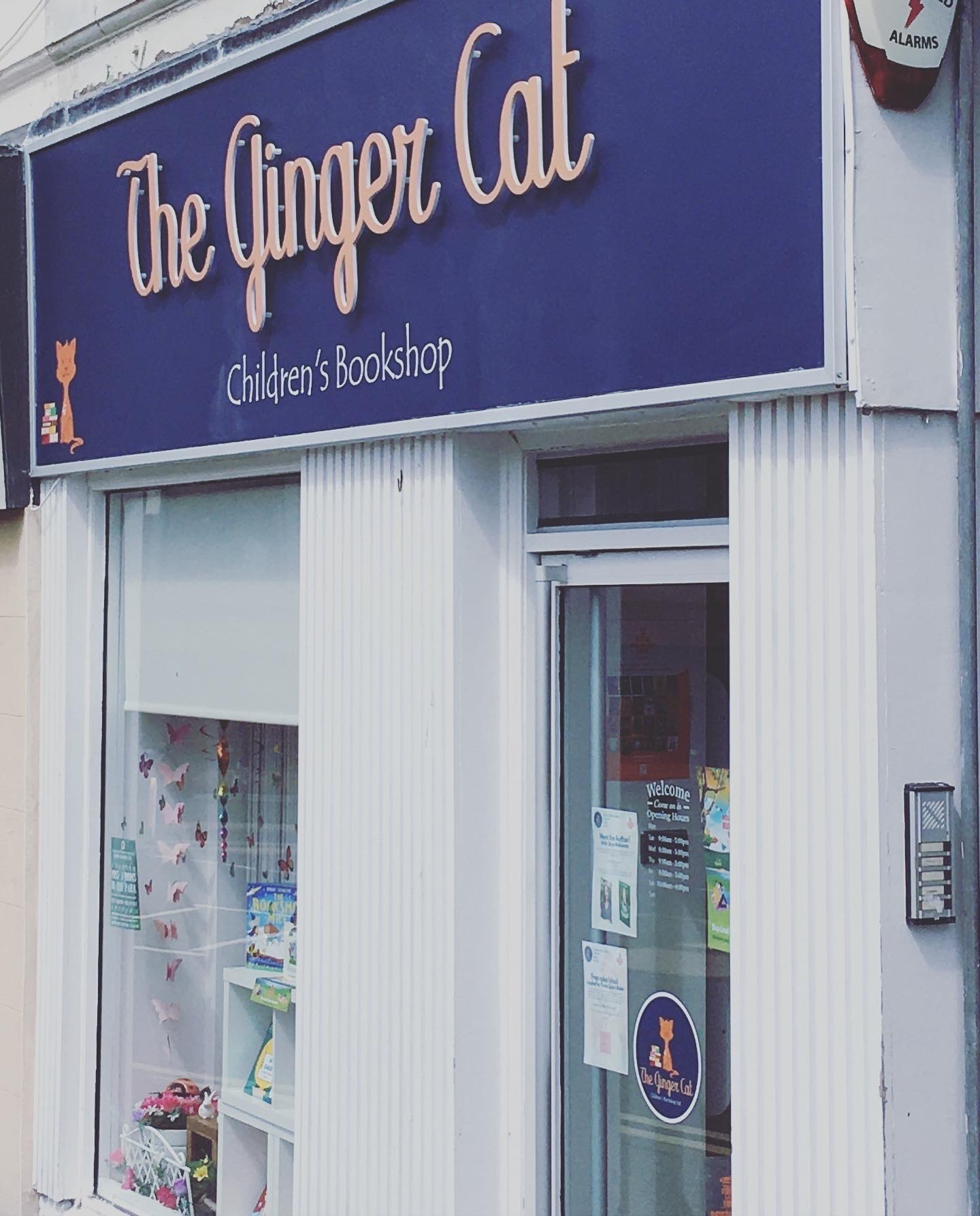
Ginger Cat Children’s Bookshop

Timberbooks

Storytelling

November has been a busy month. In amongst re-adjusting to life back in a busy office in my day-to-day life, I’ve enjoyed connecting with writers at a couple of events.

I’m in the middle of judging a teen short story competition for Erskine Writers group, where I delivered a workshop last month. Erskine Writers was where I first shared my work in public many years ago, and it’s lovely to return to lead workshops.

A couple of Saturdays ago I delivered an online workshop to the Teen Igniting Writing group (part of Wokingham Libraries), talking to a group of young people about what makes a good Mystery/Thriller. I was blown away by some of the extracts they read out of their own work, and had fun answering questions and talking about mystery books we love, (as well as telling them where my inspiration for writing mysteries comes from). I was very grateful to my school friend, Elizabeth, (or Lis as I know her), for organising this amazing session as part of her role as Young People Outreach manager. I don’t often get to engage with teens outwith Scotland, and I think one benefit of lockdown was the realisation online connections can be a positive way of reaching wider audiences/providing wider access.

One young person asked me, “What compels you to write?” It’s a good question, and one that has been circling in my head since. On the day I think I said it was ultimately my love of reading that sparked the desire for me to create my own stories, and I love seeing a story unfold and characters take over, which is all true.

But ultimately I think there is something deep within us all where we crave to connect with one another, and make sense of the world around us, and storytelling in all of its forms allows us to do that.

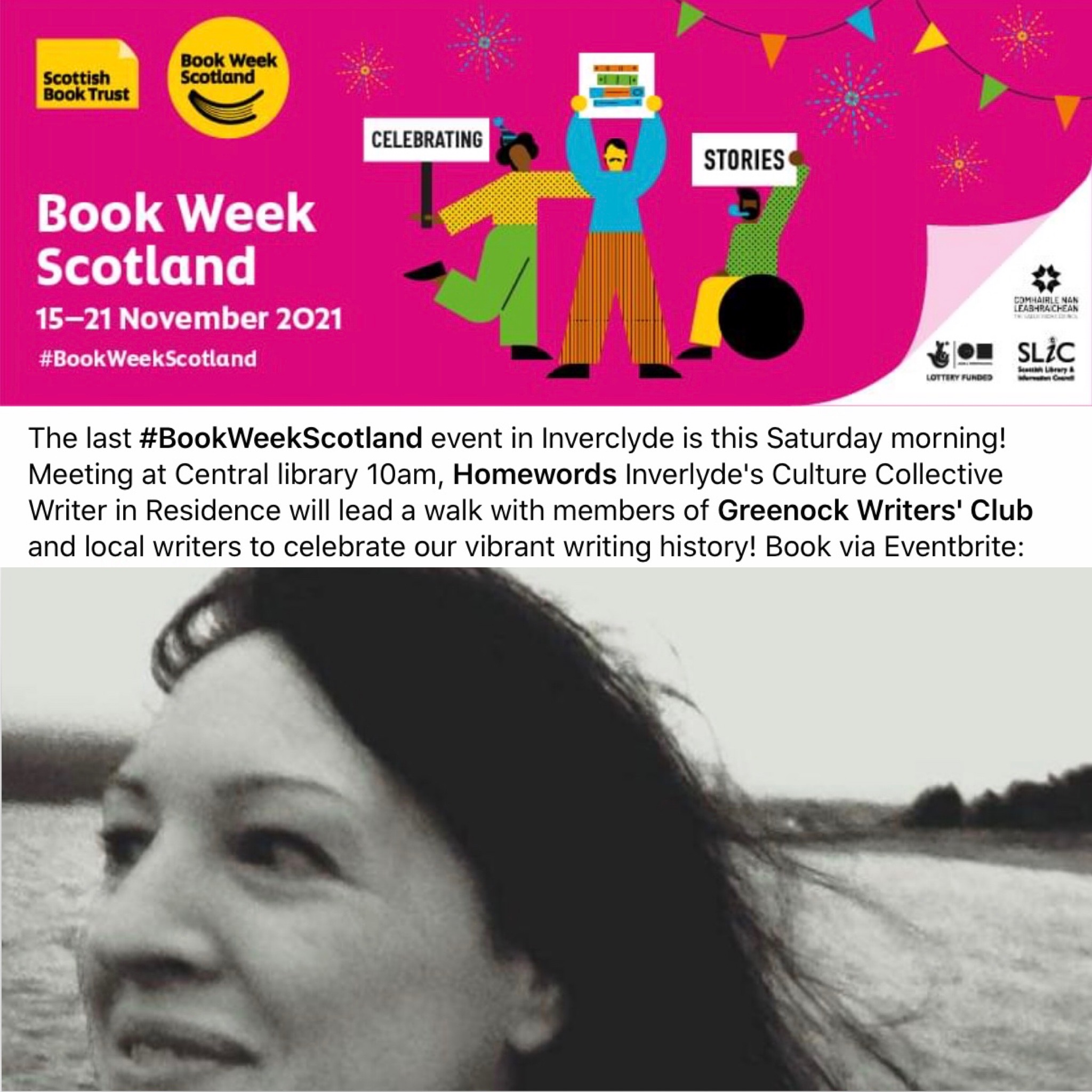
I was invited to a wonderful session last Saturday at Greenock Central Library as part of Book Week Scotland, celebrating creativity and writing within Inverclyde, organised and led by Writer In Residence, Katharine Macfarlane (who is an amazing Slam Poet. I am currently reading her poetry collection Home Words – it is full of beautiful imagery. You can buy a copy here).

Katharine is so enthusiastic about creativity and has got me involved in amazing events in the past, working with young people in Inverclyde. I grew up in Inverclyde, and previously worked there for ten years as a careers adviser, so it will always be a place I feel connected to. During this particular session I really enjoyed meeting other local writers and hearing them read their work, as well as finding out about future projects. Martin O’Connor, the Inverclyde Artist in Residence, also generated interesting discussion about how we all engage in some form of storytelling every day.

Some of the general discussion about Storytelling, and all of its forms, again made me think about how important it is for voices to be heard and that writing, (or spoken word), is a really powerful way we can encourage people to express themselves and tell their own stories.

In other news Promise Me is now available through wider distribution, both in digital and paperback formats, World Wide. It can be ordered into Waterstones here