Happy 1 year book-versary to Young Blood

This time last year I released my Young Adult crossover thriller Young Blood out into the world so I thought I’d do a post to mark the milestone.

This week I am also running a give-away alongside Ornate Alchemy on Instagram, where you can win one of their beautiful custom-made Bloodstone pendants , and a signed copy of Young Blood. If you live in the UK head over to our Instagram pages to enter: @victoriagemmellauthor @ornatealchemy You have until 5pm Friday!

It always feels strange once a book reaches publication. You spend years perfecting the story, (I’ve not yet mastered a quick turn-around), pouring a lot of heart and soul into the pages, spending hours with the characters in their world, and then suddenly it’s not just in your head anymore; it’s out there on paper for anyone to read. And then you go through a mix of emotions when you realise people are buying the book and actually reading it. What will they think? Will they enjoy it? Will they get past chapter one? Will they like that character as much as you enjoyed writing them? Will they get angry and emotional in the right places? It always delights me (and fills me with relief), when someone tells me they finished my book and loved it. This happened actually at the weekend when a friend’s mother-in-law told me how much she enjoyed Young Blood and was interested enough about the story to ask me about the inspiration behind it.

She said something along the lines of, ‘You write in a lovely way.’ These kinds of comments are so appreciated; I don’t think people realise how much writers need to hear this sometimes. Not to feed our egos, but to motivate us to keep going. I’m at the early stages of writing a new book just now and it always feels like a tricky stage, when nothing is fully formed and you are constantly questioning if this is any good or if it’s the most boring trite that you’ve ever attempted. The characters haven’t all appeared yet, and the ones who have, are still not showing you their true motivations; the setting is still taking shape, the plot has lots of holes and you’re not quite sure what’s next, but you are hoping if you keep writing all will be revealed.

In Scotland, where I live, we’re not very good at celebrating our achievements, often downplaying ourselves in self deprecating ways. Oh you enjoyed my 100,000 word novel, och that was nothing really. Just a little thing I did. Actually it was a big thing, and I locked myself away in a room by myself for hours on end to get the words just right and showed up, and didn’t give up, and saw it all the way through to the final end of being able to hold the finished copy in my hands…

Here’s some extracts from some favourite feedback and reviews I’ve received about Young Blood since it’s release. One of them was written by my Dad; you might think that’s embarrassing and a total faux pas to even mention, a bit like the bad example pitch emails to agents ‘My Mum told me this is the best thing she’s ever read in her life so I know this is going to be a best-seller.’ But actually my Dad hasn’t read much of my work over the years (no slight to him; he doesn’t read much teen fiction, believe it or not! And now he is retired he also has more time on his hands). I think he was maybe a wee bit surprised by how much he actually enjoyed Young Blood, and I was delighted that he did.

The standard of writing is superb, with excellent descriptions of characters and locations without becoming boring. As the mystery progresses you desperately want to find out what is going to happen. This thriller is a compelling read for the YA market and adults alike and I’m not just saying this because I’m Victoria’s Dad! Great Christmas Gift! (hey people get your Christmas shopping in early! – that’s me adding in this comment)

Wow!

Only 19% in and I was on tenterhooks and by half way through I was desperate to know what happened and took it to bed with me. Definitely not conducive for sleep but I just couldn’t put it down.
I loved the twists and turns that had me gasping. Credit for the author. I definitely recommend. A brilliant read!

Thrilling and involving, this is one not to miss.

Young Blood, the latest YA novel by author Victoria Gemmell is not a story for the faint-hearted….These characters are not cardboard cut-outs. They are richly developed, with flaws as well as virtues. Faced with almost impossible choices, a group of teenagers find the courage to challenge the powerful figures behind the conspiracy even though they know that their chances of winning are almost zero.

I was gripped by the story from the start- was a real page turner and was desperate to read on and discover how the plot developed! Can’t wait to read more from this author!

Captivating. This book is made for the big screen.

Great read! Really gripping and loved the character of Hope. Would make a fab film. (Hi, Netflix, are you reading?)

Loved it. Every bit as accomplished as a Good Girl’s Guide to Murder

Have I tempted you yet to take a chance on Young Blood?

If so here’s the links to Amazon to buy: and wider digital channels here: Order into bookshops here and here Abbey Books in Paisley might also still have a copy kicking about

(P.s It’s only £1.99 on kindle just now which is way cheaper than a nice coffee, and it will get your heart racing just as much as caffeine, and the buzz will last longer…)

Submission Stories #Part 1 (blog post 9 of series)

In these posts I’m moving more into a personal ‘behind the scenes look’ at my submission experiences for my three Young Adult books. I’ll do a post for each book. I’m doing these posts because I love to read about other author’s journeys. I find it motivates me and makes me feel less alone in what is quite a mad creative world. Also for all three books I’ve had very different experiences, which resulted in me taking more personal control.

Prior to ‘Book 1’ there were other books, but I refer to them as my practice novels. I completed my first typed ‘novel’ (as opposed to the many, let’s call them ‘novellas’, I had written in jotters) when I was about thirteen, and received my first rejection from a major publisher.  I wrote a magic realism contemporary novel in my early twenties and sent this out to a few publishers and one agent. I randomly met the agent’s assistant at an event and he said he pulled my book out of the slush pile and enjoyed it. (The agent making the decisions, didn’t). Years later I bumped into him at another event and he asked what happened to it. I am sure you are thinking I should have persisted with this one. But I felt I could write better, and by that point I had started to focus more on writing Young Adult, because most of the ideas that were forming in my head seemed to lend themselves better to having teen protagonists. So here’s some highlights of my submission journey with my debut Young Adult novel, which eventually did reach publication back in 2015.

Book 1 – Follow Me

When I first started writing Follow Me something took over. It was the first time a book seemed to take on a life of its own and perhaps because I was living alone at the time, once I had established a basic plot, characters, and written my prologue (which set the tone and gave my protagonist a ‘voice’), every time I sat down I was able to immerse myself fully in the world.

A couple of people who read Follow Me talked about the ‘hypnotic’ characters and feeling like the writing contained some kind of undefinable ‘magic’. I mention this, not to ‘big up’ my book (though I will always have a soft spot for this story), but because it aligns to how I felt early on when ideas and chapters unfolded. I could feel the magic driving this one, and I knew deep down this was going to be ‘the one’; the book I was going to get published, because it was the first time I properly felt like I knew what I was doing structurally, and was excited by the story and characters. Also, something in my mindset had changed. I had started to send out short stories, and was reaching publication, and being placed in competitions. I was starting to believe I could be a ‘serious writer’.

When I had nearly finished my first draft I submitted the book to the TC Farries competition at the Scottish Association of Writer’s conference and won first place.

A well-established children’s author was the adjudicator, and said it contained the ‘magic’ needed to captivate a YA audience. This gave me the confidence to finish it, fine tune my manuscript and start subbing to agents. Colleagues at the time discovered print-outs of my first few chapters and their excitement at reading, and wanting to continue reading (along with my Mum’s encouragement, and another writing friend) all kept me going…

And then when I started to sub to agents I got emails from about three asking very quickly to read the full manuscript. I was on tenterhooks waiting for replies as you can imagine.  But then the rejections started coming in.

Here’s a snapshot of some rejections.

Unfortunately, the premise involving twins is too similar to another title on our list. We wish you the best of luck with placing your work.

Many thanks for sending me your submission, which I read with interest. I’m afraid, however, that I didn’t feel passionately enough about it to offer you representation. You write well, but I’ve just taken on a book which deals with teen suicide so this feels too close to it for me. Our business is subjective by nature and another agent may well feel differently. I wish you the best of luck with that.

I realise now how lucky I was to get some personalised feedback. The landscape of publishing has changed a lot and it can be rare now to get any response.

The most disappointing knock-back was a rejection from an agent I met face to face at a York Writing Festival who was so excited when she read my first three chapters, and was so lovely in person. The type of agent I would have been happy to work with! Interestingly I really didn’t gel with a different agent at my other 1:1 and she suggested quite a graphic, dramatic change to part of my opening which made me feel uncomfortable. This experience showed me the importance of finding the right agent or publisher. Someone you connect with, and who understands your story.

This was the rejection email from the excited agent (I had to wait over 6 months for this, and it felt like a loooong wait):

As you know, I was really excited by your novel when we met in York, and I very much enjoyed reading the complete manuscript. It’s stayed with me and I’ve been ruminating on it since. The premise to the novel is really interesting and I think you write very well for this market. I love sister/twin stories too! I do think there is a lot of potential here, but I’m afraid I don’t think, at the moment, this stands out in what is a crowded market. I’m sorry to disappoint you, but do bear in mind that another agent may feel differently.

I was gutted to get such a positive rejection.

I kept going.

A BIG publisher were doing a call-out for a new teen digital-only imprint, and wanted the full manuscript emailed.

I received this exciting response from one of their editors: Thank you for sending Follow Me to xx for our consideration. I enjoyed reading it and think that your accessible voice matched with the dark and emotional subject matter makes it well suited to the list. …..  (The email then contained some editorial suggestions)…Of course we would discuss all of this later should we decide to acquire Follow Me but I just wanted to check with you before I share the script with the rest of the team whether Follow Me is still available for publication and if you would be open to editorial suggestions such as those I’ve mentioned.

I responded positively. A month later I got this response:

I just wanted to let you know that because it’s been so hectic here, I haven’t taken Follow Me to our acquisitions meeting yet, but I hope to do so next Wednesday and so I should have a decision for your shortly after that.

Then… SILENCE.  Six months later, still nothing.

Around this time I met a different publisher, who ended up taking Follow Me, at a networking event. I nearly didn’t speak to him, because I had already submitted Follow Me to them via their website submission process, but he said he didn’t remember reading it, they’d had server issues, so to email through the whole manuscript.

I emailed the big publishing house to let them know a Scottish publisher had shown interest, and another editor got back to me apologising saying the first editor had gone on maternity leave. She asked me to keep her posted on what happened, and she would read my submission again. Because I was offered print publication (and because the big house had just kept me hanging) I accepted the offer from the Scottish publisher. I had received an email from the Scottish publisher one night saying they had finished reading Follow Me and asked to meet me. Because of the ‘nearly there moments I’d had already’, I still wouldn’t let myself believe it was going to be positive news. But it  was at the face to face meeting I received an offer for publication.

It was fast-moving from there. The meeting took place at the start of April, with a publication date set for October the same year (this is very rare). It was a whirlwind which led to lots of doors opening for me in terms of opportunities to do talks and workshops in schools and in the community. I’ll talk more about those another time. The rollercoaster of ups AND downs continued, something I don’t think many people prepare you for, when you reach the goal of publication.

And sadly, with my second book I found myself back out on submission. I’ll focus on parts of that story in post 2.

I’ll leave you with some things I learned along the way from the first part of this journey:

My tips:

Spend time preparing your submission. Perfect your synopsis and intro email, along with the sample chapters. Follow the submission rules (you’re doing yourself and your book a disservice if you can’t take the time to read these properly and get them right).

If an agent, editor, or publisher takes the time to give you feedback, know that this means they really do see potential in your work and if the feedback contains constructive criticism, take time to reflect and take on board what they say

If you’re pitching to agents and you have the opportunity to pitch to them in person (to allow a face to face conversation) take it! A five minute conversation can tell you so much about the other person, and a two-way conversation allows you to see if they are on the same wavelength about your book

If you’ve spent time perfecting your craft, your book is well-written and enticing, your success now is going to rely a lot on being in the right place at the right time, connecting with the right agent/publisher, and persistence

Related to this: make the most of any writing related networking events you are invited to. Sometimes introductions to the right people means you are noticed and remembered when submitting/pitching

Don’t send your book out to one agent at a time. Any agent who says they want an exclusive read is worth avoiding (unless you’ve made some sort of personal connection with them, but even then I would say no- you’ll find out why in my next blog post). They can take six months, or more, to get back to you (IF AT ALL – the ghosting is real). A lot of very successful authors have had their manuscripts rejected 20 + times, so do your maths on that one. if they were sending them out one at a time, waiting months for responses

Forge friendships with creatives who understand the pain of the ups and downs of this journey. If you detect jealousy and negativity try to spend more time with people who lift you up. Trust me, at ALL times in this weird creative world, even when folk think you are doing well, you need to surround yourself with positive people

And to help us all keep the faith, some famous rejections:

Lisa Genova, Still Alice: about 100 rejections (or non-replies) from agents (info from Lithub.com)

After getting very little positive feedback, Genova opted to self-publish her book. Eventually, it was acquired and re-issued by Gallery Books, an imprint of Simon & Schuster, and proceeded to spend 40 weeks on the New York Times best seller list, and was made into a film.

Audrey Niffenegger, The Time Traveler’s Wife: 25 rejections from agents.

After getting rejected by 25 agents, Niffenegger sent the book directly to a small San Francisco publisher, where an editor discovered and loved it. It became a best seller and was also made into a film.

One of my favourite books of recent years was Lessons in Chemistry. Here’s an interview with author Bonnie Garmus at Maria Shriver’s Sunday Paper (you can read the full interview here https://www.mariashriversundaypaper.com/bonnie-garmus-lessons-in-chemistry/) – Did you indeed receive 98 rejections before Lessons in Chemistry?

“Yes! And they were all from agents. What happened was I had written a novel that was approximately 700 pages…Finally, agent number 98 said that she would read part of it…She wrote back the next day and said, ‘You write well, but you don’t understand this industry…’ The email was pretty nasty, but it was also a very big help. She said, ‘No one’s going to look at a debut author’s 700-page novel—ever. Do yourself a favor and write a novel of appropriate length, and you can send me that when you finish’—which I never did. But that all turned into Lessons in Chemistry. I started completely new. “

Reading these stats makes me realise I’ve never been this persistent. Talent, persistence and resilience. These are the magic ingredients.

Interview with a Writer ~Rosemary Gemmell

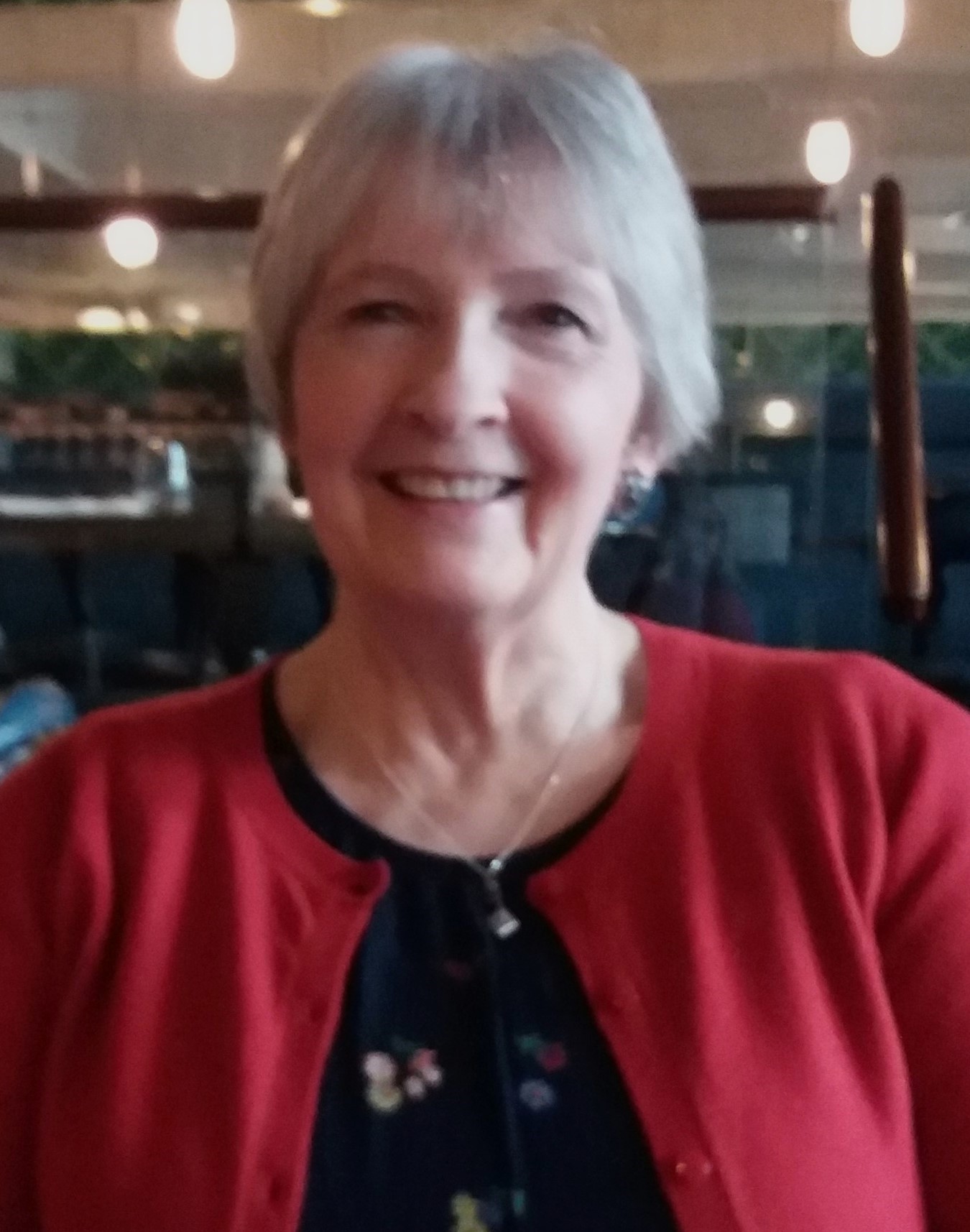
Today I am using the prompt ‘Interview someone who inspires you’ and I’m excited to have my very own writer Mum, Rosemary Gemmell, on my blog today. There was no better person I could think of to interview for this post as my mum has definitely been my biggest inspiration and support over the years, introducing me first to the world of books, then writing.

A talented and prolific writer since she put words to paper many years ago, here’s a wee insight into Rosemary’s world of writing.

When did you first start writing?

I first wrote poetry when a teenager in high school but I didn’t write anything else creative until after having my two children. Then I started experimenting with all kinds of writing, including academic essays as a mature student.

What do you write?

A little of everything (almost)! I mainly write short stories, articles, poetry, novels and novellas, with occasional children’s fiction.

What was your first published piece of work?

My very first published writing was a letter to a magazine, followed by several more. My first longer piece was an article in a Scottish Women’s Rural magazine. My first published short story was after winning the Short Story Competition at the Scottish Association of Writers conference, adjudicated by the then editor of My Weekly who bought the story for the magazine! My first novel, Dangerous Deceit, was published by a small Canadian company.

Why do you write?

I write partly to communicate and to entertain anyone who likes to read, as well as trying to make sense of all the ideas in my head that clamour for expression. When my imagination is stimulated, I explore it in fiction. But I also write because it’s fun, especially sending work out and waiting to see if anyone wants to buy or read it!

What or who helped you on your writing journey?

The single most useful and helpful decision I made for my writing was to join a local writing group at Erskine, near where I used to live. A wonderful writing tutor, Sheila Lewis (now sadly deceased), came to deliver a six-week session to get us started and ended up staying on as a valued member. She was probably my biggest influence, encouraging me all the way to publication. Lots of other writers have inspired me over the years, especially when attending the SAW conference and entering competitions. Strangely enough, my daughter (thank you, Victoria) also inspires me to be a better writer whenever I read her beautiful and often profound writing.

Share a writing low with us (if you feel comfortable doing so). What did you learn from this?

Although I was lucky to have my first novel published, it went through a few rejections first. The same with short stories – many published but many that just weren’t good enough. Now and then, it was discouraging but it taught me perseverance, to keep going and that the rejections were not personal; it was only a particular piece of writing that didn’t fit that time.

Share a writing high

Winning that short story competition with my first submitted story, then having it published in a well-known magazine, was one of the highlights of my writing career. It was followed by several other competition wins, including one where I was presented with a £1000 prize and a silver cup at a ceremony in Harrogate (Writing Magazine Love Story Winner – those were the days)! But nothing beats that initial confirmation that maybe my writing was good enough. The other main ‘high’ was getting my first full-length novel published as I wasn’t sure I could write longer fiction. Every success is still special.

Share some of your favourite lines from reviews/feedback of your work which boosted your confidence: (tell us what piece of work it’s about)

This was one of the many lovely comments for my first novel, the Regency-era Dangerous Deceit, which really made me want to continue writing books:

I’ve just finished Dangerous Deceit and wanted to let you know how much I loved it. I feel incredibly guilty for racing through the pages when so much hard work went into them, but I couldn’t wait to see what happened. Feel a little sad now it’s over to be honest.”

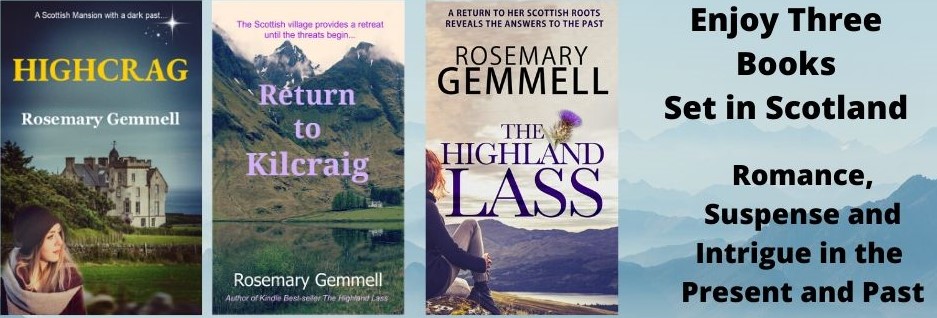
And one from my most recent full-length Gothic suspense novel set in Scotland, HIGHCRAG:

“The characters and the plot blend seamlessly and, like Cate, the reader is unsure who to trust but in the ending all threads of the plot are skilfully brought together in a most satisfying way.”

Any tips for new writers?

First, read as much as you can. If you want to write short stories, read those published. Same with novels – we absorb the ‘how to’ while we read, much more than when reading ‘how to’ books (in my opinion). And read a variety of writing for inspiration.

Second, never give up writing and experimenting with different types and genres until you find the one that is just right for you. If your aim is to be published, keep sending work out – it maybe wasn’t the right piece at the right time to the right person.

And for all writers; any tips for keeping motivated?

Use any short snatches of time to get ideas and sentences down, without the pressure of having to sit and produce a set number of words, as they all add up. A good writing magazine is full of motivation and might help to get you going again. Reading can also help to motivate our own writing, and I find music good for stimulating ideas.

When do you write? Do you have a regular routine, or do you write in frantic bursts?

I’ve never really had a regular writing routine, although I do find my creativity is best in the mornings. I tend to write in short bursts and like going back to a piece to redraft it. I find it too boring to sit at the computer for long so I write shorter items in between novels!

Where do you write? (A dedicated room, or on-the-go)

Although I have a very pleasant room I call my study, with a desktop computer, I write far better with pen and paper when out and about, especially on trains and in cafés. The words seem to flow when writing, or scribbling, longhand and I can easily shut out distractions. I then redraft while typing it up at home. I wrote one of my first novellas almost entirely in longhand while out and about and enjoyed it far more than sitting at the home computer (until redrafting it!).

Any stand-out books you have read this year?

I loved Madeline Miller’s two fictionalized books about Greek mythological figures and their stories, Circe, and then Achilles. They inspired me to finally do an online course to learn Ancient Greek! I also read the wonderful complete Ruth Galloway series by Elly Griffiths, and my favourite LJ Ross DCI Ryan books. There were lots more in paperback and on kindle, of course.

Please share links to your website and where to buy your work so that people can find you

Website: https://www.rosemarygemmell.co.uk

Facebook: https://www.facebook.com/rosemary.gemmell.3/

Twitter: https://twitter.com/RosemaryGemmell

Amazon Author Page: http://www.amazon.co.uk/Rosemary-Gemmell/e/B00U19Z4H4

Thanks to Rosemary for taking the time to answer my questions and for the lovely comment about my writing. I really enjoyed reading about your writing journey.

The Amazon link above will take you to all of Rosemary’s fabulous full length novels, novellas and short story collections. Also, if you are a People’s Friend fan then look out for their 2024 Annual in newsagents now where you will find one of Rosemary’s Christmas short stories

I’m hoping this ‘Interview with…’ spot might be something I continue to feature on my blog for future posts as I think it’s really interesting reading about fellow writers’ (and creatives) journeys and tips!