Interview with a Writer ~ Fiona Lindsay

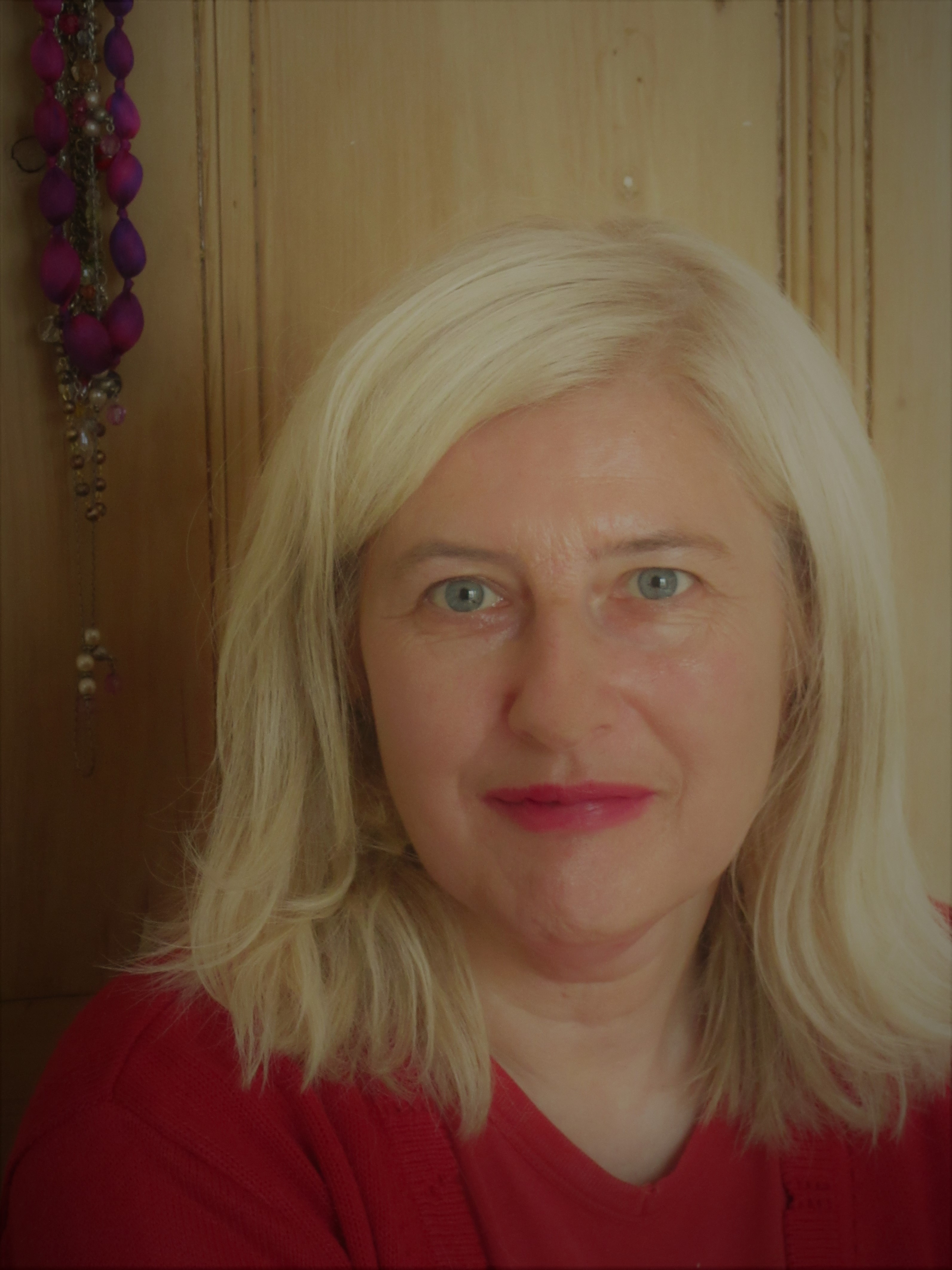
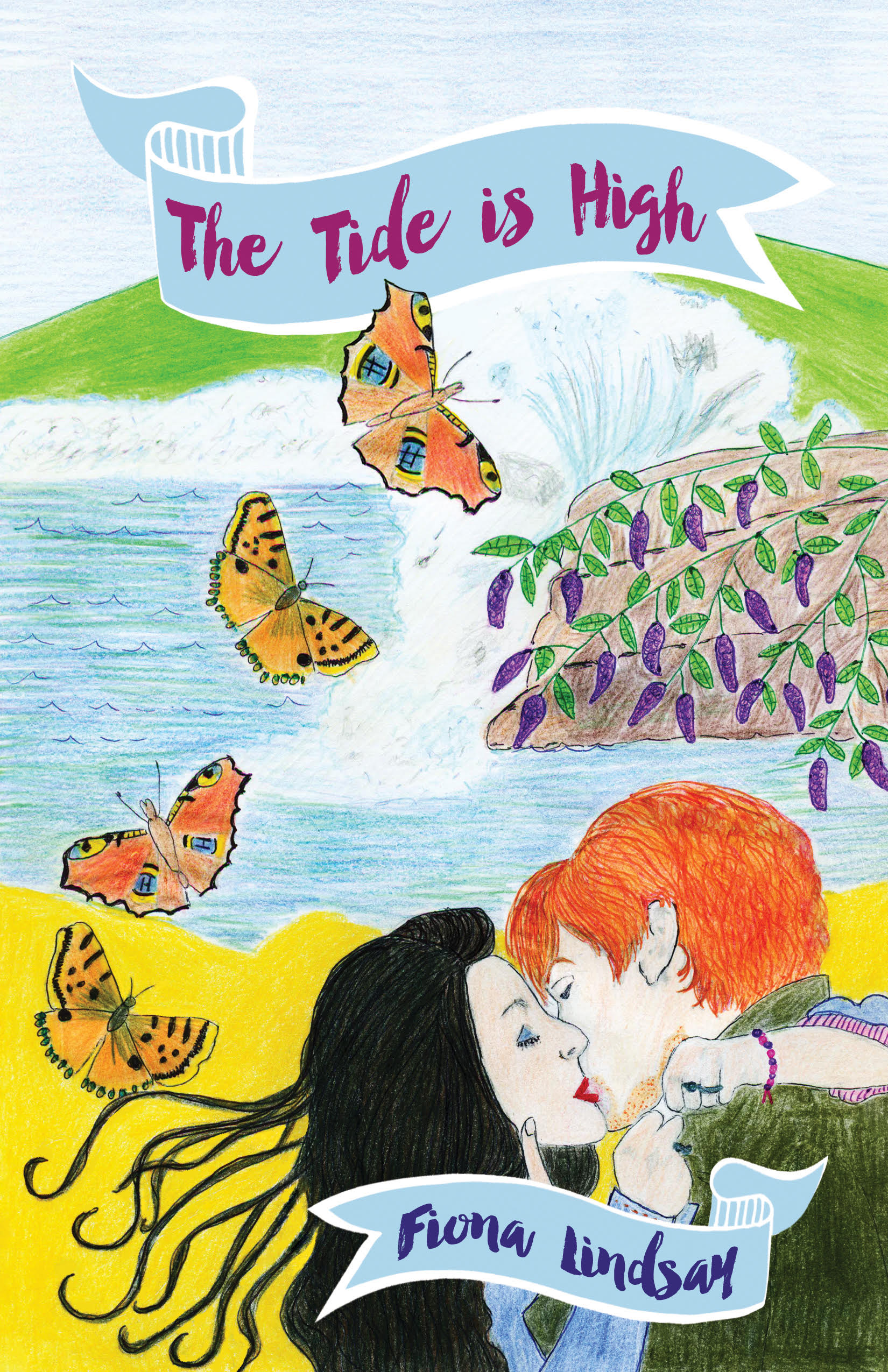
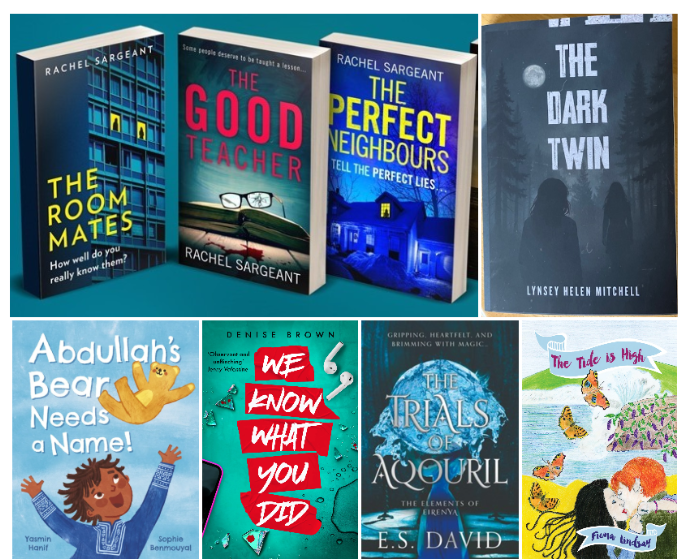
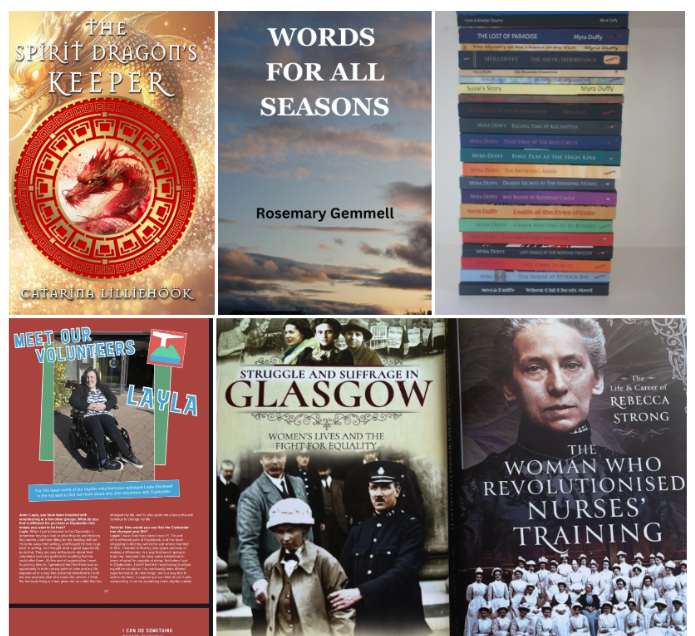
This week I’m delighted to welcome writer Fiona Lindsay to my blog. I think I first met Fiona when she came along to the book launch for my debut, (when Fiona was part of the Romantic Novelists’ Association at the same time as my Mum). That’s the nice part of being a writer and creative – when you become part of a ‘community’ of people who know one another. Case in point, Fiona collaborates with my friend, Rebecca aka Dainty Dora, for her lovely book covers (see above), for her Kirklochy series, and I also collaborate with Rebecca for some of my book covers.

Fiona’s feel-good Kirklochy series is set in a fictional village in Scotland, with an interlinking cast of lovable characters, with each book threaded with emotion, uplifting romance and humour. Read on to find out more about Fiona and her writing life. Links to buy Fiona’s books are at the bottom of the post.

Author biography

Fiona Lindsay grew up in a house full of books, has always loved reading and studied English literature at university, during which time she decided to start writing stories herself. As well as being a writer and seasoned performer, Fiona is an artist and collaborates on the design of her book covers. Fiona has also  published books for other writers.

When did you first start writing?

While at university. I loved books and had enjoyed some so much that I felt inspired to begin writing stories of my own.

What do you write?

I’ve written a series of four romantic comedies and a couple of plays, but I also write shorter stories and observational pieces.

What was your first published piece of work?

A short story called Nothing Special, in an anthology put together by Johnstone Writers’ Group.

Why do you write?

For self-expression, enjoyment and the communication of ideas. I hope to let readers into the world and the characters I’ve created and be entertained by them. Life is random and writing helps to give it some kind of shape.

What, or who, has helped you on your writing journey?

I’ve had a great deal of support and constructive feedback from Caro Ramsay and the other members of Johnstone writers’ group, and also via writing retreats led by authors Alison May and Janet Gover, but many other people have helped me over the years with insightful comments. Local writer, Tracy Patrick, skilfully edited my second novel, while other friends have done sterling work as beta readers. I’m also a member of the Romantic Novelists’ Association’s New Writers’ Scheme and have benefited from it’s critiques.

Also, the “instant feedback” received while performing is very heartening, as you can see at once if a piece of writing has landed. I appreciate the support of local writers Kathryn Metcalf and Gwen McKerrell for encouraging me to get involved.

Share a writing low with us. What did you learn from this?

I met with an agent who said that she loved my work, and would genuinely love to see more of it. I sent the book off to her, and never heard from her again (I understand that this happens to people often). But maybe it can be seen in a positive light also – that a big London agent rated me as a writer, although she didn’t follow through in the end. I learned to be resilient and I published the book – A New Flame – myself despite the disappointment.  

Share a writing high?

I wrote a short comedy play which was a spin-off from one of my novels, and it was selected by a group called Script to Stage to be performed by actors. It was great fun to see my characters brought to life, and also went down well with the audience. Otherwise, whenever someone tells me they, or someone they know, have enjoyed one of my books.

Share some of your favourite lines from reviews, or comments you have received about your work, which boosted your confidence (tell us what piece of work it relates to):

A New Flame:

I thoroughly enjoyed reading this delightful tale of many, very likeable characters. I particularly liked the aspects that highlighted the fact that not all break-ups of relationships are completely clear-cut. The happiest people are those who work through problems of unresolved issues before moving on properly takes place. Love comes in many forms and there are a number of types of love in this lovely read.

The Tide is High:

This is another wonderful story in the Kirklochy series. There are new, young, characters as well as a few familiar ones. Topics of love and grief are sensitively handled as is the transition from teenager to young adult. I read it in 24 hours as I couldn’t put it down!

Any tips for new writers?

Read widely and critically for inspiration and to learn the craft – don’t let the words wash over you. Join a writers’ group for support from other writers who can share their experience and offer constructive feedback.

And for all writers; any tips for keeping motivated? And how do you find time to write?

I think we need to acknowledge that writing is difficult and completing a novel is a lengthy job – so it will be very hard to sustain at times, but know that this is everyone’s experience and we can do it if we persevere. I’d suggest, if stuck and struggling to move forward, if you have a high-octane scene in mind for later in the book, jump ahead and write it and hopefully bring some excitement back. Also, reading an author you admire can be inspiring. Switching off and going for a walk or a swim is also helpful, as both make you think more constructively.  

Do you have a regular writing routine, or do you write in frantic bursts?

I don’t have a regular routine, but write whenever I have some free time to focus on it.

Where do you write? (A dedicated space, or on-the-go)

I live in the middle of a university campus, so I often write in the library, or else at the table in my cosy kitchen.

Any stand-out books you have read recently?

Julia, by Sandra Newman. It’s a retelling of George Orwell’s 1984, but from the point of view of Julia, Winston Smith’s lover.

Where can we find out more about you, and your books?

Links to buy Fiona’s books: (click on the title)

The Consolation Prize

Do Not Disturb

A New Flame

The Tide is High

Find Fiona on Facebook: https://www.facebook.com/tartanrouge

Showing up (final post in series- blog post 15)

Back in January I decided to write a series of posts on here which focused on what my writing life has been like over the years. I wanted to share specific aspects that I thought might be helpful for writers just starting out, and also for seasoned writers who maybe just needed a reminder that we all experience very similar highs and lows, and to offer some encouragement to keep going during times you question your sanity, or ask yourself if it’s all worth it.

Over the past couple of months I’ve found it particularly difficult to focus on my writing. I’ve been struggling with tiredness and brain fog, a combination which isn’t great when you’re trying to plot and write a new book. But I’ve been determined to keep getting words down on paper/screen, and keep telling myself the first draft does not need to be perfect.

Embarking on a new book has reminded me of two important things:

It’s important to keep showing up

Each book takes shape in a different way

For my new project I’m trying to get words down not every day, but every week. That’s a win for me just now, and keeps the momentum going. Even although I was knackered yesterday I made myself sit down at my laptop and continue with my next chapter. I’m also doing my usual; scribbling notes in various notebooks and on the notes page on my phone. These pages are filled with plot ideas, characters and locations, that don’t yet have a place on the page, but I know they might eventually fit in somewhere, and it keeps the story ‘alive’ in my head. For me this is all part of the process.

I’d say so far my ‘work in progress’ is a bit messier than usual and as the book will require a lot of detailed description (to world build), I’m finding this is slowing down my natural writing style (which is usually a bit more dialogue heavy). I’m allowing myself to skirt over parts of the descriptions and will go back to fill it in later on. I know I’ll then enjoy it more because by then I’ll be able to see the whole plot laid out in front of me, and see what I need to do to enrich the world and bring it alive (hopefully) for the reader.

I usually like to edit and perfect my story as I go along, so I’m finding it challenging to allow myself to leave messy pages sitting in amongst the more polished ones. I’m used to writing contemporary stories, and this one has a magical element sitting alongside the everyday, so it’s teaching me that it’s okay to deviate from my usual way of working, as its a completely different style of story I am writing.

So as I draw this particular series to an end, if you have been embarking on a new creative project this year, or find yourself at the start of a new writing journey, my parting advice to you is simple:

Keep showing up.

No matter how messy your project might be looking right now, write through it, and come back and tidy up later on.

Watch this space for some insights into other writers’ journeys. I’ve not quite decided what this might look like, but after capturing some of my own experiences over the years, it’s made me curious to hear from other writers, and see what words of wisdom they might have to offer too.

Happy writing!

Here are links to all of the previous posts of the series for easy access:

Starting Out

Learn Your Craft

Learn Your Craft 2

Inspiration is Everywhere Part 1

Inspiration is Everywhere Part 2

Inspiration is Everywhere Part 3

Make Every Word Count

Competitions and Connections

Submission Stories Part 1

Submission Stories Part 2

Don’t wait for the phone to ring

Creative Space

Riding the Rollercoaster

What sells books?

Creative Space (blog post 12 of series)

‘In the Mind of Gaudi’ Anadol immersive experience at Casa Batllo

One of the biggest challenges you may encounter when trying to write, is finding the head space to write and feel creative. This post is to reassure you that it’s okay to have this frustration. I’ve definitely been feeling this way lately, but I’m trying to just let myself do the things I need to do just now, and know I’ll get back on track soon.

I used to think free time was the problem, but often my free time needs to consist of  decompressing and switching off and this will take priority over sitting at a laptop (or notebook) for hours, carving out a story. When I’ve been sitting at a laptop all day in work, filling my head with other peoples’ words and problems, reading through what can be an average of thirty emails a day, making constant calls, taking calls, typing notes…I often need to just take a step back and give my brain some silence. Over the past few weeks we’ve had a bit of a mini heatwave in Scotland, and I feel like this is so rare I would also be silly not to take advantage of being outdoors as much as possible.

This isn’t to say I’ve not been thinking about ideas. I have, and continue to research a new project I’m working on, often scribbling or typing up notes. But I just haven’t formed anything into a coherent order or structured story in a way I’m happy with.

A weeks ago I downloaded a great book onto my kindle called We Need Your Art (see here to buy) by a writer I follow on Instagram called Aime McNee. Reading this on my commute to work helped me feel like I was carving out some time to acknowledge the need to keep connected to my creativity. At the heart of Aime’s book is giving importance to your art, and an encouragement to share your work. The book has echoes of The Artist’s Way by Julia Cameron and Big Magic by Elizabeth Gilbert, (and in fact references both), but I loved the honest and accessible way this one is written. Throughout the pages there is a continuous mantra to be confident, stay motivated, and don’t give up, no matter what obstacles you might face along the way. I wanted to read the whole book through before going back to try the re-set exercises. I’m going to set aside one of my lovely new notebooks to try the re-set challenge soon.

Another non-fiction book I’ve been enjoying delving into on my commute is a gift from a creative friend. It’s called Daily Rituals: Women at Work by Mason Currey, and documents the daily routines of well-known female ‘creatives’~ writers, painters, composers, singers, filmmakers. I’m half-way through the book and the majority of the artists mentioned dedicated most of their day to their creative practice – sometimes a solid 12 hour plus day of being immersed in a world of art. I don’t think I would want that either. So how do you find the balance?

When my husband asked me the other day, what helps you get into a writing state of mind? I had a proper think about this. When I write my best work it’s when I have switched into what I call an unconscious kind of flow state; I don’t think about writing or what I’m trying to achieve, I just let  the words flow. A bit like what he was doing when he was driving. A bit like what happens if you’re playing the piano and don’t need to look at the notes or concentrate – you let the music take over. Listening to music can also help me get into this state of mind; particularly if an album starts to become the ‘soundtrack’ of the book I’m writing as it’s then a helpful way to allow my mind to shift into that world again, and enter a certain ‘mood’ I am trying to evoke within the story.

At the moment I feel like I am in my conscious state of needing to feed my creativity, and what Cameron refers to in The Artist’s Way as ‘filling the creative well’. I’ve had weekends surrounding myself with beautiful scenery, walking beside the water, eating good food, buying little trinkets and art from gorgeous independent shops. I’ve been on an amazing trip to Barcelona soaking up the artistic genius of Gaudi, admiring his spectacular architecture, visiting the Moco Museum and viewing a range of inspiring exhibitions (one of my favourites was standing inside Studio Irma’s Diamond Matrix – an installation of hundreds of light-up diamonds); taking photographs of beautiful street art and buildings, and buying pottery and prints from local artists to take home to decorate my writing room.

One of my favourite parts on a visit to Gaudi’s Casa Batllo was a sensory immersive art experience called ‘In the Mind of Gaudi’ where I stood inside a 6 sided LED cube room, inaugurated by the artist Refik Anadol. This is one example where AI can be used positively to enhance a creative structure, as it enabled Casa Batllo to collect millions of Gaudi’s photos, videos, drawings, 3D models and so on, in order to create a large digital library of his patterns and design logic, which Anadol then used to project visual images. It truly was like we were standing inside Gaudi’s mind, with a succession of images flowing around the ceilings, floors and walls, accompanied by dreamy music akin to Sigur Ross. It gave me goosebumps, and reminded me that a world without art would be a very dull place. In the Moco Museum this quote from the founders, Kim & Lionel Logchies, can be found at various points: “We use the power of art to challenge the norm, champion the truth, open up minds, and question the world around us.”

I believe one of the biggest ways you can feed your own creativity, is to immerse yourself in the creativity of others. So if you’re feeling a little unproductive in your own work, and your brain is tired, then try and seek out some art in your local area- visit an art gallery or museum, go to the cinema, visit some quirky independent shops selling inspiring products, people watch at a café, read good books, watch a thought-provoking documentary, spend time with other creatives…

Take a break from the screen, and go and fill your head with daydreams

Inspiration is Everywhere Part 2# (blog post 5 of series)

An old observation diary

Today’s post is a continuation from last week where I shared some creative exercises that have helped me understand that when it comes to writing, and creating, you can find inspiration in the everyday ~ if you pay enough attention, stay curious, and let your imagination run wild!

When I deliver creative writing workshops I encourage participants to think of fun ways they can experiment with their writing. Often writers can put a lot of pressure on themselves, especially if working to deadlines, or expectations. It can also be daunting if you think a story should contain ‘complicated’ words or be a certain length.

I find a good way to take the pressure off, and to stop over-thinking, is to engage in writing tasks which don’t require a lot of words, and in fact make you start to look at words in a completely different way.

A challenge I took part in years ago, (just for fun, with friends), was to try and write stories composed of only three letter words (which then extended out to write stories with four letter words, five letter words – you get the idea!).

I amazed myself with being able to write not one, but quite a few, very short stories composed of three letter words. I’m sharing one of them below, which turned into a bit of a philosophical story.

3 Letter Word Story Example

Pat Woo and the Sun


One day Pat Woo saw the sun dip and tip out the sky. 
”Wow! See the sun!”

Pat Woo saw the sun run and Pat ran too. The sun set off for the day. One sun ray hit the ill cow. Pat saw the cow fly – set out for the sky. 

“Moo! Pat Woo! The cow can fly!”

Pat Woo saw the sun run and dip. Its ray hit the old rat. The old rat was lit. The rat got fit – saw the sky; his old eye now new. The rat saw the sun; saw Pat Woo.

“Pat Woo! The rat can see!”

One ray hit the cod. Pat Woo saw its fin dip; saw the cod nod and the cod got out the sea net.

“Pat Woo! The cod will not die!”
”Hot sun you are ace.” Pat Woo had joy for the sun. 

The sun had fun. Pat Woo did too – the day Pat Woo saw the sun dip and tip out the sky.

Why don’t you give this a go yourself? If you’re part of a creative writing group, it might a fun warm-up task to try to wake up the creative side of your brain.

As an extension of last week’s ‘Small Stones’ exercise, I’m going to challenge you to keep a more general ‘observation diary’. This can take the form of visual notes such as photographs, or scribbles (or notes in your phone), of interesting things you notice during your day-to-day. The Small Stones were quite creative paragraphs or lines, but in an observation diary you might want to capture musings and reflections on things in the news, things you overhear etc, anything really which you think one day could form part of a story.

Take a Photograph a Day

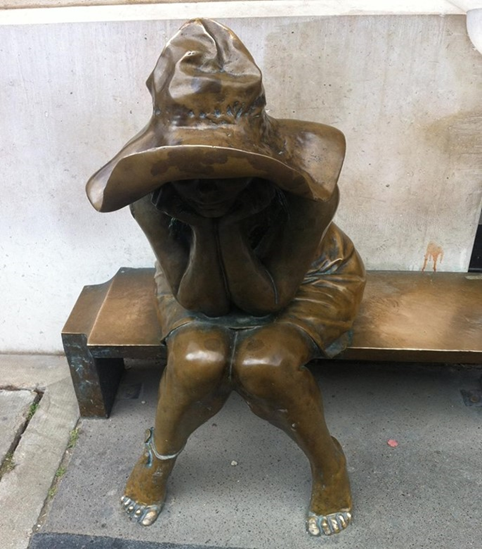
Was this a real girl?
Why is there a shoe in the cage with the skeleton?

I’m a very visual writer and I love taking photographs. You can start to build a ‘photographic’ observation diary by taking at least one interesting photograph every day. This could be anything which catches your attention; an abandoned shoe lying at the side of the road, an interesting sculpture you walk past every day, a strange doll in the window of a shop… You can start thinking about the story behind the image there and then, but often it might take a while for a proper idea to form. And that’s fine. Because now you’ve stored the photograph somewhere on your phone, you can return to this later. You might even want to combine the small stones tasks (see the post here for examples), with your photographs.

I’ve shared some photographs above I took when on various trips across the years, which I then later turned into short stories.

The heart photograph was a print which hung in the staircase of a Paris hotel I stayed in during my first solo trip abroad. I spent three nights in Paris and enjoyed wandering the streets alone, and it was during this time, passing by this print every day, I started to form the idea for a short story ‘Only You’ where a jilted bride spends her honeymoon alone in Paris. The story was runner-up in a competition, and broadcast on Hospital Radio. They sent me a CD recording of an actor reading it aloud, which was quite special. I loved hearing my words come to life.

If you enjoy finding inspiration from photographs check out the Scottish Book Trust 50 word story competition here They provide monthly photographic prompts

Listen to conversations

When I say listen to conversations, I mean within reason, as obviously it’s a bit rude to invade others’ privacy. But if you’re on a train or bus where your fellow passengers insist on talking loudly to one another (or on their phone), then naturally you will probably pick up interesting snippets of conversations throughout your day.

In an old ‘observation diary’ (where I used to write down thoughts that randomly popped into my head, interesting facts or stories I came across on social media or in the news, as well as overheard conversations) I found these snippets:

A man and a woman in conversation: “Tommy, you’re being really unfair. You’re stopping me from going to Hollywood. You’re being really bad to me with the brain transplant thing. I know I’ve had at least four brain transplants behind my back.” On the surface, most passengers would dismiss this woman as talking nonsense. But what if the man she is with is a mad scientist, and she’s the subject of numerous experiments, and is starting to rebel?

A teenage girl was sitting behind me on one train journey, talking loudly into her phone, “She fell out with me when I was camping because she said I never texted, but I couldn’t text because seriously I didn’t have reception… and then I ended up sitting with her all night on a night out so she never felt left out… I hate falling out with people, the thought of someone hating me, or having a problem with me…” At this point a boy nearby asks me if I’ve got a pen. He then returns to his seat to scribble something on a bit of paper and when he gets up at his stop he chucks a note at the girl before walking off.

The girl then shrieks into her phone, telling the person on the other end, “Oh my f-ing God. A guy just threw a note at me on the way off his train. Wait, wait. His name is Ryan. I swear… wait… he must have been listening to my conversation. How rude, haha.” (Newsflash girl, I think we’re all now listening)… “He’s said, You are too beautiful to have friends who are mean to you. Add me to facebook and let me make you smile.”

Now depending how your writer brain works, this could either be the start of a romantic novel or a true-crime type stalker thriller….

Next time I’ll be writing more about the inspiration behind my books.

Happy writing!

Inspiration is everywhere #Part 1 (blog post 4 of series)

Booklet made by Rebecca Johnstone (aka Dainty Dora)

I’ve been out of action the past week with a horrible flu, hence the bigger gap between posts. This is the first day I’ve felt like attempting to get any words down on the page. I hope you’ve all had a more productive February.

The past couple of blog posts were about learning your craft, and today I’m moving on to talk about Inspiration. I’m going to focus on this theme across a number of posts as I’ve got lots of tips and tasks I want to share with you.

Where do writers get their inspiration? It’s an interesting question, as often ideas will pop in to my head and I’m not exactly sure where they’ve come from. More often than not, something I have heard, seen, or read about, in real life will spark off ideas.

In the past I have enjoyed delivering creative writing workshops around the concept that ‘Inspiration is Everywhere’. Everyday observations have definitely fuelled my creativity and provided lots of inspiration for short stories and flash fiction.

I’ll do a separate post focusing on what inspired ideas in my books as they all connect to real-life stories in the news, and headlines. (Another great task I have used in workshops – picking random bizarre headlines and allowing pupils to then come up with their own story that aligns to them).

Today I’m going to focus on a couple of tasks you can engage in every day that can hopefully help you feel creative.

Task 1 ~ Small Stones

Many years ago I was made aware of the ‘Small Stones challenge’ which showed me how much detail you can see in every day observations if you look closely enough. The idea behind the Small Stones challenge is to:

  • Notice one thing each day
  • Give your whole awareness to it
  • Write it down

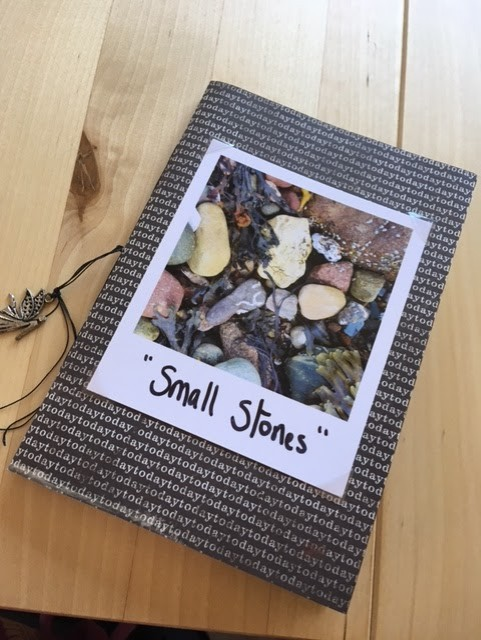
My creative friend Rebecca, aka Dainty Dora, (see her substack here), made me a lovely little Small Stones booklet for me to capture notes in which you can see at the top of this post. It’s been a while since I’ve done this exercise, but I dug out some past examples of my ‘small stones’ so I could share them below. I think it’s a great way of generating ideas and starting to form characters.

Some of my Small Stones examples:

Red Glove: child sized, waving hello from a puddle on a dark January morning. The puddles pulled her under and this is a sign -Help, come and find me…

Girl in stilettos, walking comfortably in new shoes, head held high. Her friends are running alongside still trying to catch up with who they are.

Wooden heart laced with fake red berries, tied to a fence. A cheap remembrance of a love so rich. 

Pink hair, pink trainers, black nails and fierce eyes. Sweet and sour: Do not underestimate my power.

A teenage boy, vulnerable face, dark shadows under nervous eyes, a sigh of relief flooding his body as he walks into the comfort of a group who understand: with no questions, no judgement. They speak his language of technological puzzles, navigating night monsters into oblivion, so he can live another victorious day.

When I lived in Paisley, I always noticed interesting characters and one old man stuck in my head in particular. I used to see him wheeling an empty wheelchair down the high street, walking past the market stalls. A foreign accordion player, who often sat outside the M&S, provided a haunting melody to accompany his steps, which echoed down the street. Around this time I took a regular note of small stones observations, one of which was a tangerine peel on the ground shaped like a heart: Heart shaped tangerine peel abandoned on the top step. Layers peeled back, the best bit consumed, now the rest…left to rot.

A combination of all of these observations formed a flash fiction story titled ‘Ghosts’, which was first published in the Grind Journal back in 2014. You can read Ghosts here, on my new short story page on the site.

I always say to young people in my workshops, if they notice something interesting, add in the ‘What if?’ question. This is where your writers’ curiosity and imagination clicks in. After spotting the old man a few times, always pushing the empty wheelchair, I started to ask myself the question; What if he lost his wife, and isn’t quite ready to let go? As soon as I asked myself this question, Ghosts took shape.

Task 2 ~ Participate in Creative Projects or Challenges

Many years ago I engaged in a couple of fun tasks through an American arthouse company called Art House Co-op. I took part in their Sketchbook Project where I filled a blank book with writing, photographs and drawings and posted it back to the Brooklyn Art Library to go on a ‘travelling library tour’ across America. When I was on a trip to New York in 2013 I visited the original art library and viewed lots of other participants’ sketchbooks. Unfortunately after a fire struck in their new location, lots of sketchbooks were lost, then the project shut down. It was a fun task to participate in and I enjoyed illustrating some of my Flash Fiction stories and even wrote some poetry for the first time in years (see one below, with my illustration).

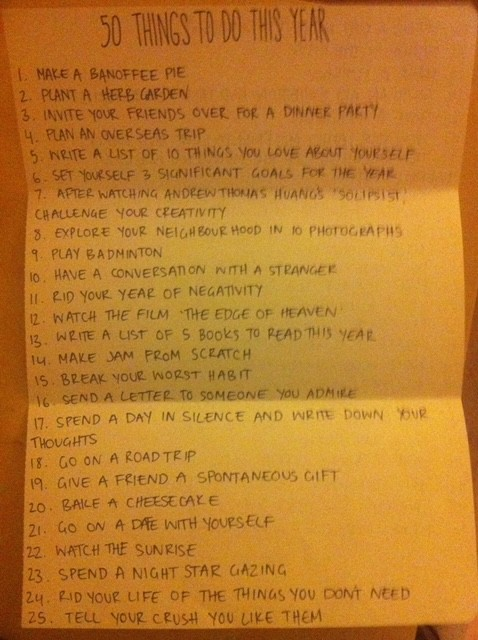
That year the Art House Co-op launched a ‘Sunday swap’ project, asking for participants to compose a list of 50 tasks for a stranger to complete. I posted my list to the company and they then mailed it out to someone, somewhere, and I then received my 50 things from a stranger, in return. I’ve put a photograph of some of my tasks above.

One particular task that really sparked off some creative ideas was the instruction to, ‘Research Natural Phenomenons.’ A natural phenomenon is basically something which occurs in nature, which is not man made. This led to lots of interesting research around things such as Tree Spiders, The Taos Hum, and the Migration of the Monarch Butterfly. Monarch Butterflies are unable to survive the colder winters in North America, so migrate to warmer climates in Central Mexico. Millions of the butterflies cluster together on trees. I enjoyed watching Youtube videos of the butterflies together in the forest and it inspired me to write a poem titled ‘Flight of the Butterfly’, which won third place in the Scottish Association of Writers poetry competition back in 2014. Years later I transformed my poem into a Flash Fiction story, using the same title and theme. This was published in the Glittery Literary Anthology in 2017. You can read ‘Flight of the Butterfly’ here

Why don’t you use some of the tasks from my photo, or do a ’50 Things’ swap with a friend? It’s a great way of getting out of your comfort zone, and doing new things, both of which are really important to keep your creative juices flowing.

A task I took part in during November 2023 was to write a blog post every day, using 30 creative prompts. See my first post here. It was an alternative to NaNoWrimo (National Novel Writing Month), where writers commit to getting a certain number of words down per day, with the aim to accumulate 50,000 words of a novel by the end of the month. I don’t think I quite achieved 50,000 words through my blog posts, but it did spark off a good few short story ideas, with one complete flash fiction piece. Feel free to use the 30 prompts from my original post as a creative challenge.

Next time I’ll continue on the theme of Inspiration, sharing some more tasks and challenges to help kickstart your creativity

Learn your craft #2 (blog post 3 of series)

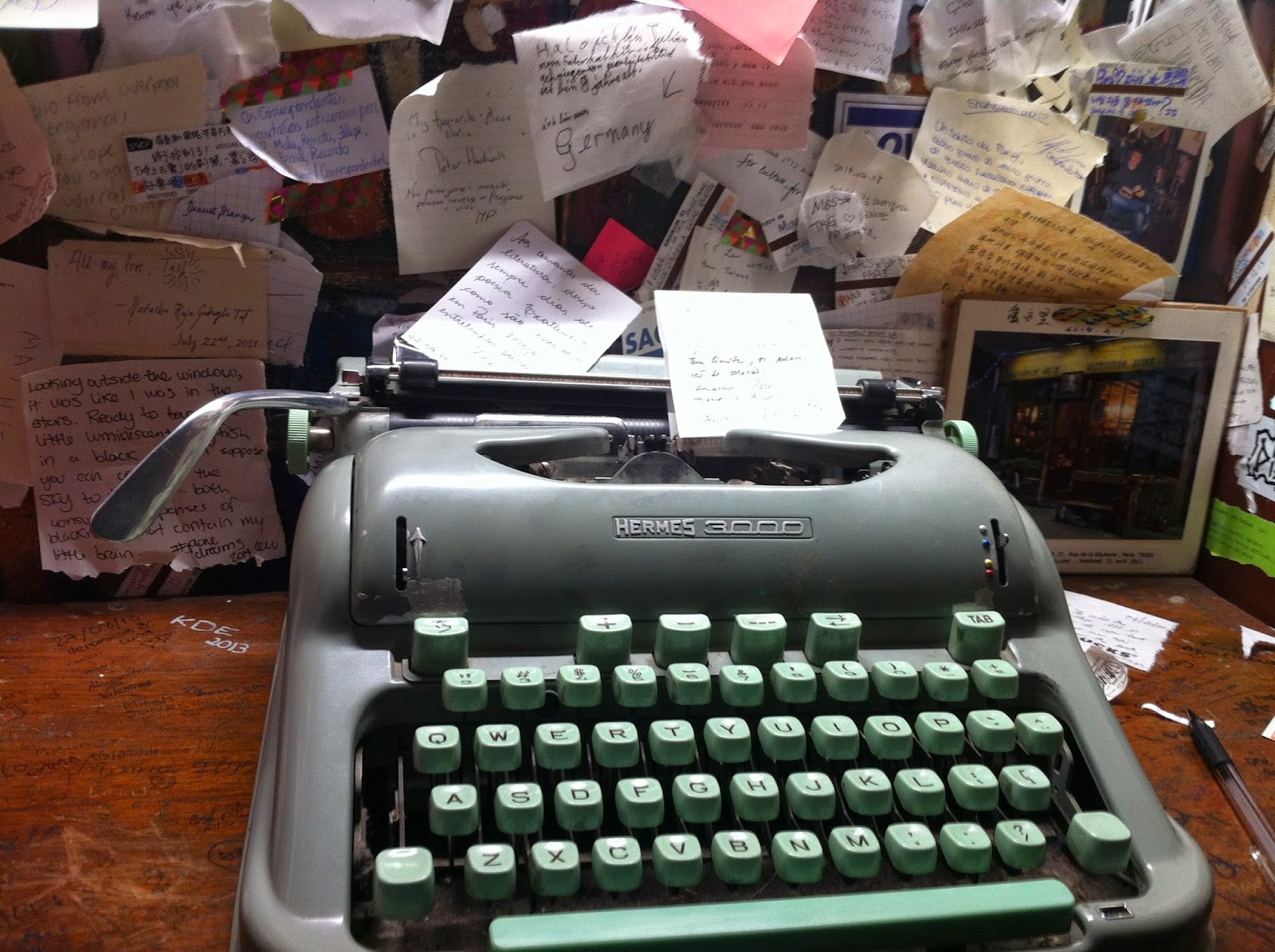
Photo Shakespeare & Co bookshop, Paris (taken by me)

This post follows on from last week with the focus on perfecting your craft. Last week I shared some hints and tips from writing workshops and talks I’ve attended over the years (read here )

This week I’m going to share some highlights from two of my favourite books about ‘the craft’; Bird by Bird by Ann Lamott and On Writing by Stephen King. The reason I love these books in particular is because they are down-to-earth, honest, funny, include memoir style anecdotes from their own lives (particularly King), and neither writer pretends to know everything about writing. So I trust what they say.

Anyone who pretends to understand everything about how stories or books or poetry work is probably not doing it right, because no matter how much you try to ‘teach’ someone how to put words together, I always think there’s still going to be that indefinable piece of magic (soul, imagination, instinct – call it what you want) that can never be taught and can never truly be explained when analysing a text. But as I said last time, if you want to give your work a good chance of heading in the right direction, you can make life a little bit easier by understanding the foundations which hold it all together.

A lot of what King says in On Writing aligns with other advice I’ve heard in workshops and I recognise a lot of his points when I receive feedback, or when I read others work. I really recommend reading the whole book as it’s a great memoir alongside the hints and tips. I believe there’s various editions of it; the one I have in the house is from the year 2000 (which I think may be my husband’s copy as I used to own an earlier one I am sure). Bear in mind when you get to the part about submitting work that publishing has changed a lot since King started sending books out to publishers/working with agents, so I’m not going to reference any of that. I’ll do a separate post about being out on submission on a future post.

Adverbs and dialogue attribution

I believe the road to hell is paved with adverbs – Stephen King – pg 139

To back up this quote King uses this example; Instead of saying ‘he closes the door firmly’ Just slam the door! Other examples I’m thinking of as I write this would be He ran quickly. You could just have him run.

The over-use of adverbs is one of the biggest mistakes writers probably make. King even admits to still doing it in some of his work, even when he knows it’s a ‘thing’.

He also talks about dialogue attribution On page 140-142 he gives various examples of this:

Jekyll grated. Shayna gasped. Bill jerked out (all after lines of dialogue)

King then goes on to say, ‘writing he said, she said, is divine‘. Just letting the dialogue do the work is something that’s quite hard to do when you are anxious about getting your point across. King acknowledges that mistakes in these areas are exactly because of this, ‘fear that our reader won’t understand us.’

I also think the over-use of adverbs, and adjectives and verbs, (she whispered softly, he shouted loudly), hark back to primary school days when we were learning grammar. I don’t say this to dismiss the importance of learning grammar, (the foundation of any language), but I bet each time you were taught something like an adverb or adjective you then had to insert them into several sentences for homework. And then you got a gold star for creating interesting sentences littered with them. So it’s almost like learning new rules all over again.

Style

King talks about being conscious of using the passive tense (the body was carried from the kitchen being one example he uses of being too passive). He digs deeper into style and how paragraphs are formed. Something I learned when writing my Young Adult mystery thrillers is how shorter sentences and paragraphs can help keep the pace. No one wants to be bogged down by a lengthy description at a crucial tense moment. But then if there’s no variation in your style, it might all feel a bit too frantic, so you need to know when to slow it down too. Feeding in more description is something I’ve become a bit more conscious of, as I know I can sometimes rely too heavily on dialogue and because I’m a very visual writer I have to remember that readers aren’t always going to picture things in quite the same way.

Kings mentions ‘making every word count’ and the importance of editing your work. If you find you often ‘over-write’ a tip from me is to try writing flash fiction. Limiting yourself to 100 words or 500 words is the best exercise in making every word count, and I think it’s a great way to build your confidence as a writer. I’ll do a blog post about writing flash fiction at a later date.

Characters – digging deep

With echoes to last week’s post, both Lamott and and King talk about the importance of characters and Lamott in Bird by Bird talks about ‘writing towards vulnerability’. She really emphasises the point about writing in a ‘directly emotional way.’ This made me think of a quote I see popping up online often ( I’m not sure it can be attributed to anyone in particular): ‘What people remember is not what you’ve done, but how you made them feel’. I think that’s true of books. The ones that stayed with me over the years made me feel something, and that’s because of the characters. They’ve taken me along on their journeys and made me feel all of the emotions.

Lamott says, ‘Plot grows out of character’. King says, ‘I think the best stories always end up being about the people rather than the event, which is to say character-driven.

Obviously you need your characters to do something interesting to be interesting and that’s where the plot comes in. Like we covered in last week’s blog post, your character needs to want something, and then go on some kind of journey. But often you won’t know what they want or what the journey actually looks like, until your characters take shape, and become three-dimensional and believable.

They will probably start to surprise you, just like people in your life often surprise you (in good ways, and bad ways). They might annoy you (especially if they start to take over a bit). In my second YA book, Promise Me, one character started to take over so much that I had to completely change the relationship dynamic I had originally intended. I also had to re-write the ending because the original didn’t ring true to what one of my character’s would have done. A similar thing happened for the ending of Follow Me. This is why I always say you can plot out your novel step by step, but never be scared to deviate from the plan. Humans are unpredictable and if you story becomes unpredictable, that’s when it shows you it’s working, and you get to experience it almost like you are the reader, as well as the writer.

There are loads of books out there about learning your craft. If you’re reading this and thinking of your own favourite, please leave a recommendation in the comments.

I also subscribe to The Writing Magazine which is always packed full of helpful advice and articles. There’s also a great section with call-outs for submissions to competitions, journals, publishers etc.

So now I’ve got you thinking about your craft, what if you’re finding it hard starting on a project.

Next time I’ll be talking about inspiration, and will tell you more about how some of my ideas formed, as well as the importance of allowing yourself to have fun.

Happy writing

Creative adventures

After what felt like a slow start to the year, Spring has raced forward at light speed (with some lovely sunshine along the way).

The past couple of months have been very busy for me as I’ve been working on final book edits, cover design chat, and more proofreads.

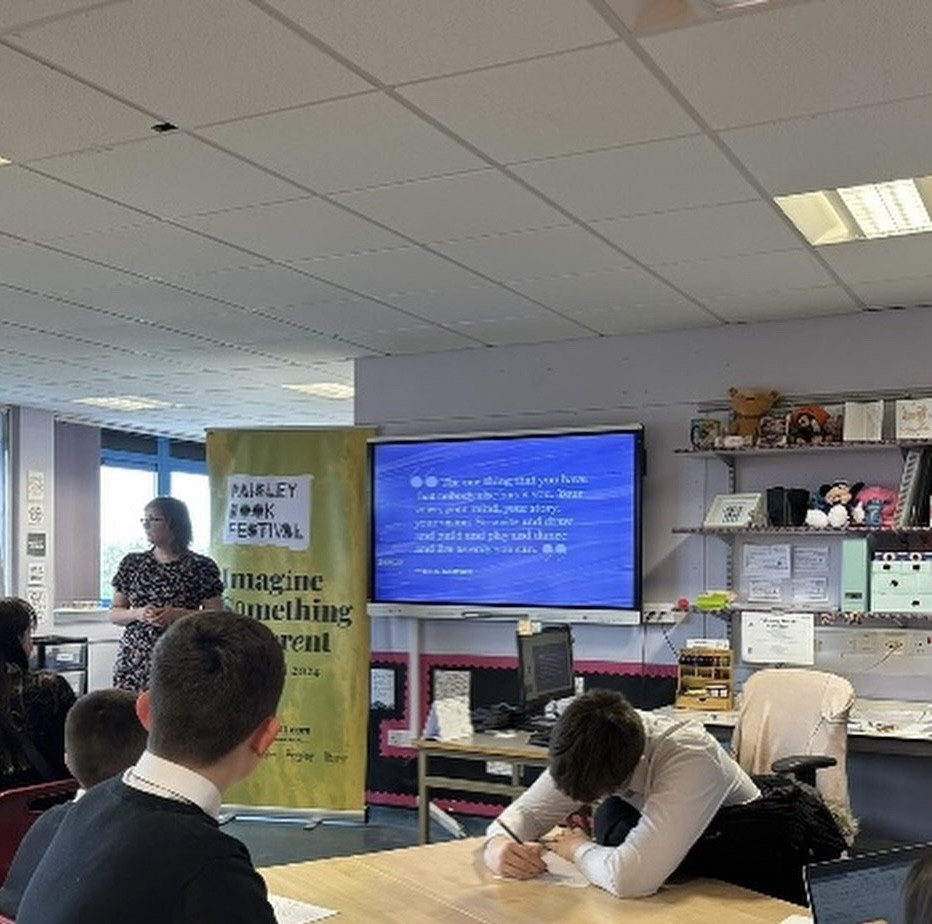
I also took part in the Paisley Book Festival Schools programme in April. This meant a lot to me as I lived in Paisley for many years and I wrote lots when I lived in the town. A couple of my flash fiction pieces were inspired by observations around town and I used to love sitting in cafes writing notes and reading and going wanders taking photographs of some of the beautiful buildings. I also wrote my first two books when I lived in Paisley.

Delivering creative writing workshops to a range of S1-S3 pupils was fun and I always love seeing what story ideas they come up with. As part of my sessions I had given the groups real-life news headlines for inspiration and the most popular one by far was ‘Girl finds criminal living in her attic.’ I really wanted to read the finished stories for that prompt!

School Workshop in action

After my workshops were over my husband and I headed across to the Isle of Arran, one of our favourite places to visit. We lucked out with the weather and it was so relaxing going walks along the beach and sitting outdoors for meals/drinks. I always think there is a real sense of calm on the Island and could happily spend weeks there writing and doing creative things (but sadly had to return home to my day job!!). Sometimes I dream about being successful enough to be a full-time writer and if it meant being able to spend more time hiding away on islands like this that would be the biggest motivator for me!

Beautiful Arran

Later this week I’m going to be doing a Cover Reveal for Young Blood, my new young adult crossover thriller and posting the trailer for this.

It’s always nerve-wracking releasing work out into the world but also exciting to see a project ‘come to life’ and now I can’t wait for the book to be published and story to be read.

I dwell in possibility

Pixabay image by Syaibatulhamdi

It’s the last day in November and the last day of my writing challenge where I have used prompts every day (since the weekend I started) throughout the month to write a post on here.

Today’s prompt is to use the Emily Dickinson quote I dwell in possibility to write a poem, essay or story. I’m writing a straight forward post instead (though I guess it could be classed as an essay) as I feel this title is very apt to end on.

Successfully completing this challenge has reminded me it’s possible to make time, even if it’s just for an hour at the end of the day, to sit down and write, or focus on something creative. Waking up my imagination reminds me of the magic that exists in the everyday.

When I start a big project such as a novel, I love that feeling of anticipation, of not knowing exactly how a story is going to unfold or if I’m even going to be able to successfully transport what is in my head onto paper. Sadly it doesn’t always turn out the way I want it to – a bit like when you have a very vivid dream and it’s all so clear and you are sure you can relay it scene by scene, but something happens in those waking hours where you can’t quite capture the story in a cohesive way.

But then you tell yourself there are other dreams still to come, there are other stories that will be written. And it’s exciting thinking this could turn into something amazing, dazzling, which could be life-changing for you. Or at least sell and be read by a wider audience. Every time I hit send on a piece of work to a competition there is a sense of possibility – maybe, you never know…

My writing has enriched my life, not only be feeding my soul and giving me a feeling of purpose and drive, but by opening up a world where I’ve met so many interesting people – both other writers and readers, and creatives. It has taken me on adventures to schools, book shops, writing groups, conferences, community events, libraries, colleges and universities. It has kept me sane when the day job gets too intense, or real-life gets challenging. It has brought some of my best friends and best experiences into my life. It keeps me curious, and keeps me wanting to get better at my craft and try new things.

I saw a post on instagram earlier today with a quote from someone saying they were bored of reading the successful under 40 lists and they wanted to see stories of people later in life achieving their dreams, or striving for them. Someone in the comment section called @_d_u_n_e said in her tribe in Nigeria there is an adage which translates, ‘whenever a person wakes up, is their morning’

Tomorrow and tomorrow and tomorrow – each day I dwell in possibility.

Interview with a Writer ~Rosemary Gemmell

Today I am using the prompt ‘Interview someone who inspires you’ and I’m excited to have my very own writer Mum, Rosemary Gemmell, on my blog today. There was no better person I could think of to interview for this post as my mum has definitely been my biggest inspiration and support over the years, introducing me first to the world of books, then writing.

A talented and prolific writer since she put words to paper many years ago, here’s a wee insight into Rosemary’s world of writing.

When did you first start writing?

I first wrote poetry when a teenager in high school but I didn’t write anything else creative until after having my two children. Then I started experimenting with all kinds of writing, including academic essays as a mature student.

What do you write?

A little of everything (almost)! I mainly write short stories, articles, poetry, novels and novellas, with occasional children’s fiction.

What was your first published piece of work?

My very first published writing was a letter to a magazine, followed by several more. My first longer piece was an article in a Scottish Women’s Rural magazine. My first published short story was after winning the Short Story Competition at the Scottish Association of Writers conference, adjudicated by the then editor of My Weekly who bought the story for the magazine! My first novel, Dangerous Deceit, was published by a small Canadian company.

Why do you write?

I write partly to communicate and to entertain anyone who likes to read, as well as trying to make sense of all the ideas in my head that clamour for expression. When my imagination is stimulated, I explore it in fiction. But I also write because it’s fun, especially sending work out and waiting to see if anyone wants to buy or read it!

What or who helped you on your writing journey?

The single most useful and helpful decision I made for my writing was to join a local writing group at Erskine, near where I used to live. A wonderful writing tutor, Sheila Lewis (now sadly deceased), came to deliver a six-week session to get us started and ended up staying on as a valued member. She was probably my biggest influence, encouraging me all the way to publication. Lots of other writers have inspired me over the years, especially when attending the SAW conference and entering competitions. Strangely enough, my daughter (thank you, Victoria) also inspires me to be a better writer whenever I read her beautiful and often profound writing.

Share a writing low with us (if you feel comfortable doing so). What did you learn from this?

Although I was lucky to have my first novel published, it went through a few rejections first. The same with short stories – many published but many that just weren’t good enough. Now and then, it was discouraging but it taught me perseverance, to keep going and that the rejections were not personal; it was only a particular piece of writing that didn’t fit that time.

Share a writing high

Winning that short story competition with my first submitted story, then having it published in a well-known magazine, was one of the highlights of my writing career. It was followed by several other competition wins, including one where I was presented with a £1000 prize and a silver cup at a ceremony in Harrogate (Writing Magazine Love Story Winner – those were the days)! But nothing beats that initial confirmation that maybe my writing was good enough. The other main ‘high’ was getting my first full-length novel published as I wasn’t sure I could write longer fiction. Every success is still special.

Share some of your favourite lines from reviews/feedback of your work which boosted your confidence: (tell us what piece of work it’s about)

This was one of the many lovely comments for my first novel, the Regency-era Dangerous Deceit, which really made me want to continue writing books:

I’ve just finished Dangerous Deceit and wanted to let you know how much I loved it. I feel incredibly guilty for racing through the pages when so much hard work went into them, but I couldn’t wait to see what happened. Feel a little sad now it’s over to be honest.”

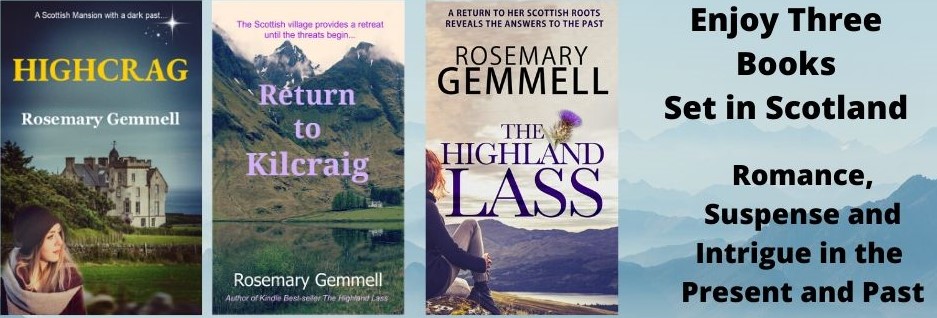
And one from my most recent full-length Gothic suspense novel set in Scotland, HIGHCRAG:

“The characters and the plot blend seamlessly and, like Cate, the reader is unsure who to trust but in the ending all threads of the plot are skilfully brought together in a most satisfying way.”

Any tips for new writers?

First, read as much as you can. If you want to write short stories, read those published. Same with novels – we absorb the ‘how to’ while we read, much more than when reading ‘how to’ books (in my opinion). And read a variety of writing for inspiration.

Second, never give up writing and experimenting with different types and genres until you find the one that is just right for you. If your aim is to be published, keep sending work out – it maybe wasn’t the right piece at the right time to the right person.

And for all writers; any tips for keeping motivated?

Use any short snatches of time to get ideas and sentences down, without the pressure of having to sit and produce a set number of words, as they all add up. A good writing magazine is full of motivation and might help to get you going again. Reading can also help to motivate our own writing, and I find music good for stimulating ideas.

When do you write? Do you have a regular routine, or do you write in frantic bursts?

I’ve never really had a regular writing routine, although I do find my creativity is best in the mornings. I tend to write in short bursts and like going back to a piece to redraft it. I find it too boring to sit at the computer for long so I write shorter items in between novels!

Where do you write? (A dedicated room, or on-the-go)

Although I have a very pleasant room I call my study, with a desktop computer, I write far better with pen and paper when out and about, especially on trains and in cafés. The words seem to flow when writing, or scribbling, longhand and I can easily shut out distractions. I then redraft while typing it up at home. I wrote one of my first novellas almost entirely in longhand while out and about and enjoyed it far more than sitting at the home computer (until redrafting it!).

Any stand-out books you have read this year?

I loved Madeline Miller’s two fictionalized books about Greek mythological figures and their stories, Circe, and then Achilles. They inspired me to finally do an online course to learn Ancient Greek! I also read the wonderful complete Ruth Galloway series by Elly Griffiths, and my favourite LJ Ross DCI Ryan books. There were lots more in paperback and on kindle, of course.

Please share links to your website and where to buy your work so that people can find you

Website: https://www.rosemarygemmell.co.uk

Facebook: https://www.facebook.com/rosemary.gemmell.3/

Twitter: https://twitter.com/RosemaryGemmell

Amazon Author Page: http://www.amazon.co.uk/Rosemary-Gemmell/e/B00U19Z4H4

Thanks to Rosemary for taking the time to answer my questions and for the lovely comment about my writing. I really enjoyed reading about your writing journey.

The Amazon link above will take you to all of Rosemary’s fabulous full length novels, novellas and short story collections. Also, if you are a People’s Friend fan then look out for their 2024 Annual in newsagents now where you will find one of Rosemary’s Christmas short stories

I’m hoping this ‘Interview with…’ spot might be something I continue to feature on my blog for future posts as I think it’s really interesting reading about fellow writers’ (and creatives) journeys and tips!

There will be days

Pixabay photo by TemperateSage (Harmony Lawrence)

Today’s prompt is a combination of two: Write a commencement address for girls graduating high school/college and write a letter to your younger self

There will be days when you fail but when you pick yourself back up you will feel even more determined

There will be days when you feel everyone is moving faster. Don’t worry about speeding up to follow them. Slow down and take a deep breath and figure out what you really want. Here’s a hint- usually it is not what everyone tells you you should want. You will get there in your own time.

There will be days someone tells you you’re not good enough. Smile, walk away and enjoy showing them you totally are

There will be days you won’t feel confident in yourself and it might feel like everyone around you has it together. They don’t. They’re probably thinking the same about you. So be kind to each other.

There will be days you feel lonely. Sometimes because you are alone, but often it will be at a crowded party, or with someone who is bringing you down. Some day soon you will realise you are often your best company and the best times can be had alone, when you most definitely are not lonely.

There will be days you wish for things that never come and you cannot understand why. You won’t realise why until much later when you look around you and realise much better things arrived.

There will be days you feel lost and have no idea what you want. Enjoy the unknown directions. Whichever turning point at the crossroads you choose you can always come back again, then walk a different way. Each time you will take away something good, because you’ve been brave enough to move forward.

There will be days you win and accomplish great things, like today. Make sure you take proper time to celebrate and stay in the moment. You’ve done amazing things and your best achievements are yet to come.

You’ve got this.