What sells books? (blog post 14 of series)

As part of this series I felt it was important to talk about marketing. This is where I feel I let myself down as a writer as I don’t think I’m very good at promoting my work, or knowing how to be seen and heard in a world that seems to be full of people talking into cameras, shouting to be heard.

How do you cut through the noise, and get people to notice your work, and choose your book to read? What sells books?

Sorry if you read the title of this blog post and got excited, as I don’t have some magic answer to this question. If I did, I’d be quitting my day job and spending lovely days happily typing away immersing myself in my writing, instead of trying to stay awake enough in the evening in order to get words down on paper (or the screen).

Here’s some marketing tips I’ve read over the years:

Find where your audience hangs out and connect with them there

Talk about the story behind your stories

Do free give-aways and promotions

Do talks and events

Contact local press

Do a blog tour/connect with bloggers

Try sponsored advertising on social media

Join up with other authors and do joint promotions

I’ve tried variations of the above over the years. One of the most successful events I think I’ve even been part of (in terms of live sales made), was a Yay YA! schools event organised by the very supportive writer Kirkland Ciccone who invited Scottish YA authors to participate, made sure our books were ordered in and sold on site, and organised for hundreds of school pupils to be bussed in to the venue for the day.

I was in one of the theatre dressing rooms, where I was instructed to read extracts of my book to rotating groups of the school pupils, and honestly it was some of the best engagement I’ve ever had from teenagers. I felt like a celebrity that day as at break time I had a queue of young people waiting to get their book signed and I even had a couple chase me (literally) across the room, shouting my name and asking for my autograph. I sold out of books that day.

This event was a success because the schools who attended clearly had selected enthusiastic readers, and they had all been told a bit about the authors prior to the event (Kirkland had made up promo posters and information was shared online, with a build up on the lead up to the event). It was obvious some of the kids had already sought out our books before coming along, as one teacher approached me with a teenage boy in tow, explaining he really wanted to talk to me as he thought Follow Me was the best book he’d ever read. It showed me the power of other writers supporting writers, and teachers and librarians being supportive of writers, building up an excitement that made teenagers notice us and our books.

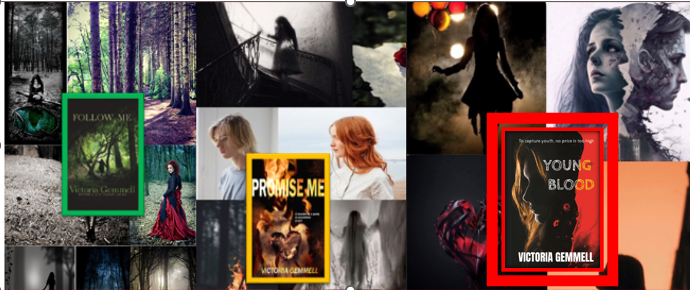
Other top events where I’ve made the most live sales have been my launches. On the night of my debut launch in Waterstones I had a great turn out and sold out the books my publisher brought along. When I did an online Facebook launch for Promise Me I hit the best seller lists that day on Amazon. I also made really good sales for my invite only in-person launch of Young Blood, and made decent sales the day I did an online Facebook launch. You should be able to view some of the posts from my Facebook launch of Young Blood here

During online launches I prepared visual extracts from my book, with insights into where the ideas came from, insights into some of the characters, and music clips to accompany some extracts. I encouraged engagement by posing questions, tying some of them to giveaways.

During my in-person launches I read short extracts from my books, had someone ‘interview’ me to ask pertinent questions about the story, and then opened it up to a Q&A with my audience. I went all-out at my Young Blood launch, turning it into a bit of a party with drinks and an array of snacks, balloons and table stands in colours matching my book cover. At both of my in-person launches I used the site Eat my Face to order edible cake topper covers of my book to stick onto cupcakes.

For events I often make up bookmarks and I recently made some postcards also – see images of them below. I use Vista Print for this type of merchandise, creating image layouts on Canva first.

A lot of the time when I’ve delivered workshops or community events I’ve been told I can’t sell my books, or I’ve taken some and made no sales. Libraries have supported me by buying in my book in advance (often creating a nice display to highlight my book). In Scotland authors are encouraged to join the Live Literature database – see here – which means when I deliver workshops and talks, (and a school or community venue has signed up to receive Live Literature funding), I am guaranteed a standard fee. The funding comes from Scottish Book Trust. So I do earn money from most of my events, but it doesn’t always then translate into book sales.

I’ve been fortunate to appear in newspapers, local circulars, and I was interviewed for Teen Titles magazine many years ago. I know from recent ‘press coverage’ it made no impact on my book sales at all. It’s a helpful way to build awareness and become ‘known’ which is part of a long-game of building up an audience, even if the audience can sometimes be participants in a creative writing workshop, as opposed to hard-core readers of my work.

I think ultimately what sells books is personal connections, and word-of-mouth recommendations. Librarians have bought in my books thanks to school colleagues mentioning my name; librarians I’ve met at events have then got in touch later down the line to ask me along to events (when I met one at a ‘Teen Title’ party she then invited me to talk to an assembly of 2nd years and it was two of them who then interviewed me for Teen Title magazine). A supportive colleague recommended Young Blood to a local book group and it secured me some new fans.

I know I buy books a lot based on personal recommendations all the time. So if you’ve enjoyed any of my books please, please, please, tell your friends about it! Also leaving a review on Amazon or Goodreads really helps too, or if you want to do that in the form of sharing a post on social media about my book that is also amazing. People take much more notice of that than any post I attempt to do about my own work!

I’d love to hear from writers with some top tips of your own.

And readers… what makes you buy a book?

Don’t wait for the phone to ring (blog post 11 of series)

Young Blood Launch —- 2024

Back to the blog today after a short trip away. If you missed my last two posts about book submission stories you can read post 1 here and post 2 here.

When I started to write Young Blood I attended an open submissions event in Edinburgh, where I got to pitch face-to-face to a YA agent I was keen to meet. It was the first time I had pitched a book that wasn’t finished, and when she asked me to send through a full submission I had to confess it wasn’t ready, and then took months to send. She did remember me and my book (which was a good sign), but the version I sent was nowhere near as tight as my eventual final draft for this book, and I received a rejection (a nice, personalised one, which I appreciated).

So a lesson, be patient, and wait until your book is fully ready before pitching to an agent you like.

This period of time crossed over with the ‘in limbo situation’ with Promise Me, so by the time Young Blood was fully ready (i.e. had been through multiple edits, with in depth feedback on both structural and grammatical aspects, resulting in fleshing out bits, re-writing parts), I was then set on continuing with independent publishing. Also around this time I saw Reese Witherspoon post a reel on her Instagram with the words, Don’t wait for the phone to ring. (In reference to her starting up her own production company, so she could take control over her own roles, and ensure she was able to continue to make quality work).

By this point I had purchased a batch of ISBN numbers (this works out cheaper than purchasing one-offs). If you are serious about independent publishing and plan to go wide with distribution, you will need ISBN numbers – see here on the Nielsen site for more info. As quoted on the link to Nielsen, ‘Systems used by publishers, booksellers and libraries all rely on the ISBN to identify books ensuring they select and stock the correct title and edition.

Here are some of my personal reasons I decided to continue with Independent publishing for Young Blood:

  • I wasn’t under pressure to hit deadlines or do events This was a pressure I didn’t want at this particular time in my life because in 2023 I was organising my wedding, and my day job felt like it was getting busier (zapping my brain capacity). I didn’t want to feel beholden to anyone (I’m now moving more towards wanting to get fully back out there!)
  • I got to control when I released the book, and put it out on various platforms I didn’t need to rush a release date, but also I didn’t have to wait another 6 years for my book to see the light of day. I was able to put it out in print and on all digital channels
  • I had full control of purchasing my author copies in advance of my launch (So I got to control how many were available, and no worrying about them turning up on time for a big event)
  • I was able to see proof copies before they went to print Mistakes happen; but at least I was able to make immediate fixes to any spotted
  • I was in full control of cover design (this is something that wasn’t an issue with traditional publishing, but it was still fun to be able to come up with the concept, and collaborate with my friend Dainty Dora to produce the final design).
  • I get access to statements of all of my sales, and often from Amazon in real-time. Amazon KDP have a dashboard you can log in to which breaks down your daily and monthly sales in to ebook and print sales. This can be helpful if I try something to market my book, to see if it actually had any impact! I also get regular statements from Ingram Spark and Draft2Digital (who I am with for wider distribution) This article from the Bookseller published a survey exposing writers’ frustrations with lack of clarity around royalty statements, and delayed payments
  • I got to write the story the way I wanted to tell it Young Blood did not fit into the word count most agents and publishers were saying was ‘acceptable’ for contemporary Young Adult novels. There are many conflicting opinions about YA word count. With rising print costs, and opinions about diminishing attention spans amongst young people, some are saying it is ‘safer’ to publish shorter books. If you are an unknown writer, publishers are probably less likely to take the risk of a bigger spend. But when I did a quick check of some of the best-selling and most successful YA books over the years, guess what….nearly all of them were near 100,000 words. And for Young Blood to have the depth I wanted it to have, I needed the layers a bigger word count allowed (it sits at 100,000 words). A couple of people have said they feel it’s my strongest book so far, and I know this is because I put the layers in
  • Readers don’t care I mentioned this in my last post, that hardcore readers just want to read books, and often don’t have a clue or care about who you are published by (or not published by) What readers will care about is unprofessional editing, and production. So if you’re going to do this yourself, then do it right, and don’t work alone. I got so much support with edits and formatting, and the technical uploads (thanks Mum! See Rosemary’s books here ), as well as the design aspects. Even although platforms such as KDP and Ingram provide you with templates, you need to understand the technical nuances to ensure everything looks right

Now here’s my reasons why for my next project I’m going to try the traditional path to publication again:

  • I want wider readership To get wider readership I need someone bigger (i.e. an agent, and publisher, maybe just a publisher) to get behind me and help me promote and publicise my work to others. I don’t have the confidence to do this alone. I can’t deal with translation rights, distribution to bookshops is complicated, and some publications that list book releases will forever ignore me as an indie
  • Linked to above – I want to get into bookshops When Promise Me and Young Blood came out, this wasn’t an aim. I understand how hard it is to get into bookshops (even when with a traditional publisher), and my priority for these books was actually to get into libraries (especially school libraries). Bookshops have to be business minded and will only stock books they know will sell, and these tend to be ones which are getting a lot of exposure. They also need to trust the quality, and unless they read mine cover to cover, they’re not going to take my word for it. But for my next project (if it goes well, and ever sees the light of day) I would need a local bookshop in my area to get behind me as they seem to have all of the distribution tied up with local primary school events. Even although I am on wider distribution, so bookshops can find me on their distribution system, I have my books set to ‘no returns’. I have global distribution and if I allowed returns two things could happen: Bookshops could order in lots of my books, but if they don’t sell, they then return direct to me (the publisher) and charge me postage as well as RRP cost of all books unsold I’ve heard horror stories about a certain retailer managing to bankrupt small publishers by ordering in crates of books, keeping them in storage and forgetting about them, then returning them unopened to the publisher (which lands them with a massive unexpected bill). This is another insane part of the business that makes me wonder how anyone actually makes any money!
  • I want to kick the Imposter Syndrome I love doing events in schools and the community. Usually I feel confident but I was really nervous being part of the Paisley Book Festival School events last year because I was just waiting for someone to compare me to the bigger names on the programme, and ask me what I was doing there. Being validated by a publisher opens doors to big events; there is no getting around this.
  • And finally...I feel ready! Back in January when I wrote a post outlining my plan for this series, I talked about how writing should be treated like an apprenticeship, and that it’s a journey of learning. It’s easy for writers I think to share knowledge about the process and craft, and pass on hint and tips, similar to what I have been writing these past few months. What isn’t often talked about, is the emotional impact of sending your work out into the world, and the emotional impact of attempting to make a serious career out of writing, when challenges and setbacks extend way beyond your initial rejections. You’ll often hear writers say writing the actual book is the easy part, and I agree and think it’s because that’s the fun part (when things are going to plan!!) You can enjoy just creating, and get lost in the creative process. At the other end, once your words are released, they become a product to be consumed, and with this comes expectation. And that’s when it all can feel a bit overwhelming, and the pressure and disappointments can set in. Now, I feel ready for the emotional parts, because none of it feels so raw anymore. And because so many writers are opening up and being honest about the full picture of what it means to be part of the industry, it makes it all feel a little less daunting, knowing it’s okay to embrace both the failures and the successes.

So onwards I go. And onwards I hope you go too!

Links to my books are here

Inspiration is Everywhere #Part 3 (blog post 6 of series

Continuing with the theme of sharing where I find inspiration for stories, today’s post is about the inspiration behind my Young Adult books. I’m cheating a bit with this post and extracting a section from a blog post I wrote back in 2022, where I went into quite a bit of depth already about the inspiration behind my debut YA mystery, Follow Me, and my second YA mystery, Promise Me. You can read the full post ‘Stranger than Fiction’ here

My latest YA Thriller, Young Blood, was also inspired by an article I read in the press, so it fits nicely with the theme of paying attention to what you read in the news. Just like I talked about in last week’s ‘inspiration’ post, the best stories can be formed from things that catch your attention in ‘real- life’, if you add in the ‘What if’ question, and let your imagination run wild…

News headlines often catch my eye and act as a catalyst. When my imagination takes over, and characters start to form, a story of fiction then unfolds, where I imagine what would happen if fictional teenagers were placed in these situations I read about.

Numerous reports of the unexplained Bridgend suicides stayed with me for years .There were twenty-six known suicides in the town between 2007-2008, and most of those who lost their life were young adults. I remembered opening newspapers at the time, wondering what on earth was going on in that town.

In my book Follow Me my 17-year-old protagonist, Kat, begins a desperate search for answers and explanations, after her twin, Abby, is the sixth in their small Scottish town to die by apparent suicide.

A big theme of my YA mystery, Promise Me, is the way in which press coverage and social media has the power to portray a certain narrative during high profile, emotional murder cases. One of the inspirations of the story was my memory of the sensationalist press coverage of convicted Scottish teen Luke Mitchell from many years ago. From 2003-2005 there was lots of press coverage around his case. Demonising language and character assassination was often used in reporters’ narratives (With headlines like ‘Devils Spawn’ appearing on front page reports).

The headline ‘Boyfriend, 15, charged (with murder of schoolgirl Jodi Jones)’, was published in the Edinburgh Evening News, (2004) before said boyfriend (Luke) even went to trial. Everyone in their small-knit town knew he was ‘the boyfriend’.

The paper took things a stop further and named him. The Press and Journal, Aberdeen, also ran a similar story. They faced contempt charges but were cleared of breaching the Criminal Procedure (Scotland) Act, that states “no newspaper report of any proceeding in court should identify anyone under the age of 16.” (In Scotland this is now 18). They were cleared of charges because judges ruled that the story was not a report of court proceedings. This is just one troubling example of how a fifteen-year-old boy, (and throughout his trial when he was sixteen), dominated headlines. Numerous false ‘facts’ were published about the case, and tabloids delighted in running sensationalist reports about Mitchell’s apparent obsession with knives, drug-taking, lack of discipline in a single parent household, even linking his music tastes to the murder.

I read a lot about the case and it made me realise how easy it could be for a small community to spread rumours relying heavily on hearsay and perceptions of a local outcast boy’s ‘reputation’, and how this could influence local prosecution investigations, and a jury. Conversations I’ve had with legal people where I questioned how anyone could truly be impartial in such a high profile case said a judge would have ensured jurors had no local connections to the case. The trial took place in Edinburgh, less than half an hour away from where the murder took place. I was reading newspaper stories an hour away from where it all unfolded and still felt emotional reactions to the reports, even if I didn’t personally know anyone.

My book Promise Me is a work of fiction, set in an affluent fictionalised Scottish village, and not about the Mitchell case, but I hope it makes people think about how damaging media and indeed, court narratives can be, and the distorted perceptions that communities can sometimes have of young people who don’t quite ‘fit’. In my job I’ve undergone unconscious bias training and I really believe the police involved in this case let a lot of their own unconscious bias (and media pressure to get a conviction), influence their decision-making. If you have an interest in finding out more about this case I recommend the brilliant podcast Through the Wall by Naomi Channell.

My latest YA thriller, Young Blood, is a story about young people in the care system who are kidnapped and taken to a secret house to become exclusive plasma donors for an elite group of wealthy adults who want to stay youthful and healthy. It’s told from the perspective of two teenagers – Ana who is outside the house and dealing with the realisation her mum may have early onset dementia; and Hope who is captured and taken to the house.

Young Blood was inspired by an article I read about an American start-up company ‘Ambrosia’, founded by a medical school graduate in 2016 which sold ‘young blood transfusions’ (from young people into older people). Charging a large sum of money for these transfusions, they claimed a range of health benefits such as treatment for Alzheimer’s. In a pitch about Ambrosia at a self-enhancement conference in 2017 Karmazin said, “We’re a company interested in making you young again.” In my day job I work with vulnerable teenagers. I see how much instability and uncertainty young people in the care system in particular can face. This sparked off the idea of having a powerful doctor set up a premium club who can access pure plasma transfusions from a select group of young people who are easy to make ‘disappear’, whilst maintaining a super-controlled environment within ‘the house.’

Links to buy my Young Adult books are here

I often take along strange news headlines to creative writing workshops I deliver in schools and get the class to choose one as inspiration for a story. A popular headline lots of pupils chose last year was, ‘Girl discovers criminal living in her attic.’ I love hearing the ideas form, and characters that start to develop. It also shows that we can all start with a similar idea, but when you create your own unique characters a truly unique story also starts to take shape…

Why not spend the week looking up interesting headlines, and see if it sparks off any great story ideas!

Starting Out (blog post 1 of series)

Following on from my post last week this is the first of a series of blogs which delve a bit deeper into what the writing life has been like for me over the years. When I say ‘writing life’ it’s important to emphasise you can be living a writing life without sharing your words, or ever reaching publication.

My love for writing started with a love for reading and as a family we made regular visits to our local library, which at the time was in Inverclyde. My house was always bursting with books growing up and this was thanks to my Mum’s enthusiasm and passion for words. I realised some of my early favourites, such as the Nancy Drew series and Point Horror, have shaped a lot of my writing. All three of my Young Adult books (see here), feature teen sleuths who undercover the truth about some dark mysteries taking place in their Scottish villages.

I wanted this post to be a bit of an overview of what has been important to me over the years. Finding champions (people who encourage, and don’t dismiss your ideas and dreams), and attending writing focused groups/workshops/conferences to learn my craft, have been so important.

Through both, I’ve been supported to bring my stories to life, and found like-minded people to advise and steer me on my way. Being connected to others writers/creatives has kept me motivated and enthusiastic during times I have asked myself why do I devote so much time to this? What’s the point?

For me, writing truly feels like it is in my blood. Even if I take a break from time to time, (or nearly ‘give up’), something always calls from deep down inside me that makes me sit back down at my laptop or notebook (or notes page on a phone!) to shape words into some form of storytelling.

Here’s some key highlights along the way: See links at the bottom of the blog post to help you find groups/courses

  • My Mum has always been an important champion, always encouraging me to keep writing, and submit my work. When I was eleven my Mum took me along to a new writing group she was attending (Erskine Writers).This introduced me to a magical world of writers, and I realised people actually did this writing thing as a job, or at least submitted stories to magazines/competitions and books to actual publishers…and got their work in print. Over the years Erskine Writers has played a massive part in my development as a writer. It’s where I won my first writing competition and started to read out my work aloud to strangers for the first time, and get critiques from people other than my mum. It helped me develop confidence and taught me the importance of listening to feedback to improve my craft
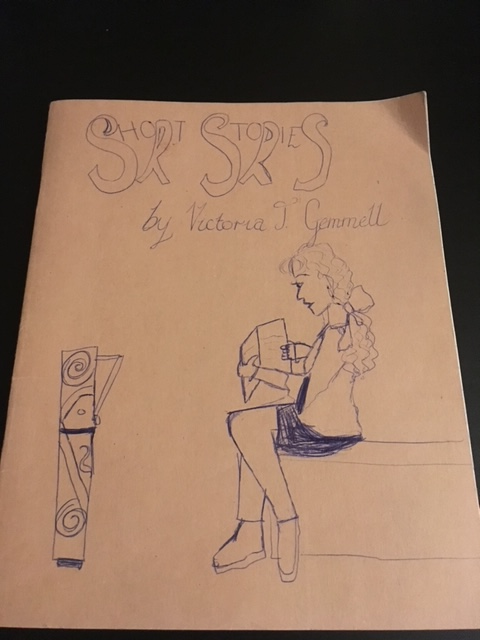
  • When I was in primary seven my older brother indulged me by reading my illustrated Horror novella – Ye olde Castle. Sadly I never kept this notebook, probably too embarrassed by the illustrations of heads rolling down a hill during the unfortunate school trip. My head teacher at the time called me to her office, (not to give me a mental health assessment thankfully.) She encouraged me to keep writing, and showed me a book that a twelve-year-old girl had published (it was about a vegetable family, and I remember being very impressed!). I continued writing many stories during this time – the photo at the top of the blog post is a notebook that did survive. Twenty- odd years later when my first book Follow Me was launched at Waterstones my head teacher attended my launch night and I was able to thank her for her encouragement during my acknowledgements. One of many full circle moments I’ve had in my writing life
  • Another teacher champion: My first year English teacher Mrs Cook told me I was going to be the next Roald Dahl (not quite happened, but this meant a lot at the time as I had grown up loving these books!) and got my class involved in acting out (and I am sure filming!) a play I had written in my own time
  • When I was about twelve or thirteen I finished my first ‘book’ Rhea the Rollerskater and my mum helped me package it and send it off to a publisher. They sent me a very lovely rejection. I love the fact my mum encouraged the process, and the publisher was encouraging, but I think I knew I really needed to give myself a bit more time to develop my craft! And also have some fun along the way. Being too focused on publication can detract from just enjoying the process.
  • When I was seventeen my mum took me along to my first Scottish Association of Writers conference. I was delighted to witness her being presented with a first prize certificate for her short story (from Ian Rankin!) This was a weekend where I first entered a world filled with experienced authors/writers and attended workshops which taught me lots about the craft of writing and storytelling. Twenty years later I was invited to be an adjudicator at the conference. Another full circle moment in my writing life!
  • In my twenties I started getting serious about sending work out and during my early thirties in particular I was on a mission to get my work in print. I felt at this point I had developed my craft enough to write an acceptable short story that could maybe see print. I’ll do a separate post on early submissions/rejections/acceptances and how to approach this
  • Around this time I kept attending the Scottish Association of Writers, as well as attending a brilliant writing festival (that an author at SAW suggested I go to) in York. Sadly this festival no longer runs but I’ve put alternative suggestions in the links below. It was here I met face-to-face with agents for the first time to pitch my novel. What this taught me is a website can tell you only so much about an agent. Meeting them in person allowed me to see how we ‘clicked’ as well as showing me how one totally understood my story, whereas the other did not!
  • Writing friendships ~ I met some of my best friends through writing groups and at a writing networking group. Finding people who are on the same wavelength and who understand the pain and enjoyment writing can bring, as well as being a safe space to share work and your highs and lows, has been such an important part of ‘keeping going’.
  • When my debut YA novel came out I was clueless really about how anything worked in terms of how to organise talks, school events and so on. I’ll do other posts about this, but at the time joining the Society of Children’s Book Writers and Illustrators (SCBWI) and attending their conference and speaking to published authors was so helpful. Fellow published authors who invited me to, and suggested me for, small festivals/talks was so amazing and helped me a lot. Librarians were also so supportive. Signing up to the Scottish Book Trust Live Literature database has helped me secure writing talks/workshops throughout the years (and get paid for them!)

As I live in Scotland I’ve included some Scottish/UK focused links below to help you find your tribe. Happy writing!

Find a Writing Group:

These lists can help you get started: https://www.scottishbooktrust.com/writing-and-authors/writing-groups-in-scotland

https://www.scottishassociationofwriters.com/find-a-writing-group/

Use social media to help you find local groups. I found an informal Glasgow Writers meet up group via facebook

Ask your local library and community centres. Paisley central library host a local group.

Attend Conferences/Writing Festivals/Courses

https://www.scottishassociationofwriters.com/saw-conference-2025/

https://www.cymerafestival.co.uk/2024-writers-conference-programme

https://www.writersandartists.co.uk/events-and-courses

Check college websites for leisure writing courses/online writing courses. This is a great way to connect with other writers. West College Scotland started an online creative writing course in November. I’ve also seen authors I know sharing courses they are running via Dundee Lifelong Learning

Attend a Retreat:

A popular one with writer friends: https://www.moniackmhor.org.uk/courses/

One I’ve got my eye on: https://www.acornwritingretreats.com/

Launch of my new YA Mystery Promise Me

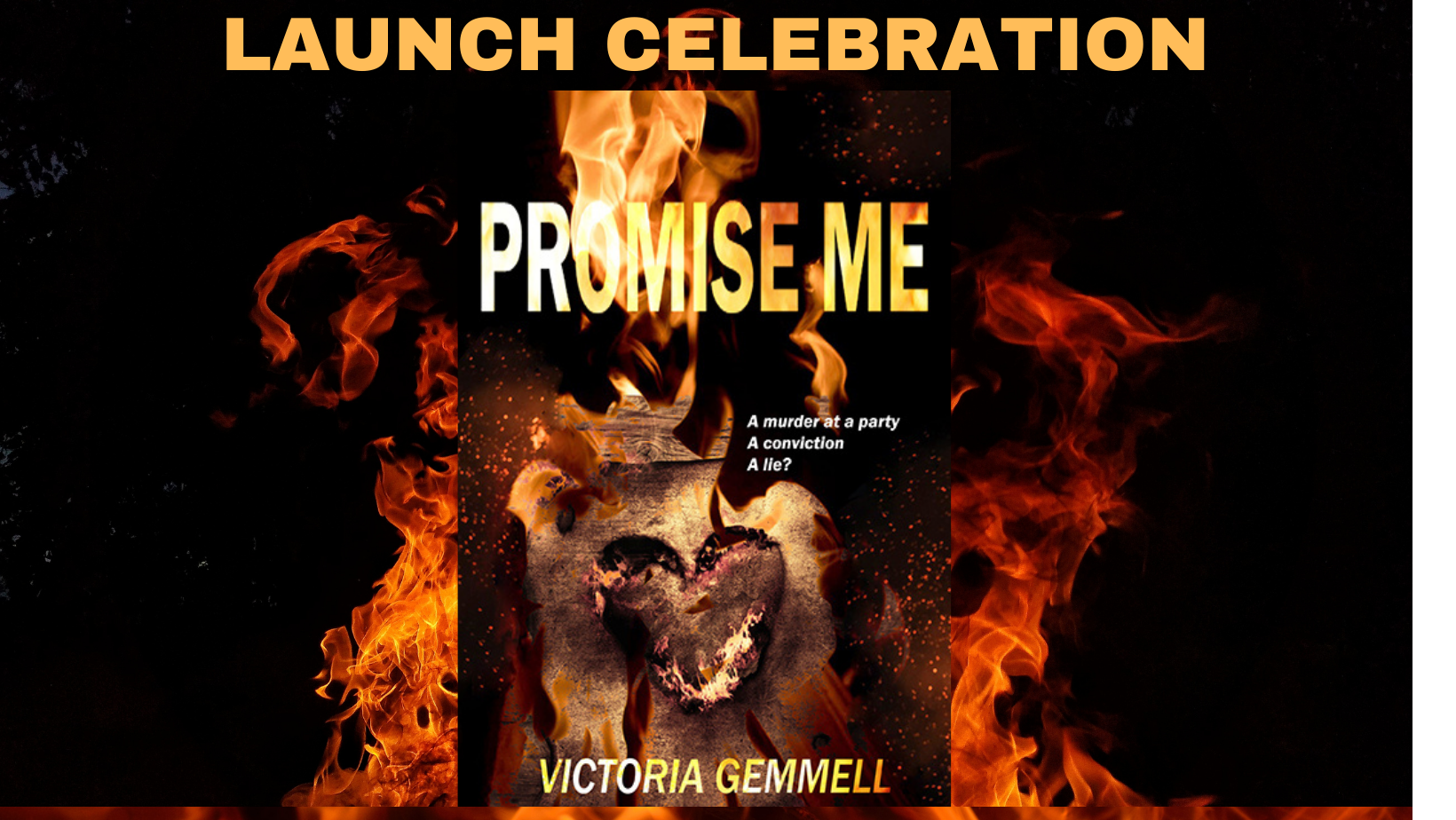
Tomorrow I am having an online celebration for the launch of my new YA mystery Promise Me. Anyone can join the facebook page to take part in giveaways and watch some videos/find out more about the book!

Follow the link here: to the page … and this link takes you to the platforms where you can purchase Promise Me